A Man Born Into the Wrong Country at the Right Time
Zora Arkus-Duntov was born Zachary Arkus on December 25, 1909, in Brussels, Belgium. His father was a Russian-Jewish engineer who had fled tsarist Russia; his mother, Rachel Arkus, was a woman of considerable intellect and, by period accounts, formidable personality. The family moved often during Zora's childhood — from Brussels to Leningrad, then to Berlin, tracing a path shaped by the upheavals of early twentieth-century Europe as much as by professional opportunity. It was in Germany, during the Weimar years, that the young Zachary received his engineering education, graduating from Charlottenburg Technische Hochschule in Berlin with a degree in mechanical engineering. He would later add to that foundation with graduate work at the Technische Hochschule Hamburg.
Those who knew Duntov in his later years at General Motors often remarked on how thoroughly European he remained. He spoke English with a thick Belgian-Russian accent for the rest of his life — an accent that, according to colleagues, never softened appreciably no matter how many decades he spent in Michigan. He was direct to the point of bluntness, impatient with bureaucratic hedging, and constitutionally unwilling to accept a specification on paper without also driving the car himself. Those qualities were forged during his European years, when engineering was still a discipline practiced close to the machine.
Europe, Racing, and the Ardun Heads
Before Duntov ever set foot inside a General Motors facility, he had already built a reputation in the American performance community through one of the more ingenious pieces of aftermarket engineering of the postwar era: the Ardun overhead valve conversion for the Ford flathead V8.
The Ford flathead had powered a generation of American cars and, more relevantly, a generation of hot rods. Its limitation was the combustion chamber design inherent to the side-valve architecture — inefficient, prone to heat buildup, and fundamentally limited in terms of the power it could be made to produce. Duntov, working with his brother Yura under the company name Ardun Mechanical Corporation (the name combining their surname with "Duntov"), developed a set of overhead valve cylinder heads that transformed the flathead's performance characteristics. Period accounts suggest the Ardun heads were capable of nearly doubling the power output of a stock flathead installation, depending on the state of tune. The conversion was expensive and labor-intensive, but it earned Duntov an audience among American performance enthusiasts and engineers that his European credentials alone would not have opened.
The Ardun enterprise wound down in the early 1950s as the American automakers moved to modern overhead valve engines, but it had served its purpose. Duntov's name was known among the people who cared about power and handling — which is to say, among exactly the people who were watching the Corvette's debut with keen and critical interest.
Meanwhile, Duntov was racing. He drove at various European events throughout the late 1940s and early 1950s, and in 1954 he entered the 24 Hours of Le Mans on an Allard-Cadillac — an audacious machine built around a Cadillac V8 shoehorned into a British sports car chassis. The timing of that Le Mans appearance is worth noting: Duntov had been hired by General Motors just weeks before the race, meaning he drove as a private entrant, independently of his new employer. Period accounts suggest GM was not entirely comfortable with the arrangement, but Duntov was not a man easily dissuaded from something he had already decided to do. He and his co-driver finished third in class. He was forty-four years old.
The Letter, the Hire, and the Arrival at GM
The story of how Duntov came to join General Motors begins with the 1953 Motorama, the annual dream-car showcase that GM used to gauge public appetite for design directions it was considering. Among the vehicles on display was a low, white, two-seat roadster with a fiberglass body — the first Corvette. The reaction from the public was enthusiastic enough that GM moved the car into limited production that same year.
Duntov saw the Motorama Corvette and wrote a letter to GM's engineering leadership. The letter was characteristically direct: he admired the design, he said, but the car as it stood was not a genuine sports car, and he outlined specifically what would need to change. He was not the first observer to make this point — automotive journalists and enthusiasts were already writing much the same thing — but he was perhaps the first to make it to the people who could actually do something about it, and to make it with the kind of engineering credentials that demanded a response rather than a dismissal.
The full story of that letter and what it set in motion is told in detail in our piece on the letter that hired Zora. What matters here is that it worked. Ed Cole, then chief engineer at Chevrolet and one of the driving forces behind the small-block V8 that would soon transform American performance, brought Duntov aboard in 1953. He joined the GM Research Staff, a position that gave him both the access and the latitude to do what he did best: find the problems in a vehicle and fix them.
Transforming the Corvette
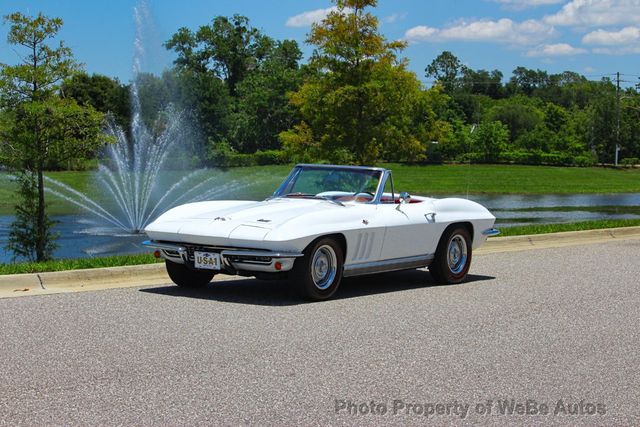
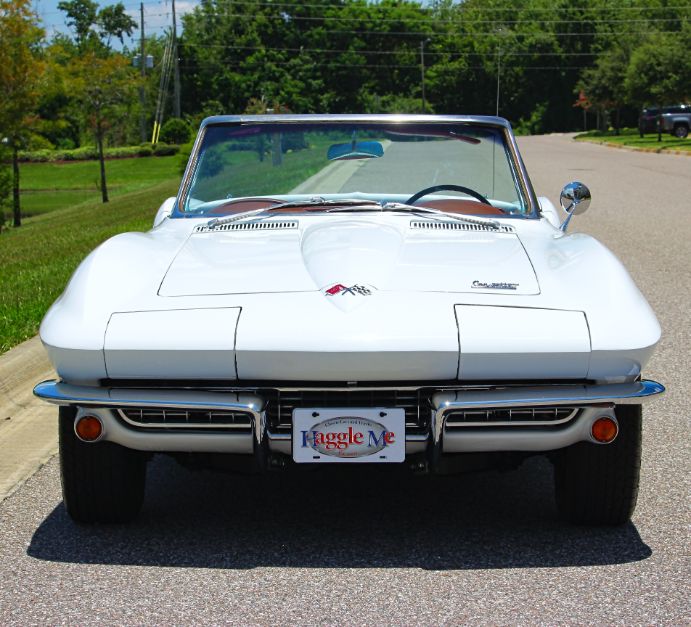
The early Corvette was, by nearly every objective measure, a problematic vehicle. It came from the factory with a Blue Flame Six-cylinder engine — a truck-derived unit — paired with a two-speed Powerglide automatic transmission. For a car marketed as a sports car, these were crippling compromises. Sales were poor. Ford's forthcoming Thunderbird threatened to make the Corvette look like a misstep. There were serious discussions inside GM about cancelling the program entirely.
Duntov understood that the Corvette's survival depended on making it actually fast. He campaigned internally for the small-block V8, which arrived in the Corvette for 1955. He pushed for a three-speed manual transmission. He worked on the suspension geometry to make the car handle in a way that matched its visual promise. And he did all of this not by running simulations or studying data in an office, but by driving the cars — on test tracks, on public roads, at speed whenever and wherever he could arrange it.
In 1956, Duntov drove a modified Corvette to a two-way average speed of 150.583 mph at Daytona Beach, a record that received national press coverage and did more for the Corvette's performance image than any advertising campaign could have managed. He was not supposed to be there as a factory driver; GM's policy at the time discouraged direct racing involvement. He went anyway, in a capacity that could be described as semi-official at best, and came back with a number that Chevrolet's marketing department was delighted to use.
The full scope of Duntov's legacy with the Corvette encompasses thirty years of development — from the early struggles to make the car viable to the sophisticated mid-engine concepts he was still pursuing at the end of his tenure. But the essential contribution was simpler than any list of engineering achievements can capture: he believed the car could be great, and he was willing to fight for that belief inside one of the largest corporations in the world.
"If you want to make a sports car, you must make a sports car. Not a sports-car-looking car."
— Zora Arkus-Duntov, paraphrased from multiple period interviews
The Man Behind the Myth
The question of credit for the Corvette's creation is more complicated than popular history often acknowledges. Harley Earl designed the original car. Ed Cole championed its production and brought the V8 that gave it teeth. Bill Mitchell shaped its visual identity through successive generations. Duntov's contribution was different from any of these: he was the one who insisted, persistently and often inconveniently, that the car's performance had to match its appearance.
The title "Father of the Corvette" is one that Duntov himself neither sought nor particularly encouraged, and the question of whether it is accurate is explored at length in our piece on the Father of the Corvette myth. What is less contested is that the Corvette as it exists — as a car taken seriously by serious drivers — owes more to Duntov's stubbornness than to any other single factor. He retired from GM in 1975, having spent more than two decades ensuring that the car was worthy of the reputation it had acquired. He died in April 1996, at the age of eighty-six.
He was inducted into the Corvette Hall of Fame in its inaugural class. He is buried in Milford, Michigan, not far from the test track where he spent so many years driving cars that were not yet good enough and making them better.
| Milestone | Year | Significance |
|---|---|---|
| Born, Brussels, Belgium | 1909 | Christmas Day; raised between Russia and Germany |
| Engineering degree, Charlottenburg | early 1930s | Foundation in mechanical engineering |
| Ardun heads introduced | 1947 | OHV conversion for Ford flathead; established US reputation |
| Hired by General Motors | 1953 | Joined GM Research Staff under Ed Cole |
| Le Mans, Allard-Cadillac | 1954 | Third in class; raced independently of GM role |
| Daytona speed record | 1956 | 150.583 mph average; national press coverage |
| Retired from GM | 1975 | After more than two decades shaping the Corvette |
| Died, Milford, Michigan | 1996 | Age 86; Corvette Hall of Fame, inaugural class |
Sources and notes
- National Corvette Museum — History — overview of Corvette development history including Duntov's contributions
- SAE Technical Paper 650562 — Duntov's own technical paper on Corvette development, presented 1965
- Motor Trend — Corvette History — period coverage of Corvette milestones and engineering evolution
- Hemmings Motor News — Zora Arkus-Duntov — biographical profile with period interview quotes
- New York Times — Obituary, April 1996 — contemporaneous obituary with biographical details