America's Racer at La Sarthe: How Corvette Built a Le Mans Legacy
No American sports car has left a deeper mark on the 24 Hours of Le Mans than the Chevrolet Corvette. From the pioneering efforts of Briggs Cunningham in the early 1960s to the factory-backed Corvette Racing program that has dominated GT competition since the turn of the millennium, the Chevrolet Corvette accumulated a class-win record that no other American GT car can match. What began as an underdog effort on European soil became one of motorsport's most enduring success stories.
The Cunningham Era: Corvettes at Le Mans in the 1960s
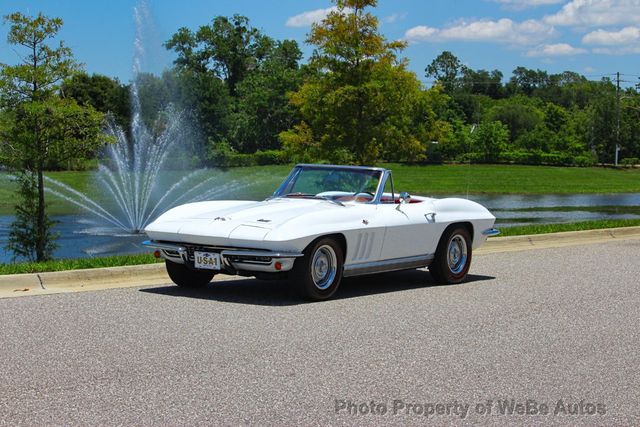
The Corvette's relationship with Le Mans predates any factory racing program by four decades. In 1960, wealthy American sportsman Briggs Cunningham entered three Corvettes — two production-based cars and one modified roadster — in the GT class at La Sarthe. The effort was ambitious for its time: American production cars had rarely been entered seriously in European endurance racing. John Fitch and Bob Grossman brought one of the Corvettes home in eighth place overall and first in the GT class, marking the model's very first class victory at Le Mans.
Cunningham returned to Le Mans with Corvettes again in subsequent years, reinforcing the car's credibility as a serious GT competitor in international competition. These early outings were significant not just for the results but for the image they established — that an American V8 sports car could hold its own against European machinery over 24 grueling hours.
The Modern Corvette Racing Program Takes Shape: 2001 and the C5-R
After decades without a factory-backed presence, Chevrolet and Pratt & Miller Engineering launched the modern Corvette Racing program in 1999. The car was the C5-R, a purpose-built GT race car derived from the fifth-generation Corvette. After establishing itself in American Le Mans Series competition, the team made its first appearance at the 24 Hours of Le Mans in 2000, where both cars retired. The program regrouped, and in 2001 everything clicked.
At the 2001 24 Hours of Le Mans, the No. 63 Corvette C5-R driven by Ron Fellows, Johnny O'Connell, and Chris Kneifel took GTS class honors. It was the beginning of a dynasty. The C5-R was a formidable machine: it used a 7.0-liter LS-based V8 producing around 600 horsepower, and it was engineered to run at high speed for extended periods with minimal drama. The team won the GTS class again in 2002 and 2003, establishing early dominance in its category.
The C5-R era produced four GTS/GT class wins at Le Mans between 2001 and 2004, laying the foundation for what would become one of the most consistent GT racing programs in the world. For a deeper look at the full Corvette Racing history, see our Corvette Racing history overview.
The C6-R and C7-R: Extending the Win Streak
When the sixth-generation Corvette arrived, Pratt & Miller built the C6-R to replace the aging C5-R. The new car debuted in 2005 and immediately continued where its predecessor left off. The C6-R era, which ran from 2005 through 2013, produced multiple GT class victories at Le Mans and cemented the program's reputation as the benchmark GT operation in endurance racing.
The C6-R's Le Mans wins came in the GT1 and later GT class (as the ACO reorganized its categories during this period). Oliver Gavin, Olivier Beretta, and Jan Magnussen were among the key drivers who contributed to class victories during the C6-R years. The program's consistency was remarkable: Corvette Racing rarely failed to finish at Le Mans, and when the cars did finish, they almost always contended for class honors.
In 2014, the C7-R made its Le Mans debut. The seventh-generation race car competed in the GTLM class and continued Corvette Racing's winning tradition. The C7-R era saw class victories in 2015 and beyond, with Oliver Gavin and Tommy Milner forming one of the program's most celebrated driver pairings. The car's distinctive appearance — lower, wider, and more aerodynamically aggressive than its predecessors — made it one of the most recognizable GT cars of its generation.
| Era | Car | Class | Le Mans Wins |
|---|---|---|---|
| 1960 | Corvette (Cunningham) | GT | 1 |
| 2001–2004 | C5-R | GTS/GT | 4 |
| 2005–2013 | C6-R | GT1/GT | Multiple |
| 2014–2022 | C7-R / C8.R | GTLM/GTE | Multiple |
Key Milestones and Records
Corvette Racing's Le Mans record is defined by a series of landmark achievements that separate it from every other American GT program in history.
- First GT class win: 1960, with the Cunningham-entered Corvette driven by John Fitch and Bob Grossman.
- First factory-era class win: 2001, with the C5-R in the GTS category, launching the modern dynasty.
- Consecutive class wins: The program assembled back-to-back GTS victories in 2001, 2002, and 2003, a streak that demonstrated consistent pace and reliability over successive years at La Sarthe.
- Most successful American GT car at Le Mans: Corvette Racing's total tally of class victories across all eras makes the Corvette the most decorated American production-based GT car in the race's history.
- Driver consistency: Oliver Gavin is among the most capped Corvette drivers at Le Mans, completing more than a dozen appearances with the program across the C5-R, C6-R, and C7-R eras.
"Every year we come to Le Mans, we come to win. Not just to finish, not just to be competitive — to win. That's the Corvette Racing standard."
The program also reached the milestone of its 100th race start — a landmark few GT programs in history have achieved — and it did so while maintaining one of the highest finish rates in the GT field. Reliability, not just outright speed, became the Corvette Racing hallmark. The team's ability to run 24-hour stints with minimal unscheduled stops gave it a strategic advantage that pure pace alone could not replicate.
America's GT Benchmark
What makes Corvette Racing's Le Mans record genuinely historic is the continuity of it. Most programs produce a golden era, a few years of success, and then fade. Corvette Racing has been competitive at Le Mans across five different decades and three distinct race car generations, winning class honors in the GTS, GT1, GT, GTLM, and GTE Pro categories as the ACO's class structure evolved around it.
The program proved that American engineering — a big V8, rear-wheel drive, and a production-derived chassis — could compete at the highest level of GT endurance racing against dedicated European manufacturers including Ferrari, Porsche, Aston Martin, and BMW. It won not through exotic technology but through meticulous preparation, strategic racing, and driver consistency.
For enthusiasts of American motorsport history, Corvette Racing at Le Mans is not merely a footnote. It is the central chapter of a 60-year story that began with Briggs Cunningham's gentlemanly GT effort in 1960 and continued through a factory program that turned La Sarthe into something close to home territory. The Corvette's class-win record at the 24 Hours of Le Mans stands as the most compelling evidence that American GT cars belong on the world stage — and can dominate it.
Sources and notes
- Automobile Club de l'Ouest (ACO) — official 24 Hours of Le Mans results archive, lemans.org
- Corvette Racing official team history and press releases, corvetteracing.com
- Henry, Alan. Le Mans: The Official History of the World's Greatest Motor Race. Haynes Publishing, 2000.
- Starkey, John. Corvette Racing: The Factory Race Cars Since 1999. David Bull Publishing, 2009.
- Racing Reference / Racing Sports Cars database — historical GT class results for Le Mans 1960–2024, racingsportscars.com
- Pruett, Marshall. "Corvette Racing at Le Mans: A Legacy Built on Reliability." Racer Magazine, various issues 2001–2022.