A Title with Three Claimants
Ask almost anyone with a passing interest in American automotive history who created the Corvette, and the answer comes back quickly: Zora Arkus-Duntov. "The Father of the Corvette," the legend says. It is a tidy story — the Belgian-born engineer who loved racing and believed in the sports car ideal, who arrived at General Motors in 1953 and shaped the Chevrolet Corvette into the icon it became. The problem is that Duntov did not create the Corvette. By the time he walked through the doors at GM, the car had already been shown to the public, already entered production, and already begun accumulating the identity problems that would nearly kill it.
The "father" question turns out to be a question about what we value in the history of an object. Do we credit the person who conceived it? The one who made it viable? Or the one who gave it meaning? In the Corvette's case, those roles belong to three different men, and the fact that only one of them is remembered as "the father" tells us as much about how automotive mythology works as it does about the car itself.
Harley Earl: The Man Who Dreamed the Car Into Existence
The Corvette began not in an engineering bay but in the imagination of Harley Earl, GM's legendary design chief. Earl had been watching European sports cars gain cultural traction in America after World War II — particularly the MG, the Jaguar, and the Healey — and he believed General Motors was missing something. He reportedly sketched his initial concept for an American sports car around 1951 and pushed it through the GM system with the authority of a man who had spent decades transforming automotive design from an afterthought into a centerpiece of American consumer culture.
The result debuted at the 1953 Motorama in New York, a traveling GM showcase that functioned as a theater of automotive ambition. The Corvette drew enormous crowds. Period accounts describe visitors pressing against the velvet ropes, astonished by the two-seat fiberglass body and the long, low proportions unlike anything an American manufacturer had shown before. Earl had done what no one else at GM had seriously attempted: he had made a sports car that looked the part. Within months, the Corvette was in production.
Without Earl, there is no Corvette. That is not hyperbole — it is a statement about institutional reality. The car faced skepticism inside GM from the beginning, and it required Earl's considerable political weight to shepherd it from concept to showroom. He was also the person who insisted on fiberglass construction, which gave the car its distinctive character and its early production economics. Earl's claim to the title of "father" rests on the most fundamental act of creation: he made the car exist when it did not exist before.
And yet Earl's Corvette was, in its first incarnation, deeply flawed as a sports car. It came with a six-cylinder engine borrowed from the family sedan, a Powerglide automatic transmission, and side curtains instead of roll-up windows. European sports car owners, the very audience Earl had been trying to attract, were unimpressed. The car looked exciting. It was not particularly exciting to drive.
Ed Cole: The Engineer Who Made It Viable
The name Ed Cole rarely appears in the romantic telling of the Corvette story, which is a significant omission. Cole arrived as Chevrolet's chief engineer in 1952, the same year the Corvette was being developed, and he is the person most responsible for the decision that saved the car from cancellation: putting a V8 under the hood.
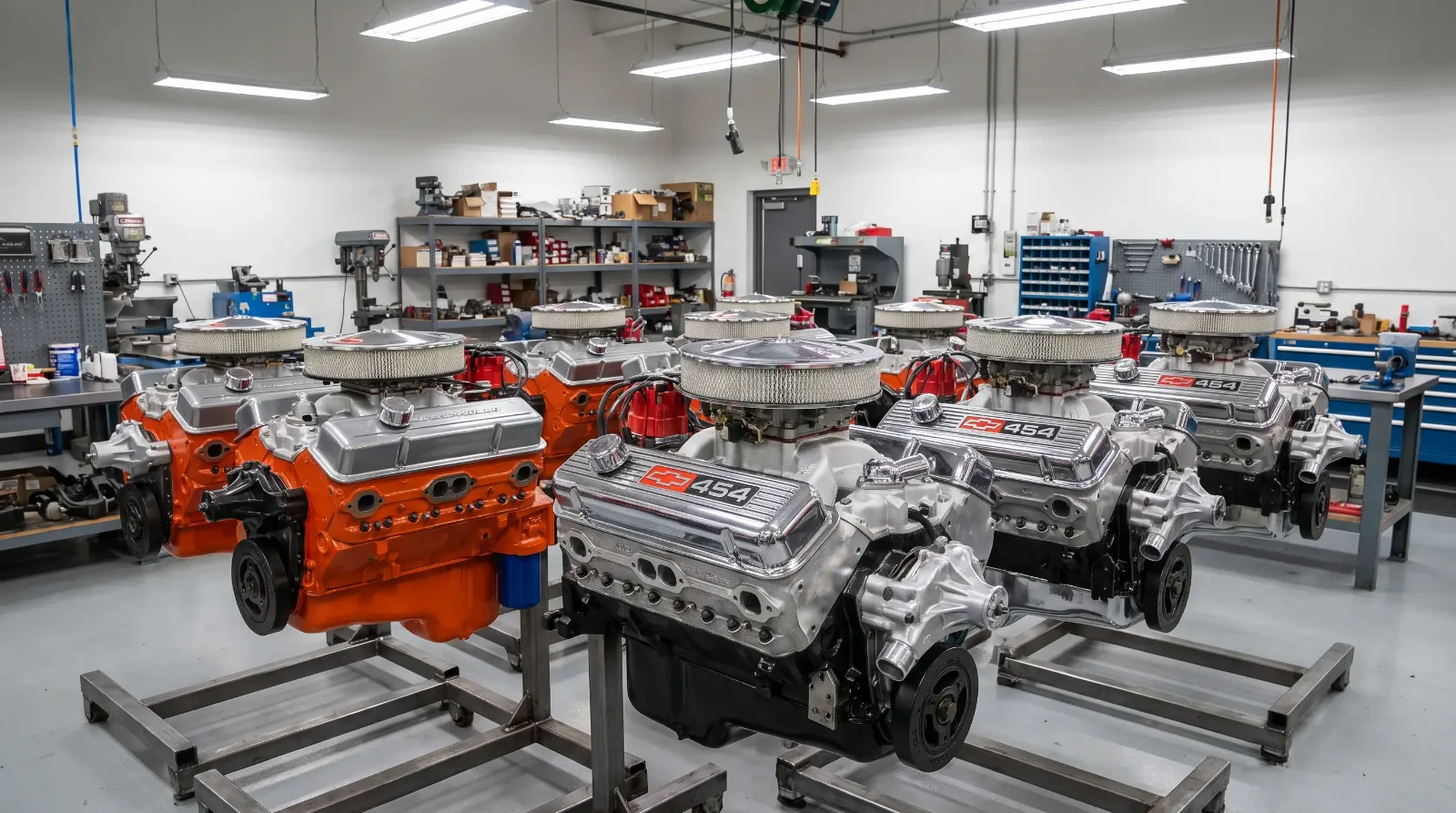
The 265 cubic-inch small-block V8 that Cole's team developed and installed in the 1955 Corvette was, in retrospect, one of the most consequential powertrain decisions in American automotive history. It transformed the Corvette from an underpowered styling exercise into something that could reasonably compete with the European sports cars it had been designed to emulate. More importantly, it gave the car a reason to exist in the market at a moment when its survival was genuinely uncertain. Sales in 1954 had been poor enough that cancellation remained a live option; the V8, combined with the three-speed manual transmission that accompanied it, gave dealers something to sell and enthusiasts something to want.
"The small-block V8 did not merely improve the Corvette. It defined what kind of car the Corvette was going to be — and that definition has never fundamentally changed."
— Emily Chen
Cole went on to become one of GM's most consequential executives, rising to president of the company. His contributions to the Corvette's survival are well documented in the engineering record, even if they are less celebrated in popular memory. He is overlooked in the "father" debate partly because his work was institutional — the work of an engineer running a department, not the work of a charismatic advocate — and partly because he moved on to larger responsibilities while others remained closely identified with the car.
Duntov: The Architect of Identity
Zora Arkus-Duntov joined GM as an engineer in 1953, drawn partly by the Corvette itself. He had seen the car at the Motorama and reportedly written a memo to GM management outlining the car's potential and its current shortcomings. That memo was prescient, and it established him early as someone who understood not just what the Corvette was but what it could become. His background included time as a racing driver and an engineer who had worked on the Ardun overhead-valve conversion for Ford flatheads — he knew performance engineering from both inside the car and behind the wheel.
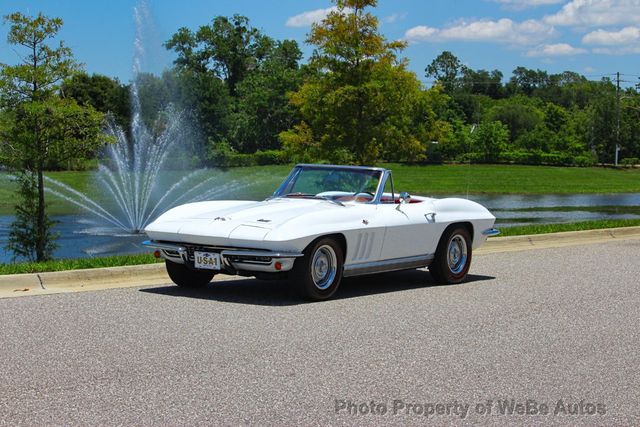
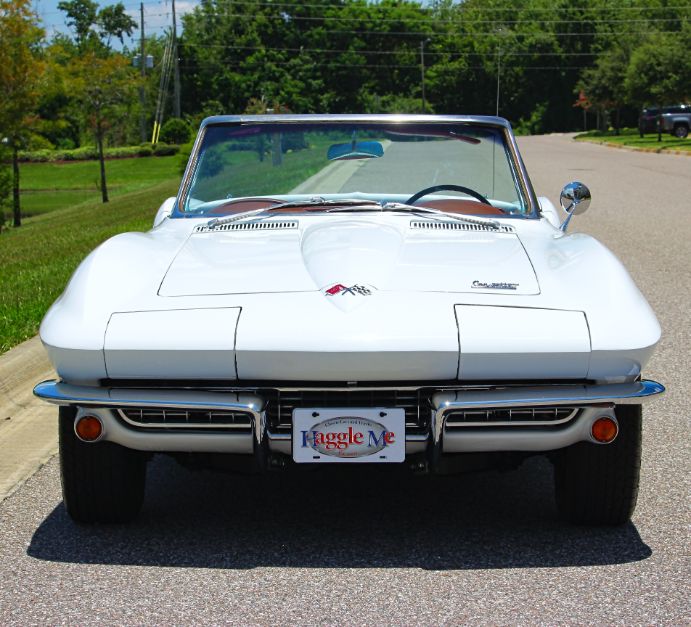
What Duntov did over the following two decades was construct an identity for the Corvette as a serious performance machine. He championed the car's participation in racing, particularly at Sebring. He developed the famous high-lift camshaft that bore his name — the "Duntov cam" — which became a performance option for enthusiasts. He pushed for independent rear suspension, which arrived with the C2 in 1963 and transformed the car's handling. He lobbied internally, sometimes against significant institutional resistance, for engineering decisions that would make the car credible on track and on road.
He also worked the press with skill. Duntov's 1956 Daytona speed run, in which he drove a modified Corvette to over 150 miles per hour on the beach, was covered widely and repositioned the car in the public imagination. Period accounts suggest Duntov understood the value of visibility — that a sports car's reputation was built as much through demonstration as through specification sheets. He was not merely an engineer; he was, in a meaningful sense, the Corvette's first product champion.
Later in his career, Duntov became the primary advocate for a mid-engine Corvette, a project that occupied him from roughly the late 1960s until his retirement in 1975 and that would not reach production until the C8 generation arrived in 2020, nearly half a century later. That ambition, too, is part of his legacy — not just what the car was, but what he believed it should become.
Why "Father" Is the Wrong Frame — and Why It Stuck Anyway
The three-father model — Earl as conceiver, Cole as savior, Duntov as identity architect — is more accurate than the single-father story, but it is also less satisfying. Myths about objects prefer singular origin points. The lone genius who brought something into being is a more durable narrative than the institutional committee that developed it over a decade, subject to budget pressures, executive turnover, and competitive threats from Ford.
The title "Father of the Corvette" attached to Duntov for several reasons that have more to do with narrative mechanics than historical precision. He was the most vocal advocate for the car's sporting identity at a time when that identity was contested. He remained closely associated with the Corvette throughout his GM career, while Earl retired in 1958 and Cole rose to responsibilities that took him far from any single vehicle program. Duntov outlived Earl and remained a visible public figure — attending shows, giving interviews, connecting with enthusiasts — long after Cole had moved on. He also, frankly, worked at positioning himself and the car simultaneously, which is not a criticism so much as an observation about how reputations are built.
There is also something true in the title, even if it is not literally accurate. A car's identity — what it stands for, what its owners believe they are buying, what its place is in the culture — is not determined by the person who draws the first sketch. It is determined by the person who most persuasively defines its purpose. Duntov did that work. The Corvette's legacy as a performance machine, the way enthusiasts have related to it across seven generations of the car, reflects the framework Duntov established more than it reflects Earl's stylistic vision or Cole's engineering decisions. Those contributions were necessary. Duntov's contribution was definitional.
This distinction matters because it reframes what we mean when we call something a "father." If the term means "first cause," Earl deserves it. If it means "the person whose removal would most alter the object's identity," Duntov has the stronger claim. The first Corvette off the line in 1953 was already a Corvette before Duntov touched it. But the Corvette that enthusiasts have loved and argued about and raced and collected for seven decades — the performance car, the sports car, the American answer to Ferrari — that is very largely his construction.
The question of who deserves to be called the father of the Corvette is, in the end, a question about what we think matters in the history of a car. Did it matter more that the car existed, or that it meant something? For the broader story of the Corvette in American culture, meaning won. And meaning, in this case, was Zora's department.
The title is a myth. But like most good myths, it is pointing at something real.
Sources and notes
- MotorTrend: Complete Corvette History — comprehensive timeline of the Corvette from 1953 through the C8 generation
- Hagerty: Zora Arkus-Duntov and the Corvette — editorial examination of Duntov's role and the "father" title
- National Corvette Museum: Corvette History — institutional history including the Motorama debut and early production years
- Car and Driver: Corvette History — production history covering the V8 transition under Ed Cole and subsequent engineering milestones
- AutoWeek: Zora Arkus-Duntov Biography — biographical account of Duntov's career, including his background before GM and the Daytona speed run