Jim Hall and Hap Sharp: Building Chaparral in the Texas Desert
In the early 1960s, two wealthy Texan oilmen with a passion for motorsport set up shop in Midland, Texas — about as far from the racing circuits of Europe as you could get. Jim Hall and Hap Sharp founded Chaparral Cars in 1962 with a simple ambition: to build and race cars that were faster than anything else on the American scene. What they achieved over the next decade would reshape motorsport engineering on both sides of the Atlantic.
Hall was the driving force behind the technical program. A graduate of Caltech with a degree in mechanical engineering, he approached racing with a methodical, almost scientific mindset. He wasn't content to bolt together proven components in conventional ways. Instead, he questioned every assumption — about aerodynamics, powertrain layout, and suspension — and often arrived at solutions that left rival engineers scratching their heads. Sharp, a fellow Texan and accomplished driver in his own right, provided crucial financial and competitive support during the team's formative years.
The team's first car, the Chaparral 1, was essentially a learning exercise. The Chaparral 2, which debuted in 1963, was where the real story began — and where Chevrolet's Corvette heritage became inseparable from the Chaparral legend.
The Corvette Small-Block at the Heart of Chaparral
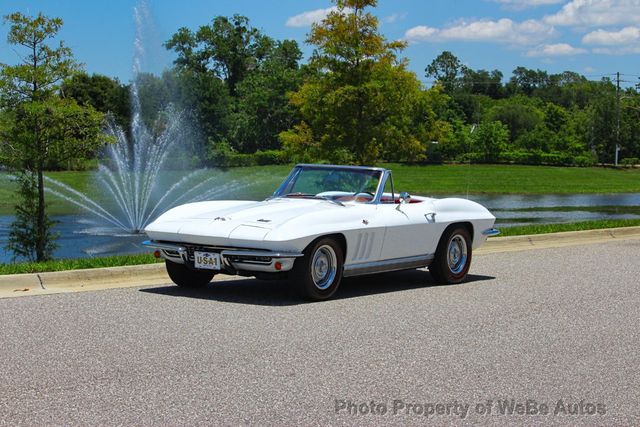
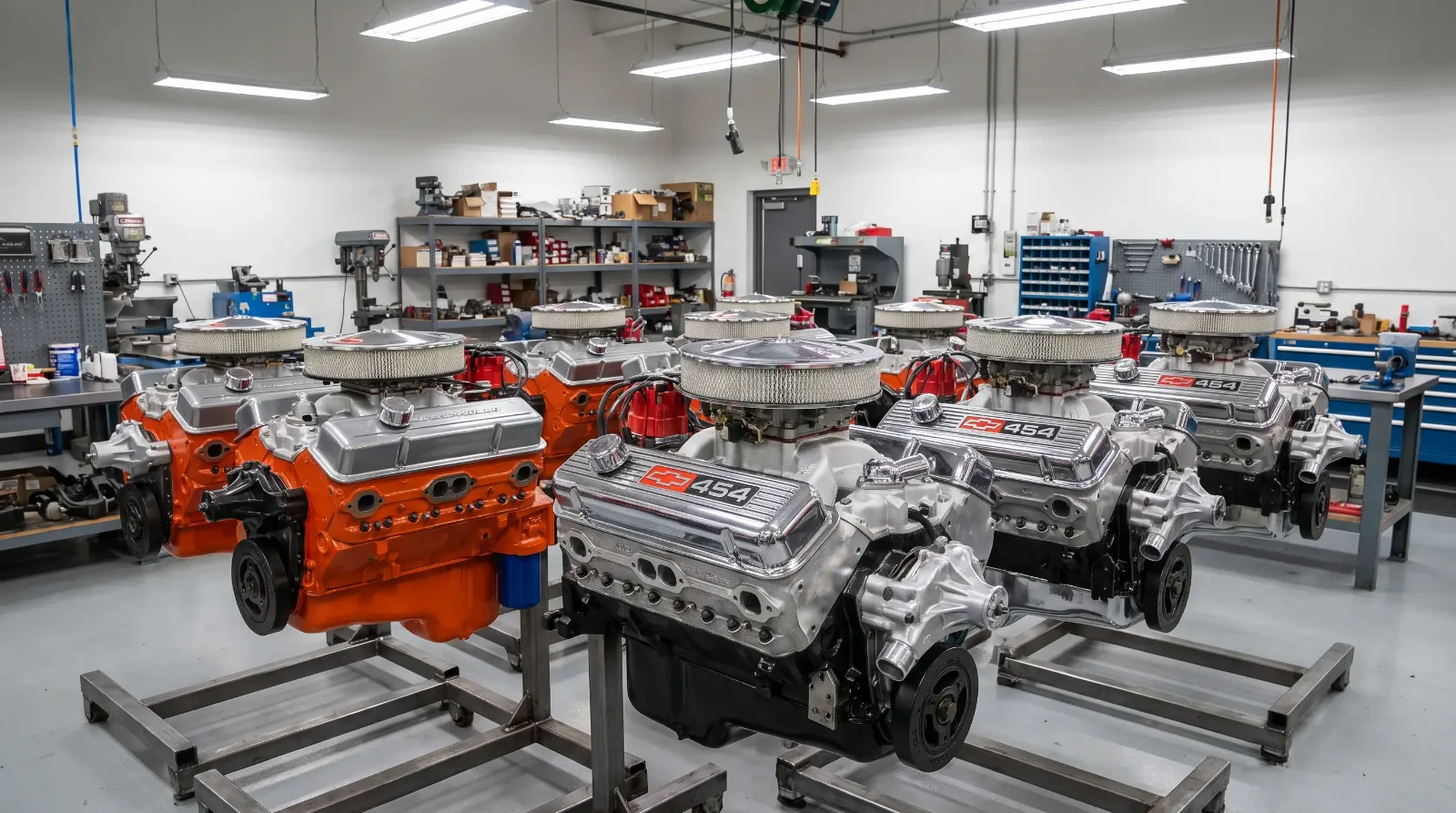
The Chaparral 2 was built around a fiberglass monocoque chassis of Hall's own design, but it needed an engine. Hall turned to Chevrolet's small-block V8 — the same family of engines that powered the Corvette's racing history throughout the 1950s and into the 1960s. The small-block Chevy, displacing around 327 cubic inches in early Chaparral applications, was a known quantity: reliable, compact, relatively lightweight, and with enormous tuning potential.
The relationship between Hall and General Motors was never a formal factory program in the way that Ford's Total Performance effort was managed from Dearborn. GM was officially out of racing following the Automobile Manufacturers Association ban of 1957. But unofficially, and through a well-understood wink-and-nod arrangement, Chevy engineers provided Hall with access to technical knowledge, machined components, and engineering support that went well beyond what any private customer could expect.
Zora Arkus-Duntov, the legendary chief engineer of the Corvette program and one of the most important figures in American performance car history, was a key figure in this relationship. Duntov saw Hall's program as a legitimate extension of Corvette racing development — a way to test ideas and build a performance reputation without GM being officially involved. Engine components developed for the Chaparral often had direct parallels in what would later appear in high-performance Corvette applications.
Engineering Breakthroughs: Automatic Transmission, Wings, and Ground Effects
What set Chaparral Cars apart from every contemporary competitor was not just raw horsepower — it was the willingness to rethink fundamental assumptions about how a racing car should work. Hall introduced a series of innovations that were, at the time, either ridiculed or quietly copied.
The most immediately controversial was the automatic transmission. Conventional racing wisdom held that a manual gearbox, giving the driver full control over gear selection, was always preferable. Hall disagreed. Working with General Motors' Hydra-Matic division, he developed a two-speed automatic transmission specifically for racing use. The argument was straightforward: an automatic allowed the driver to keep both hands on the wheel during cornering, improved consistency of power delivery, and eliminated the weight and mechanical complexity of a conventional clutch and manual gear change. The system was essentially a development of the same Hydramatic units used in GM road cars, optimized for the sustained high loads of endurance racing.
The Chaparral 2E, introduced in 1966, took aerodynamics to a place no racing car had gone before. Hall mounted a large, adjustable wing high above the rear of the car on struts attached directly to the uprights, bypassing the chassis entirely. The driver could adjust the wing's angle of attack using a foot pedal — flattening it for straight-line speed and increasing its angle in corners to generate downforce. This was not an incremental refinement. It was a conceptual leap that fundamentally changed how engineers thought about the relationship between a racing car and the air moving around it.
The power for all of this came from big-block Chevrolet engines as Chaparral moved into the Can-Am series in the late 1960s. The Can-Am had no engine displacement limit, and Hall responded with enlarged Chevy V8s of up to 7.0 liters. These units drew directly on the same engine families being developed for the Corvette and other high-performance GM vehicles, with modifications to cooling, oiling, and breathing that reflected lessons learned both on the track and in collaboration with Chevrolet engineers.
"We were always trying to find the areas where the rules didn't say you couldn't do something. If the rules didn't say you couldn't have a wing, then maybe you should have a wing."
— Jim Hall, on Chaparral's approach to technical innovation
Hall's Racing Record: Sebring, USRRC, and Can-Am
The results validated the engineering. Hall and the Chaparral team compiled an impressive record across the major American road racing series of the 1960s.
At Sebring — the 12 Hours of Sebring, America's oldest sports car endurance race — Hall was a regular front-runner. He took a class win at the 1965 race and finished overall on multiple occasions, demonstrating that the Chaparral was not merely a test bed for exotic ideas but a genuinely competitive racing machine. Sebring's mixture of long straights and technical infield sections suited the Chaparral's balance of power and aerodynamic grip.
In the United States Road Racing Championship, which served as the primary domestic sports car series before the Can-Am was established, Hall was a dominant presence. He won the USRRC championship in 1964 and 1965, establishing Chaparral as the benchmark for American sports car constructors. The combination of small-block Corvette power, sophisticated chassis engineering, and the early aerodynamic experiments gave the Chaparral 2 advantages that more conventionally engineered cars simply could not match.
The Can-Am series, which ran from 1966, brought the biggest engines and the most intense competition Hall had faced. The series attracted the best Formula 1 teams and drivers — Bruce McLaren, Denny Hulme, John Surtees — who recognized the Can-Am's lack of regulations as a genuine opportunity. Hall answered with the Chaparral 2E and its high-mounted wing, and then with the 2F, which brought the concept to sports car endurance racing including a strong run at Le Mans in 1967. While outright Can-Am championships eluded Hall, individual race victories and the consistent technical respect from rival teams underlined that Chaparral was operating at the frontier of what was possible.
Legacy: How Chaparral Changed Racing and the Corvette Connection
The innovations that emerged from Midland, Texas in the 1960s did not stay in Texas. The aerodynamic concepts pioneered by Hall — high-mounted wings, adjustable downforce, the idea that a car's interaction with airflow was as important as its engine or suspension — became fundamental to Formula 1 by the late 1960s and have remained central to motorsport engineering ever since. Colin Chapman at Lotus and the major Formula 1 constructors were paying close attention to what Hall was doing.
The Corvette connection ran beneath all of it. The engines that powered Chaparral's greatest achievements were Chevrolet units, developed within the same engineering culture and drawing on the same performance knowledge base that made the Corvette America's sports car. The informal collaboration between Hall and GM engineers produced benefits in both directions: the Chaparral program stress-tested engine components under race conditions, while the Corvette program absorbed lessons about sustained high-performance operation.
Chaparral Cars holds a unique place in American motorsport history — not just for its results, but for its demonstration that a small, independently minded team operating outside the traditional centers of racing could change the sport permanently. Jim Hall's engineering ambition, powered by Corvette-derived V8s built in the heart of Texas, remains one of the defining stories of 1960s motor racing.
Sources and notes
- Falconer, Richard, and Doug Nye. Chaparral: Can-Am and Prototype Racing Cars from Rattlesnake Raceway. Motorbooks International, 1992.
- Golenbock, Peter, and Greg Fielden. The Stock Car Racing Encyclopedia. Macmillan, 1997. (Background on American road racing context.)
- Ludvigsen, Karl. Corvette: America's Star-Spangled Sports Car. Princeton Publishing, 1978. (Duntov's relationship with independent racing teams.)
- Sports Car Club of America. USRRC championship records, 1963–1968. Available at scca.com historical archives.
- Nye, Doug. Can-Am. Hazleton Publishing, 1986. (Comprehensive race-by-race Can-Am history including Chaparral entries.)
- Zora Arkus-Duntov papers. Cited in multiple Corvette engineering histories regarding the Chaparral program and GM's unofficial racing involvement in the 1960s.