A Racing Engine in Dealer Clothing
In the spring of 1967, a customer could walk into a Chevrolet dealership, check a single box on an order form, and drive away in something that bore almost no resemblance to a street car. The box was RPO L88. What it unlocked was a 427 cubic inch engine built to race — aluminum heads, a radical camshaft, a Holley carburetor sized for high-octane fuel, and compression so high that running it on pump gasoline would destroy it. Chevrolet listed it at 430 horsepower. Nobody believed that number. Nobody was supposed to.
The Chevrolet Corvette had always carried racing pretensions, but the L88 was something different. It was a factory-built race engine delivered with a warranty card. That same year, one was pointed toward Le Mans.
Engineering the L88: What Was Under That Hood
The L88 option did not arrive in isolation. It was the culmination of years of big-block Corvette development — the Mark IV engine family refined through racing programs that Chevrolet officially denied and unofficially funded throughout the early 1960s. By 1967, the pieces had come together into something extraordinary.
The Mechanical Architecture
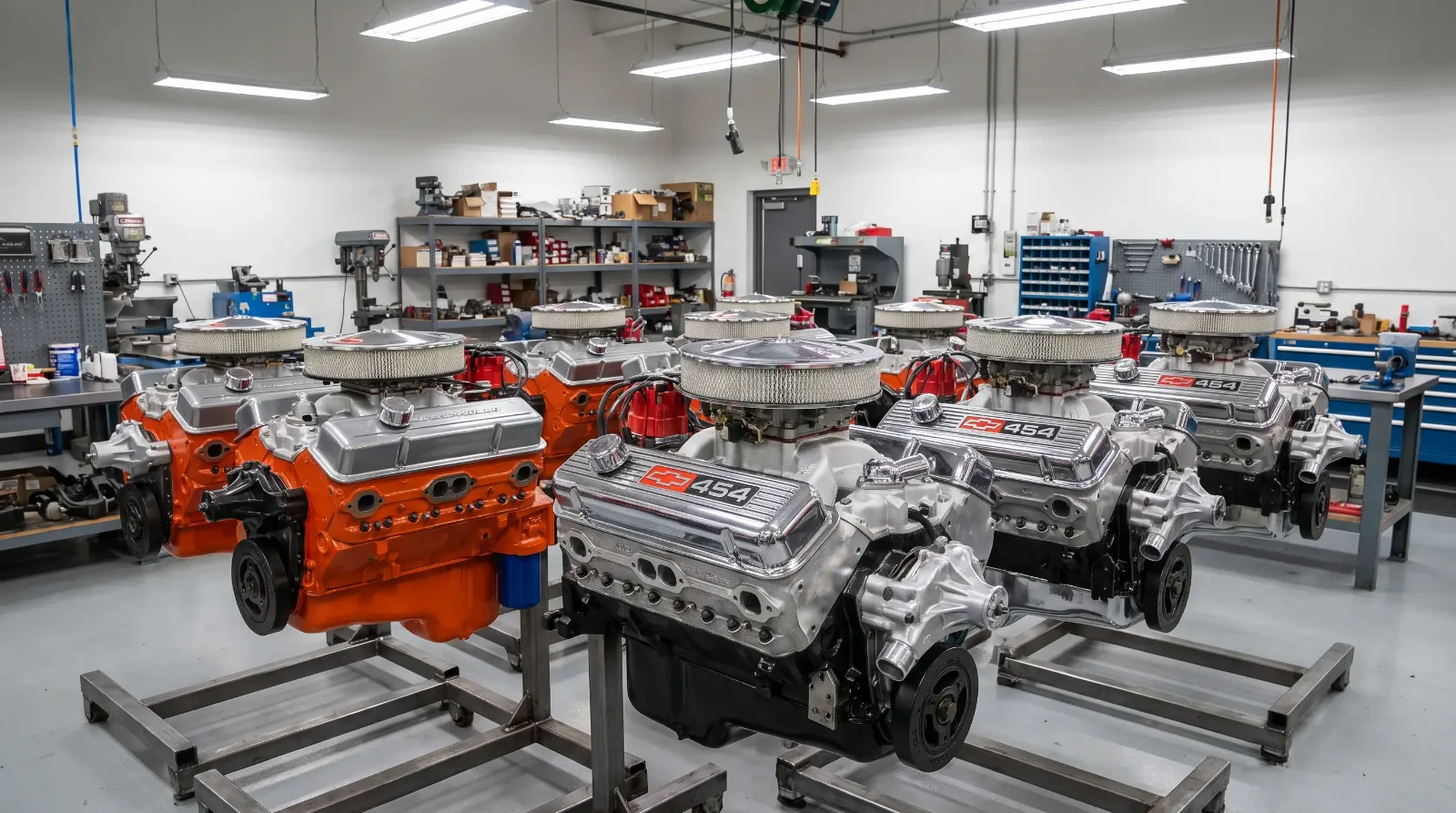
The defining feature of the L88 was its aluminum cylinder heads, borrowed directly from the racing program. Cast iron was heavier and absorbed heat differently; the aluminum units shed weight and ran cooler under sustained racing conditions. The combustion chambers were designed for high compression — period sources indicate a ratio of approximately 12.5:1, though some accounts place it slightly higher. Either figure was far beyond what any regular-grade or even premium pump gasoline could handle without detonating violently.
This was deliberate. Chevrolet's own documentation discouraged street use explicitly. The engine required 103-octane racing fuel to function without damage. A dealer could sell you one, but Chevrolet made clear that it was not intended for daily driving. The compression alone enforced the point.
The camshaft profile was equally aggressive — a hydraulic lifter setup with timing and duration figures suited to high-rpm operation rather than low-speed street tractability. Idle quality was rough. Throttle response below 3,000 rpm was unremarkable. Above that, the engine came alive in a way that few road cars of any era could match.
The induction system used a single Holley four-barrel carburetor on an aluminum intake manifold. The carburetor's sizing was tuned for wide-open-throttle operation at racing fuel flow rates, not for the partial-throttle driving that characterized normal road use. An open-element air cleaner — almost non-existent as a filtering device — allowed maximum airflow at the expense of any pretense of street refinement.
The Power Question
Chevrolet published 430 horsepower as the L88's output. The figure was almost universally understood to be understated, and period testing and racing results suggest the engine was producing significantly more — estimates in contemporary accounts ranged upward from 500 horsepower, with some sources suggesting considerably higher output on racing fuel at high rpm. The deliberate underrating served a purpose: it discouraged insurance-conscious buyers who would have been poorly served by a racing engine in traffic, and it maintained a degree of plausible deniability in an era when the Automobile Manufacturers Association's voluntary racing ban created awkward questions about factory involvement in motorsport.
| Specification | Detail |
|---|---|
| Displacement | 427 cubic inches (7.0L) |
| Cylinder heads | Aluminum (racing-derived) |
| Compression ratio | Approximately 12.5:1 (period sources vary) |
| Carburetion | Single Holley four-barrel |
| Advertised output | 430 hp (widely understood as understated) |
| Fuel requirement | 103-octane racing fuel |
| Production (1967) | Approximately 20 units (exact figure varies by source) |
Twenty Cars: The Rarity of the 1967 L88
How many L88 Corvettes were built in 1967? Accounts vary, and researchers have reached different conclusions depending on build records, shipping documents, and dealer invoices consulted. The number most often cited is approximately 20 cars, though the exact figure has been disputed in Corvette research literature. What is not disputed is that production was vanishingly small.
This was partly by design. The combination of the engine's incompatibility with street use, its substantial price premium over the standard 427 options, and Chevrolet's active discouragement of casual purchases meant that L88 orders came primarily from buyers who knew exactly what they were getting: a race car that required a license plate. Teams, racers, and a handful of serious enthusiasts placed those orders. The cars that resulted became the foundation of Corvette's most successful period in American road racing.
Le Mans 1967: The L88 Goes to France
The 24 Hours of Le Mans in 1967 was one of the great races of the decade. Ford's GT40 program was at its apex, locked in a factory battle with Ferrari that had defined the previous two years. Into this environment came a privateer entry — an L88 Corvette, entered not by a factory effort but by a team operating with the means and ambition to put an American production-based car against the best endurance machinery in the world.
The details of the specific entry are, accounts suggest, somewhat scattered across period sources. What the available record indicates is that the car ran — and reportedly ran with genuine competitiveness for a privateer effort — before ultimately retiring from the race. The exact cause of retirement varies depending on the source consulted; mechanical failure is the commonly cited explanation, as it is for the majority of Le Mans retirements in any era. The car did not finish.
"The L88 at Le Mans wasn't a publicity stunt. These were serious racers who believed the engine could do something credible over 24 hours. The fact that it didn't finish doesn't change what it was or what it was capable of."
— Period assessment, Corvette racing literature
What matters about the 1967 Le Mans entry is not its outcome but its context. The car was entered in one of the most demanding endurance events in the world, against machinery developed by major factory programs with budgets and engineering resources that dwarfed anything a privateer could bring. That an L88 Corvette — a car sold through dealer showrooms — was considered a viable entry at all speaks to what Chevrolet had built.
For the broader story of Corvettes at Le Mans, the 1967 effort sits within a longer tradition — the Corvette's Le Mans history stretches back to Briggs Cunningham's 1960 entry, and the L88 represented the most technically capable American production car yet brought to the circuit.
The Broader Racing Career: SCCA and Beyond
Le Mans was a single data point in the L88's racing story. The engine's natural habitat was the Sports Car Club of America's A-Production class, where displacement and configuration rules created a playing field that the L88 Corvette was built to dominate.
SCCA A-Production racing in the late 1960s was, by any measure, serious motorsport. The cars were fast, the competition was genuine, and victories required engineering, preparation, and driving skill in roughly equal measure. The L88 Corvette delivered in all three categories. Period sources describe the car as essentially unchallenged in A-Production during its competitive years — a machine that arrived already at the top of its class.
This dominance was not incidental. It was the purpose. The L88 was designed for this kind of racing, sold to the teams that would compete in it, and engineered to win. That it succeeded is the story. That you could buy it at a dealership — with a warranty, a window sticker, and financing available — is what makes it remarkable.
The Corvette's full racing history encompasses decades of competition, but the L88 era stands apart as the moment when the factory's commitment to racing credentials produced something genuinely extraordinary. And the L88 wasn't alone in the big-block performance story — the big-block Corvettes reshaped drag racing as well, demonstrating that the 427's applications extended well beyond road courses.
What the L88 Actually Represents
In the history of American performance cars, the L88 occupies a specific and important position. It is not the most powerful engine ever offered in a production vehicle. It is not the rarest. It may not even be the most technically sophisticated.
What it is, instead, is perhaps the purest expression of the idea that a car sold to the public could be genuinely competitive in major-class racing — not with modifications, not after preparation by professional teams, but fundamentally, by design. The aluminum heads, the radical camshaft, the oversized carburetor, the compression ratio that required racing fuel: these were not options added to a street car. They were the architecture of a racing engine that Chevrolet agreed to put on an order form.
The 1967 production total of approximately 20 cars — a number that may be slightly higher or lower depending on the records consulted — tells its own story. This was not a volume product. It was a statement. Chevrolet was building race cars and calling them Corvettes, or building Corvettes and making them into race cars, and by 1967 the distinction had blurred to the point where it no longer mattered.
For anyone interested in the engineering details of the L88 as a racing powerplant, the deeper story involves the relationships between Zora Arkus-Duntov's engineering team and the racing programs they quietly supported. The L88 was the product of that relationship made manifest in metal.
What Chevrolet created was a car capable of going to Le Mans, of dominating SCCA A-Production, of making professional racing teams take a Corvette seriously. That it was also available, technically, for purchase by anyone with a Chevrolet dealership nearby and the asking price in hand remains one of the more remarkable facts in American automotive history.
Sources and notes
- National Corvette Museum — historical archives and L88 documentation
- 24 Heures du Mans — official race history and entry records
- Sports Car Club of America — SCCA A-Production class history
- Hemmings Motor News — L88 Corvette historical coverage
- MotorTrend — Corvette factory racing program documentation