The salesman who understood what Detroit was missing
Lee Iacocca arrived at Ford Motor Company in 1946 as a sales trainee in Chester, Pennsylvania, and he wasted no time making clear that he was not a conventional engineer. He was a persuader, a reader of people, and, crucially, a student of what ordinary Americans actually wanted from a car. By the late 1950s he had been promoted through the district sales ranks and landed at Ford's corporate headquarters in Dearborn, where he would collide with the forces that shaped the Mustang.
At the time, Ford's product planning was dominated by engineers and financial men who thought in terms of platforms, tooling costs, and quarterly targets. Iacocca thought in terms of customers. He had watched the slow, expensive Edsel disaster up close, and he drew a sharp conclusion: Ford had built a car for itself, not for the buyer. He was determined not to repeat the mistake.
The Fairlane Committee and a car without a brief
In the early 1960s, Iacocca convened a small group of planners, stylists, and marketers at a regular lunch meeting in Dearborn. Because they gathered at the Fairlane Inn near Ford's headquarters, this informal group became known as the Fairlane Committee. The roster included product planner Don Frey, market researcher Chase Morsey, and designer Gene Bordinat, among others. What they were doing, in modern terms, was user research, though nobody called it that.
Iacocca had been tracking demographic data that few in Detroit were paying attention to. The postwar baby boom had produced a generation of young adults who were entering the workforce and looking to buy their first cars. This cohort was larger than any before it, it had money to spend, and it had different tastes from its parents. Surveys showed these younger buyers wanted sportiness, individualism, and style. They emphatically did not want the bloated, chrome-heavy land yachts that had defined American cars through the 1950s.
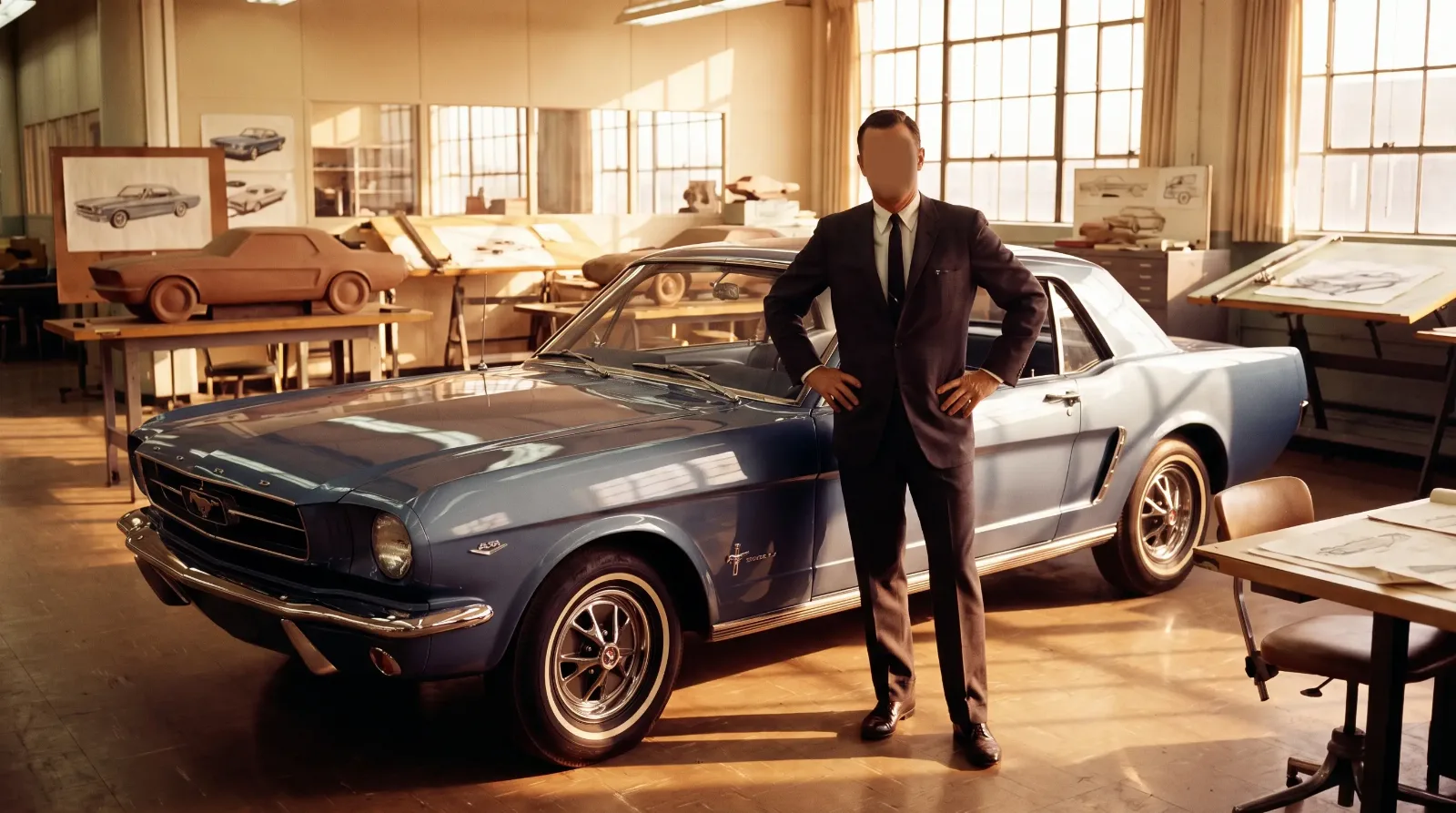
The Fairlane Committee distilled these observations into a vehicle concept: a small, sporty car with a long hood and a short rear deck, seating four, priced below $2,500, and light enough to feel agile. No such vehicle existed at Ford. The committee's job was to argue for building one. To read the full backstory of how these ideas turned into a real model, see the whole backstory.
Championing the program when it was at risk
The Mustang project was not a smooth ride from concept to showroom. Within Ford's hierarchy, significant voices argued against it. The car was seen as a niche product that might cannibalize Falcon sales, and its projected volumes did not initially impress the finance department. Henry Ford II was not immediately sold, either. Iacocca had to build and rebuild the internal case repeatedly.
His approach was methodical. He commissioned consumer clinics where Ford showed early models to potential buyers and captured reactions. The results were consistently enthusiastic, and Iacocca used that data as currency inside the company, presenting it to skeptics in the executive ranks as evidence rather than opinion. When budget pressures threatened to push the price above $2,500, he pushed back hard, understanding that the $2,368 base price was part of the car's identity, not a line item to be adjusted.
He also managed the engineering compromises that allowed the Mustang to reach production quickly. Rather than building the car from scratch on a new platform, the team used a modified Falcon floorpan, which kept tooling costs down and the timeline manageable. The base engine was Ford's 170-cubic-inch six, but Iacocca ensured that buyers could option their car with the 260-cubic-inch V8 or, later, the 289. This approach, offering a wide range of powertrains and appearance packages, was Iacocca's deliberate strategy: let customers configure their own car. It was a concept the industry would later call personalization, but in 1964 it was still novel.
The result of all this internal advocacy was a car that delivered on the Fairlane Committee's brief almost exactly. How that car then reshaped the American automotive market is examined in detail in the article about the market the Mustang created.
The April 1964 covers and a career transformed
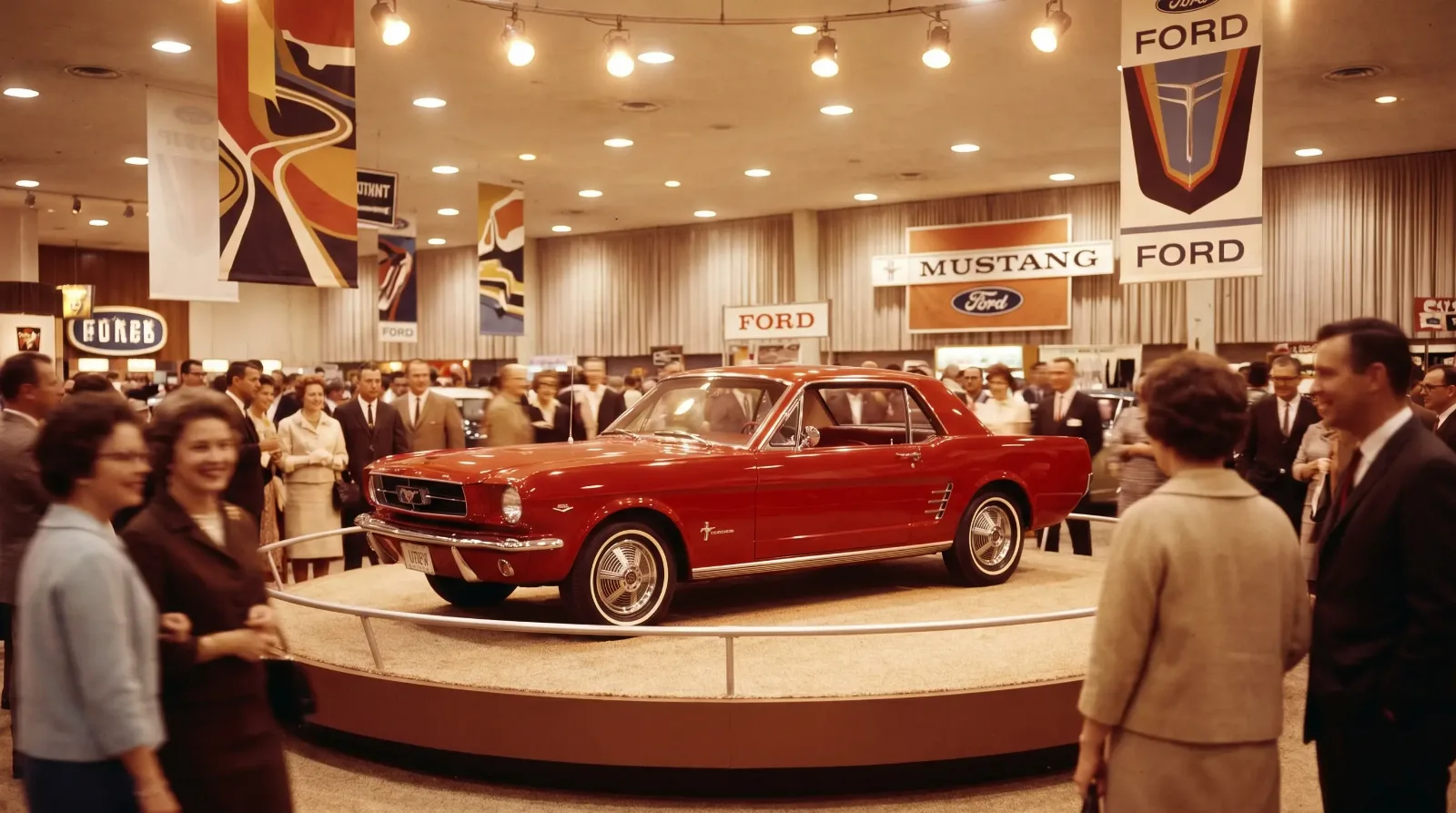
Ford's launch strategy for the Mustang was orchestrated with theatrical precision. The car was introduced to the public on April 17, 1964, at the New York World's Fair, timed to coincide with a media blitz that included simultaneous advertising across all three major American television networks. But the centerpiece of the launch was something that could not be simply purchased: Iacocca appeared on the covers of both Time and Newsweek in the same week. Time put him on its April 17, 1964 cover, the very day the Mustang went on sale, and Newsweek followed three days later with its April 20, 1964 issue.
Appearing on the cover of a single major newsweekly would have been notable for any executive. Appearing on two in the same week was extraordinary, and it reflected just how significant the editors of those publications judged the Mustang story to be. This was not merely a new car. It was a cultural event. Iacocca, at 39 years old, had a face that America now recognized.
The public response matched the coverage. In the first year of production, Ford sold more than 400,000 Mustangs, a figure that shattered Ford's own projections. Dealers ran out of stock. Some sold cars off showroom floors without floor mats because they could not wait for full inventory. Consumers put deposits on cars they had not yet seen. The phenomenon earned the Mustang a new category name, the pony car, and it prompted General Motors and Chrysler to scramble their own development programs in response.
From the Mustang to the presidency of Ford
The Mustang's success did more than sell cars. It established Iacocca as the most commercially credible executive inside Ford Motor Company, and it accelerated his rise through the organization in a way that a decade of more conventional work might not have.
In 1965, the year after the Mustang launched, Iacocca was promoted to executive vice president. In 1967, he was given responsibility over all of Ford's North American automotive operations. Then, in 1970, Henry Ford II named him president of Ford Motor Company on December 10, 1970. He was 46 years old, one of the youngest presidents in the company's history.
Throughout this period, the Mustang remained central to his identity inside and outside the company. It had proven something that was not yet obvious in Detroit: that a vehicle's emotional appeal, its character, its visual distinctiveness, could be as powerful a commercial driver as horsepower figures or cargo space. Iacocca had argued this when it was an unconventional position, and the market had vindicated him completely.
Later career chapters, including his dismissal by Henry Ford II in 1978 and his subsequent turnaround of Chrysler Corporation, would add further complexity to his story. But the arc of his fame traces back to a two-door coupe with a running-horse badge that went on sale in the spring of 1964. Without the Mustang, there is no Iacocca story worth telling at the scale the world eventually came to know it.
"Iacocca's great skill was never the Mustang itself. It was his ability to make a room full of engineers and financial men believe that a young buyer's feelings about a car mattered as much as the cost per unit."
— Patrick Walsh
Sources and notes
This article is an editorial history piece. Dates, titles, and figures have been checked against the public-record sources listed below. Sales numbers for the early Mustang vary between sources depending on whether they count the calendar year, the model year, or a rolling twelve-month window; we have stated a deliberately conservative figure ("more than 400,000 in the first year"), which all major sources support. The frequently quoted precise figure of 418,812 falls within this range.
- Lee Iacocca — Wikipedia (career timeline: joined Ford 1946, VP car and truck group 1965, executive VP 1967, president December 10, 1970 at age 46; born October 15, 1924).
- Lee Iacocca Elected President of Ford Motor Company — This Day In Automotive History (confirms December 10, 1970 presidency).
- TIME Magazine cover, April 17, 1964 — Lee Iacocca (verifies the Time cover date).
- April 17, 1964 — The Ford Mustang Goes On Sale — This Day In Automotive History (first-day and first-year sales; ~22,000 first day, 418,812 first year, one million within 18 months).
- Lee Iacocca — Britannica (independent confirmation of roles and dates).
- Ford Mustang Debuts at World's Fair, April 17, 1964 — HISTORY (launch date and New York World's Fair debut).