How the Mustang became America's pace car
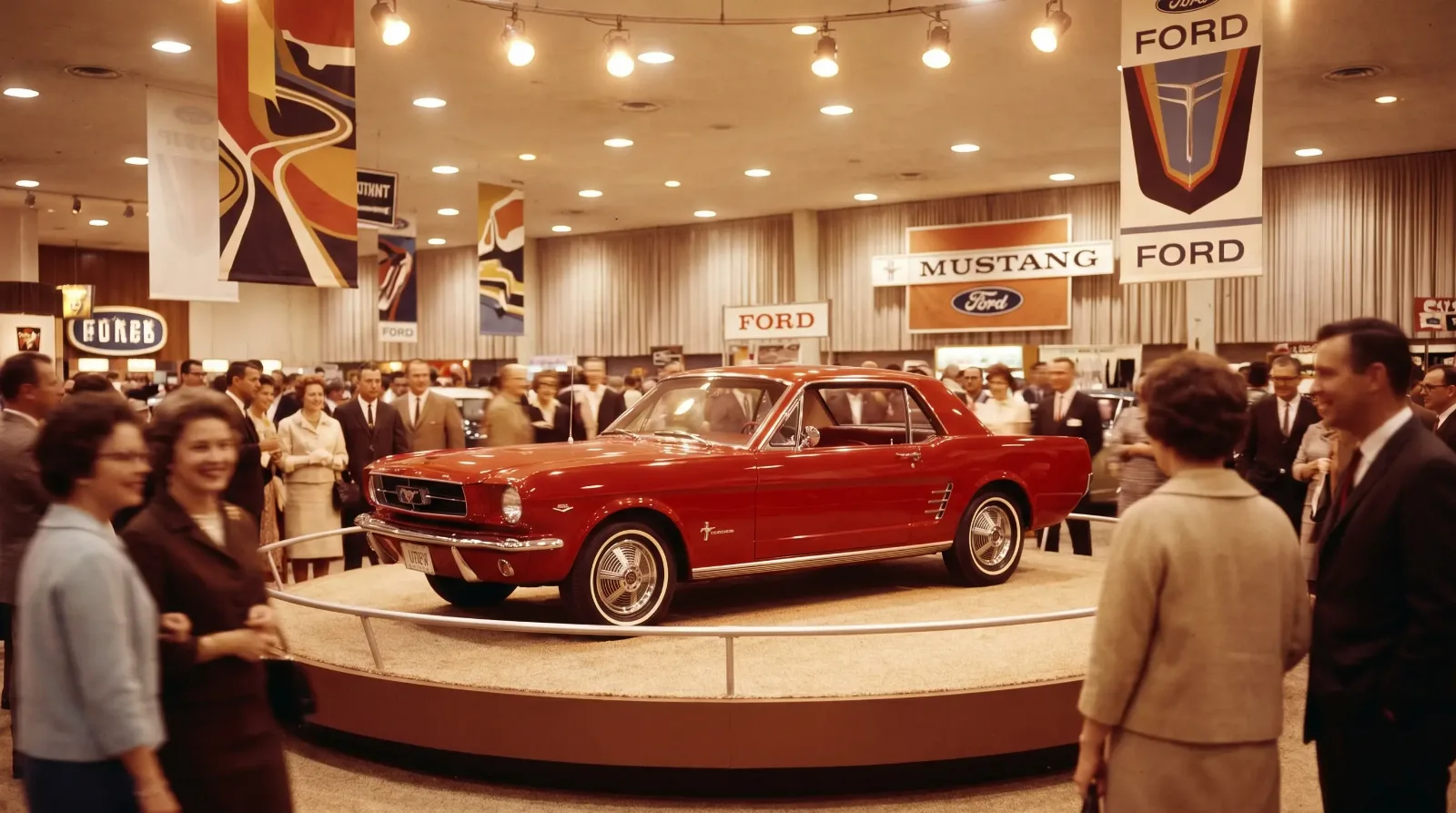
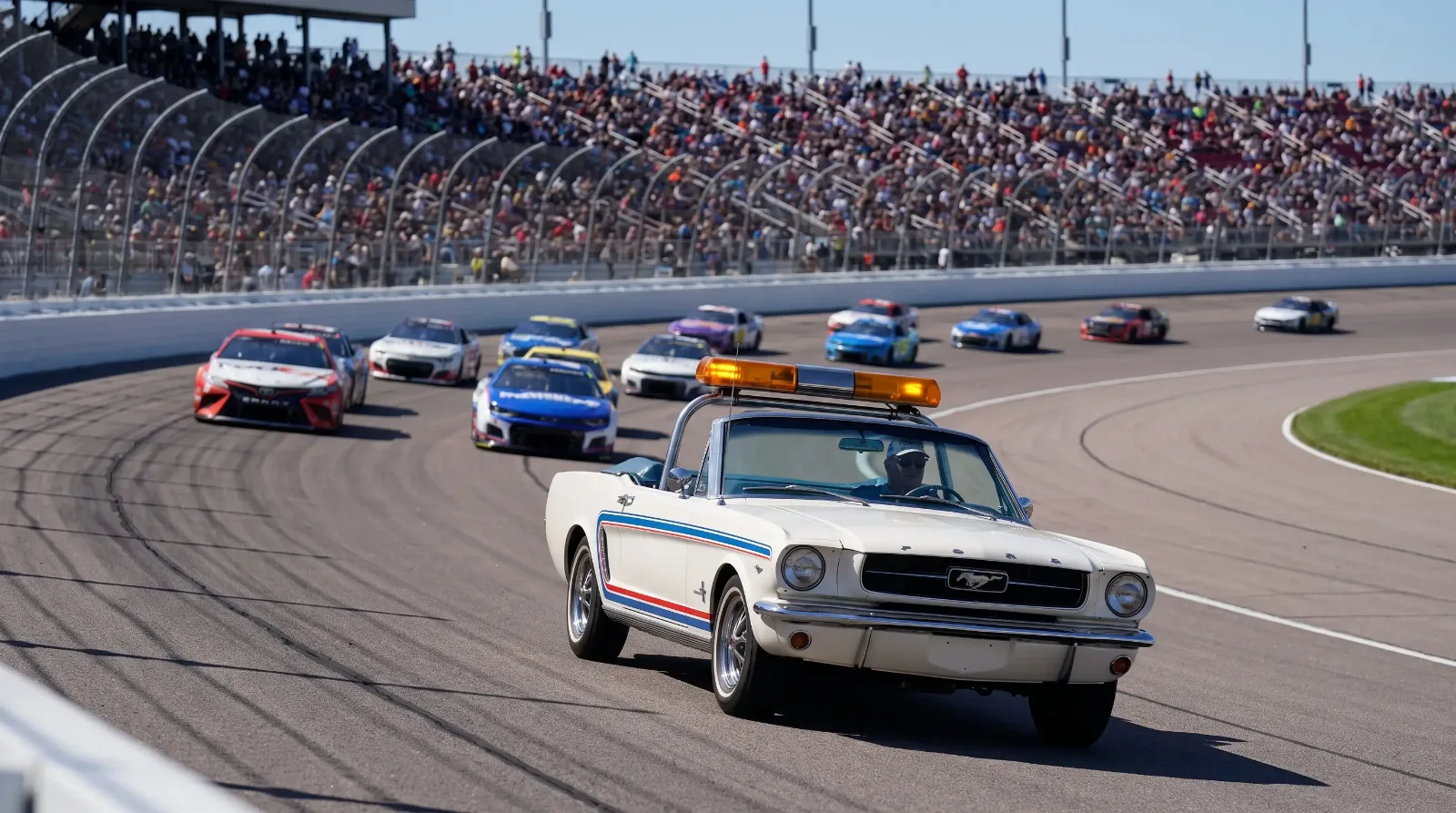
When Ford introduced the Mustang at the 1964 New York World's Fair in April of that year, the company needed a national stage to underline the car's arrival as something more than a mass-market compact. The Indianapolis 500 provided exactly that. On May 30, 1964, a Wimbledon White Mustang convertible led the field of 33 cars around the two-and-a-half-mile oval and kicked off what would become a recurring relationship between Dearborn's pony car and the world's most famous race. Understanding the broader Mustang origins story helps put that debut in proper context, because the pace-car role was no accident. It was a calculated move by Ford's marketing team to associate the new nameplate with speed, glamour, and pure Americana at the exact moment the car went on sale to the public.
The pace car is not a participant in the race, but its cultural weight is enormous. Manufacturers compete fiercely for the assignment because the car appears in millions of photographs, television broadcasts, and newsreel clips. For Ford in 1964, placing the brand-new Mustang in that spot was an act of confidence that paid dividends immediately.
The 1964 Indy 500: pace-car replicas and dealer excitement
The three actual pace cars used at Indianapolis in 1964 were Mustang convertibles finished in Wimbledon White. They left the factory with the 260-cubic-inch V-8, but were sent to Holman & Moody, where those engines were replaced with modified 289-cubic-inch units patterned after Ford's GT40 program so the cars could safely hold pace speeds approaching 140 mph. The choice of a convertible allowed the car to be seen clearly on the broadcast.
Beyond the three track cars, Ford built a run of pace-car replicas for dealer use and promotional purposes across the country. The bulk of these were hardtop coupes, with roughly 190 distributed to top-performing dealers through internal sales contests, alongside about 35 convertibles used in festival and dignitary roles around the race. These cars wore the same Wimbledon White paint with blue stripes and "Official Pace Car" lettering, and Ford used them in dealership showroom displays and regional promotional events to capitalize on the Indianapolis connection. Because the Mustang was simultaneously launching as a regular production car, the pace-car replicas functioned as both a marketing tool and a preview of the car that any customer could walk in and order. The timing was deliberate: the Indy 500 aired to a massive national television audience, and Ford wanted every viewer to know that what they saw pacing the race was something they could own.
The 1979 Indy 500: Fox-body Mustang takes the oval
Fifteen years later, the Mustang returned to Indianapolis under very different circumstances. Ford had just introduced the Fox-body Mustang for the 1979 model year, a complete redesign on a new platform that replaced the Mustang II. The 1979 Indy 500 gave Ford another chance to showcase the redesigned car to a national audience, and the company committed fully to the opportunity.
The 1979 pace car was a Mustang hatchback finished in a two-tone Pewter Metallic and black livery with an Indy 500 Official Pace Car graphics package. Buyers of the replica could choose between a turbocharged 2.3-liter four-cylinder and a 5.0-liter V-8, but the actual on-track pace cars were a separate proposition: they ran 5.0-liter V-8s extensively built up by Jack Roush, with a high-rise intake, modified heads, and a hotter cam to meet the demands of pacing race speeds.
Where the 1964 program had been primarily a marketing exercise, the 1979 pace car edition became a commercial product in its own right. Ford produced roughly 10,500 Mustang Pace Car replica editions for public sale (sources commonly cite figures around 10,478), finished in the same two-tone livery with the full decal package, an available T-roof, and a specific interior treatment. The replicas were sold through Ford dealers at a premium over the standard Mustang, and demand was strong enough that some dealers marked them up further. The cars became a documented variant in Ford's production records, which is precisely what gives them value to collectors today: a verifiable factory option code, a specific paint and trim combination, and a connection to a datable event.
"The 1979 pace car replica is one of those first-year Fox-body variants that actually holds a story worth telling. The decal package alone was enough to make it a time capsule of the era."
— Patrick Walsh
Pace car appearances by year: a reference table
The Mustang's presence as an official pace car at major events stretches across multiple decades. The table below captures the confirmed and historically documented appearances, along with notes on replica programs where they existed.
| Year | Event | Car variant | Notes |
|---|---|---|---|
| 1964 | Indianapolis 500 | Mustang convertible (Holman & Moody-built 289) | Wimbledon White; ~190 hardtop replicas to dealers plus ~35 convertibles for festival use |
| 1979 | Indianapolis 500 | Fox-body Mustang hatchback | Two-tone Pewter/black livery; ~10,500 replica editions sold publicly (commonly cited as ~10,478) |
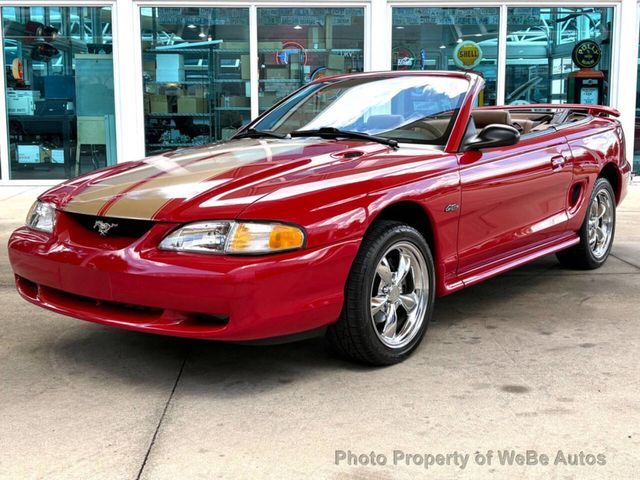
| 1994 | Indianapolis 500 | Mustang SVT Cobra convertible | 30th anniversary of the 1964 pace car; 1,000 Rio Red replica convertibles built for public sale |
Why pace-car editions matter to collectors
The appeal of a factory pace car edition to a collector is straightforward: it is a regular production car that carries a specific, documentable set of options tied to a real event on a real date. Unlike a one-off show car or a dealer-modified vehicle, a pace car replica edition can be verified through the vehicle identification number, the window sticker, and Ford's published production records. Build sheets and Marti Reports, the latter being a resource drawn directly from Ford's production database, can confirm whether a given car left the factory with the correct paint code, interior code, and option package.
This matters because the classic car market rewards authenticity and documentation above almost everything else. A Mustang described as a pace car edition without supporting documentation is simply a Mustang with a paint job. One that can be verified through the VIN decode, the door tag, and production records is something different: a piece of automotive history with a clear chain of custody. The 1964 and 1979 pace car replicas are both old enough now that original documentation is increasingly hard to find, which makes the cars that do have it correspondingly more significant.
The pace car tradition also illustrates a broader truth about the Mustang's place in American culture. Ford did not need to pace the Indianapolis 500 to sell Mustangs. By the time the 1979 program ran, the car had been in continuous production for 15 years and had survived two fuel crises, a federally driven period of detuning, and the awkward Mustang II interlude. The decision to return to Indianapolis with the Fox-body Mustang was a statement of intent: this was still a car with enough identity and public presence to lead the most famous race in the country around the track.
For anyone researching a specific example, the first stop should always be the VIN decode and a Marti Report if the car is a Ford product. From there, period documentation, original window stickers, and any accompanying dealer materials add layers of provenance that the production records alone cannot capture. The pace car editions are a small fraction of total Mustang production in any given year, which is part of what makes them worth the extra effort to verify properly.
Sources and notes
The figures and dates in this article were checked against the published sources listed below. Production counts for vehicles of this era can vary slightly between sources because of differences in record-keeping and how festival, dignitary, and replica cars are categorized; where sources disagree, we have noted the commonly cited range rather than asserting a single exact figure. This article is provided for general historical and educational purposes, and anyone evaluating a specific car for purchase should verify its configuration through a VIN decode, Marti Report, and original documentation.
- MustangSpecs — 1964 1/2 Ford Mustang Pace Car: Ultimate Guide
- CJ Pony Parts — What Is the 1979 Mustang Indy Pace Car?
- LMR — Fox Body Pace Car Specs, History & Horsepower
- MustangSpecs — 1994 Ford Mustang Cobra Pace Car: Ultimate Guide
- Wikipedia — Indianapolis 500 pace cars (year-by-year list)
- Indianapolis Motor Speedway — Indy 500 pace car summaries