
Park a Rolls-Royce Silver Cloud next to a Bentley S-Series and most people cannot tell you what separates them. That is not a failure of attention. It is the whole point of badge engineering. From 1955 to 1965, these two cars shared a chassis, an engine, a gearbox, and a pressed-steel body. What differed came down to a grille, a mascot, and a badge, plus a small handful of trim details most owners never noticed. The interesting question is not what changed between them. It is how little changed, and why the factory wanted it that way.
History & Heritage
6 min read
Badge Engineering Explained: What Really Differed Between a Silver Cloud and a Bentley S-Series
Silver Cloud vs Bentley S-Series badge engineering explained: what the two shared, where the grille and mascot differed, and standard steel vs coachbuilt.
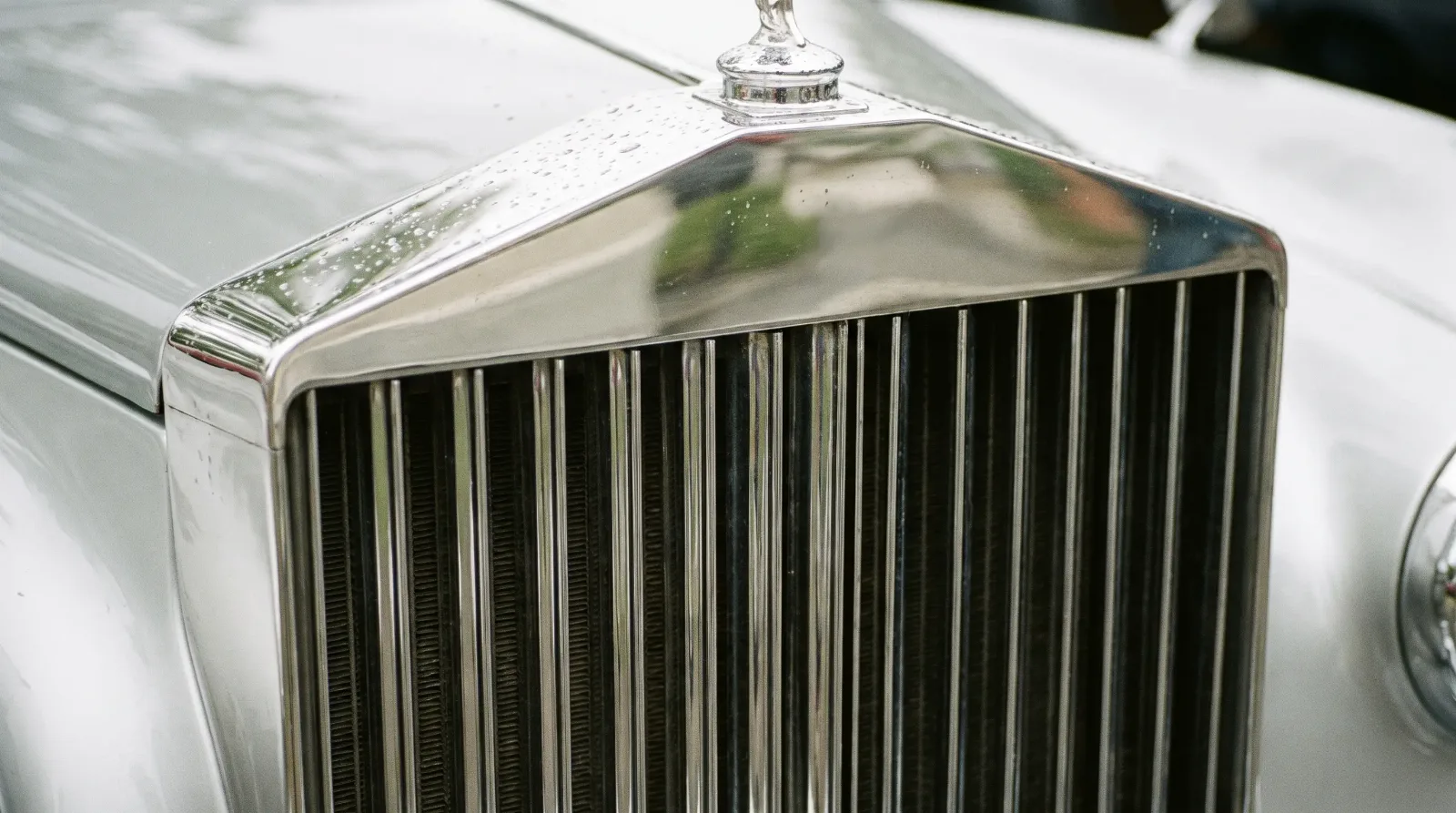
This is the clearest case study in the badge-engineered rivalry, because the Cloud and the S-Series are the two cars where the practice reached its purest form. Understanding exactly where they diverge tells you how to read every shared model that came before and after.
What the two cars actually shared
The standard-steel saloon body was the common foundation. Both marques used the same pressed-steel shell, supplied by the Pressed Steel Company and finished at the factory, and both used identical mechanicals underneath it. The first-series cars of 1955 to 1959, the Silver Cloud I and the Bentley S1, ran the same 4.9-litre inline-six. When the aluminium 6.2-litre V8 arrived in 1959, it went into the Silver Cloud II and the Bentley S2 in exactly the same tune. The Cloud III and S3 of 1962 to 1965 shared the same revised engine and the same quad-headlamp front.
Because the sheet metal was shared, the doors, glass, floorpan, and roofline were interchangeable in every meaningful sense. A body panel that fit one fit the other. The engineering department did not design two cars. It designed one and issued it under two names, which is the definition of the practice.
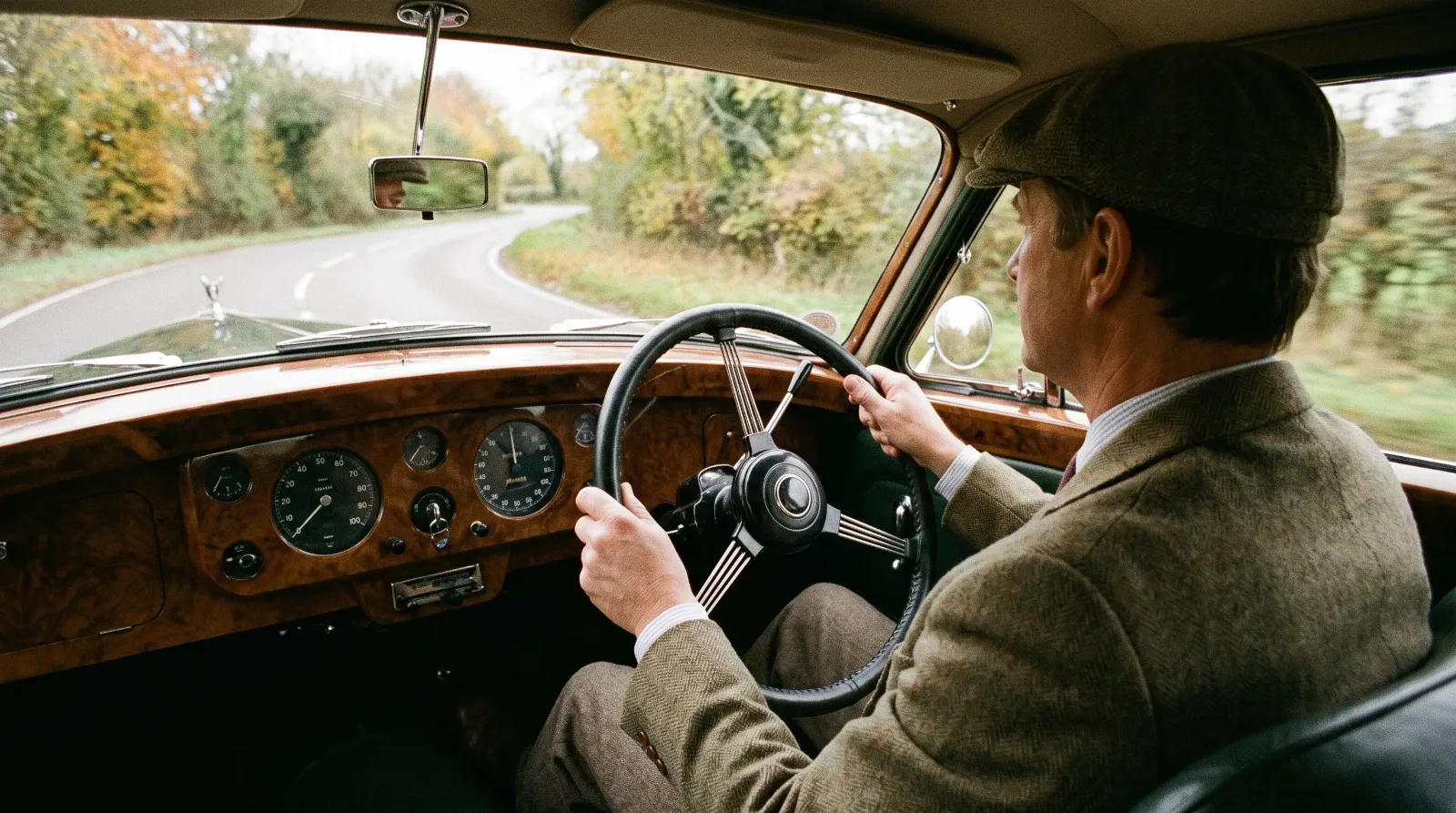
The interiors told the same story. Both cars used the same dashboard architecture, the same instruments, the same wood and leather standards, and the same suspension and steering. When Rolls-Royce revised the Cloud III with quad headlamps in 1962, the Bentley S3 received the identical change at the same moment. Nothing meaningful was ever developed for one badge and withheld from the other, because there was no separate development to withhold. The cars advanced in lockstep for a full decade.
| Feature | Rolls-Royce Silver Cloud | Bentley S-Series |
|---|---|---|
| Production years | 1955-1966 | 1955-1965 |
| Radiator grille | Tall, flat Grecian temple shape | Lower, rounded matrix shape |
| Bonnet mascot | Spirit of Ecstasy | Winged-B (optional, not standard) |
| Engine (series I) | 4.9-litre inline-six | 4.9-litre inline-six |
| Engine (series II/III) | 6.2-litre V8 | 6.2-litre V8 |
| Body shell | Shared pressed-steel standard saloon | Shared pressed-steel standard saloon |
Where the differences really live
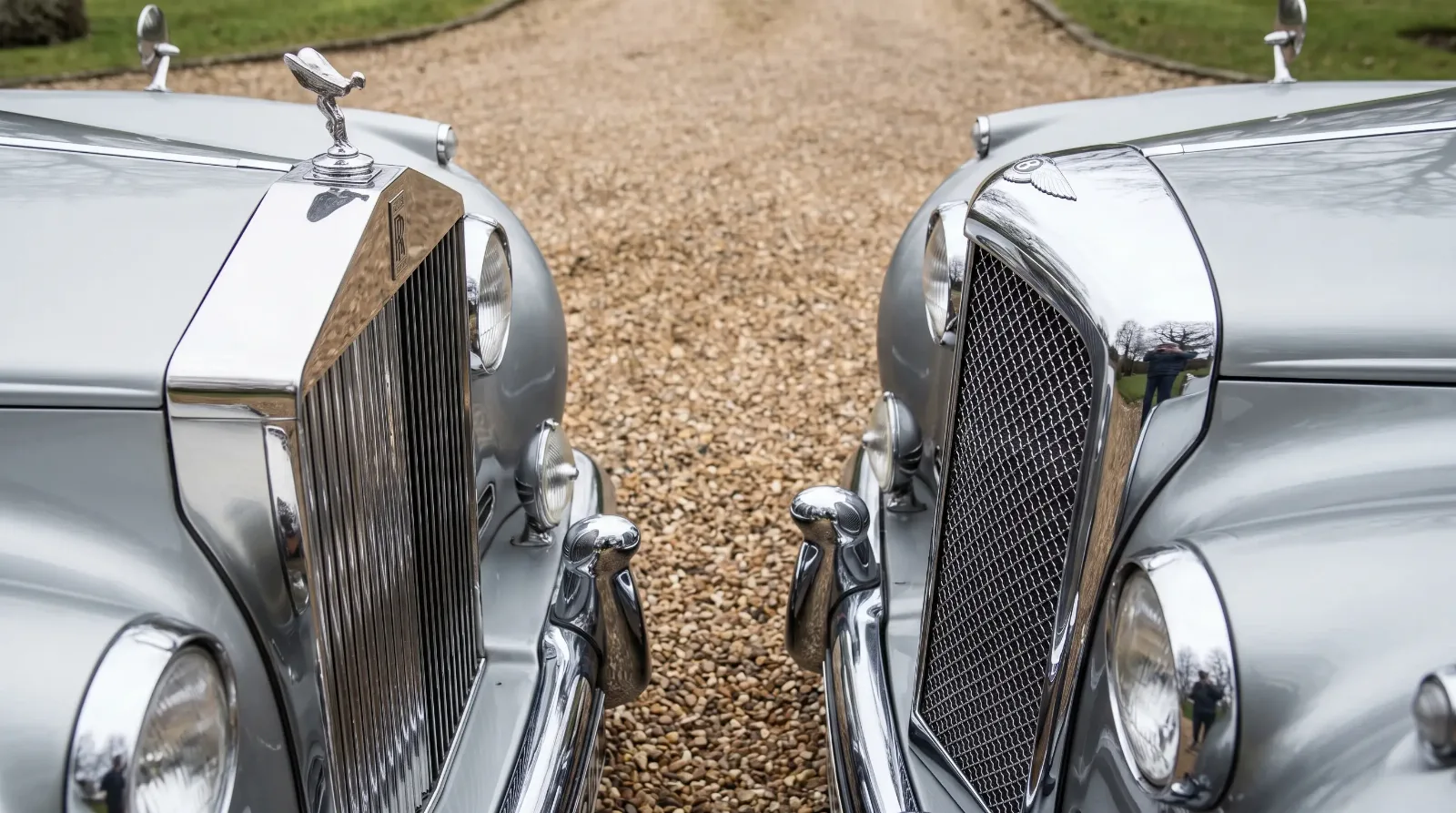
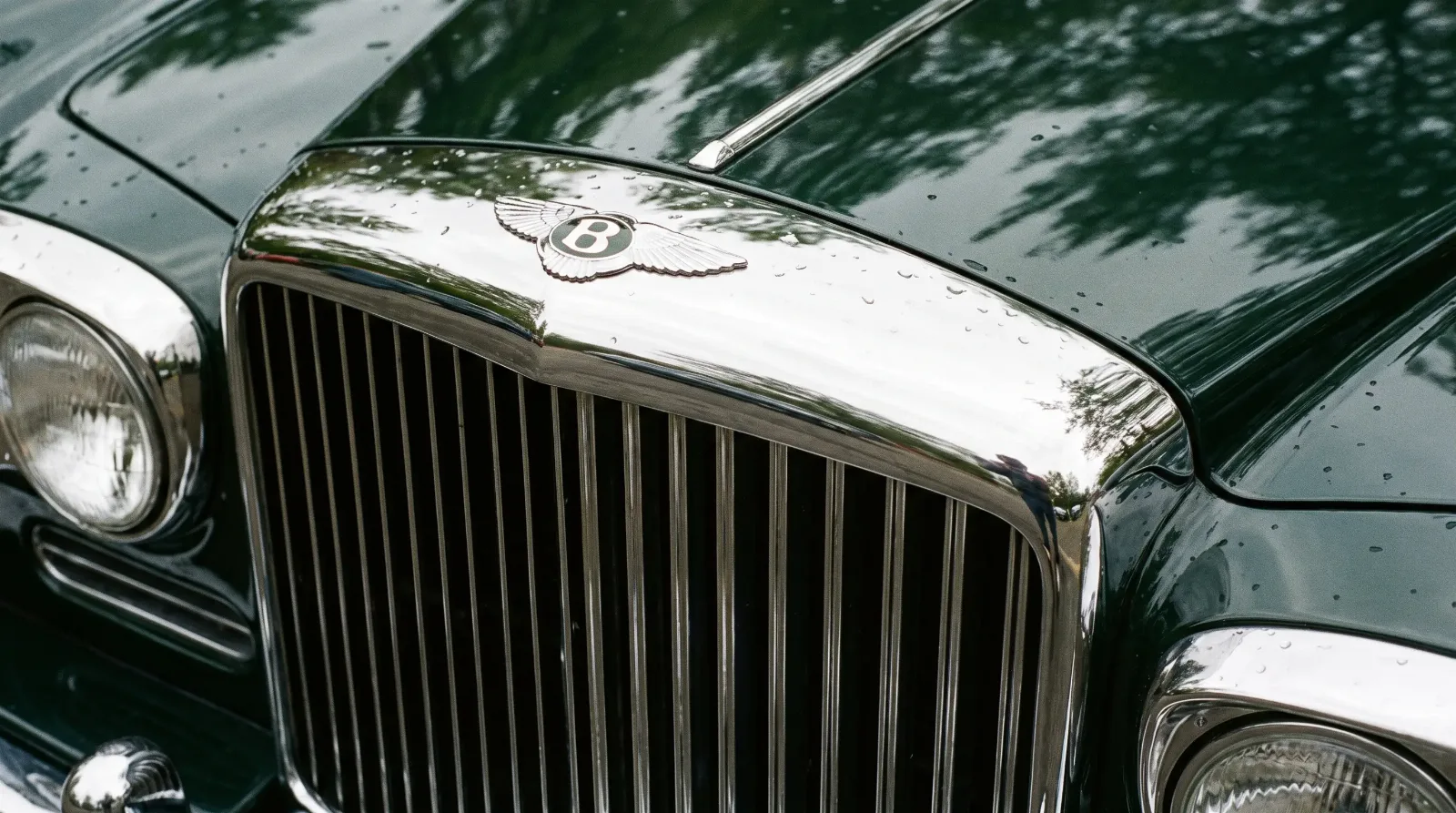
The grille is the honest divider. Rolls-Royce kept its tall, flat radiator shell modelled on a Greek temple front, a shape it has defended for over a century. Bentley wore a lower, softer, rounded grille that traced back to its own sporting heritage. On the standard-steel saloons this was the single most visible distinction, and it remains the fastest way to identify one at a distance.
The mascot followed the grille. The Silver Cloud carried the Spirit of Ecstasy on its radiator cap; the Bentley did not, and never wore that figure. Bentley buyers could specify the winged-B mascot instead, though many left the car clean. Beyond those two items, the differences shrink to badge scripts, hubcap centres, and the occasional interior detail. Mechanically and structurally the cars were twins.
Standard steel versus coachbuilt
The badge-engineering story applies most strictly to the standard-steel saloon, and it is worth being careful here. Both marques also offered the same chassis to independent coachbuilders such as H.J. Mulliner, Park Ward, and James Young, who built dropheads, two-door saloons, and the long-nose Continental bodies to order. Those coachbuilt cars diverged far more, in shape, weight, and price, than the factory saloons ever did.
Even then, the coachbuilders usually built to a common design that could wear either badge, so a Continental drophead could be had as a Rolls-Royce or a Bentley from the same body. The coachbuilt cars are where individuality entered the picture, and they command a premium today precisely because they were not identical twins. The standard-steel saloons, by contrast, are the cars that make the badge-engineering point cleanly.
"On a standard-steel Cloud and S-Series, the grille is doing almost all the work of telling them apart. Everything a collector prizes as different, the coachbuilt shapes, the Continentals, sits on top of a chassis both badges shared without alteration."
Sarah Whitfield
What this means for a buyer today
If you are shopping a Silver Cloud or an S-Series, understand that you are choosing a badge and a grille far more than a different car. Condition, documentation, and body style matter enormously more than the marque. A well-kept Bentley S2 and a well-kept Silver Cloud II are the same machine, and their values track closely, with the Rolls-Royce name usually carrying a modest premium at the saloon level and the rarer coachbuilt Bentleys often leading at the top.
The practical advice is to buy the specific car, not the badge. A shared-body saloon should be judged on its steel, its V8, and its service history, since the two marques offer identical mechanicals to maintain. The inline-six cars of the first series ask slightly different questions of a buyer than the V8 cars that followed, but that split runs across both badges equally rather than between them. A Bentley S1 and a Silver Cloud I share the same six to inspect, and a Bentley S2 and a Silver Cloud II share the same aluminium V8, so the name on the grille tells a mechanic nothing at all. Once you understand that the difference is mostly cosmetic, the more interesting question becomes why the factory bothered to sell the same car twice. That answer lies in how Bentley was positioned for a different kind of owner. Read next: Why Bentley Was Built as the Driver's Alternative to the Chauffeur-Driven Rolls-Royce.
Related Reading
Have a
Classic Car
for Sale?
Reach thousands of serious classic car collectors across the US.
Sell It Here →
Are You a Classic Car Dealer?
List your full inventory and connect with targeted classic car buyers.
Join as a Dealer →

About the author
Sarah Whitfield
Third-generation classic car collector specializing in pre-war American and European coachbuilt automobiles. Researcher and concours enthusiast.
More in History & Heritage
Comments
Be the first to comment on this article.