New York, April 17, 1964: a car meets its moment
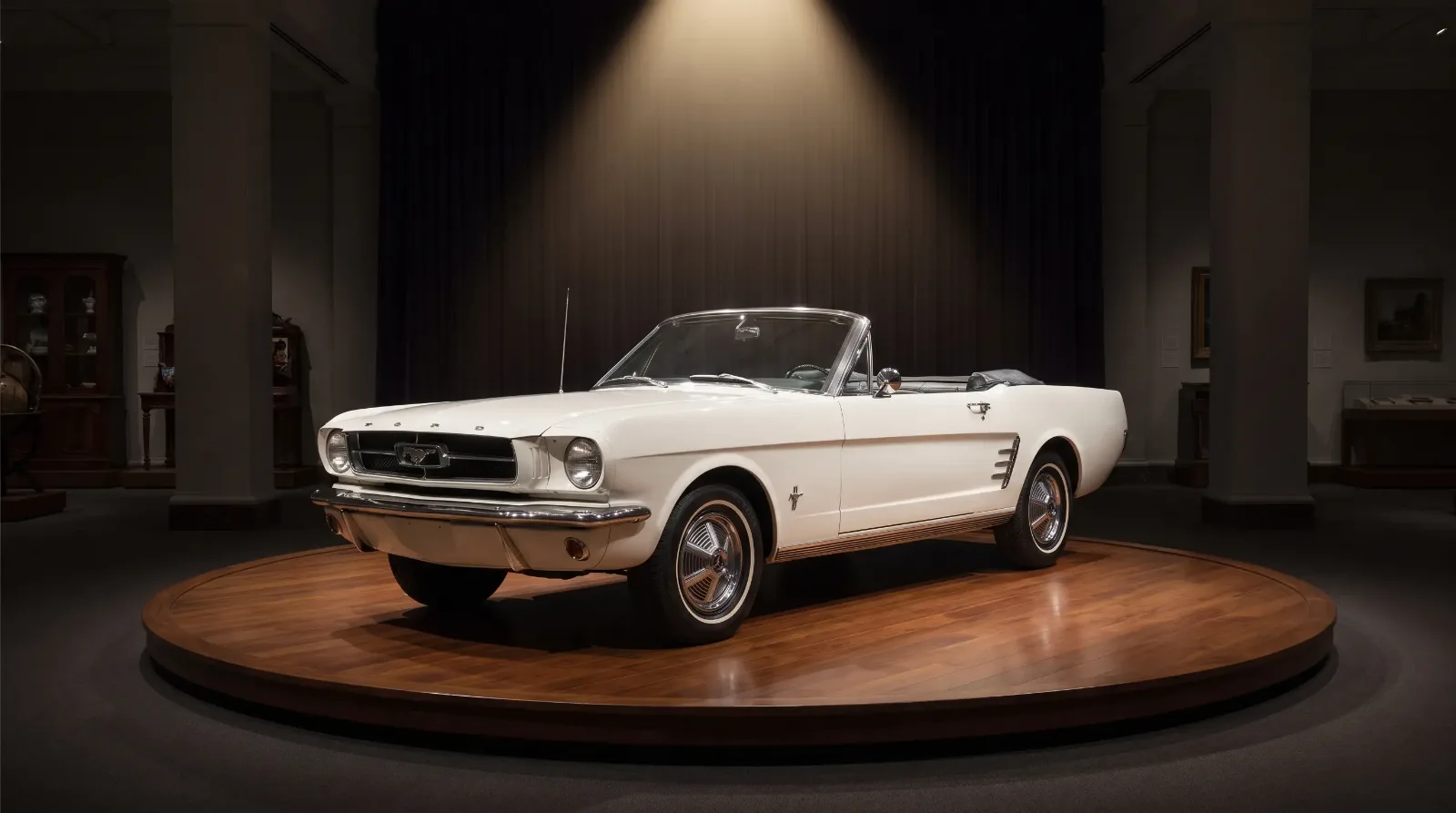
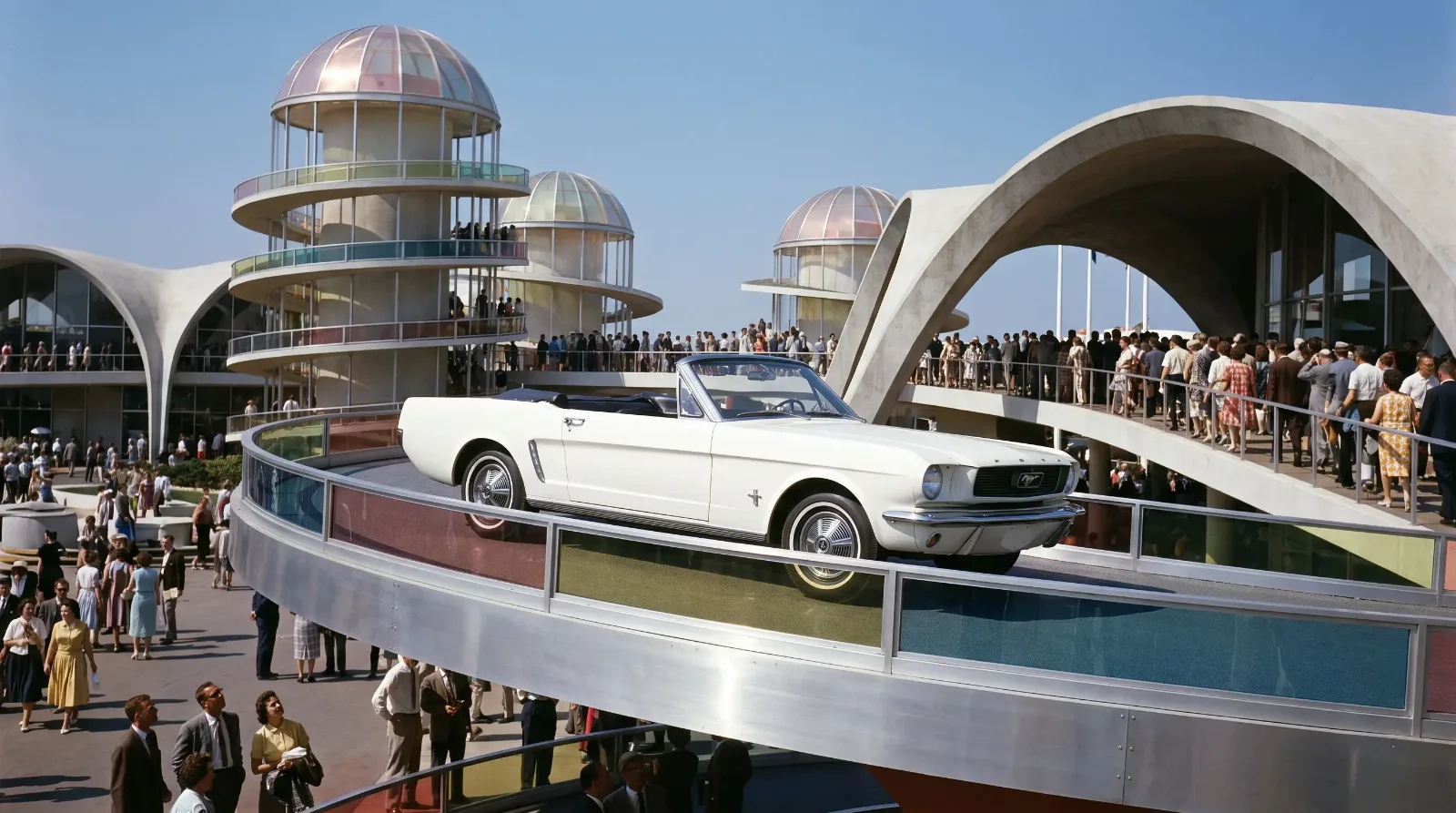
The New York World's Fair opened on April 22, 1964, but Ford had no intention of waiting that long. Five days earlier, on the morning of Thursday, April 17, the company invited the press and the public to the Ford Pavilion at Flushing Meadows to witness the introduction of something it called the Mustang. By the time the sun went down that day, the American automobile industry had changed permanently. To understand the full story, it helps to read about the origins and legend of the Mustang, because the World's Fair debut was the culmination of years of internal debate, studio battles, and one man's determined push to put a sporty car within reach of everyday buyers.
Ford's choice of the Fair was not accidental. The 1964 New York World's Fair was the largest peacetime gathering the country had hosted in a generation, drawing visitors from across the United States and around the world. President Johnson had opened it just weeks prior. The fairgrounds at Flushing Meadows were packed with corporate pavilions, national exhibitions, and technological wonder. Ford understood that a car introduced here would not merely reach the motoring press. It would reach families, young professionals, returning veterans, and college students who had never set foot in a dealership. The audience, in other words, was everyone Ford wanted to own a Mustang.
The Ford Pavilion and the Magic Skyway
Ford's presence at the 1964 World's Fair was not a simple showroom tent. The company had invested heavily in the Walt Disney-designed Magic Skyway, a ride that carried passengers in actual Ford convertibles through a sweeping diorama of human history, from the age of dinosaurs through the Space Age. Disney's involvement gave the pavilion the kind of theatrical authority that no amount of advertising copy could manufacture. Visitors who had already been charmed by the Magic Skyway were then deposited, quite deliberately, in the vicinity of the Mustang display. The sequencing was not coincidental.
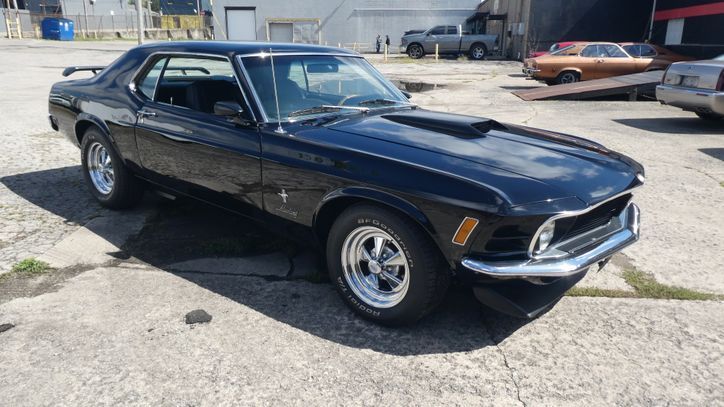
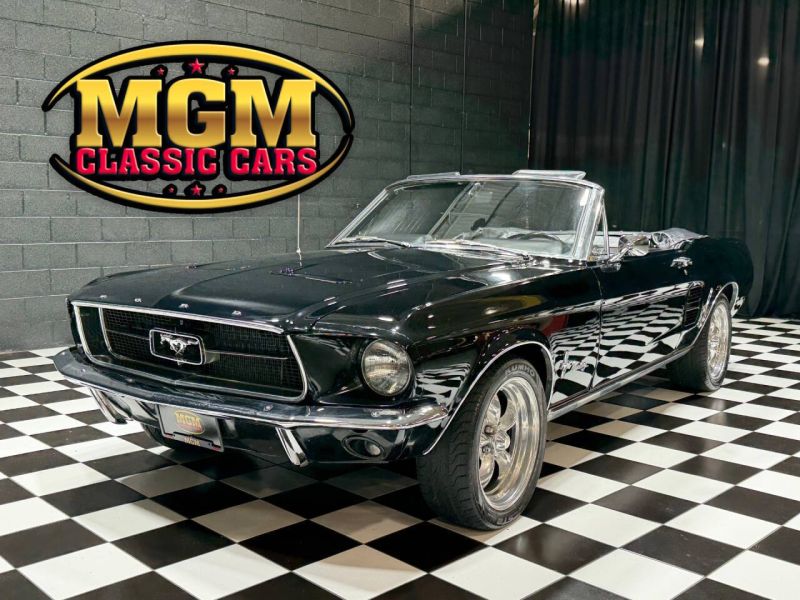
The cars on display represented the full introductory range: hardtop, convertible, and the sporty fastback that would arrive shortly after. Prices began at $2,368 for the hardtop, a figure Ford had worked backward from the marketing research showing that buyers wanted a car that looked like it cost considerably more than it did. The standard engine at launch was the 170-cubic-inch inline six, but the options list included the 260-cubic-inch V8 and, for buyers who read the order sheet more carefully, access to the 289 small-block that would define the performance Mustang for years to come.
The prime-time announcement nobody could avoid
The night before the cars reached showrooms, Ford was executing a second front. On the evening of April 16, the company ran commercials on all three major television networks at once, buying the 9:30 to 10:00 slots on CBS's Perry Mason, NBC's Hazel, and ABC's The Jimmy Dean Show. The coordinated buy meant that virtually any American watching television that night encountered the Mustang at least once and probably more than once. Network prime-time advertising in 1964 reached an audience that dwarfed anything available through print, radio, or the enthusiast press, and Ford's decision to flood all three channels simultaneously was a deliberate attempt to make the Mustang feel like a national event rather than a product announcement.
The advertising itself was straightforward by later standards: the car in motion, the price prominently stated, the tagline emphasizing that this was something genuinely new. What made it effective was the sheer mass of impressions delivered in a single evening; the buy reached an estimated thirty million homes. By the morning of April 17, when the cars hit showrooms, the Mustang was already a known quantity to most of the country, even to people who had never considered buying a new car. Ford's dealer network was ready for exactly that moment.
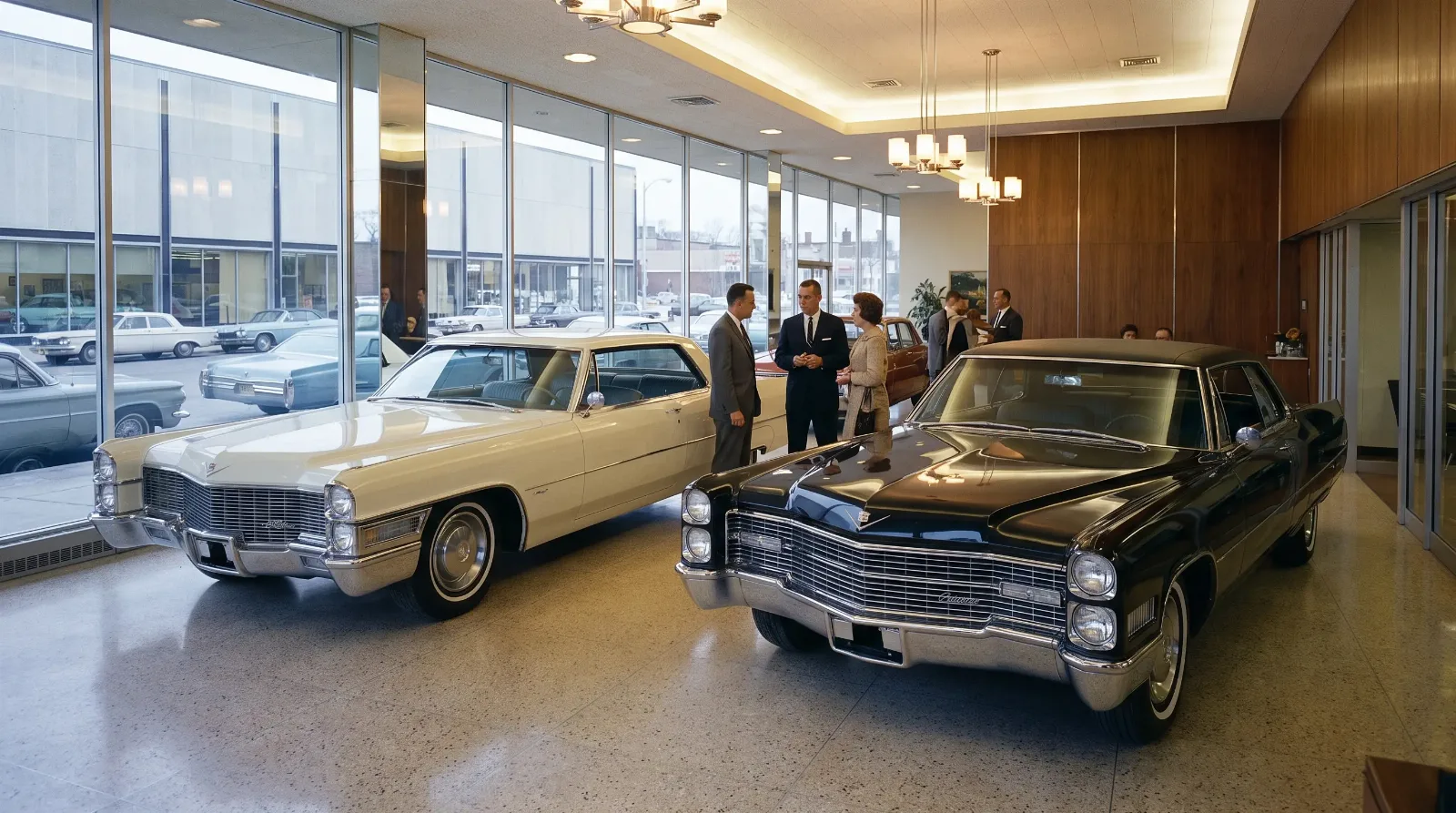
Dealers and the showroom frenzy
The World's Fair debut and the television campaign had been carefully synchronized with a third element: actual cars in actual dealerships across the country. Ford had supplied its dealer network with cars in advance so that anyone who saw the announcement on television and wanted to walk into a showroom the following morning could do exactly that. The execution of this supply chain coordination was, by the standards of the era, remarkable. Manufacturers routinely unveiled cars months before dealers had inventory to sell. Ford collapsed that gap almost entirely for the Mustang launch.
What followed in dealerships on April 17 and 18 has become one of the more reliably cited stories in American automotive lore. Dealers in major cities reported customers sleeping in showrooms overnight to be first in line. In some locations, a single display car was surrounded by crowds large enough that the car itself could not be moved. Dealers who had ordered conservatively found their lots stripped in hours. Reports filtered back to Dearborn of bidding above sticker, of customers writing checks on the spot for cars they had not yet sat in, and of salesmen who had not experienced anything like it since the years immediately after the war when any new car at any price found a buyer. For a more detailed look at the economics behind that frenzy, the account of the launch that created a new market traces how Ford's pricing and positioning decisions translated into that dealer-floor pandemonium.
"What happened in those showrooms on April 17 was not marketing, it was a crowd finding something they didn't know they'd been waiting for."
— Patrick Walsh
The first-day orders and what they meant
The figure most commonly associated with the Mustang's first day is approximately 22,000 orders placed on April 17 alone. Ford's own internal projections had originally targeted first-year sales in the range of 100,000 to 150,000 units, a figure the company revised sharply upward within weeks of the launch. By the end of the 1965 model year, Ford had sold more than 680,000 Mustangs, a performance that exceeded not only Ford's projections but the capacity of the company's single-plant production model. A second assembly facility had to be brought online to meet demand.
The depth of that demand revealed something Ford's market research had correctly intuited but perhaps not fully quantified. The Mustang was not a replacement for an existing vehicle in most buyers' garages. It was an addition, a second car, a reward, an aspiration made affordable. The buyer profile that emerged from dealer sales data was younger than the average new-car buyer of the era, more likely to be female than Ford's competitors had assumed, and more likely to add options than to buy the base specification. The average transaction price climbed well above the advertised $2,368 entry point because buyers found the options list hard to resist once they were standing in the showroom with a pen in their hand.
By any measure, April 17, 1964, stands as one of the most successful single-day product launches in American commercial history. The event at the World's Fair, the television blitz, the coordinated dealer stocking, and the showroom response were not separate phenomena. They were the components of a campaign that Ford had assembled with unusual precision, and they worked together in a way that the company's own executives later admitted had exceeded their most optimistic scenario. The Mustang had arrived, and the market it created did not exist before it did.
Sources and notes
This article has been fact-checked against the sources below. Dates, prices, and sales figures reflect the most reliable published records; some first-day order and first-year sales totals vary slightly between sources because of differing accounting of the "1964½" early-production cars, all of which Ford titled as 1965 models. The base price of $2,368, the roughly 22,000 first-day orders, the simultaneous Time and Newsweek covers, and the 680,989 (1965 model-year) sales total are all corroborated below. Note that the three-network television blitz aired the evening of April 16, 1964 — the night before the cars reached showrooms — not on debut day itself.
- Ford Motor Company — "Mustang Debut at World's Fair"
- HISTORY — "Ford Mustang debuts at World's Fair, April 17, 1964"
- Encyclopædia Britannica — "Today in History: The Introduction of the Ford Mustang"
- Hagerty — "Mustang Memories: Tom Cotter Recalls April 17, 1964"
- MustangSpecs — "Ford Mustang Sales Figures by Year"
- Wikipedia — "Ford Mustang"