The biggest Mustangs Ford ever built
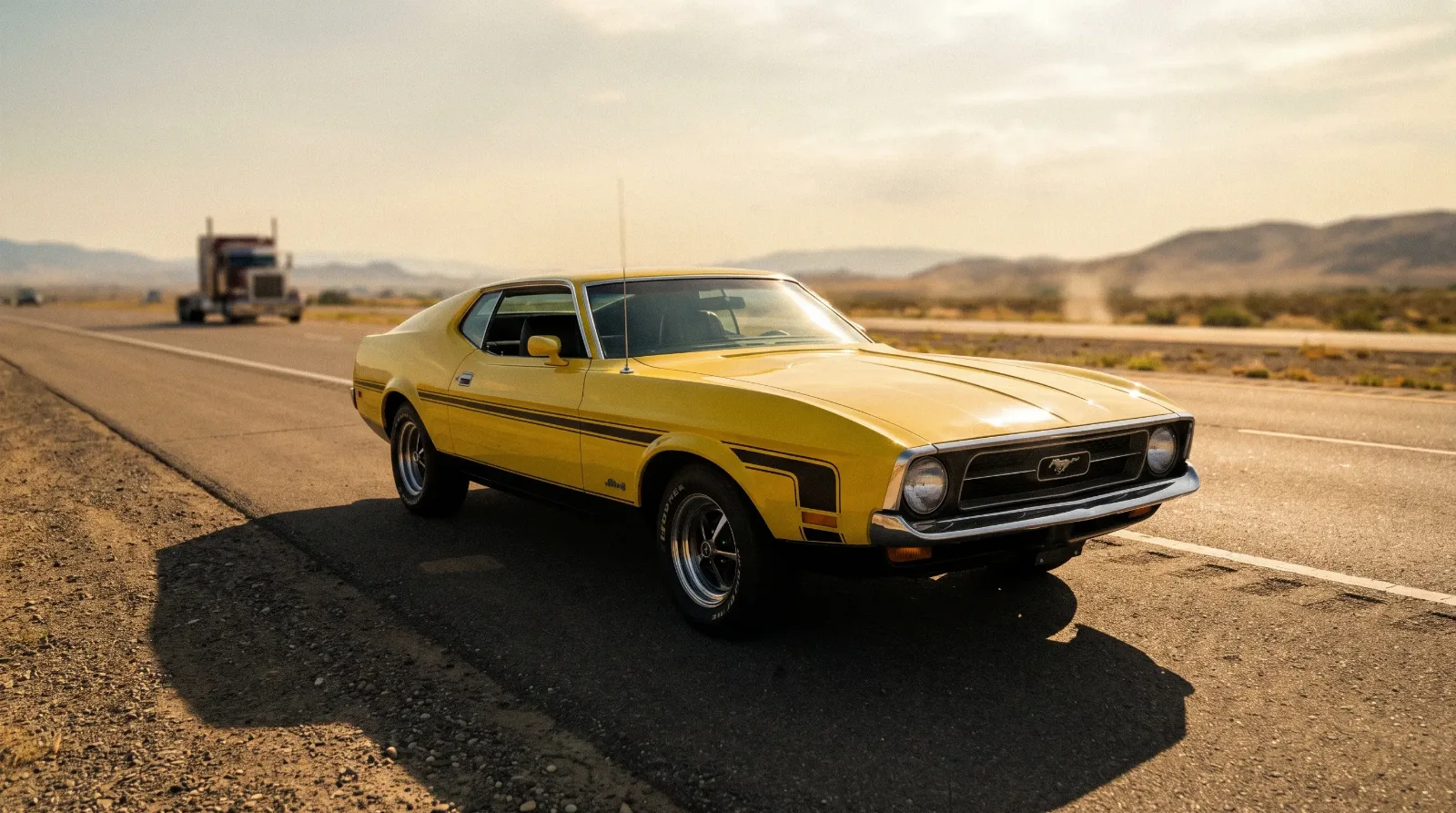
When Ford unveiled the redesigned Mustang for 1971, it shocked a public that had grown accustomed to the original pony car's compact proportions. The new car was longer, wider, lower, and considerably heavier than anything the Mustang nameplate had carried before. Wheelbase stretched to 109 inches, overall length pushed past 189 inches, and curb weight on a fully equipped fastback could approach 3,500 pounds. These were not the nimble pony cars of 1965. They were, in almost every measurable way, the largest first-generation Mustangs Ford would ever produce.
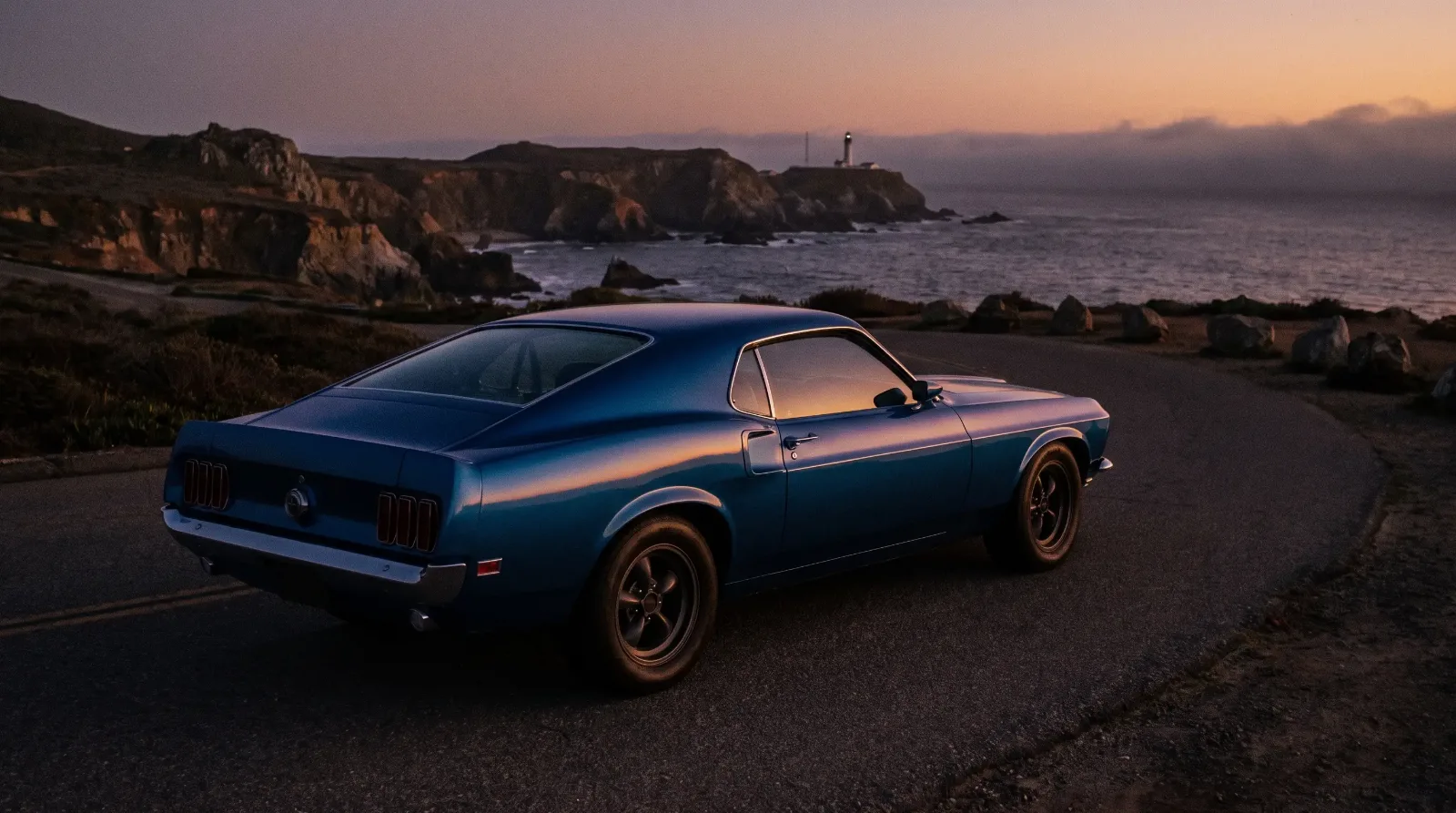
The styling reflected this new ambition. Chief among the visual departures was the SportsRoof fastback, whose roofline descended in an almost flat, near-horizontal plane from the windshield header to the tail. The angle was so shallow it drew comparisons to European GT coupes of the era, though opinions on its looks were divided from the day it appeared in dealer showrooms. What nobody disputed was that the 1971 body was unmistakably its own thing, a deliberate break from the long-hood, short-deck formula that had defined the original.
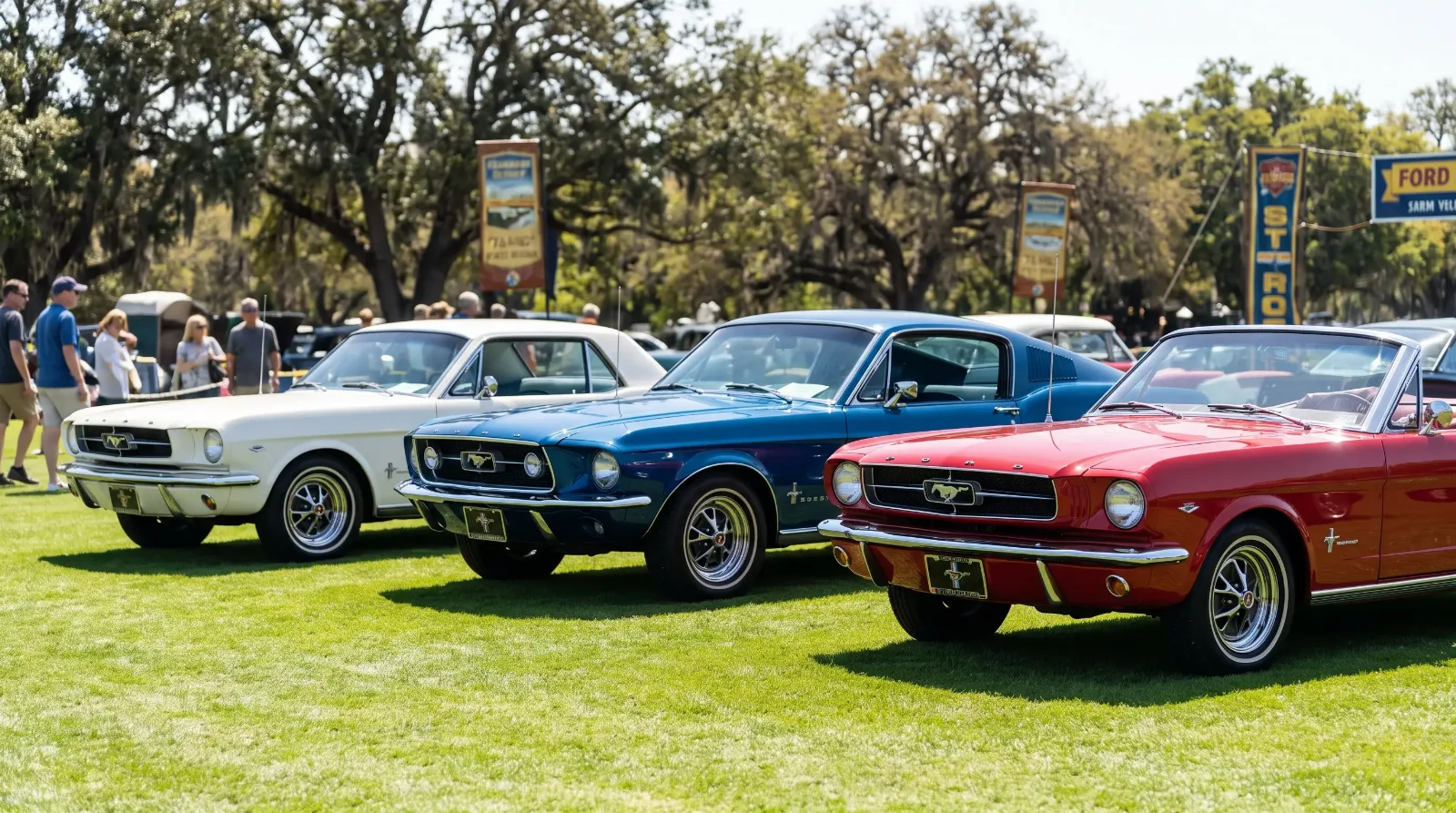
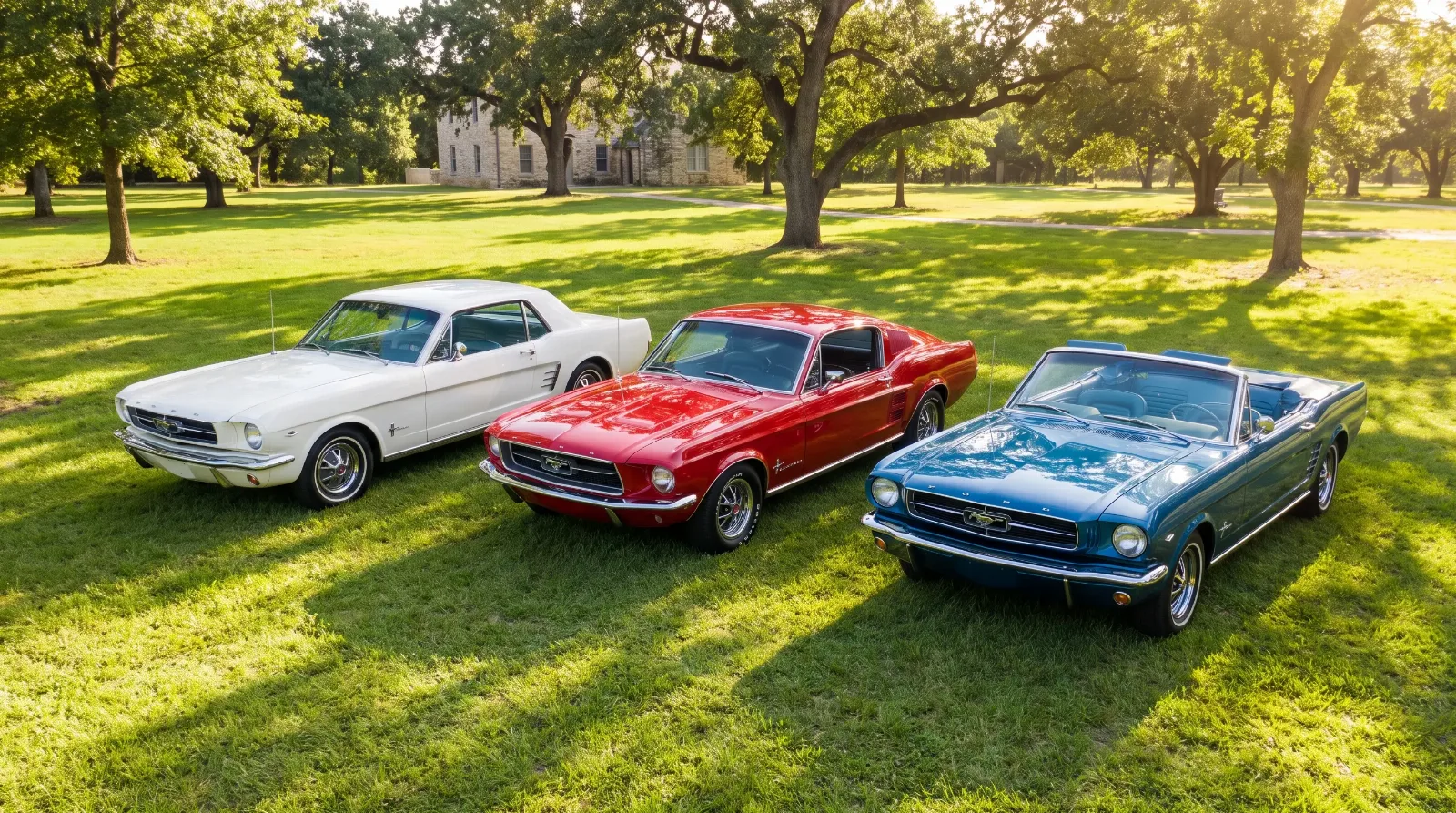
These cars are part of the larger story told in the gen-one Mustangs, but the 1971-73 generation deserves its own examination. It was the period when the Mustang reached its physical peak, fired off some of its most powerful engines, and then watched the muscle car era collapse around it in just two model years.
The big engines: 429 and 351 Cleveland
Ford entered 1971 with its most powerful Mustang engine lineup to date. The 429 Cobra Jet, a massive semi-hemispherical big-block displacing 429 cubic inches, was available in two states of tune. The standard 429 Cobra Jet carried a single four-barrel carburetor and was rated at 370 gross horsepower in its 1971 form. Above that sat the 429 Super Cobra Jet, which added a solid-lifter camshaft, stronger connecting rods, and an oil cooler, pushing the gross rating to 375 horsepower. These engines were not quiet or subtle. They were built for drag strips and straight-line acceleration, and they delivered.
Alongside the 429 family sat the 351 Cleveland, a high-revving small-block that many engineers considered the more sophisticated engine of the era. The 351 Cleveland used canted-valve cylinder heads with large ports that allowed impressive airflow. In 1971, the standard four-barrel was rated at 285 gross horsepower, while the high-output Boss 351 version reached 330 gross horsepower. The Boss 351, offered only for 1971, was a particularly focused version: solid-lifter cam, high-compression heads, and a stronger bottom end. It was the last of the Boss-series Mustangs in the original generation.
How emissions and insurance ended the muscle era
The 1972 model year brought the changes that effectively ended the big-power Mustang. Federal emissions regulations required that all passenger cars be capable of running on regular, low-lead or unleaded fuel, which meant compression ratios had to drop substantially. Ford's response was to reduce compression across the engine lineup, and in the process, output fell sharply. The 429 big-block was dropped entirely after 1971. The 351 Cleveland continued, but in detuned form with lower compression and reduced factory horsepower ratings. Part of the drop on paper also reflected a measurement change: beginning in 1972, the industry switched from the optimistic SAE gross system to the more conservative SAE net method, which measured output with the full exhaust and accessories installed. The 1972 four-barrel 351, for example, was rated at 266 net horsepower, a figure that is not directly comparable to the gross numbers quoted for 1971.
Making the situation worse, the insurance industry had begun surcharging young male buyers who owned high-displacement vehicles. A muscle car that cost $3,500 from a dealer could require insurance premiums that equaled or exceeded the monthly car payment. Sales of performance-oriented trims fell, and Ford, watching the numbers, reduced its investment in high-output options accordingly.
By 1973, the Mustang's engine choices were a practical lineup rather than a performance one. The available engines included a 250 cubic-inch inline six, a 302 two-barrel V8, and the 351 Cleveland in its now-milder two-barrel and four-barrel configurations. These were adequate engines for the cars as daily transportation, but they were a long distance from the 429 Super Cobra Jet that had led the option sheet just two years earlier.
1973: the final first-generation year
Ford sold the 1973 Mustang knowing that a replacement was already in development and that the new car would be dramatically smaller. The Mustang II, arriving for 1974, would be based on the subcompact Pinto platform and would measure roughly 20 inches shorter than the 1973 model. The contrast could not have been sharper.
The 1973 cars received a few notable updates. The front bumper was redesigned to meet new federal impact standards, giving the car a somewhat heavier nose. Convertible production continued, and for buyers who wanted a ragtop, the 1973 represented one of the last opportunities to get an open-air Mustang before Ford would not offer another convertible in the nameplate until 1983. Interior refinements and color options gave the 1973 some distinction over the 1972, though mechanically the two years were closely related.
When the 1973 model year ended, so did the first generation. It had run from 1964 and a half through nine model years, expanding from its original compact dimensions into the large, heavy cars of the final three years. The Mustang II that replaced it was a completely different product aimed at a completely different market, a response to the energy crisis and changing buyer expectations rather than any continuation of the original formula.
"The 1971-73 cars get dismissed because they arrived just as the party ended, but the documentation tells a different story. These were the most ambitious Mustangs Ford produced in the first generation, and the production records show that buyers responded to them in significant numbers."
— Tom Ramirez
Why collectors are reassessing the 1971-73 generation
For decades, the 1971-73 Mustangs occupied an awkward position in the collector market. They lacked the early-car nostalgia of the 1965-66 models, they were heavier and less agile than the 1969-70 cars, and the later two years carried detuned engines that held little appeal for performance enthusiasts. Prices reflected this indifference.
That picture has gradually shifted. A combination of factors appears to have lifted collector interest in the best examples. First, the genuine big-engine cars from 1971, particularly those documented with the 429 Cobra Jet or Boss 351, are increasingly recognized as among the last expressions of unrestricted factory muscle. A numbers-matching 429 Super Cobra Jet car from 1971 is now understood to be a historically significant vehicle, not merely a large Mustang.
Second, the 1971-73 convertibles have attracted strong attention. Convertible production for these years was relatively limited compared to the hardtop and SportsRoof body styles, and a clean, documented ragtop from this era represents a rare piece of first-generation history. The combination of open-air driving, the distinctive styling of the era, and genuine scarcity has, on the evidence of recent sales, tended to support stronger values on good examples than they commanded a decade ago.
Third, well-preserved 351 Cleveland cars, especially those with the four-barrel carburetor and desirable options, have found a collector audience that appreciates the engine's technical merits. The Cleveland heads are still regarded as among the best-flowing production small-block designs of the era, and cars equipped with the engine in honest original condition are becoming harder to find.
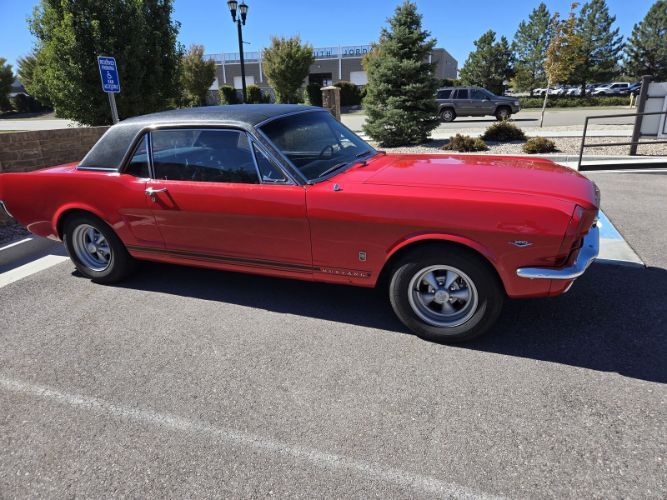
If you are interested in seeing what is currently available, classic Mustang convertibles and coupes from this generation appear in the market regularly, though the cleanest documented examples move quickly when priced correctly.
The 1971-73 generation ended an era that had lasted the better part of a decade. These cars were simultaneously the most powerful and the most compromised Mustangs of the first generation, carrying the biggest engines Ford offered at the start and watching those engines vanish under regulatory and economic pressure by the end. That arc, from the 429 Super Cobra Jet to the emissions-compliant 351, makes the three-year run one of the most consequential chapters in the nameplate's history.
Sources and notes
Horsepower figures are as published by Ford and period sources. Note that 1971 ratings are SAE gross, while 1972 and later figures are SAE net and are not directly comparable. Collector-value observations are general and based on recent public sales; they are not a guarantee of current or future market value. Always verify the specifications and documentation of any individual car before purchase.
- Hagerty Media — "Sorting out the Mustang's 351 Cleveland engines"
- Wikipedia — Ford 335 engine (351 Cleveland specifications and net/gross ratings)
- Wikipedia — Ford Mustang (first generation)
- MustangSpecs — 1971 Mustang 429 Cobra Jet / Super Cobra Jet engine data
- Hagerty Media — "No, the Ford Mustang II is not a re-skinned Pinto"