The road that made the car
There is a moment in the first episode of Route 66 that tells you everything. Tod Stiles is behind the wheel of a 1960 Corvette, top down, heading into the middle of the country with no plan and no fixed destination. The highway stretches out ahead. The camera pulls back. And for a second before the dialogue starts, you understand exactly what that car was supposed to mean.
The CBS series ran from October 1960 to March 1964, and it did something no marketing campaign could have engineered. It fused a specific automobile with a specific idea about American freedom at exactly the moment both things were new enough to still feel possible. The Chevrolet Corvette had existed since 1953, but it was the television show, shot on location across more than forty states, that turned it into a cultural object. Not just a car. A vehicle for a particular kind of life.
This piece is part of a larger look at the rarest Corvettes and the icons of the culture they created. But to understand why the Corvette became an icon at all, you have to start here, on a highway that runs from Chicago to Santa Monica, with two young men and a white convertible that the network got for free.
Tod, Buz, and the car Chevrolet gave them
The arrangement between the show's producers and General Motors was straightforward by early television standards. Chevrolet supplied new Corvettes each season in exchange for the prominent placement. The cars were worked hard. Production crews drove them across the country between shoots, and by all accounts they held up well, which itself became a kind of advertising.
Tod Stiles (Martin Milner) was the establishment half of the pair, an Ivy League type who inherited his father's car and not much else. Buz Murdock (George Maharis) was the street-smart New Yorker, rougher edges, less certain about where he fit. The tension between them was the show. The Corvette was the constant.
What the writers understood, whether consciously or not, was that the car had to be a sports car to make the premise work. A sedan would have implied a destination. The Corvette, open and low and pointed, implied motion itself. You were not driving somewhere. You were driving.
George Maharis left the series after season three due to illness, and Glenn Corbett joined as Linc Case for the final season. The Corvette itself changed with the show's run, transitioning from the C1 body style to the second-generation C2 when Chevrolet introduced the Sting Ray in 1963. The show effectively documented the transition in real time, which gave it an accidental authenticity that pure fiction rarely achieves.
The C1-to-C2 transition, on camera
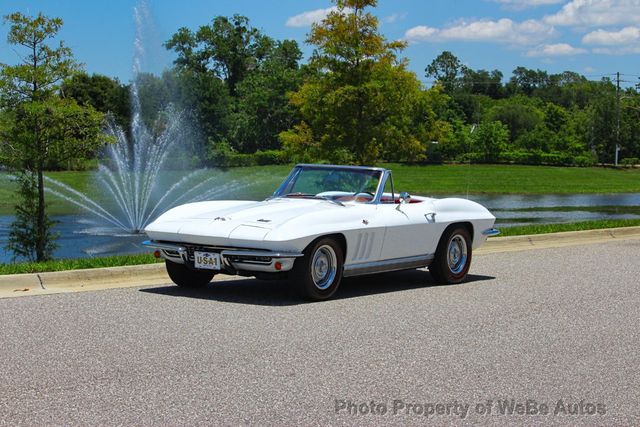
The first three seasons of Route 66 used C1 Corvettes, the rounded, classic roadster shape that Harley Earl's team had designed in the early 1950s. By 1963, when the C2 Sting Ray arrived with its split rear window coupe and dramatically reshaped convertible body, the show was still in production. Chevrolet supplied the new cars. The camera crews kept rolling.
This created something genuinely unusual in automotive history. A single television series bridged the two most celebrated generations of America's sports car. Viewers who had watched Tod and Buz for three seasons in one car saw the next generation introduced through the same characters, the same highway, the same premise. The transition was seamless in a way that no press launch or motor show appearance could replicate, because it came wrapped in a story people were already following.
| Season | Years aired | Corvette generation | Body style featured |
|---|---|---|---|
| Season 1 | 1960–61 | C1 (1960 model) | Convertible |
| Season 2 | 1961–62 | C1 (1961–62 models) | Convertible |
| Season 3 | 1962–63 | C1 / early C2 | Convertible |
| Season 4 | 1963–64 | C2 Sting Ray (1963–64) | Convertible |
The C2 that appeared in the final season had a 327 cubic inch V8 producing between 250 and 360 horsepower depending on the carburetor and compression setup Chevrolet chose for the supplied car. The 1963 Sting Ray was a genuine engineering step forward, with independent rear suspension replacing the C1's solid axle, a fully redesigned chassis, and bodywork that looked like it had been drawn by someone thinking about Le Mans as much as Malibu. It was a better car by almost any technical measure. The show made sure the country knew it existed.
Bobby Troup wrote the song first
Before the television series, before the Corvette was anything more than a niche sports car struggling to find buyers, there was the song. Bobby Troup wrote "(Get Your Kicks on) Route 66" in 1946, reportedly on a drive from Pennsylvania to California with his then-wife Cynthia. Nat King Cole recorded it that same year and it became a hit. Bing Crosby, Chuck Berry, the Rolling Stones, Depeche Mode, and dozens of others covered it in the decades that followed.
The song does something specific that the later television show would amplify. It names the towns. Flagstaff. Gallup. Amarillo. Barstow. San Bernardino. It turns a highway number into a geography, a sequence of places that adds up to a journey from the Midwest to the Pacific coast. That specificity is what gave Route 66 its weight as a cultural idea. It was not a generic road. It was a particular one, with a beginning and an end and a list of stops in between that Americans could locate on a map.
By the time the television show launched in 1960, the song was fourteen years old and already embedded in the culture. The show's title was not accidental. The producers were borrowing the freight that Troup's lyric had already built up, the association between that highway and the idea of going somewhere new, of leaving something behind and moving west into possibility.
"The song named the places and the show put a car in them. Between the two, they built an idea of American freedom that was specific enough to feel real and open enough to absorb anyone's version of it. The Corvette happened to be parked in the middle of all of it."
— Patrick Walsh
Postwar mobility and what the Corvette meant
The Corvette arrived in 1953 as a concept that almost failed. Sales were slow in the first two years, and Chevrolet came close to canceling the program. What saved it was partly competitive pressure from Ford's Thunderbird and partly Zora Arkus-Duntov, the Belgian-American engineer who pushed for a proper high-performance version and got it with the introduction of a V8 option for the 1955 model year.
But the deeper context was what was happening to American life after 1945. The Interstate Highway System broke ground in 1956. The suburban build-out was accelerating. For the first time in history, a significant portion of the American population had both the disposable income and the infrastructure to think of the automobile as something other than pure transportation. You could drive for pleasure. You could drive to somewhere you had never been. The car was not just a tool. It was a form of self-expression.
The Corvette stepped into that cultural opening at the right moment. It was not the only sports car available in America, but it was the American one. It came from Flint and Detroit, not Stuttgart or Maranello. It ran on the same fuel and used the same roads as everything else on the highway, but it looked like it was doing something different with the experience. That was the point.
What the Route 66 television show did was make that abstraction concrete. It gave the Corvette a narrative function. The car was not background set dressing. It was the mechanism by which two characters moved through American experience, encountered strangers in difficulty, and worked out what kind of people they were. Week after week, the car was there. And week after week, it was moving. Always moving.
The road trip as American mythology
The road trip is not a uniquely American idea, but America made it into a mythology at a scale no other country matched. Kerouac published On the Road in 1957, three years before the television show debuted. John Steinbeck's Travels with Charley came out in 1962, while the show was in its third season. The country was, in that particular window, actively constructing a story about itself that had motion and highway at its center.
The Corvette fit that story because of what it was not. It was not a family car. It had no back seat. It carried two people and their luggage and not much else. It was designed for the experience of driving, not the logistics of it. That limitation was also a definition. The Corvette was for people who had decided, at least temporarily, that the only obligation was the next stretch of road.
That idea has stayed attached to the car in ways that are difficult to explain purely through engineering or marketing. Other sports cars have come and gone. The Corvette has remained in continuous production since 1953, through eight generations, through changes in engine displacement and chassis architecture and body material that would make the original car unrecognizable. What has not changed is what the car is supposed to represent. Freedom. Motion. The American road trip in its most distilled form.
The Route 66 television show was not the only reason for that. But it was a significant one. Four seasons, more than a hundred episodes, shot on location across the American landscape, with a Corvette in the frame every week. That is a lot of repetition. Repetition is how myths get made.
Sources and notes
- Edelbrock, Joe. Route 66: The Television Series. McFarland & Company, 2003. Primary source for production history, location shooting, and GM supply arrangement.
- Troup, Bobby. "(Get Your Kicks on) Route 66." Recorded by Nat King Cole, Capitol Records, 1946. Original recording; lyric geography verified against published sheet music.
- Yates, Brock. Corvette: American Legend. Publications International, 1993. C1 production history, Zora Arkus-Duntov's role in the V8 development program.
- Antonick, Michael. Corvette Black Book 1953–2022. Michael Bruce Associates, 2022. Production figures and option codes for C1 and C2 generations.
- Kasher, Sam. "The Wild Ones." Vanity Fair, February 2012. Profile of the Route 66 production and its cultural legacy, including interviews with surviving crew members.
- U.S. Department of Transportation. Federal Highway Administration. "Route 66 Corridor Preservation Program." Accessed 2025. Official history of the highway's decommissioning and preservation designation.