How the screen made the Corvette
There is a version of Corvette history that runs through engine codes and production numbers. That version is real and useful. But there is another version, equally real, that runs through television schedules and movie marquees. The Chevrolet Corvette became America's sports car not just because General Motors built it, but because the country watched it every week in living rooms and on theater screens for the better part of four decades. The two histories are inseparable. Sales data from the 1960s makes very little sense without understanding what was happening on CBS on Thursday nights.
This is not a coincidence. Chevrolet understood early that the Corvette needed cultural reinforcement. The car was never cheap, never particularly practical, and never the fastest thing you could buy for the money. What it was, consistently, was visible. Each generation of buyers grew up seeing a specific Corvette on screen, and when they finally had the income to act on that memory, they did. The filmography shaped the market. Understanding which appearances mattered, and why, is part of understanding what you are actually buying when you buy a Corvette today.
Route 66 and the C1: a television sales campaign that actually worked
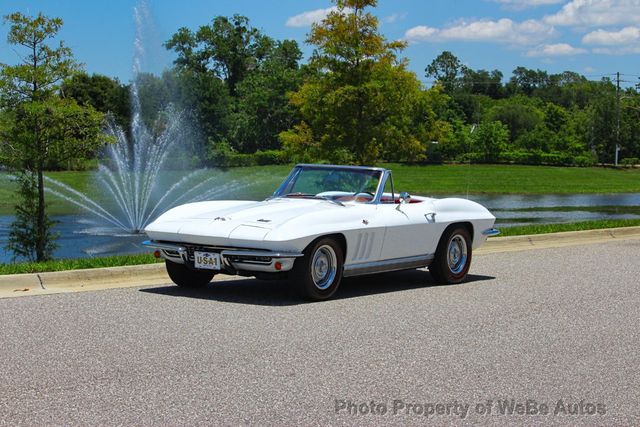
"Route 66" ran on CBS from October 1960 through March 1964, and it did something no print advertisement could replicate: it put two young men in a white Corvette and sent them across America, week after week, into the living room of every household with a television set. Buz Murdock and Tod Stiles were not selling the car directly. They were selling a specific idea of what driving a Corvette meant, and the idea was freedom, mobility, and the possibility that the road itself might solve your problems.
The show was produced with Chevrolet's active involvement. The cars were updated each season to reflect the current model year, which gave the production both fresh inventory and a running demonstration of Corvette evolution. Viewers who watched from 1960 through 1964 saw the C1 age in real time, and then saw it replaced. The 1963 season switch to the C2 Sting Ray was, functionally, a national product launch delivered through drama. No ad buy could have achieved the same depth of impression.
The sales impact is documented. GM's own records show the Corvette climbing from roughly 10,000 units annually at the show's debut to over 21,000 by 1963. Attribution in marketing is always complicated, and the C2's new design was itself a major factor. But Corvette historians, including those working from factory records at the National Corvette Museum in Bowling Green, consistently cite "Route 66" as the single most effective piece of Corvette marketing in the car's first decade. It established the car not just as a product but as a character type.
This article sits within our broader exploration of rare Corvettes and their cultural icons, where the connection between screen exposure and collector desirability runs across every generation.
| Screen appearance | Year(s) | Corvette generation | Cultural impact |
|---|---|---|---|
| Route 66 (CBS) | 1960-1964 | C1 / early C2 | Direct sales lift; national brand establishment |
| Corvette Summer | 1978 | C3 (custom) | Cult following; most-recognized single screen car |
| Stingray (CBS) | 1985 | C4 | C4 introduction to mass TV audience |
| Various 1960s-70s films | 1965-1979 | C2 / C3 | Reinforced performance/youth positioning |
Corvette Summer and the car that refused to be forgotten
"Corvette Summer" (1978, directed by Matthew Robbins) is a strange film. It stars a 26-year-old Mark Hamill, shooting between "Star Wars" and "The Empire Strikes Back," as a high school student who builds a custom C3 Corvette in shop class and then follows it to Las Vegas after it is stolen. The plot does not hold up to scrutiny. The car absolutely does. The modified 1973 C3 at the center of the film, with its extended front end, chopped roof, and side-pipe exhaust, became one of the most recognizable screen cars in American automotive history despite the movie itself being largely forgotten.
What "Corvette Summer" accomplished was accidental and lasting. It planted a specific, extreme version of the C3 in the memory of every teenager who saw it in 1978 or caught it on cable through the 1980s. The generation that grew up with that image is now in its fifties and sixties, and C3 demand in collector markets tracks closely with their buying power. Whether a buyer knows the film consciously or not, the aesthetic the film popularized, the modified C3 as object of desire worth pursuing, runs through the C3 collector community in ways that are hard to separate from the car's underlying engineering merits.
The actual screen car was built for the production by Bill Shenk and is not a Corvette you could buy from a dealer. It belongs to the category of film-specific interpretations that create their own mythology. The car appeared at the 1978 Cannes Film Festival alongside Hamill. A replica was built and displayed at the National Corvette Museum. For practical buyers, the film's legacy is most useful as an explanation for why well-modified C3s from the mid-1970s command premiums that their mechanical specifications alone would not justify.
"The interesting thing about 'Corvette Summer' isn't what it did for the C3's reputation while it was in theaters. It's what it did over forty years on cable and home video. That film ran constantly through the 1980s. A generation of kids who would never have sought out a Corvette documentary absorbed the idea of the C3 as a car worth obsessing over. You can trace that in the auction data if you know what you're looking at."
— Emily Chen
The C4 era: Stingray (1985) and 1980s pop culture placement
The C4 Corvette launched in 1984 into a very different media environment than the C1 had faced in 1953. Cable television was fragmenting the audience, but it also created new channels hungry for programming. "Stingray," a CBS series that premiered in 1985, put a black 1984 C4 at the center of a weekly action format. The premise was thin (a mysterious man helps people in exchange for favors), but the car was given considerable screen time and presented as technologically current in a way that mattered to the audience "Knight Rider" had built for automotive-hero television.
The C4 also appeared consistently in the broader 1980s landscape of action films and television that treated high-performance American cars as shorthand for a specific kind of protagonist. These appearances were less deliberate than "Route 66" had been, but they accumulated. By the mid-1980s, the C4 was the default screen car for a certain category of American action storytelling, and Chevrolet benefited from placements it had not always paid for directly.
The practical consequence for today's buyer: C4 Corvettes from 1984-1989 are still priced as driver-quality cars rather than serious collectibles, typically ranging from $8,000 to $25,000 depending on condition and drivetrain. The ZR-1, which arrived for 1990 with the LT5 engine producing around 375 horsepower (later upgraded to approximately 405 hp for 1993), represents the serious collector tier. But the cultural memory of the C4 as a capable, stylish American sports car, reinforced by consistent screen presence through the 1980s, is part of what keeps demand for good examples steady rather than declining.
What screen exposure actually does to a car's collectibility
The mechanism is worth thinking through carefully, because it is not what most people assume. Screen exposure does not create desire directly. It creates a memory that activates when buyers reach the financial stage of life where they can act on preferences formed decades earlier. A twelve-year-old watching "Route 66" in 1961 is not a Corvette buyer. That same person at fifty-five, having accumulated savings and started to think about which car they always wanted, is. The screen appearance plants the seed; the market harvests it twenty or thirty years later.
This has a concrete implication for evaluating which Corvettes to buy. Cars with strong screen associations from the 1960s through the 1980s, the C1, C2, C3, and early C4, are drawing buyers from generations that have already peaked or are approaching peak buying age. Demand for C1 and C2 cars is stable to slightly softening at the top of the market, though solid driver-quality examples remain active. C3 demand is still building as the generation that grew up with "Corvette Summer" reaches its buying prime. The C5 (1997-2004), which appeared in several early 2000s films and television series, is now entering the phase where its screen associations are converting into collector interest.
Sources and notes
- Antonick, Michael. Corvette Black Book 1953-2013. Michael Bruce Associates, 2013. Primary source for production numbers by model year and variant.
- Falconer, Tom and Don Sherman. Corvette: America's Sports Car. Publications International, 2004. Documents the "Route 66" production relationship with Chevrolet and contemporaneous sales data.
- National Corvette Museum (corvettemuseum.org). Institutional records on screen-car replicas, including the "Corvette Summer" display vehicle and "Route 66" documentation.
- Zazarine, Paul and Chuck Jordan. Corvette: A Piece of the Action. Motorbooks International, 1992. Covers the C1-C3 era cultural placement strategy from within GM's design and marketing departments.
- Leffingwell, Randy. Corvette: Five Decades of Sports Car Speed. Motorbooks, 2002. Includes contemporary reviews and advertising records for each generation's market positioning.
- Robbins, Matthew (director). Corvette Summer. MGM/United Artists, 1978. Primary source for on-screen car specifications; production notes archived at the Academy of Motion Picture Arts and Sciences Margaret Herrick Library.