Why Corvette color matters more than almost anything else
Paint is the first thing you see and the last thing most buyers think hard enough about. On a Corvette, that's a mistake. Color isn't decoration — it's documentation. The right color on the right year tells you about production intent, about what the factory thought would sell, and sometimes about a build so rare that fewer cars survived with that paint than you could fit at a dinner table. Get the color wrong — meaning a repaint in a color the car never wore from the factory — and you've fundamentally changed what the car is.
I've been laying paint in Long Beach for a long time. I've refinished Corvettes in correct factory colors and I've seen plenty come in wearing something they were never supposed to. The difference shows up fast when you know where to look. More important for buyers right now: the difference also shows up at auction. Original paint, even tired original paint, commands a premium that a high-dollar respray in the correct code will never fully recover.
This piece covers the colors that matter most — the genuinely rare ones across C1 through C4, what made them rare, and how to confirm whether you're actually looking at one. For the full context on which specific Corvettes carry the biggest collector premiums, the history of rarest Corvettes, icons, and culture covers the broader picture. Here we're staying focused on paint.
C1 and C2 rare colors: the scarcity starts early
The first-generation Corvette ran from 1953 through 1962, and early on Chevrolet was still figuring out who was buying these cars and what they wanted. Color choices shifted year to year in ways that created some genuine anomalies.
1961 Fawn Beige is the one people talk about. It was a single-year color — offered only for 1961 — and it sold poorly enough that Chevrolet pulled it after one season. Production numbers in Fawn Beige are hard to pin down precisely, but the color shows up rarely enough at shows and in registry data that finding a survivor in any condition is an event. The irony is that it's not a dramatic color. It's a warm, muted tan. Buyers at the time wanted something sportier-looking. Today that restraint makes it interesting.
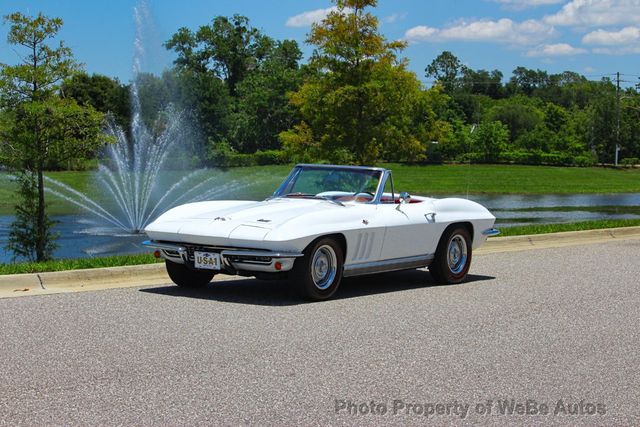
The C2 generation (1963-1967) produced what is probably the single most cited rarity in Corvette color history. Lynndale Blue in 1967 was available on both coupes and convertibles, but convertible production in that color was extraordinarily small. The most-cited figure from registry research puts it at 9 convertibles built in Lynndale Blue for 1967. Nine. That's not a rounding error in a big number — that is the number. A 1967 convertible in Lynndale Blue is not just a rare color; it's a specific and documented production anomaly. If you encounter one with legitimate provenance, you're looking at something that belongs in a serious collection.
Other C2 colors that appear rarely in survivor form include Nassau Blue (1966-1967) and Milano Maroon (1966). Neither approaches the Lynndale Blue convertible situation in terms of documented scarcity, but both are uncommon enough in original condition that they register at serious events.
C3 rare colors: Donnybrooke Green, Mulsanne Blue, and the era of short-run experiments
The C3 ran from 1968 through 1982 — fourteen model years — and Chevrolet's color palette during that stretch went through phases that ranged from conservative to genuinely adventurous. The early-to-mid 1970s produced some of the most paint-specific collector targets in the generation.
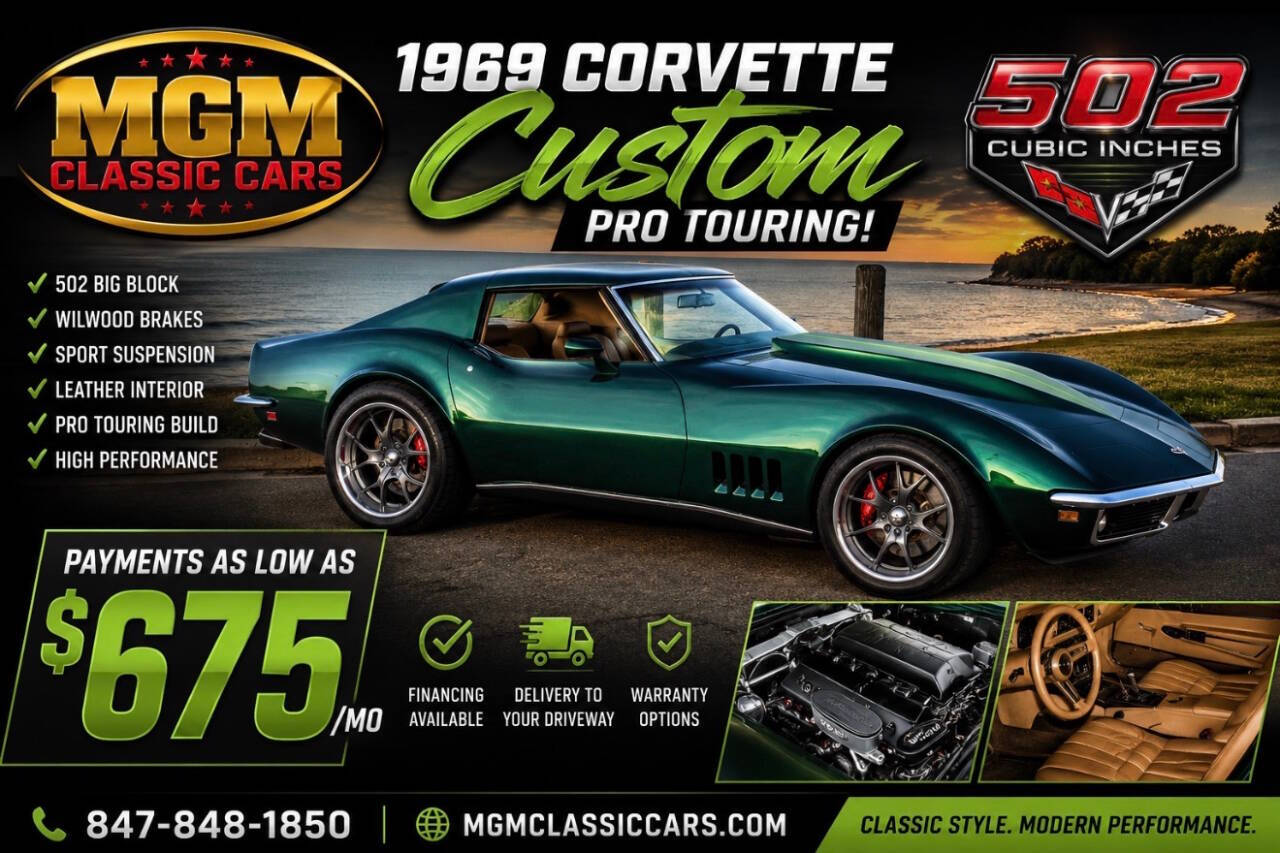
Donnybrooke Green is the one I get asked about most. It appeared for 1969 only, named after the Donnybrooke Raceway in Minnesota. It's a deep, complex green — not the bright candy colors of the late 1960s muscle car era, but something more saturated and serious-looking. Production in Donnybrooke Green was limited, and because it was a single-year color that didn't resonate broadly with buyers at the time, survivor rates are low. A clean original-paint 1969 in Donnybrooke Green is worth serious attention.
Mulsanne Blue ran for 1969 as well, another single-year color named for a racing venue. The Le Mans connection was intentional — Chevrolet was in an aggressive motorsport marketing phase — and the color itself is a rich medium blue that reads well on the C3's body. Like Donnybrooke Green, it didn't sell in high volume, which means finding one now takes patience.
| Color | Year(s) | Generation | Notes |
|---|---|---|---|
| Fawn Beige | 1961 only | C1 | Single-year; poor original sales, strong collector interest now |
| Lynndale Blue | 1967 only | C2 | Approximately 9 convertibles documented by registry research |
| Nassau Blue | 1966-1967 | C2 | Two-year run; uncommon survivors in original paint |
| Donnybrooke Green | 1969 only | C3 | Single-year; named for Minnesota raceway; deep complex green |
| Mulsanne Blue | 1969 only | C3 | Single-year; Le Mans naming tie-in; limited production |
| Bryar Blue Metallic | 1970 only | C3 | Single-year; another racing venue name; uncommon at shows |
| War Bonnet Yellow | 1969 only | C3 | Single-year bright yellow; polarizing at the time, sought now |
| Bright Aqua Metallic | 1972 only | C3 | Single-year; rarely seen in survivor condition |
The pattern with C3 rare colors is consistent: single-year offerings that didn't move product at the time are the ones collectors want now. Bryar Blue Metallic (1970 only) follows the same naming convention as Donnybrooke and Mulsanne — Bryar Motorsports Park in New Hampshire — and the same limited-production profile. War Bonnet Yellow from 1969 was polarizing when new. A lot of buyers passed on it. That makes original-paint survivors uncommon.
Bright Aqua Metallic from 1972 deserves specific mention because it's genuinely hard to find. It was one of the last truly adventurous colors before Chevrolet's palette became more conservative through the mid-to-late 1970s. By 1975 and 1976, the color choices had contracted considerably, which makes the early-C3 single-year experiments feel even more distinct in retrospect.
"The single-year colors from 1969 through 1972 are where the C3 rarities live. Donnybrooke Green, Mulsanne Blue, Bryar Blue — these weren't popular when new, and that's exactly why they matter now. You find them at maybe one serious show a year if you're paying attention. Original paint on one of those is a different conversation than a fresh respray, even a perfect one."
— Jim Vasquez
C4 rare colors and the shift in how rarity gets documented
The C4 generation (1984-1996) gets less attention for color rarity than the earlier Corvettes, partly because the palette was more conservative and partly because C4 values have been slower to climb than C1 through C3. But there are specific situations worth knowing about.
Bright Red was the dominant color throughout the C4 era — it sold in volume and it's common. The colors at the other end of the spectrum are more interesting. Polo Green Metallic, which ran through the early-to-mid 1990s, became closely associated with the C4 and has held up well. But the genuinely uncommon colors are the ones tied to specific packages and limited-run editions.
The 1996 Collector Edition brought Sebring Silver Metallic as an exclusive color option — not available to standard production buyers that year. That specificity matters. When a color is tied to a specific trim or edition rather than the general order bank, it concentrates production in a defined, documented way. The 1995 and 1996 pace car replicas created similar situations: colors that were tied to a specific production run and documented as such from the factory.
Original paint vs. repaint: what it means for value
I'll be direct here because I see people get this wrong constantly. A car with original factory paint in a rare color is worth more than the same car with a correct respray. This is not a small premium. At serious auction houses and in private sales involving documented cars, original paint can add 20 to 40 percent over an equivalent car that has been refinished — even refinished correctly, even in the right code. The gap widens on rarer colors because the rarity itself compounds the originality premium.
Why? Because original paint is direct physical evidence. It hasn't been touched. A chip, a scratch, a stress crack in the original lacquer — all of that is documentation. It tells you the car is what it says it is. A perfect respray in the correct color code removes that evidence. It replaces certainty with probability. On a car worth $50,000, that distinction matters. On a C2 in a genuinely rare color, it can matter by $30,000 or more.
Tired original paint is not a problem to fix before selling. It's a feature. If you own a car with original paint and you're considering a respray to freshen it up before listing, talk to someone who has watched auction results before you make that call. The car in its current condition might bring more than the car after you've spent $15,000 on paint work.
How to verify original color via VIN and trim tag
The trim tag — also called the cowl tag or body tag — is the primary factory document for color verification on Corvettes from the 1960s through the early 1980s. On C2 and C3 Corvettes, it's typically located on the driver-side door jamb area. It carries the paint code, interior code, build date, and other factory information. This is the first thing any serious buyer should locate and read.
The paint code on the trim tag should match the color the car wears. If the car has been repainted in a different color, the trim tag will still carry the original code. If the car has been repainted in the original color, the trim tag will match the paint but you won't have the original surface. The tag itself doesn't tell you whether the paint is original — it tells you what the original color was.
For C1 Corvettes, the situation is slightly different because early production documentation was less standardized. NCRS (National Corvette Restorers Society) documentation processes are built around exactly this kind of verification, and their judging protocol covers what's expected at each point in the car's history.
VIN decoding adds a layer but doesn't replace the trim tag. The VIN identifies the car — year, assembly plant, production sequence — but the color specification is in the trim tag. On C4 and later cars, the Service Parts Identification (SPID) label in the glove box carries option codes including paint, and this is the document to reference for edition-specific color verification.
| Generation | Primary color document | Location | What to check |
|---|---|---|---|
| C1 (1953-1962) | Body plate / trim tag | Varies by year; firewall area | Paint code vs. current paint; NCRS documentation |
| C2 (1963-1967) | Trim tag (cowl tag) | Driver door jamb area | Paint code; date code alignment with build sequence |
| C3 (1968-1982) | Trim tag | Driver door jamb | Paint code; confirm single-year color is period-correct |
| C4 (1984-1996) | SPID label | Glove box | Option code for paint; edition-specific codes for limited runs |
For C2 cars specifically, where the rare-color stakes are highest, cross-reference the trim tag data with registry resources. The Corvette Black Book and NCRS documentation have been tracking build data long enough that anomalous claims — a car supposedly from a batch of nine — can be evaluated against what's actually known to exist. A legitimate 1967 Lynndale Blue convertible will have a paper trail that extends beyond the trim tag.
Which rare colors carry the biggest premium today
The honest answer is that it depends on the car and the buyer pool, but some patterns have been consistent enough over the past decade of auction results to say with confidence.
On C2 cars, Lynndale Blue convertibles are in their own category. The production number is small enough and the documentation tight enough that when one comes to market in legitimate condition, the premium is real. This is not a situation where the color adds 10 percent — it's a situation where the color is central to the car's identity and the price reflects that. Buyers who collect documented rarities pay accordingly.
On C3 cars, the single-year racing-venue colors from 1969 through 1972 carry consistent premiums over the same car in a common color. Donnybrooke Green, Mulsanne Blue, and Bryar Blue all trade at a premium in original paint. The gap between original paint and respray is arguably larger on these cars than on any other segment, because the color is the rarity — replace the paint and you've removed the primary evidence.
On C1 cars, Fawn Beige and other single-year colors from the late 1950s and early 1960s command attention from serious collectors, but the C1 market is driven heavily by condition and authenticity across all factors, not color alone. A Fawn Beige car in poor condition doesn't benefit from the color the way a well-preserved example does.
The broad principle is straightforward: rare color plus original paint is a multiplier. Rare color plus respray is interesting but not the same thing. Common color plus original paint is worth noting but not the same value driver. Common color plus respray is a car valued on its mechanical condition and overall correctness, with no color premium at all.
Sources and notes
- National Corvette Restorers Society (NCRS) — production documentation, judging standards, and registry data for C1 through C4: ncrs.org
- Corvette Black Book by Mike Antonick — year-by-year production statistics and option code reference, published annually since 1977 by Michael Bruce Associates
- Bloomington Gold Certification — originality judging standards and color documentation criteria: bloomington-gold.com
- Mecum Auctions — archived hammer price results for documented rare-color Corvettes, searchable by year and color: mecum.com
- Hagerty Valuation Tools — condition-tier pricing across Corvette generations with color and options adjustments: hagerty.com/valuation-tools
- Corvette Research (Noland Adams) — historical production analysis and trim tag interpretation guides, referenced in NCRS judging materials