
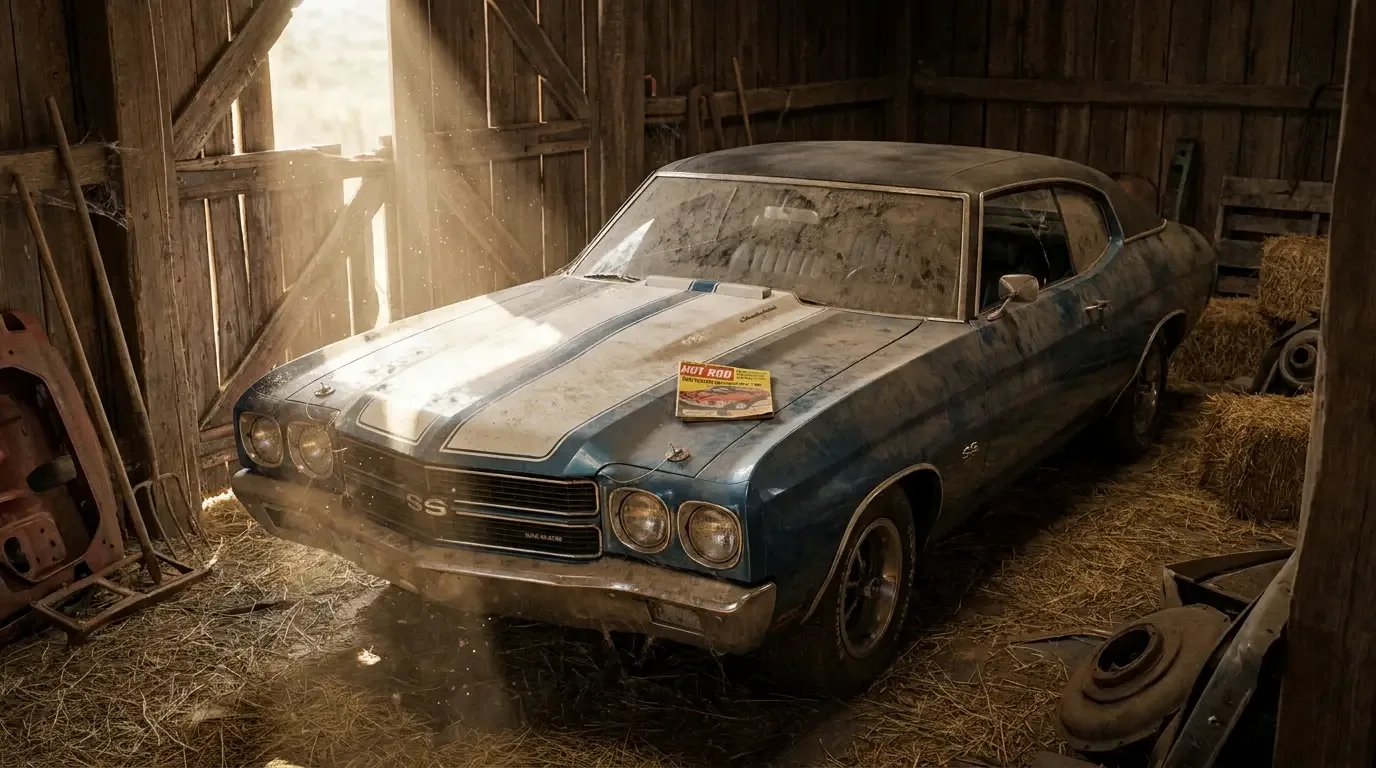
There's a specific kind of magazine you find in a barbershop or a diner waiting area, the cover always some faded red or orange muscle car against a sunset, the headline promising "the cars that built America" or something close to it. That whole genre, nostalgia media built entirely around the muscle car era, has existed almost as long as the cars themselves have been old enough to be nostalgic about, and the Chevelle has never been far from the center of it. I think about nostalgia differently than a lot of car writers do. It's not really about the machine. It's about who was standing next to it and what year it was. The Chevelle shows up in this kind of storytelling constantly, not necessarily because it was the fastest or rarest car of its era, but because so many ordinary people actually owned one, which means so many ordinary people have a real memory attached to it.
Muscle Car Nostalgia Media: Where the Chevelle Fits In
How muscle car nostalgia magazines, podcasts, and video built a lasting storytelling genre around the Chevrolet Chevelle, and why the car fits it so well.
The magazine era
Hot Rod, Car Craft, Muscle Car Review, and dozens of smaller regional and specialty titles built an entire cottage industry on retrospective Chevelle content starting in the late 1970s and accelerating through the 1980s and 1990s, once the cars had aged enough to become collectible rather than just used. These weren't new-car road tests. They were "remember when" pieces, often built around a single restored example and the owner's personal story of finding it, usually half-buried in a barn or bought from a widow who just wanted it gone. That format, the found car plus the owner's story plus a walk through the specs, became such a reliable template that it's still the backbone of muscle car content today, just moved from print to YouTube and Instagram. The bones of the story haven't changed much in forty years. What's changed is how fast it travels and how many more Chevelle owners now have a platform to tell their own version of it without a magazine editor in the middle.
Why the Chevelle fits the nostalgia format so well
Some muscle cars carry a kind of mythic, unreachable quality, the Hemi Cuda or the L88 Corvette, cars so rare and so expensive that most readers never had a real shot at owning one even in period. The Chevelle sits in a different, more accessible emotional lane. It was genuinely common. Chevrolet built these by the hundreds of thousands across its run, which means there's a real chance the reader's uncle had one, or their dad's friend, or the guy two houses down growing up. That accessibility is exactly what nostalgia media runs on. A story about a millionaire's unobtainable Hemi car is entertaining. A story about a Chevelle that reads like it could have been your own family's car is something people actually feel, and feeling is what keeps someone reading past the headline.
From print to podcast to short-form video
The format has fractured across a lot more channels than it used to run through. Where a 1985 reader only had a handful of national magazines to get their Chevelle nostalgia fix, today's audience gets it from YouTube channels doing barn-find walkthroughs, podcasts interviewing longtime owners and former GM engineers, and short-form video built around a single dramatic detail, an untouched interior, an odometer reading, a matching-numbers stamp. What's interesting is that the underlying appetite hasn't shrunk even as the format has splintered. If anything, algorithm-driven platforms have made it easier for a genuinely compelling Chevelle story, a car found exactly as it was parked in 1978, say, to reach a much bigger audience than any single print magazine issue ever could have. The nostalgia machine got faster. It didn't get smaller.
What this means for the cars themselves
All of this coverage isn't neutral. Cars that get featured repeatedly in nostalgia media, whether print or digital, tend to see real interest follow the attention, sometimes translating into stronger demand for that specific configuration or color combination. A well-told story about a low-mile, unrestored SS 396 can move buyer interest in ways a spec sheet never will, because the story does the emotional work the spec sheet can't. That dynamic connects directly to the Chevelle's cultural footprint as a whole. Movies and TV put the car in front of a mass audience for two hours at a time. Nostalgia media does something slower and arguably stickier, building a sustained relationship between the car and its audience one story, one podcast episode, one late-night barbershop magazine at a time.
The next chapter
What comes next in this cycle is worth watching. The Chevelle owners who grew up with these magazines as teenagers are now the ones being interviewed for the podcasts and video series, which means the storytelling is starting to loop back on itself, nostalgia about the nostalgia. That's a strange but honest place for the genre to land, and it's not likely to slow down while there are still Chevelles sitting in barns waiting to be found. There's also a generational handoff happening that the older print magazines never had to think about. A teenager scrolling short-form video today has no memory of the Chevelle as a new car, or even as a common used car, the way someone reading Hot Rod in 1985 might have. For that younger audience, the nostalgia isn't personal, it's inherited, absorbed secondhand through a grandparent's story or a viral clip rather than lived firsthand. Whether that inherited version of nostalgia carries the same emotional weight as the real thing is an open question, and probably the single biggest thing that will determine whether the Chevelle's cultural relevance outlasts the generation that actually owned one new. For a car with that much emotional gravity built up around it, the natural next stop is visual: next: The Chevelle as Poster Car looks at how that same nostalgia translated onto bedroom walls, garage posters, and the kind of imagery that outlasts any single article or episode.
"Every one of these stories starts the same way, somebody found a car nobody wanted, and it turned out to matter more than anybody expected. That's not really a story about horsepower. It's a story about who we were when we were young enough to think a car could be forever."
Nora Beckett
Sources and notes
Related Reading

Automotive features writer and photographer who tells the human stories behind the cars, from show fields to cross-country road trips.
Related Listings - Chevrolet Chevelle
More in Ownership & Lifestyle
Comments (1)
Curious whether values have held since this was written. The market moves fast right now.