
In the last shot before dawn in George Lucas's American Graffiti, a chopped and channeled coupe idles under a streetlight, its owner daring anyone to run him. The car is a 1932 Ford, a Deuce, painted a hard canary yellow, and for a generation of kids who saw the film in 1973 it became the picture in their heads whenever anyone said the words "hot rod." That yellow coupe did more to sell the idea of hot rodding to America than any magazine spread ever managed. It put the whole subculture, the primer and the flames and the small-town cruising ritual, on a movie screen where millions of people who had never set foot in a speed shop could fall for it.
Ownership & Lifestyle
7 min read
Hot Rods in Movies and Music
The yellow Deuce, Two-Lane Blacktop and the Beach Boys turned a local craft into a national dream. How hot rods got onto the screen and the radio.
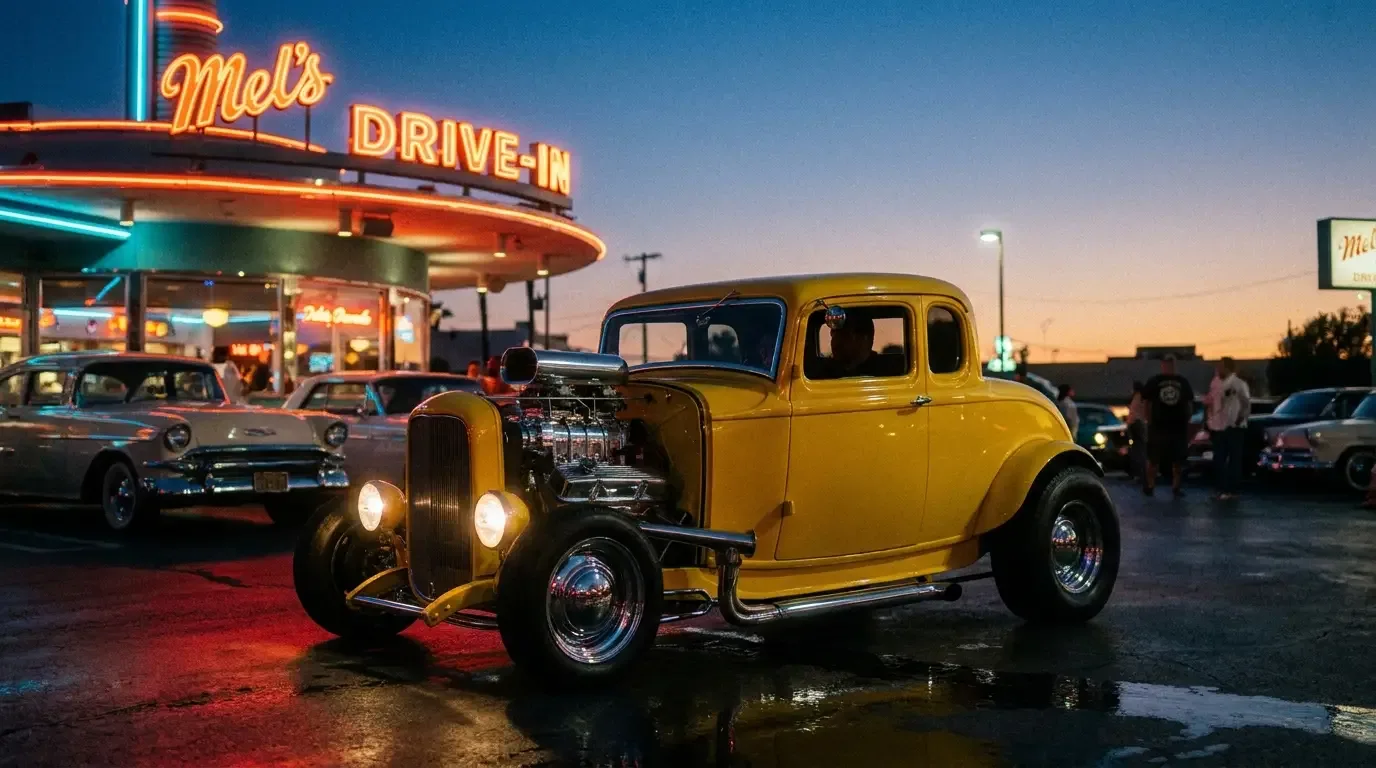
That is the strange power of pop culture. A hot rod is a physical object, welded and hammered and bolted together in somebody's garage. But the image of a hot rod, the feeling of one, travels through movies and records and reaches people who will never turn a wrench. This is the story of how the car got into the songs and onto the screen, and how those songs and screens sent the car back out into the world larger than life.
The yellow Deuce and the Hollywood hot rod
Before American Graffiti, Hollywood had already been circling hot rods for two decades, usually nervously. The 1950s produced a run of low-budget pictures with titles like Hot Rod Girl and Dragstrip Riot, films that treated the cars as a symptom of teenage delinquency. The formula was reliable: fast cars, a fatal game of chicken, a moral at the end. These movies were cheap and a little ridiculous, but they did something important. They told teenagers that a modified car was dangerous and thrilling and adult, which is exactly what a teenager wants to hear.
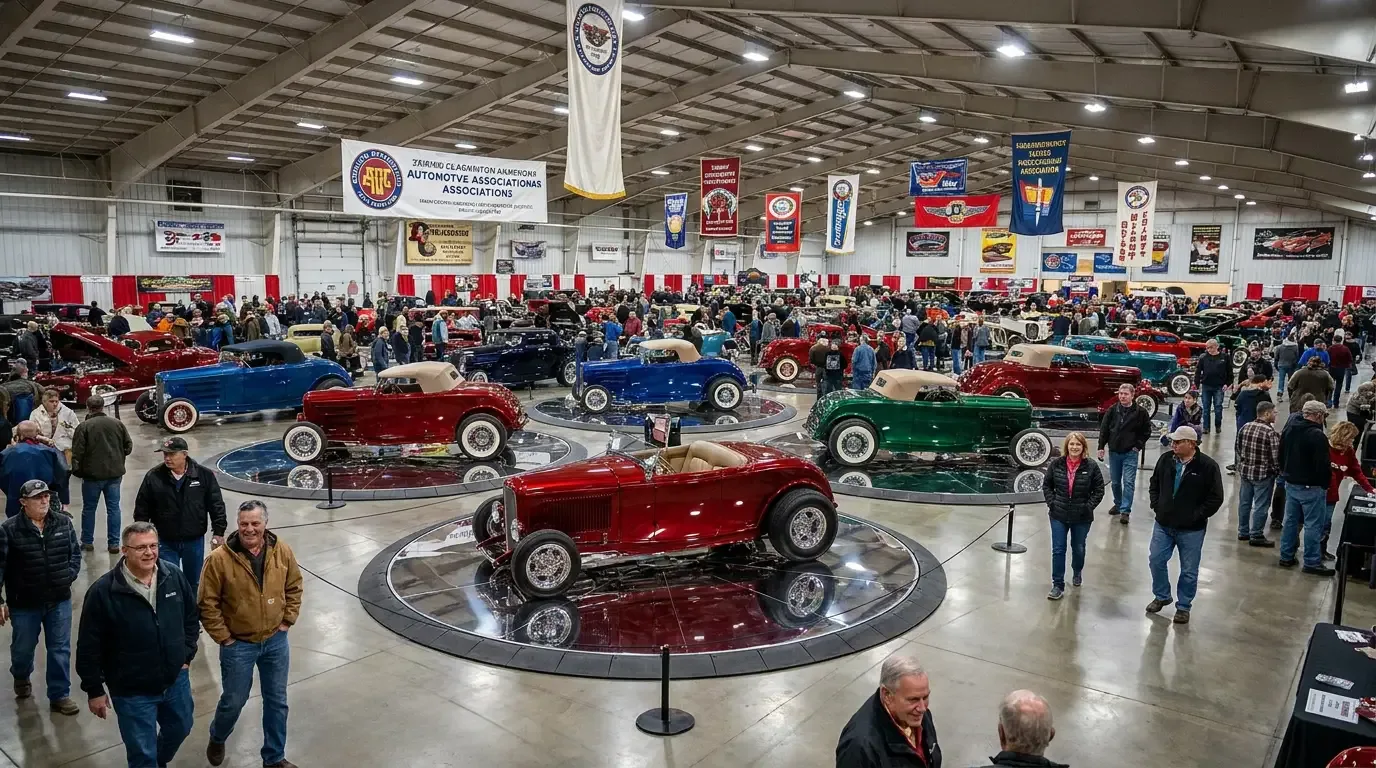
What Lucas did differently was treat the car with affection instead of alarm. The John Milner character drives his yellow coupe not as a menace but as a craftsman proud of his work, the fastest man in town who is quietly aware that his moment is ending. The film understood the culture from the inside. It knew about the cruising loop, the drive-in, the way a good stance and a lopey idle said more about a man than anything he could say out loud. If you want the deeper story of the cars and the people who defined that world, it connects straight back to the world documented in coverage of the grand national roadster show and the clubs that grew up around it.
Two-Lane Blacktop and the road as a place to disappear
Two years before the yellow coupe, in 1971, a much stranger film put a hot rod at its center and refused to explain anything about it. Two-Lane Blacktop starred a primer-gray 1955 Chevrolet, a stripped and gutted street racer, and two characters known only as the Driver and the Mechanic, played by musicians James Taylor and Dennis Wilson of the Beach Boys. There was almost no plot. The car went east, raced for money, and the men inside it barely spoke.
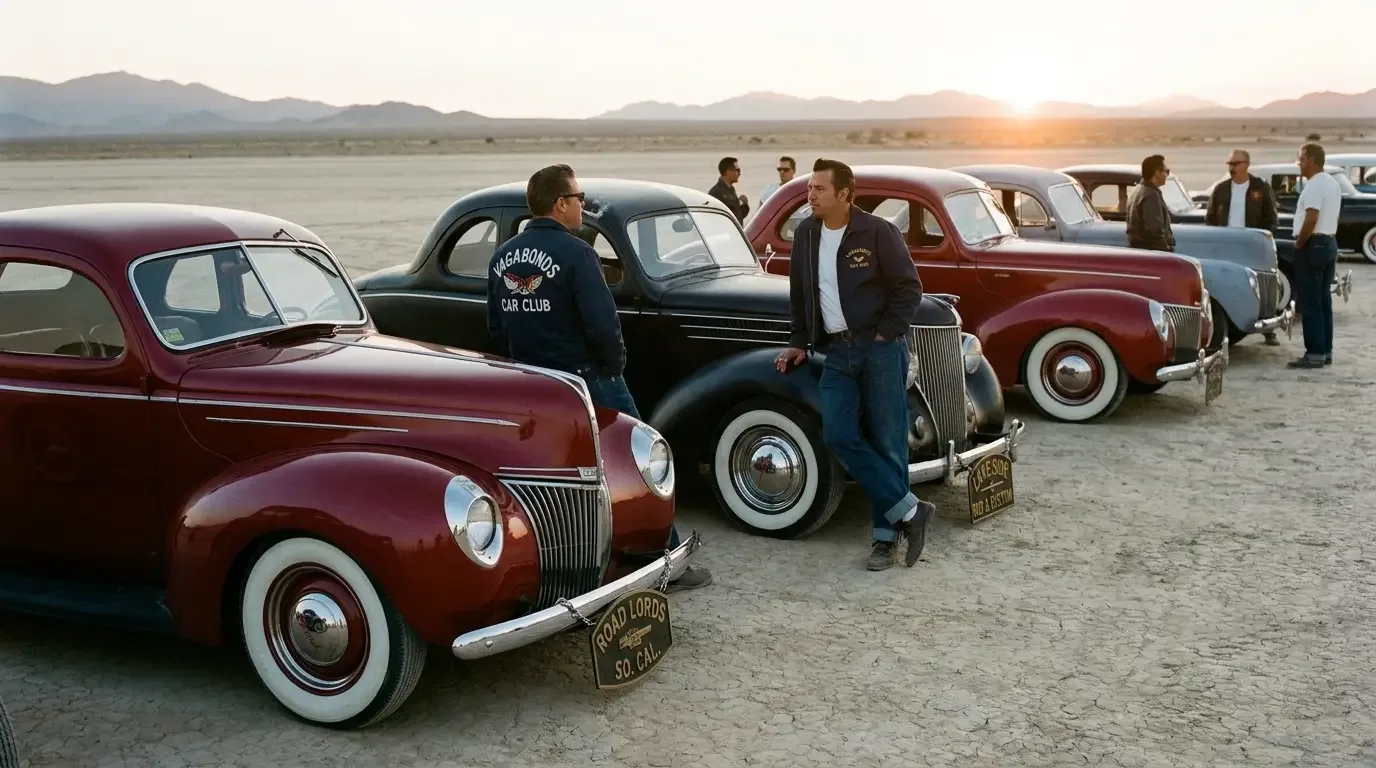
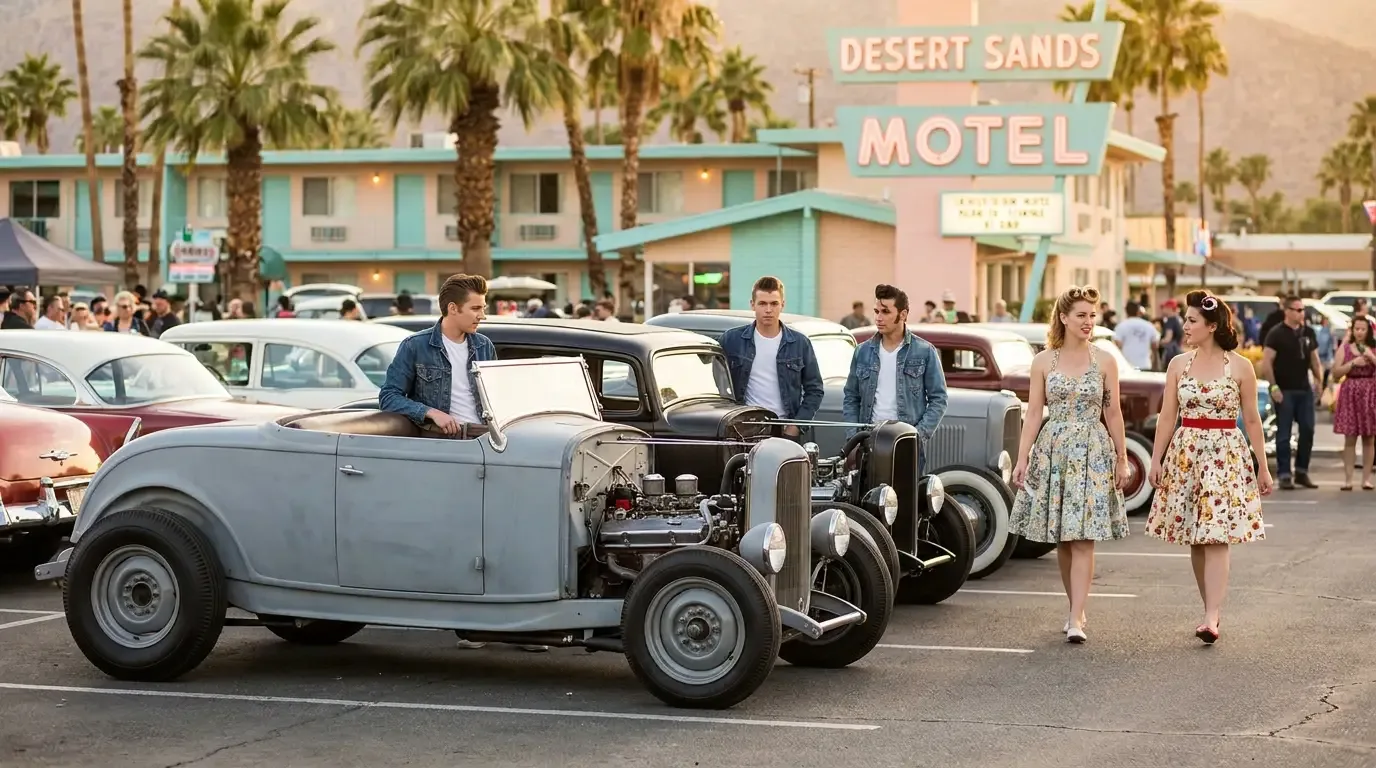
The film flopped when it came out and later became a quiet classic, and the reason is the car. That gray '55 was not a show piece. It was a tool, built for one job, with no chrome and no paint to distract from the work. It represented a truth that the flashier films missed: that for a lot of rodders the point was never to be looked at. The point was the run itself, the machine doing exactly what it was made to do. The same primer-gray honesty runs through the whole tradition, and it is the same instinct behind the Rockabilly and the Hot Rod Revival that keeps rebuilding those bare-metal cars decades later.
"You can tell a lot about a film by whether it lets the engine talk. The great hot rod pictures shut everybody up and let you hear the cam. That sound was the whole language, and the movies that trusted it are the ones that lasted."
Patrick Walsh
The Beach Boys put the car on the radio
While Hollywood was still deciding whether hot rods were a menace, the record industry had already figured out they were a goldmine. Nobody did more to fix the hot rod in the American ear than the Beach Boys. In 1963 they released "Little Deuce Coupe," a song sung in the voice of a proud owner bragging about his 1932 Ford, and it did for the car what American Graffiti would do a decade later for the screen. It made the Deuce the default hot rod in the national imagination.
The same era gave them "409," a song built around a Chevrolet engine, the 409-cubic-inch big block, with the sound of a real motor turning over spliced into the opening. Think about how odd and wonderful that is. A pop group scored a hit built around a specific engine displacement, and teenagers who could not have found a valve cover sang along to it. The car songs were not metaphors. They named real parts, real numbers, real machines, and the audience loved them for the specifics.
| Song | Artist | Year | What it celebrated |
|---|---|---|---|
| Little Deuce Coupe | The Beach Boys | 1963 | The 1932 Ford coupe as the ideal hot rod |
| 409 | The Beach Boys | 1962 | The 409-cubic-inch Chevrolet big block |
| Shut Down | The Beach Boys | 1963 | A stoplight drag race, told part by part |
| Hot Rod Lincoln | Commander Cody / earlier versions | 1972 | A cross-country run in a home-built Lincoln |
Why the songs and screens mattered so much
Here is what the movies and the music actually did. Hot rodding started as a regional thing, a dry-lakes and back-roads pursuit centered in Southern California, understood by the people inside it and almost invisible to everyone else. A kid in Ohio or Georgia in 1950 had no easy way to see what a chopped Deuce looked like or hear what a hopped-up flathead sounded like. The magazines helped, but they reached the already-converted.
A hit record and a hit movie reached everyone. When the Beach Boys sang about a Little Deuce Coupe, a teenager two thousand miles from a drag strip suddenly knew what a Deuce was and wanted one. When the yellow coupe filled the screen, the whole cruising ritual became legible to people who had never lived it. Pop culture took a local craft and made it a national dream, and that dream is what filled the fairgrounds and the show halls in the decades that followed.
The cars in these films and songs were never just props or lyrics. They were the culture speaking to itself and to everyone else at once, and every kid who built a coupe in a driveway afterward was, in a small way, answering back.
Sources and notes
- Period hot-rod and enthusiast press covering film and music tie-ins to the custom-car world.
- Film production records and cast credits for hot rod pictures of the 1950s through 1970s.
- Discography and recording notes from early-1960s car-song releases.
- Museum and registry records documenting surviving screen-used hot rods.
Related Reading
Have a
Classic Car
for Sale?
Reach thousands of serious classic car collectors across the US.
Sell It Here →
Are You a Classic Car Dealer?
List your full inventory and connect with targeted classic car buyers.
Join as a Dealer →
#hot rod movies
#american graffiti
#beach boys
#little deuce coupe
#two-lane blacktop
#hot rod culture

About the author
Patrick Walsh
Automotive journalist covering classic car shows, events, and the enthusiast community across North America.
More in Ownership & Lifestyle
Comments
Be the first to comment on this article.