
There's a photograph that circulates every few years in car forums, black and white, a little soft at the edges. A teenage boy leans against the fender of a Chevelle parked outside a drive-in theater, marquee glowing behind him, a girl's hand just visible on the passenger door handle. Nobody knows who took it. Nobody's entirely sure it's even real and not a later recreation staged for nostalgia's sake. It doesn't matter. It circulates because it feels true, because it captures something about what this car meant to the people who owned it that no movie ever quite managed to put on screen.
Ownership & Lifestyle
9 min read
Chevelle in Pop Culture and Film
Why the Chevelle became a quiet fixture of American pop culture, from background film appearances to video games and the band that took its name.
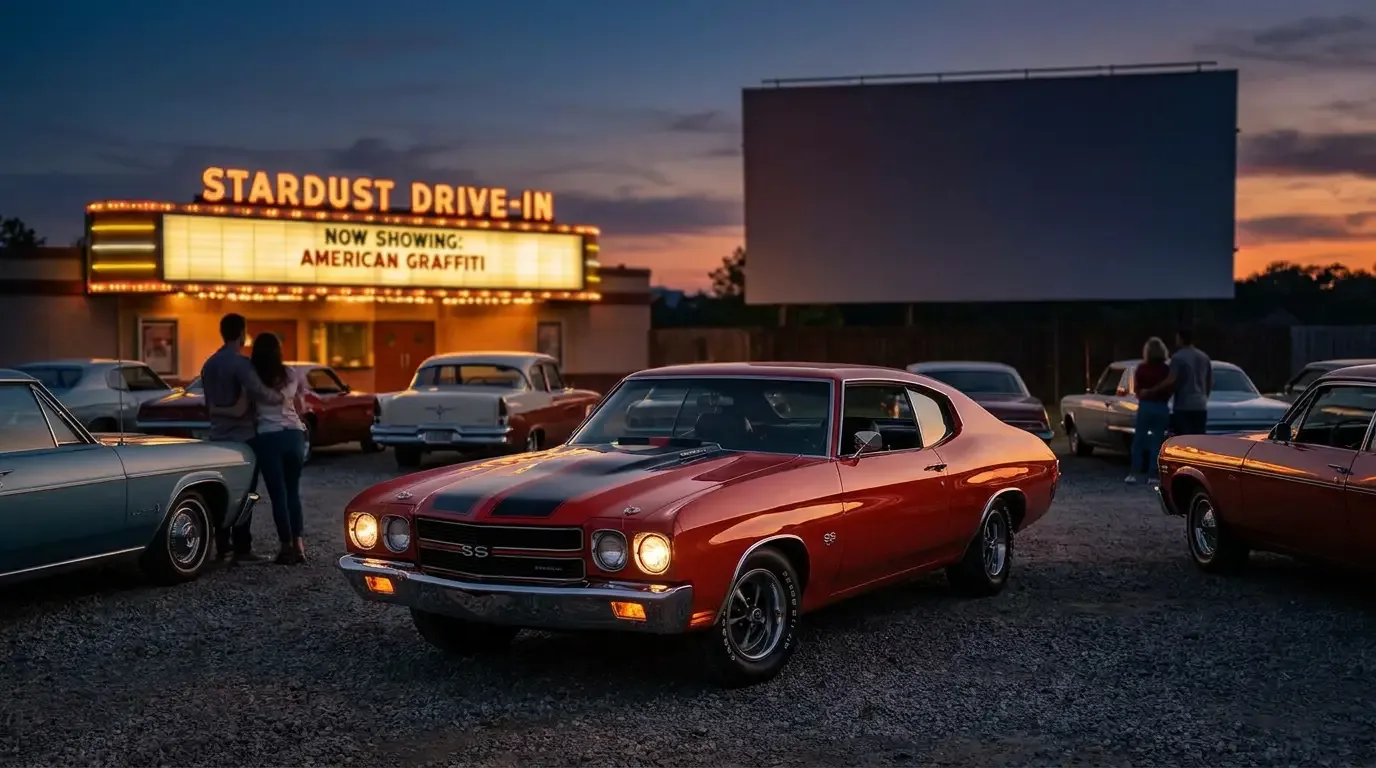
That's the strange thing about the Chevelle's place in popular culture. It never got the singular, career-defining screen moment that some of its rivals did. It didn't chase a bounty hunter across the desert in a film people quote at parties forty years later, and it wasn't the car a fictional getaway driver polished obsessively between jobs. What it got instead was something quieter and, in its way, more durable: a presence in the background of American life so constant that it became part of the wallpaper of an era, which is its own kind of immortality.
Before wandering further into that cultural terrain, it's worth grounding the conversation in the full Chevelle story, the fuller history of a car whose cultural footprint grew out of just how many ordinary American driveways it occupied.
The background car that was everywhere
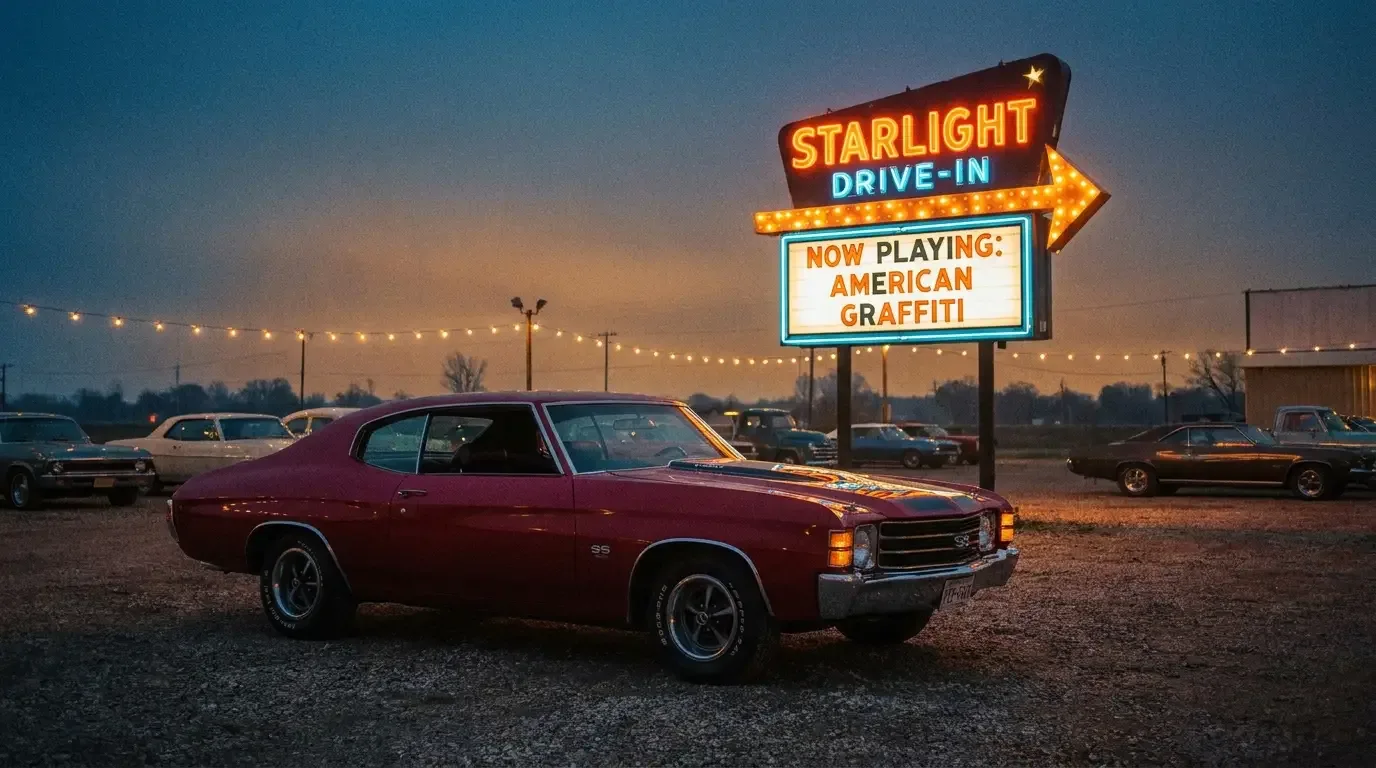
Watch enough film and television shot on American streets between roughly 1968 and the late 1970s and a Chevelle will eventually roll through frame, parked at a curb, idling at a light, sitting in a driveway behind whoever the camera is actually following. That ubiquity is easy to overlook precisely because it wasn't designed to be noticed. Production designers weren't hunting one down for a hero shot. It was simply there, the way a Chevelle was simply there in millions of families' lives, which is its own kind of cultural weight even without a single iconic chase scene attached to its name.
That background presence is part of why period films and television carry an emotional charge for people who grew up around this car that they don't quite carry for viewers who didn't. Recognizing a Chevelle idling outside a diner in an old film isn't the same experience as recognizing a famous movie car. It's closer to recognizing a street you used to live on. Quieter, more personal, and in some ways harder to shake.
The moments that did make it to screen
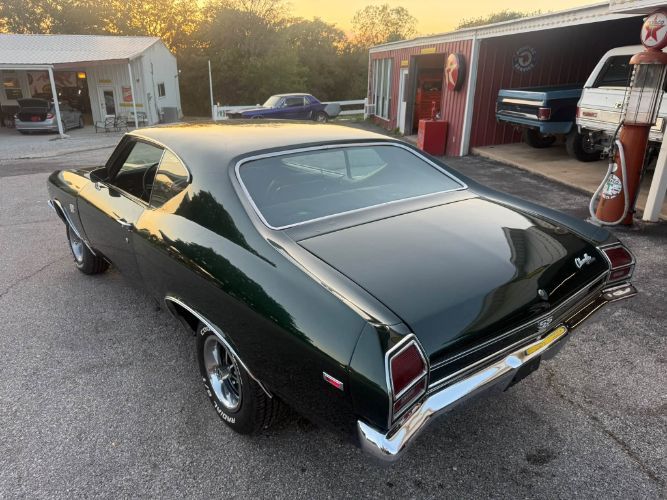
A handful of screen appearances are documented well enough to name with confidence. A red 1970 Chevelle SS454 appears in the closing scene of the original The Fast and the Furious in 2001, then returns as Dominic Toretto's car in 2009's Fast & Furious, where the production built six primered examples for filming and Toretto sands the paint to bare metal on-screen before repainting it gray. The same 1970 Chevelle recurs across later entries in the franchise, including The Fate of the Furious and Fast X. Tom Cruise drives a red, black-striped 1970 Chevelle SS four-speed in Jack Reacher (2012), a production that bought nine cars and lost six of them to stunt work. A 1970 Chevelle SS454 also turns up in Dazed and Confused (1993). Beyond those, the car shows up across decades of American film and television as exactly the kind of car a working character, a supporting character, someone's older brother or a small-town cop, would plausibly drive. It was cast, in effect, as itself, an honest reflection of what was actually parked in American driveways during the years the car was in production.
The rock band that took the Chevelle's name, formed in the late 1990s and carrying it into arena tours and platinum records, is a more traceable piece of the car's cultural footprint than any single film cameo. A band choosing a car's name for its identity says something about how the shape and sound of the word itself had already worked its way into American vocabulary well beyond car culture specifically, familiar enough to feel meaningful even to people who couldn't tell a Chevelle from a Malibu.
Video games and the second life of an icon
Where the Chevelle found a more concrete, recent cultural spotlight is in racing and open-world video games, where licensed and thinly fictionalized versions of the car have appeared across multiple franchises for people who never touched a real one. For a generation that grew up after the car left production, a video game garage might be where they met the Chevelle first, long before they ever stood in front of a real one at a car show. That's a genuinely different relationship to the car than the one the drive-in photograph represents, mediated through a controller rather than a driveway, but it's real cultural presence all the same, and arguably it's kept the silhouette recognizable to people who'd otherwise have no reason to know it.
There's something worth sitting with in that shift. The car that used to be background wallpaper in real American streets became, a generation later, a digital object people chose deliberately, customized, and drove for pleasure inside a screen. The context changed completely. The shape people were drawn to didn't.
What the car represents now versus then
For the people who owned Chevelles when they were simply used cars, not yet classics, the appeal was practical as often as emotional. Affordable, capable, family-sized but still available with real power under the hood if you ordered it that way. The cultural romance came later, retroactively, once the car became scarce enough that owning one required deliberate effort rather than just walking into a dealership. That romance is genuine. It's just worth remembering it wasn't always there. It grew alongside the car's rarity.
The stories that outlast the screen credits
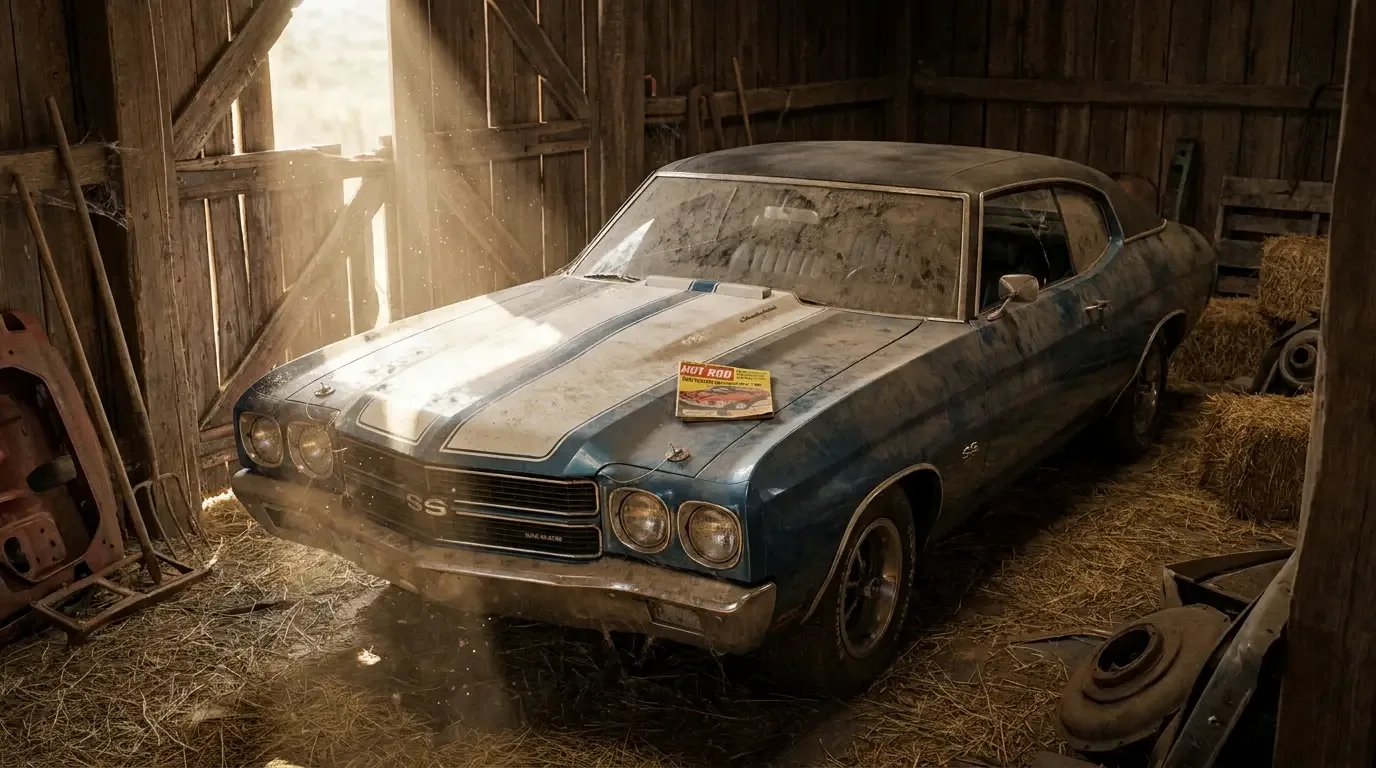
Talk to enough owners at a car show and the pop culture question eventually turns personal. Someone will mention a movie, sure, but they'll mention it the way you'd mention a coincidence, a car that looked like theirs showing up somewhere unexpected. What they actually want to tell you about is the specific Chevelle in their own life. The one their father drove to work for a decade. The one they bought at nineteen for money they didn't really have. The one sitting under a cover in a barn for years before somebody finally had the nerve to start it again.
Those stories don't need a film credit to matter. They're the actual cultural life of this car, passed forward at reunions and swap meets and quiet conversations in driveways, the kind of inheritance that doesn't show up on a box office report but outlasts most of what does. If a screen appearance brought you here, it's worth staying for that instead.
Why nostalgia found this car later than others
Part of the reason the Chevelle's pop culture footprint feels understated compared to some of its rivals is timing. The car's peak production years landed squarely in the middle of the muscle car era, a period so thick with competing nameplates that no single one could dominate the cultural conversation the way an earlier or later car sometimes managed to. The Chevelle wasn't fighting for attention against a handful of rivals. It was one of a genuine crowd, and crowds don't produce single, universally agreed-upon icons. They produce something closer to a shared, diffuse memory, which is a harder thing to point a camera at but, for the people who lived inside it, a truer one.
That diffuseness is also why the car ages so well emotionally. A car that was never mythologized into something larger than life doesn't have to live up to an impossible legend every time someone sees one in person. It just has to be what it always was, honest transportation with real presence, and for most owners that's exactly enough.
| Cultural touchpoint | Era | Nature of presence |
|---|---|---|
| Film and television background appearances | Late 1960s through 1970s | Ambient, period-accurate street presence rather than hero casting |
| Chevelle (rock band) | Formed late 1990s | Name directly drawn from the car |
| Racing and open-world video games | 2000s to present | Licensed or fictionalized in-game versions |
| Owner storytelling and swap meet culture | Ongoing | Primary living source of the car's cultural meaning |
"She kept his truck in the barn for eleven years before she could sell it. When the new owner started it, she cried in the driveway, because some engines still sound like a person. I've heard some version of that story about a Chevelle more times than I could count, and it's never once come from a movie."
Nora Beckett
What made this car matter was never really the screen. It was every ordinary driveway it sat in, every kid who leaned against its fender outside a drive-in that's long since closed. From here, the story turns to the shape of the car itself, the lines and proportions that made it recognizable enough to become wallpaper in the first place, a conversation that continues in onward to Chevelle Design and Styling. And if a photograph or a half-remembered scene has you thinking about finding one of your own, the '70 Chevelle for sale right now is a reasonable place to start looking.
Sources and notes
Related Reading
Article
The Classic Chevrolet Chevelle Story
Article
Chevelle in Racing: From NASCAR to the Drag Strip
Article
Chevelle Design and Styling: The Coke-Bottle A-Body
Article
The 1970 Chevelle SS in Fast and Furious
Article
Why Hollywood Always Reaches for a Chevelle
Article
Chevelle on the Small Screen
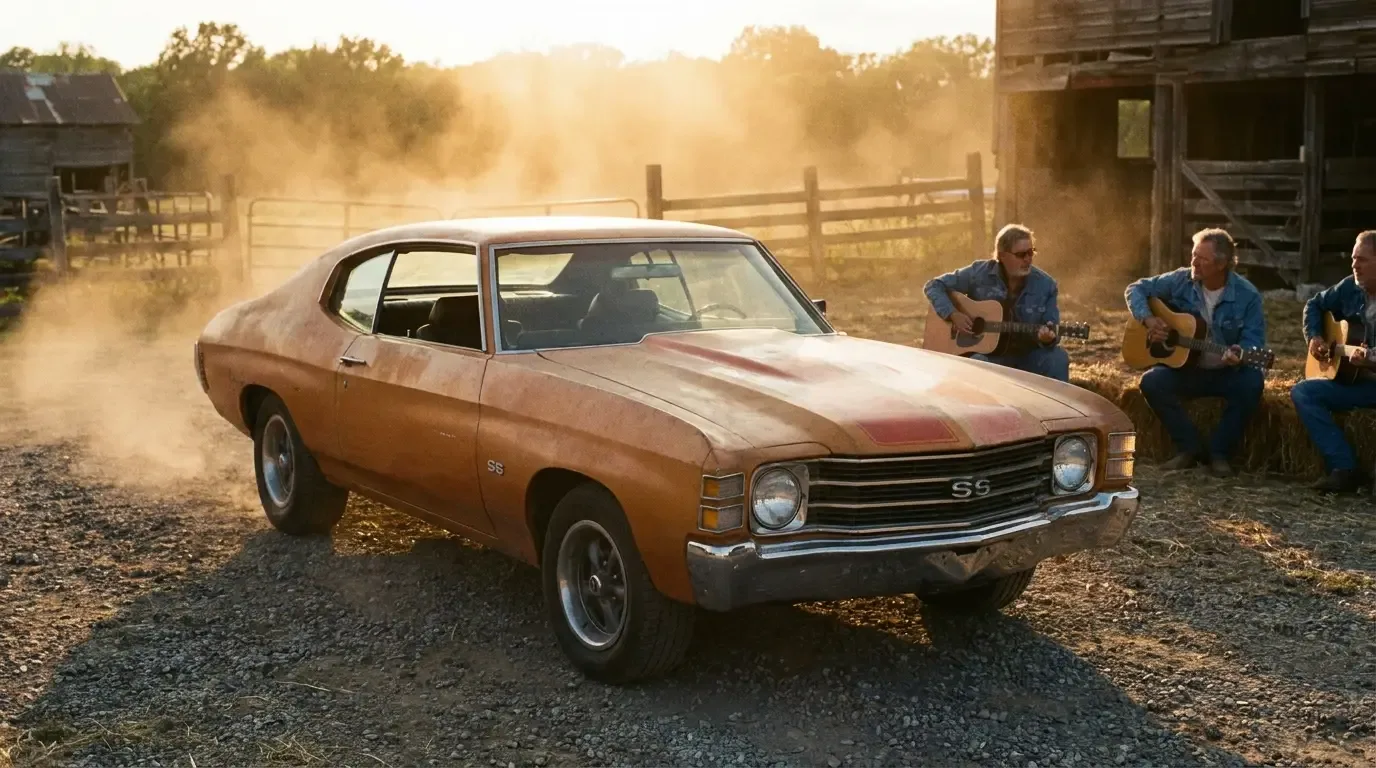
Article
Chevelle in Music: Album Covers That Put the A-Body on a Pedestal
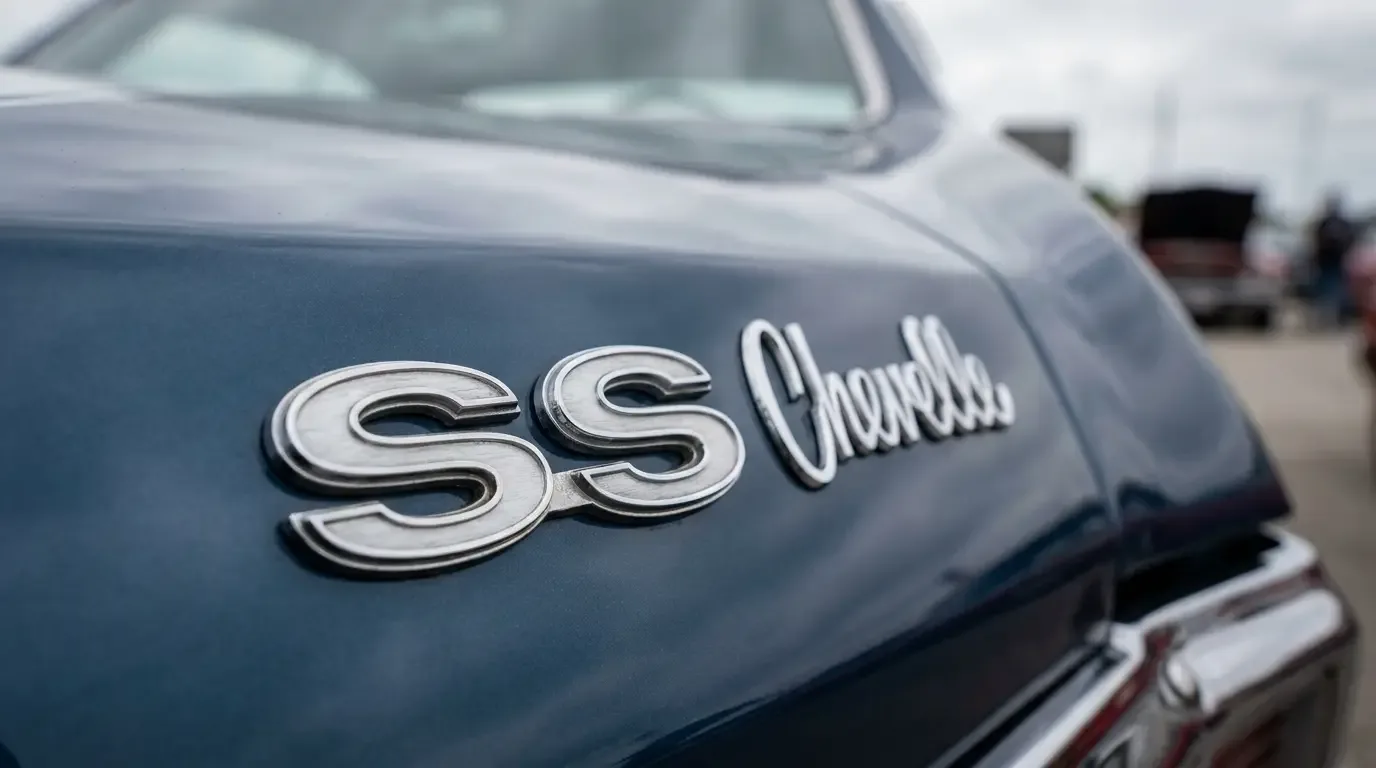
Article
The Band Chevelle: Untangling the Name From the Car
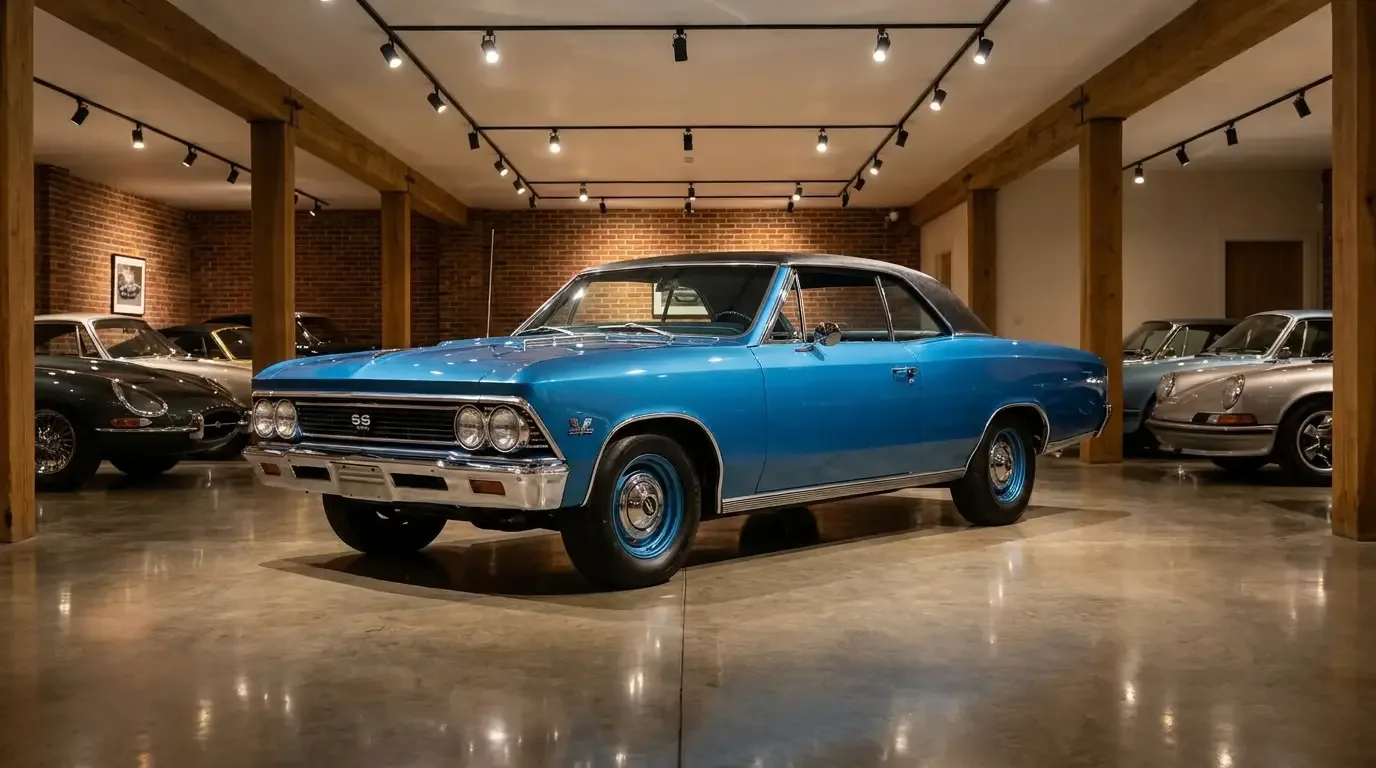
Article
Celebrity Garages: Famous Owners Who Chose a Chevelle
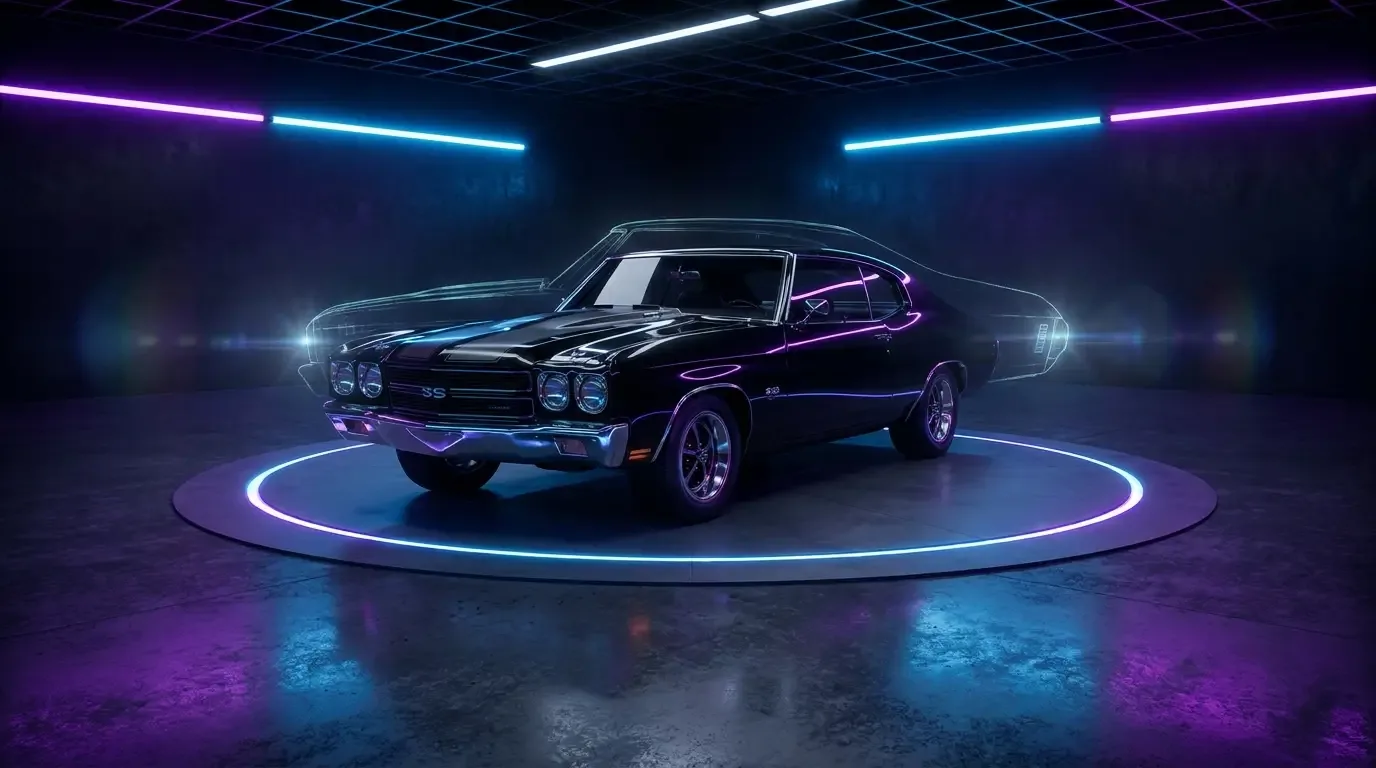
Article
Chevelle in Video Games
Article
Hot Wheels and Diecast Culture
Article
Model Kit Heritage: Building the Chevelle
Article
Period GM Advertising: How Chevrolet Sold the Chevelle Dream
Article
Chevelle at Power Tour
Article
Muscle Car Nostalgia Media: Where the Chevelle Fits In
Article
The Chevelle as Poster Car
Article
Tattoo-Worthy: The Chevelle as Automotive Ink Icon
Article
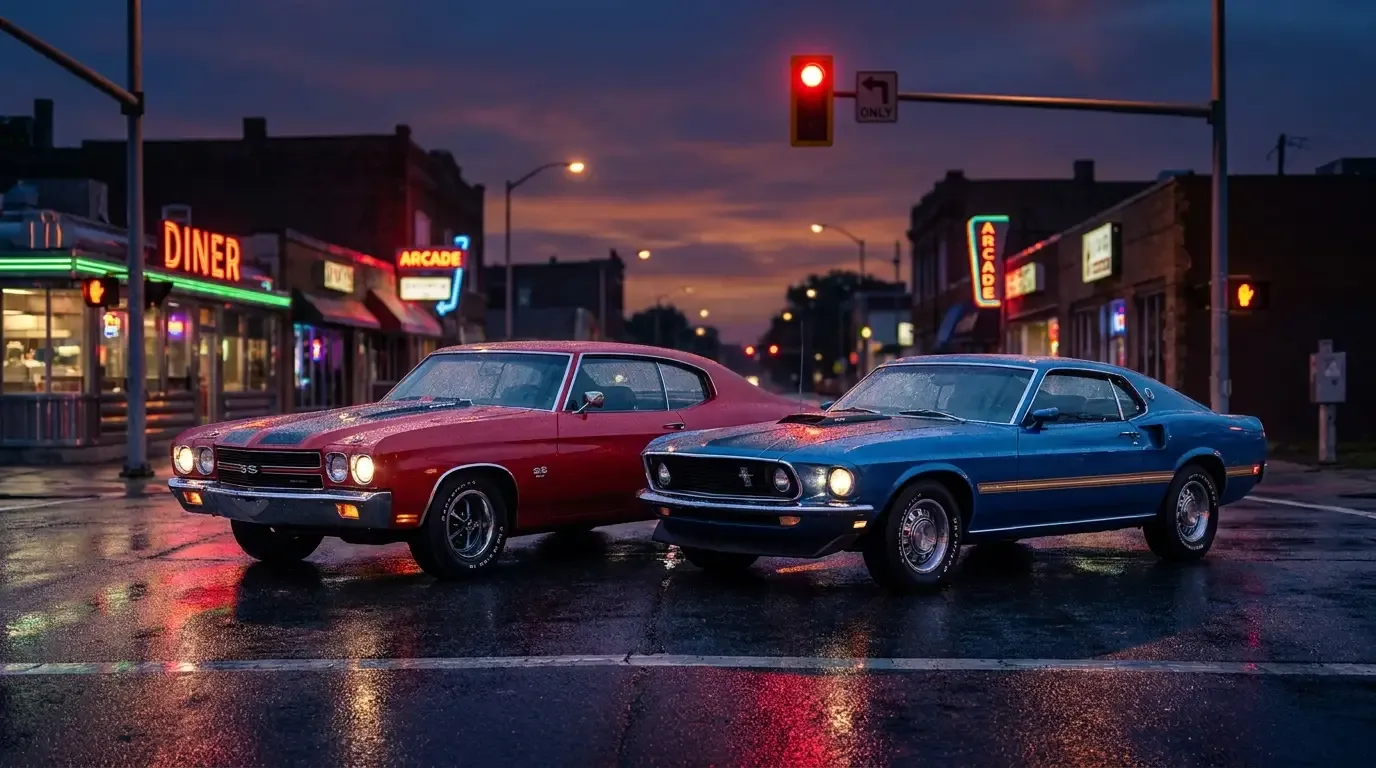
Filming a Chevelle Chase: Movie Stunt Work
Article
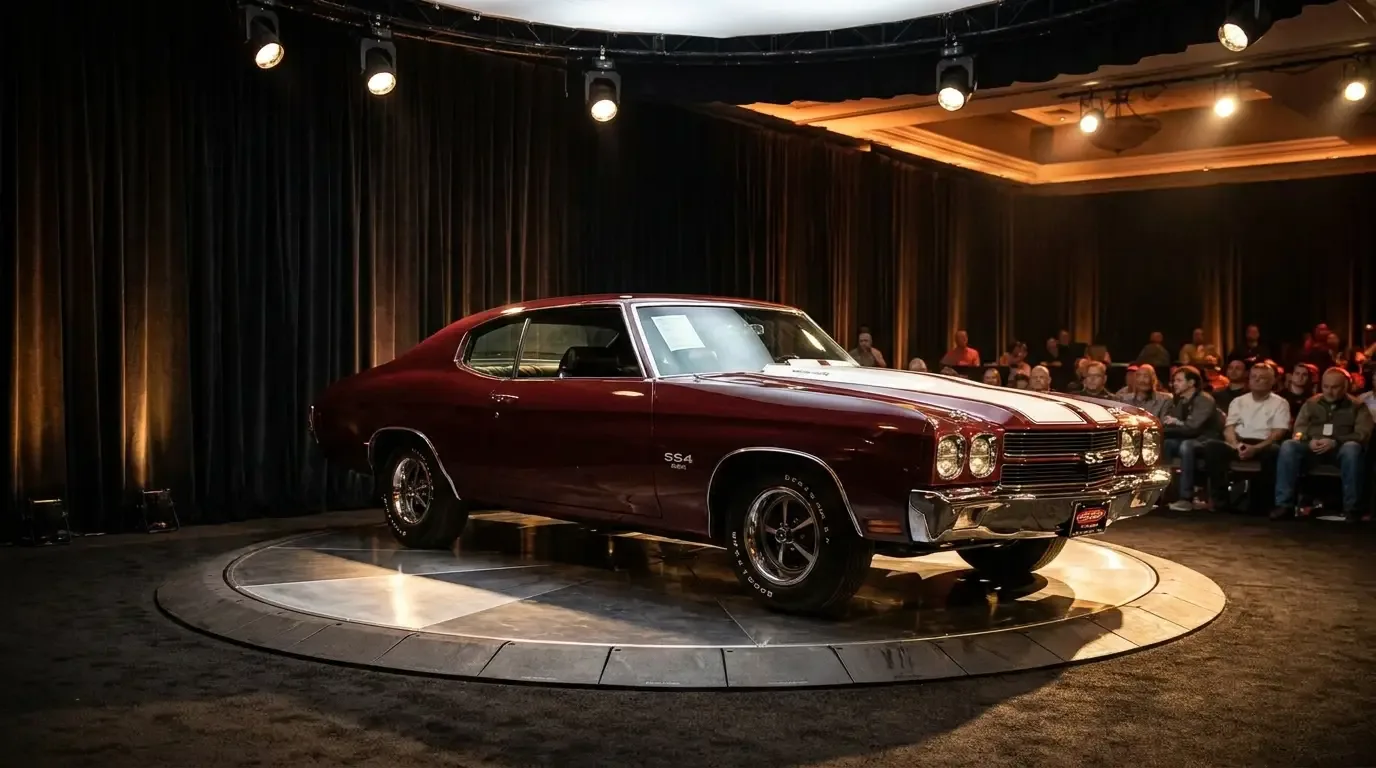
The Chevelle's Onscreen Rivals
Article
From Screen to Street: How Movie Fame Shaped Chevelle Values
Have a
Chevrolet Chevelle
for Sale?
Reach thousands of serious classic car collectors across the US.
Sell It Here →
Are You a Classic Car Dealer?
List your full inventory and connect with targeted classic car buyers.
Join as a Dealer →
#classic car culture
#Chevelle in movies
#Chevelle pop culture
#muscle car nostalgia
#Chevelle band
#car show stories

About the author
Nora Beckett
Automotive features writer and photographer who tells the human stories behind the cars, from show fields to cross-country road trips.
Related Listings - Chevrolet Chevelle
More in Ownership & Lifestyle
Comments
Be the first to comment on this article.