
Say "kustom kulture" out loud and people who know reach for the spelling before the definition. Both words start with a K, and that swap is the whole point. It signals a scene that took hot rods and customs and built an entire aesthetic around them: the paint, the pinstripes, the music, the ink, the flyers stapled to telephone poles. It is not a car club and it is not a paint style. It is the culture that grew up in the garages and drive-ins where guys were chopping tops and laying flames long before anyone thought to give it a name.
Ownership & Lifestyle
7 min read
What Kustom Kulture Is
The art, music, and fashion movement that grew out of hot rods and customs, from 1950s California to its 1990s revival.
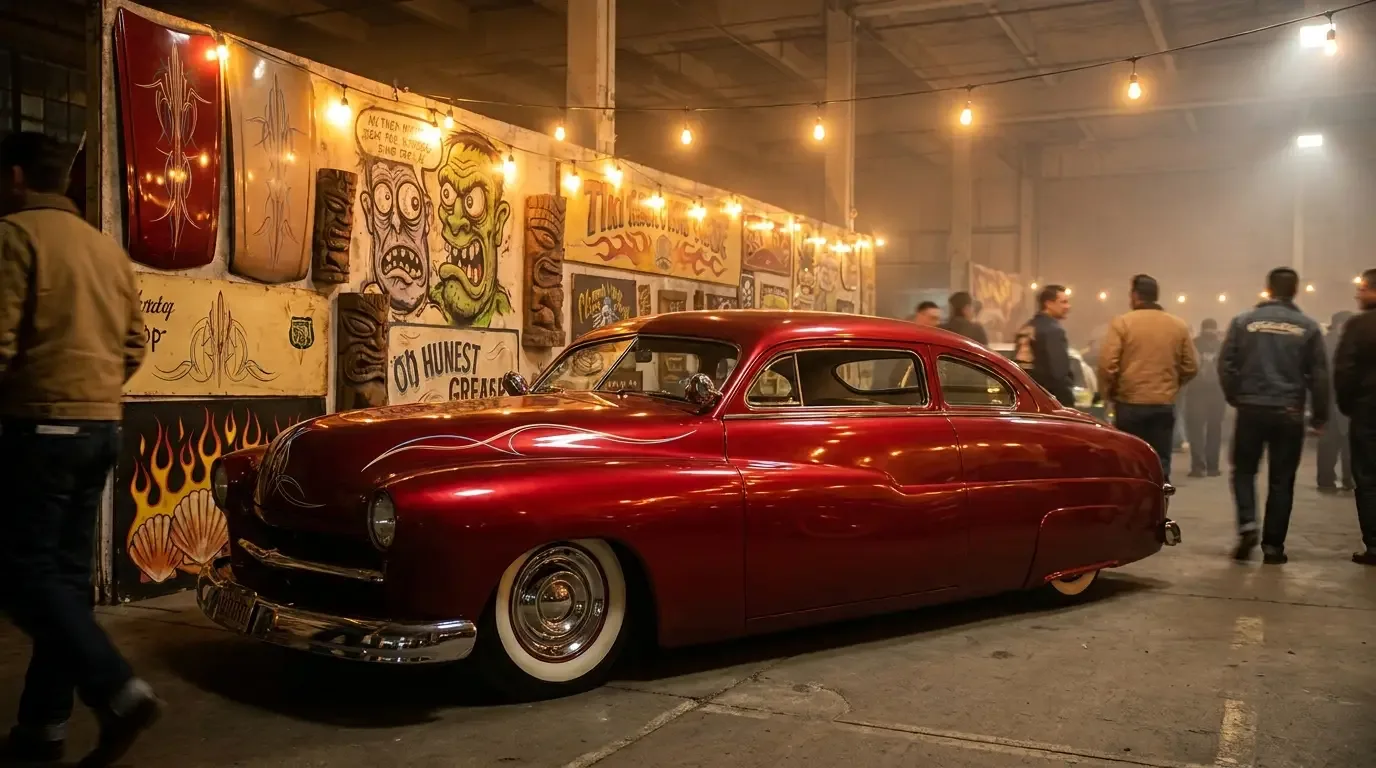
I've spent enough years hanging around garages that smelled like lead and lacquer to tell you that kustom kulture is what happens when the work spills past the car. A channeled coupe is a machine. The wild monster decal on the toolbox, the tiki mug on the shelf, the rockabilly record on the player while you block-sand, that is the culture. The car sits at the center, but the movement is everything that orbits it.
Why the K, and where it came from
The K spelling is usually credited to George Barris, the Southern California customizer, whose use of "Kustom" on his shop and cars in the 1950s spread the spelling far and wide; it traces back to the "Kustoms" car club he and his brother Sam ran as young men. Whatever the exact story, the deliberate misspelling caught on because it drew a line. A "custom" was any car with modified bodywork. A "kustom" was one built in a specific idiom, low, smooth, leaded, with the factory seams and badges shaved off and a coat of hand-rubbed lacquer over the top.
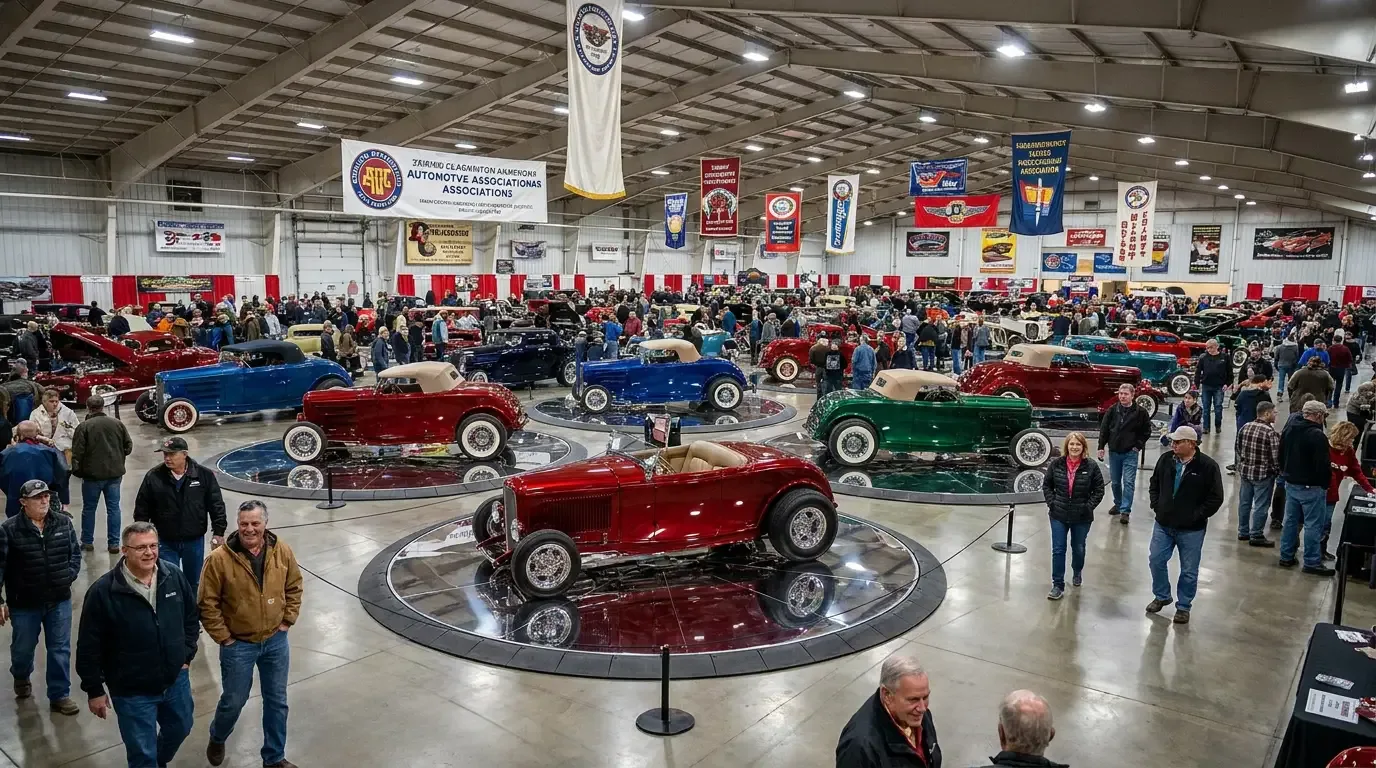
The roots are postwar Los Angeles. Returning servicemen had welding skills, cheap prewar Fords, and dry lakebeds to run them on. Out of that came two related but distinct branches. The hot rod was about speed, stripped weight and a bigger engine. The kustom was about style, the chop and the channel and the paint. The same guys often did both, and the scenes shared the same drive-ins, magazines, and Saturday nights. That overlap is why you see hot rods and kustoms treated as one family at events like the modern grand national roadster show, which has been a proving ground for this stuff since 1950.
The art: pinstriping, monsters, and flake
The visual language is the part most people recognize even if they cannot name it. It starts with pinstriping. Von Dutch, whose real name was Kenneth Howard, turned freehand striping into a signature art form in the 1950s, laying long tapered lines with a brush and a steady hand. Striping was practical at first, a way to hide a bad panel edge, and it became decoration for its own sake.
Then came the monsters. Ed "Big Daddy" Roth built wild show cars like the Beatnik Bandit, but his bigger cultural hit was Rat Fink, a bug-eyed, drooling rodent he drew as an anti-Mickey Mouse. Roth airbrushed T-shirts of hot-rod-driving monsters and sold them by mail and at shows, and that imagery, bloodshot eyes, gearshifts, oversized slicks, became shorthand for the whole scene.
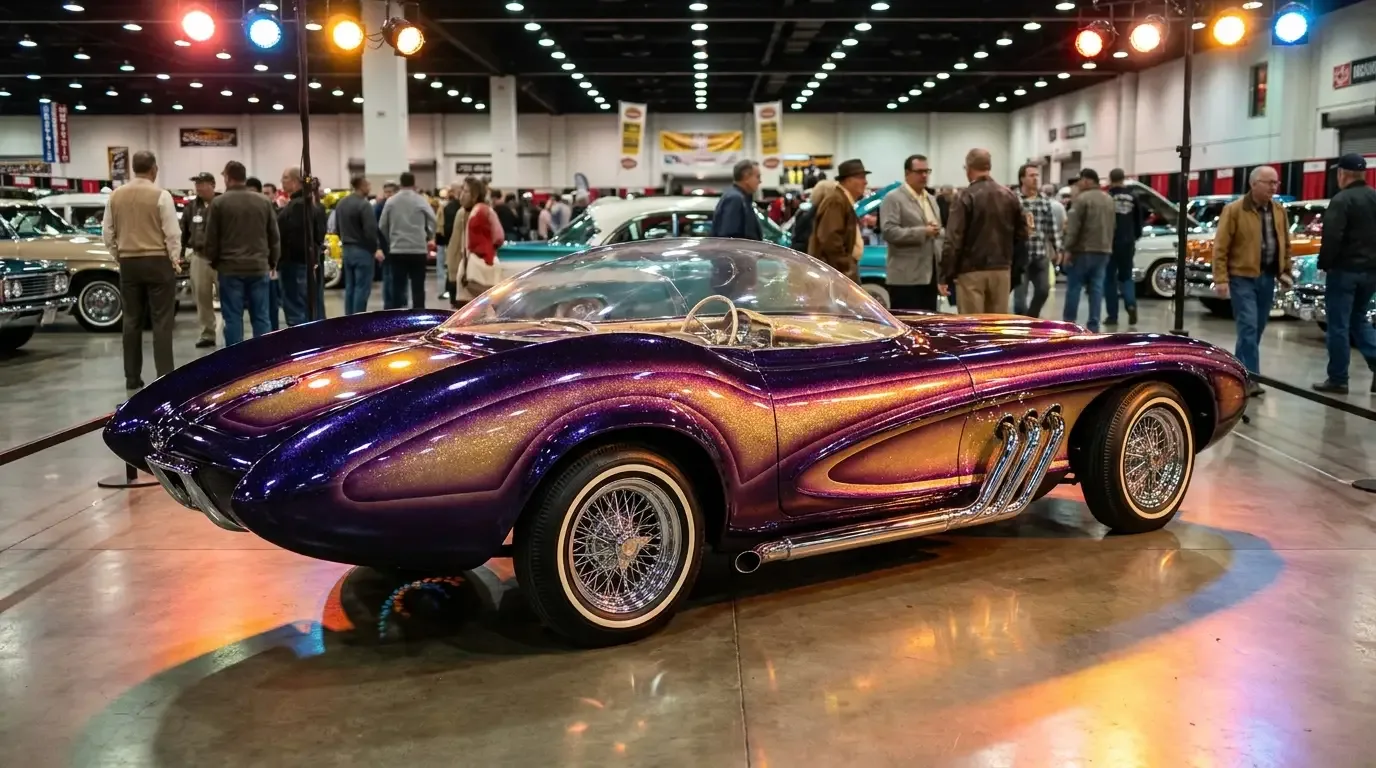
Paint is the third pillar. Kustom kulture paint means candy colors laid over a metallic base, metalflake that throws sparks in the sun, scallops and flames and fades. This is the hard part of the craft. Candy is translucent, so every coat deepens the color and every mistake shows. Getting flake to lay flat and cover even takes patience most people do not have.
"Folks think the paint is the flashy easy part. It is the opposite. I can teach a kid to chop a top in a week. Teaching him to shoot even candy without stripes and tiger-striping, that takes a couple of years and a lot of ruined panels."
Gary Nowak
The music, the fashion, the whole lifestyle
You cannot separate the cars from the soundtrack. Rockabilly, that early collision of country and rhythm and blues, was the music of the original scene, and the 1990s revival brought it back hard alongside psychobilly and surf. The fashion followed: cuffed jeans, greased hair, bowling shirts, Western wear, and later the heavily tattooed pinup look for women that borrowed straight from 1940s and 1950s calendar art.
Tiki culture folded in too. The Polynesian-themed bars and carved mugs of midcentury America shared the same postwar optimism and the same crowd, and today a big kustom weekend often has a tiki bar, a burlesque revue, a record hop, and a car show all under one roof. The tattoo world is tied in at the root. A lot of the flash, the pinups, the panthers, the dice and the eight-balls, comes out of the same visual well as the car art.
- Music: rockabilly, psychobilly, surf, early rhythm and blues.
- Art: pinstriping, monster cartoons, flake and candy paint, sign painting.
- Fashion: greaser and pinup looks, Western wear, vintage workwear.
- Objects: tiki mugs, hand-painted flyers, dashboard shakers, custom club plaques.
The 1950s roots and the 1990s revival
The first wave ran roughly from the late 1940s through the early 1960s. Magazines like Hot Rod and Car Craft spread the styles nationally, and the big customizers, Barris, the Ayala brothers, Bill Hines, built the reference cars everyone else copied. By the mid-1960s the scene faded. Muscle cars, factory horsepower, and changing tastes pulled younger buyers toward showroom-stock speed instead of hand-built style.
The revival started in the late 1980s and hit full stride through the 1990s. A younger generation, some of them the kids and grandkids of the original builders, went digging for the traditional look. They rejected the billet-aluminum, monochrome "smoothie" street rods that dominated the 1980s and went back to steel bodies, flathead V8s, wide whitewalls, and period paint. Rat Fink got reissued, Von Dutch became a fashion label, and the 1993 Laguna museum show gave the whole thing an art-world stamp.
How to tell the real thing from the costume
Here's where I get opinionated, same as I do about most things. Kustom kulture has been merchandised to death, and a Von Dutch trucker hat from a mall does not make anyone part of the scene. The real thing is in the craft. A period-correct kustom has its body seams leaded, not filled with plastic. The chop lines flow, the glass fits, the paint has depth you can see into. The pinstriping is done by hand, one continuous line at a time, not applied as a decal.
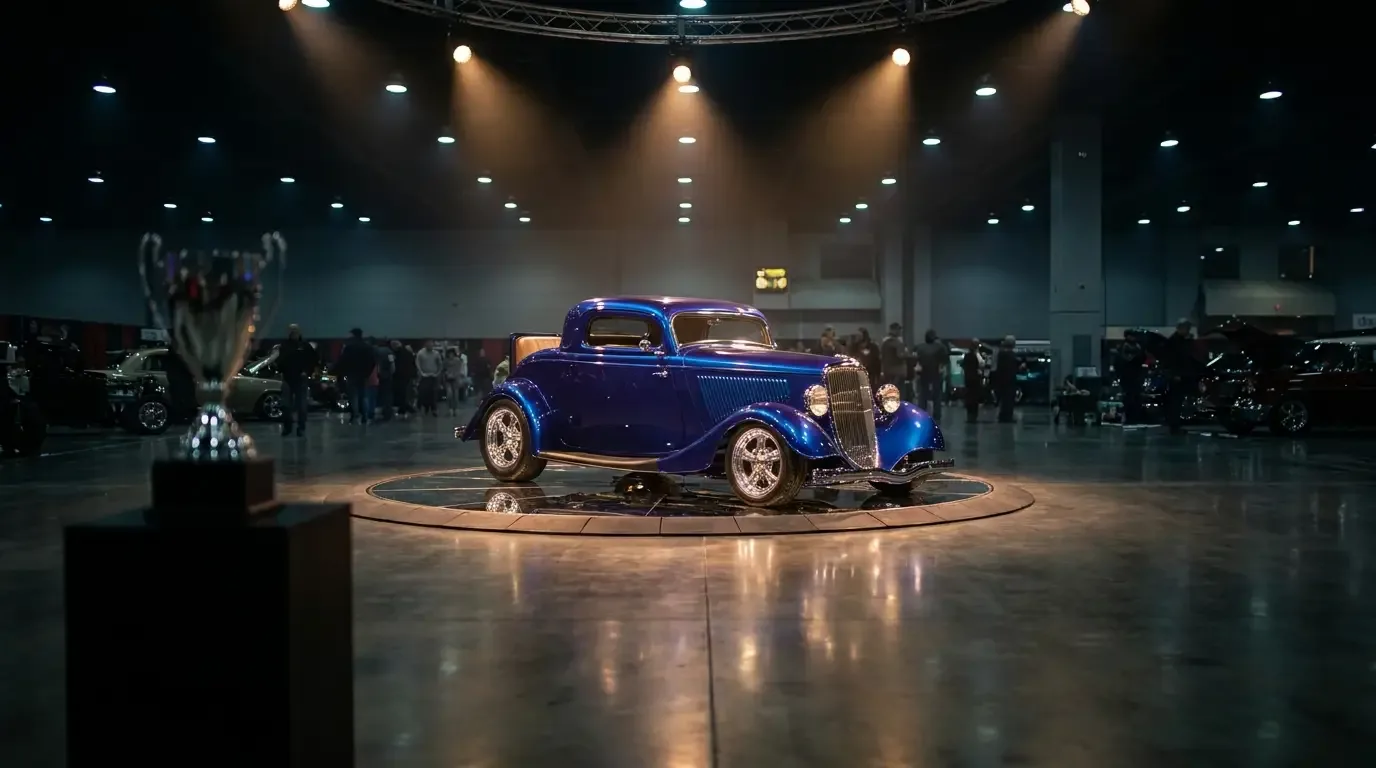
The same standard runs through the whole culture. The best builders and painters treat it as a trade with a lineage, and they can tell you who taught them and who taught that person. That is why the top awards in this world still mean something. Winning honors like The Ridler Award and America's Most Beautiful Roadster requires the kind of finish and detail that separates a real build from a costume. You cannot fake lead work or a straight candy panel under show lights.
So what is kustom kulture, in one line? It is the art, music, and style movement that grew out of hot rods and customs, born in 1950s California, revived in the 1990s, and still measured by handwork. The K is the flag. The craft is the substance.
Sources and notes
- Period hot-rod and custom press (Hot Rod, Car Craft, Rod & Custom) for style history and builder references.
- Museum and exhibition records for the naming and art-world recognition of the movement.
- Builder and painter interviews for craft distinctions between traditional kustoms and modern reproductions.
- Show and registry records for the customizers and cars cited.
Related Reading
Have a
Classic Car
for Sale?
Reach thousands of serious classic car collectors across the US.
Sell It Here →
Are You a Classic Car Dealer?
List your full inventory and connect with targeted classic car buyers.
Join as a Dealer →

About the author
Gary Nowak
Lifelong Midwest rodder who has been building and driving traditional pre-war hot rods since the 1970s.
More in Ownership & Lifestyle
Comments
Be the first to comment on this article.