
The hot rod was never just a car. It was a way of belonging. Before anybody handed out trophies for it, guys in postwar garages were chopping tops and channeling frames because the crowd at the drive-in respected the work, not because a magazine told them to. The culture came first and the shows grew out of it. If you want to understand why a bare-metal roadster can stop a room the way it does, you have to look at the scene that built it, judged it, and kept it honest for seventy-odd years.
Ownership & Lifestyle
9 min read
Hot Rod Culture and Shows
The scene behind the metal: the Grand National Roadster Show, kustom kulture, car clubs, rockabilly, and hot rods in movies and music.
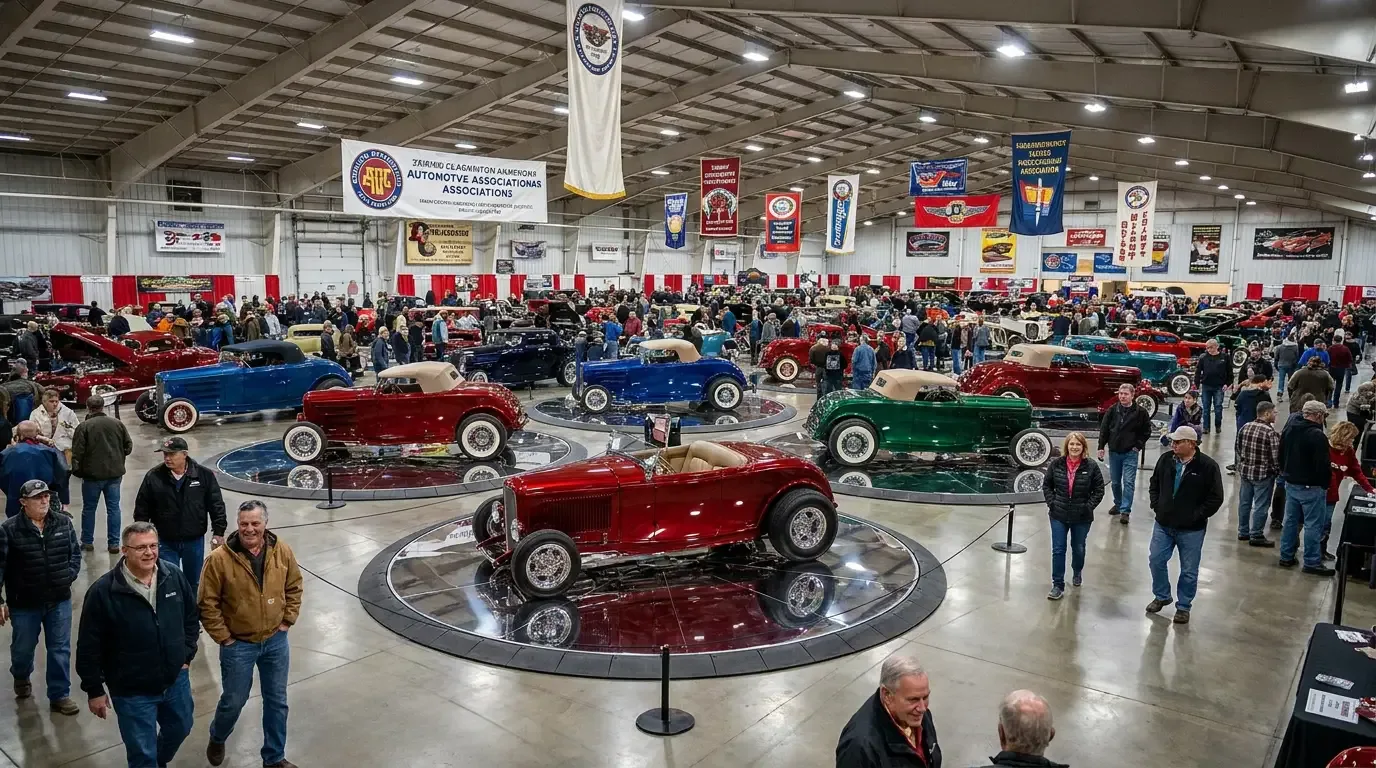
This is the world around the metal. If you came in through the classic hot rod story and you want the human side, the shows and the clubs and the kustom painters, this is where it lives.
The Grand National Roadster Show and the trophy everybody wants
The Grand National Roadster Show is the oldest indoor car show of its kind still running, and among rodders it carries the kind of weight the Oscars carry in Hollywood. It started in Oakland in 1950 as the Oakland Roadster Show, which is why old-timers still call the top prize the Oakland trophy out of habit. The show moved south over the decades and now runs in Pomona, California, at the Fairplex every January. It is the season opener. What debuts at GNRS sets the tone for the whole year of building.
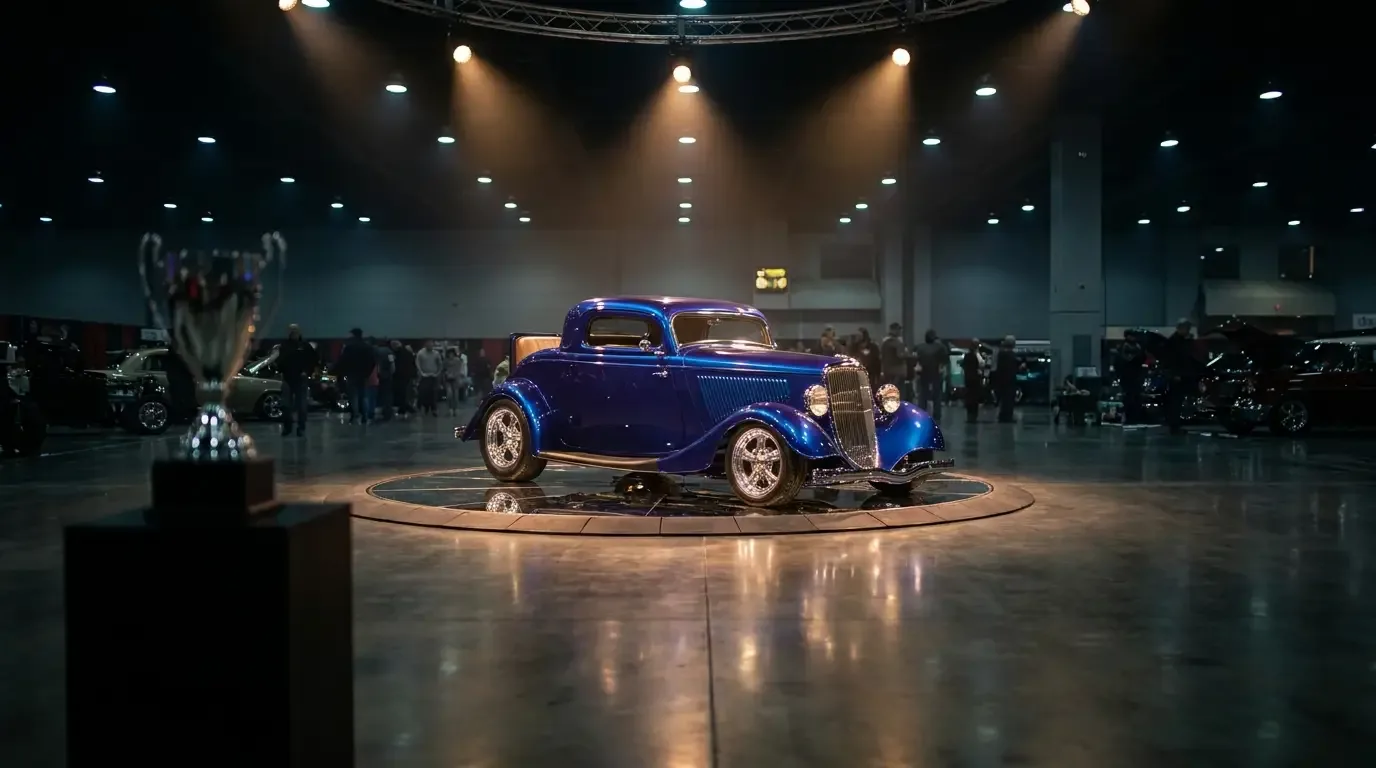
The prize at the center of it is the America's Most Beautiful Roadster award, the AMBR. To even compete you have to bring an open roadster, which keeps the field pure to the original hot rod form. The trophy itself is enormous, taller than a person, and the same physical trophy has carried the engraved names of every winner since the beginning. Winning it can make a builder's career. It is not a paint-and-shine contest either. Judges crawl underneath, they look at the frame, the plumbing, the wiring, the parts you were hoping nobody would notice. A car can look finished from six feet and lose on what is happening at the belly pan.
The AMBR is for roadsters, but GNRS is not the only house of worship. The Detroit Autorama, held every spring, hands out the Ridler Award, and that one plays by different rules. A car is only eligible for the Ridler the first time it is ever shown in public, which means builders hide their projects for years and reveal them cold on the floor. The Ridler rewards the boundary-pushers, the guys who reinvent what a custom can be. Between the AMBR out west and the Ridler back east, you have the two poles that the whole high-end custom world orbits.
Kustom kulture and the men who named it
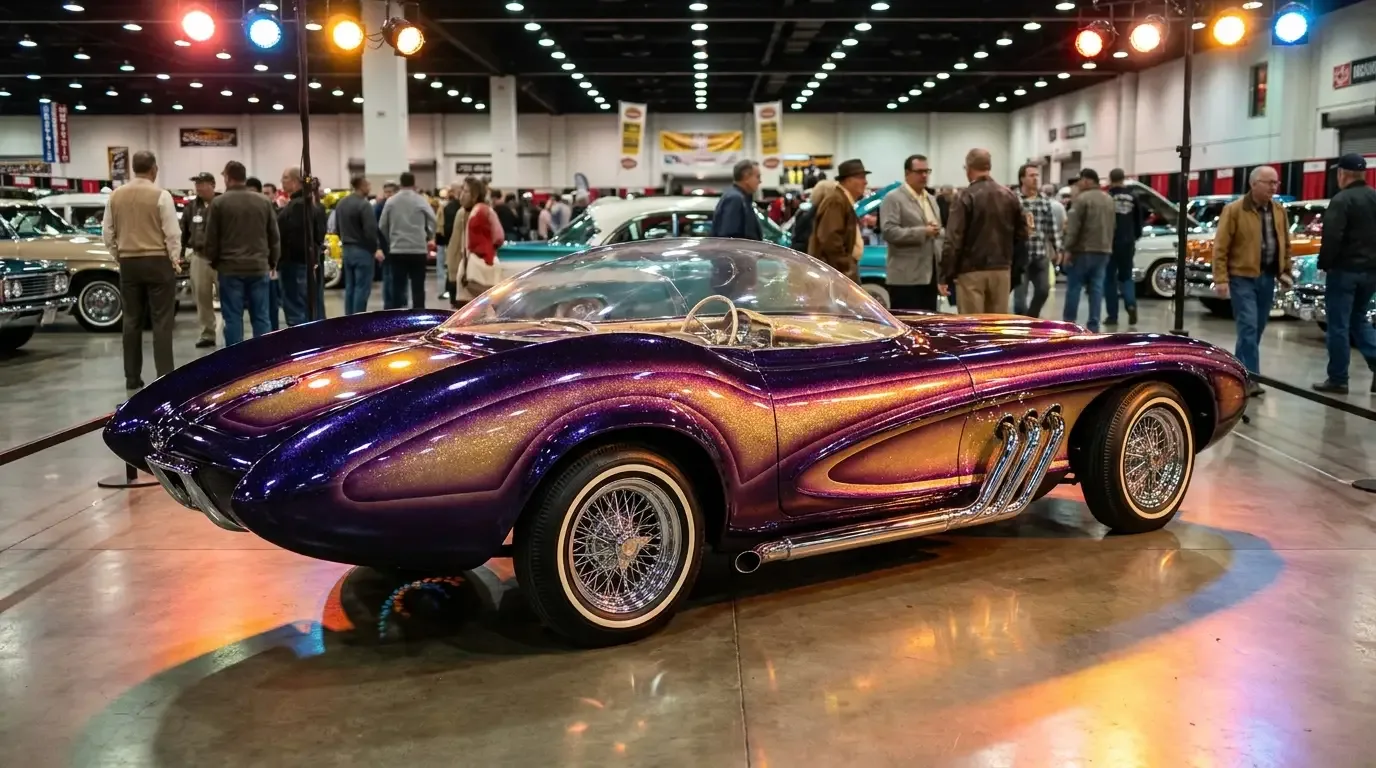
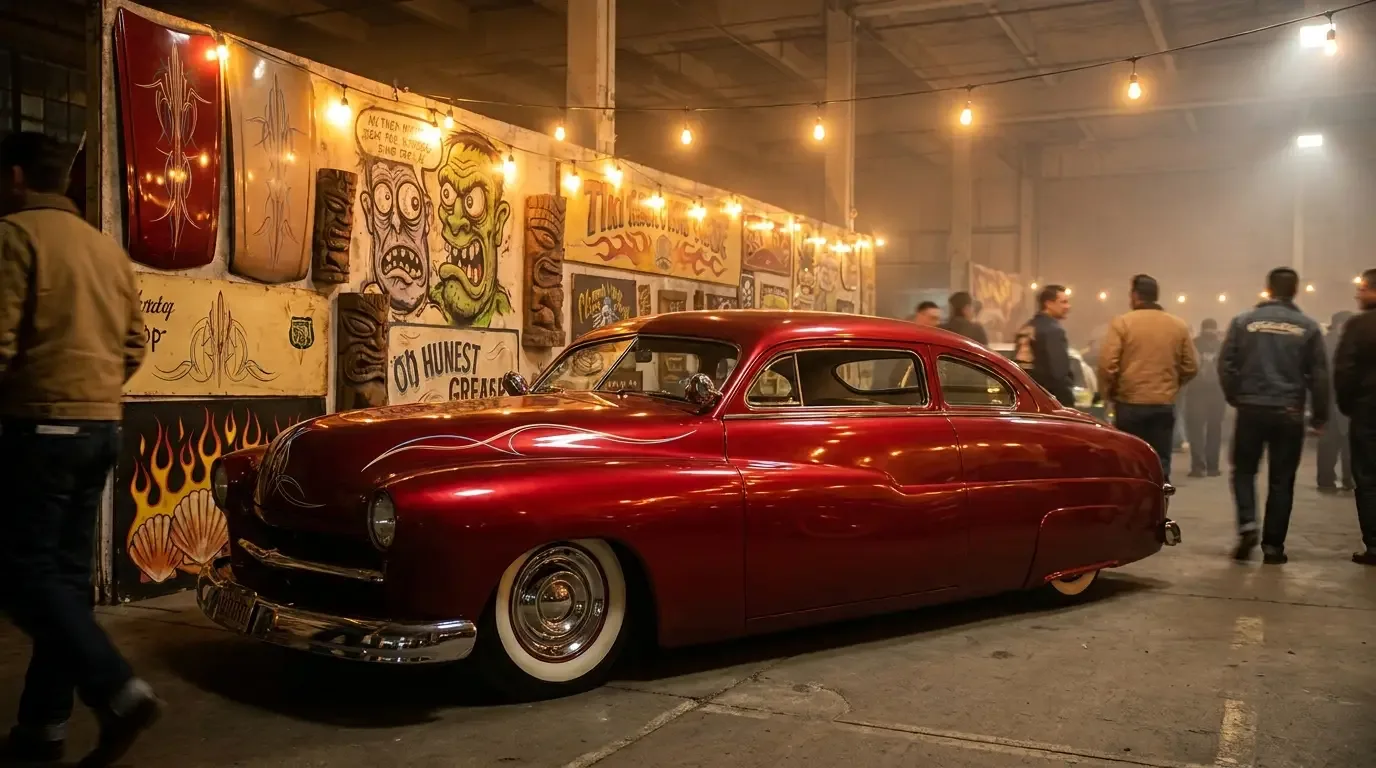
The word is spelled with a K on purpose. Kustom kulture is the art movement that grew up alongside the cars, the pinstriping and the wild paint and the monster cartoons and the attitude. Three names carry most of the weight, and if you build cars you owe all three whether you like it or not.
George Barris is the one most people have heard of, the "King of the Kustomizers." He and his brother Sam built radical customs in the 1940s and 1950s, and Barris later became the go-to man for Hollywood, best known for building the original 1966 Batmobile from a Lincoln Futura concept car. Some of the credit he took was really shared shop work, and old builders will argue about that until closing time, but nobody argues that he put customs in front of the whole country.
Ed "Big Daddy" Roth was the wild one. He airbrushed monster shirts, invented the Rat Fink character as an anti-Mickey Mouse, and built show cars like the Beatnik Bandit and the Outlaw that looked like they rolled out of a cartoon. Roth made the culture weird and funny and a little dangerous, which is exactly what it needed. Then there is Von Dutch, real name Kenneth Howard, the man who basically fathered modern pinstriping as an art form. His flying-eyeball motif is still striped onto cars and tanks and helmets today by people who have no idea whose hand it came from.
"People see the flames and the flake and they think it is decoration. It is not. A good stripe job by hand tells you a man sat there with a dagger brush and a steady wrist and no undo button. That is why the old stuff still hits harder than a wrap."
Jim Vasquez
The clubs, the plaque, and belonging to something
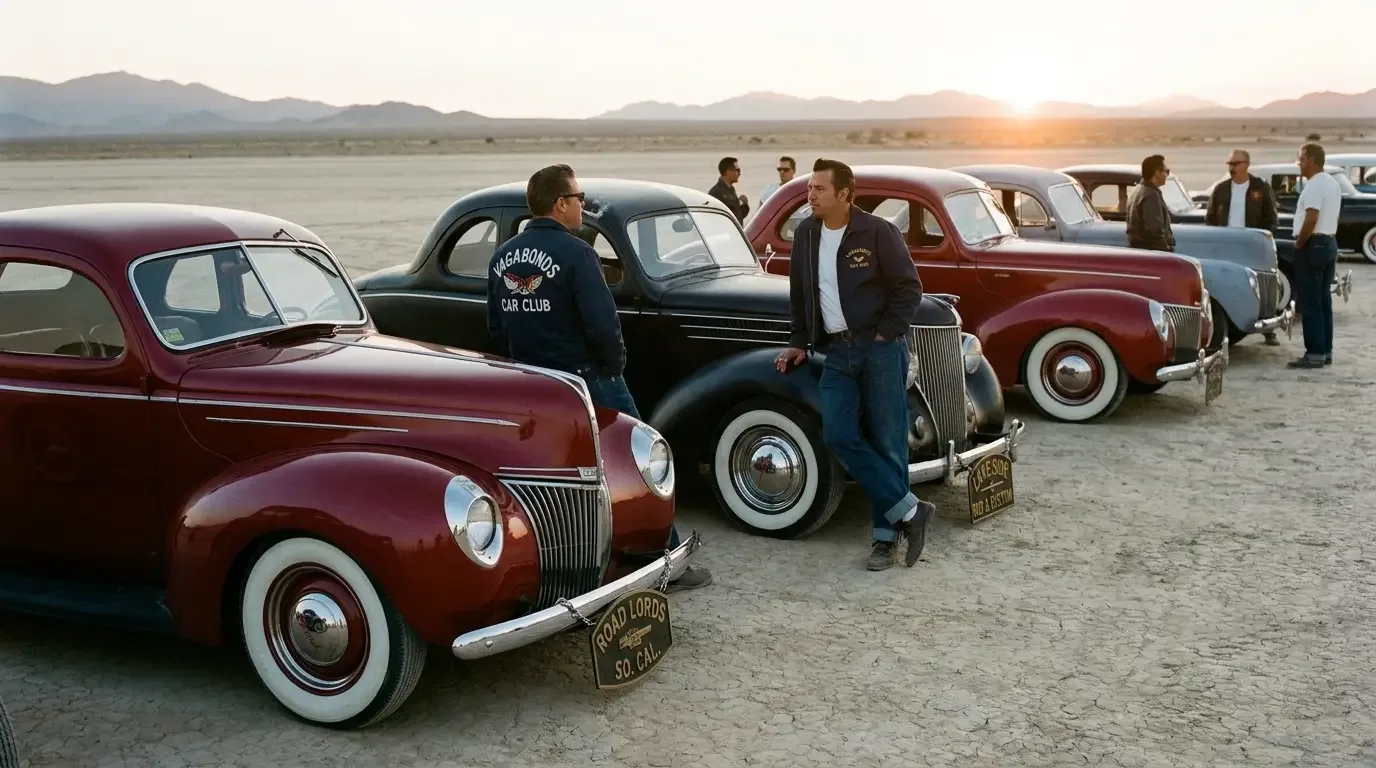
Long before the internet, the way you found your people was the car club. Postwar rodders formed clubs partly for camaraderie and partly for survival, because loose street racing was getting hot rodders a bad name and the clubs pushed guys toward organized timing at the dry lakes and the strip. Groups like the SCTA, the Southern California Timing Association, brought order to the speed chasing at El Mirage and Bonneville.
The club plaque is the heart of it. It is a cast or engraved plaque, usually hung in the back window or off the rear bumper, and it says who you run with. You do not buy your way into a real club and you do not hang a plaque you did not earn. The etiquette around plaques is old and it is serious. Clubs like the Bonneville-era outfits and later crews carried names and styles that told you at a glance what kind of cars and what kind of people you were looking at.
Rockabilly, greasers, and the sound of the scene
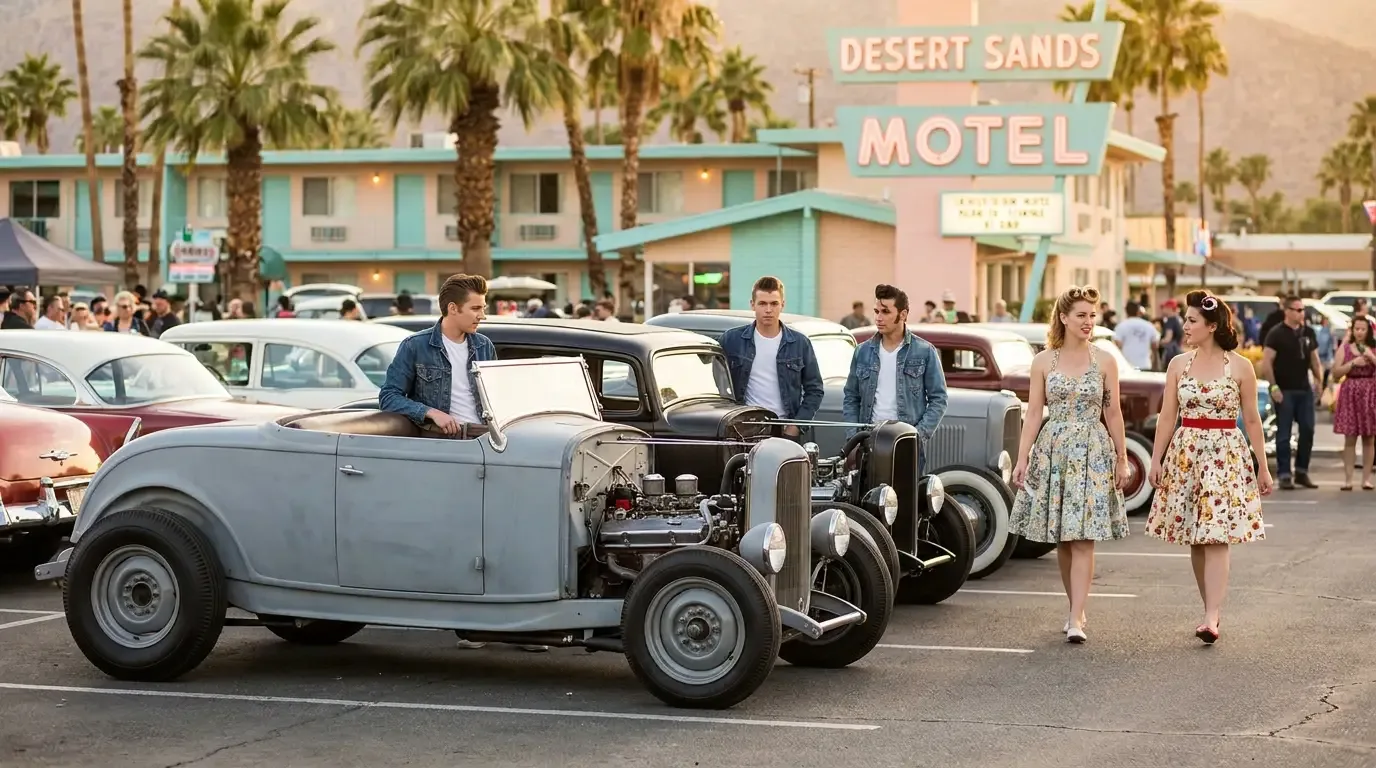
Hot rod culture never traveled alone. It came bolted to a sound and a look. In the 1950s that was rockabilly and early rock and roll, the same cheap, fast, loud energy that got young guys into stripped-down Fords in the first place. The greaser style, the cuffed jeans, the white tee, the slicked hair, ran on the same track as the cars.
That link never died, it just went underground and came back. The rockabilly revival of the 1980s and beyond pulled the whole package back into daylight, and today a proper hot rod weekend is as much about the bands and the pin-up contests and the pomade as it is about the machinery. Events like the Viva Las Vegas Rockabilly Weekend put the cars, the music, and the style under one roof, and you cannot really separate them anymore. The rat rod movement that came later leaned hard into that same raw aesthetic, primer and patina over polish.
"I have built cars for guys who could not tell you a Stray Cats song from a fire alarm, and I have built them for guys who live the whole thing head to toe. Both are fine. But the ones who get the music get the car faster. It is the same nerve running through it."
Jim Vasquez
Hot rods on the big screen and in the grooves
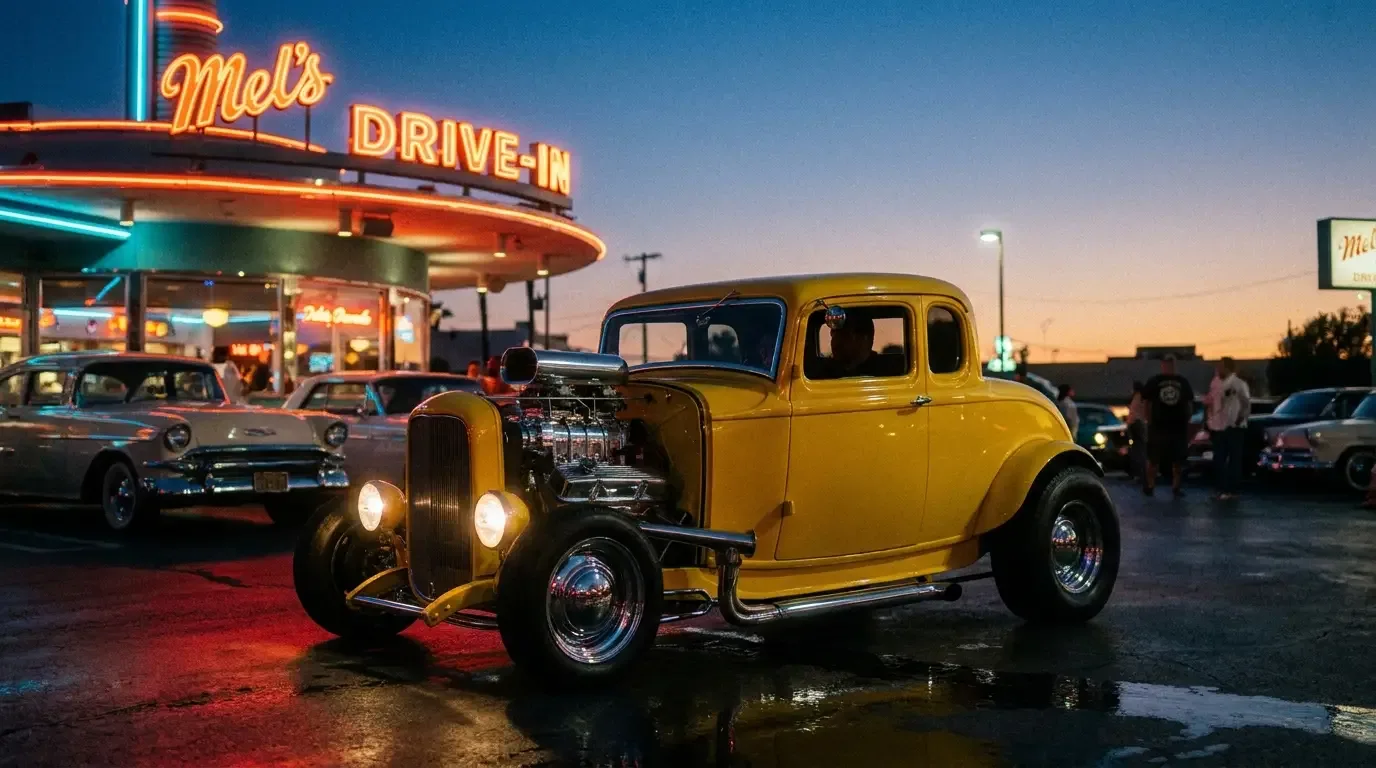
Part of why everybody knows what a hot rod is, even people who have never touched a wrench, is Hollywood and the radio. The cars kept showing up in the stories America told itself. The 1955 film Rebel Without a Cause put fast cars and restless kids on the screen together. George Lucas mined his own teenage cruising memories for American Graffiti in 1973, and that yellow 1932 Ford coupe became one of the most recognized hot rods on film. Two Lane Blacktop in 1971 built a whole road movie around a primered 1955 Chevy.
The music did the same work. The Beach Boys built early hits around cars, "Little Deuce Coupe" being the obvious one, named for the 1932 Ford. Jan and Dean and a whole subgenre of hot rod records in the early 1960s turned the garage obsession into radio pop. Between the movies and the songs, the hot rod stopped being a regional Southern California thing and became a piece of the national imagination. That reach is why a kid in a state with no dry lakes still grows up knowing exactly what a deuce coupe is supposed to look like.
| Show or event | Signature award | Home / timing | What it rewards |
|---|---|---|---|
| Grand National Roadster Show | America's Most Beautiful Roadster (AMBR) | Pomona, CA / January | Open roadsters, judged top to belly pan |
| Detroit Autorama | Ridler Award | Detroit, MI / spring | First-ever-shown customs that push limits |
| Bonneville Speed Week | Land speed records | Bonneville, UT / August | Outright speed, not looks |
| Viva Las Vegas | Show-and-shine, culture | Las Vegas, NV / spring | Cars, rockabilly, and the whole scene |
Where the culture points you next
Once you have spent a few weekends in it, the labels start to matter. People at a show will argue for an hour about whether a car is a proper hot rod, a street rod, or a rat rod, and those are not just snobbery, they are real distinctions in intent and period. If you want that sorted out cleanly, read hot rod vs street rod before your next swap meet argument.
And if the shows have done their job on you, at some point you stop wanting to just look. That is how it always goes. When you get there, you can start browsing classic hot rods for sale and see what it takes to bring your own plaque to the next run.
Sources and notes
- Period and current hot-rod press coverage of the Grand National Roadster Show, the AMBR award, and the Detroit Autorama Ridler Award.
- Show and registry records for AMBR and Ridler eligibility rules and winner histories.
- Kustom kulture references and museum retrospectives on George Barris, Ed "Big Daddy" Roth, and Von Dutch (Kenneth Howard).
- Timing-association histories (SCTA, dry lakes, and Bonneville) on car clubs and the club-plaque tradition.
- Film and popular-music references documenting hot rods in American Graffiti, Rebel Without a Cause, and the early-1960s hot rod record era.
- Builder interviews and swap-meet etiquette drawn from working custom-shop experience.
Related Reading
Article
The Classic Hot Rod Story
Article
Hot Rod, Street Rod, Rat Rod: What's the Difference
Article
Hot Rod Style: Flames, Paint and Stance
Article
Ed Roth, Von Dutch and the Kustom Kulture Icons
Article
What Kustom Kulture Is
Article
The Ridler Award and America's Most Beautiful Roadster
Article
Hot Rod Clubs and Their History
Article
Hot Rods in Movies and Music
Article
Rockabilly and the Hot Rod Revival
External
/hot-rods-for-sale
Have a
Classic Car
for Sale?
Reach thousands of serious classic car collectors across the US.
Sell It Here →
Are You a Classic Car Dealer?
List your full inventory and connect with targeted classic car buyers.
Join as a Dealer →

About the author
Jim Vasquez
Southern California hot rod and custom car builder with roots in the traditional kustom kulture scene.
More in Ownership & Lifestyle
Comments
Be the first to comment on this article.