
Two businesses can quote the same 5% to sell your car and be doing very different jobs. A classic car broker finds a buyer for a car that usually stays in your garage. A consignment dealer takes the car onto its floor, markets it under its own name, closes the sale and holds the money before it pays you. The commission looks alike on paper. The custody of the car, the custody of the funds and the legal standing of the business do not, and those three things decide how much risk you carry between signing and getting paid.
Market & Values
8 min read
Classic Car Broker vs Consignment Dealer: Which One Sells Your Car
A broker finds a buyer while the car stays home; a consignment dealer takes the car and the money. How custody, fees and licensing differ.
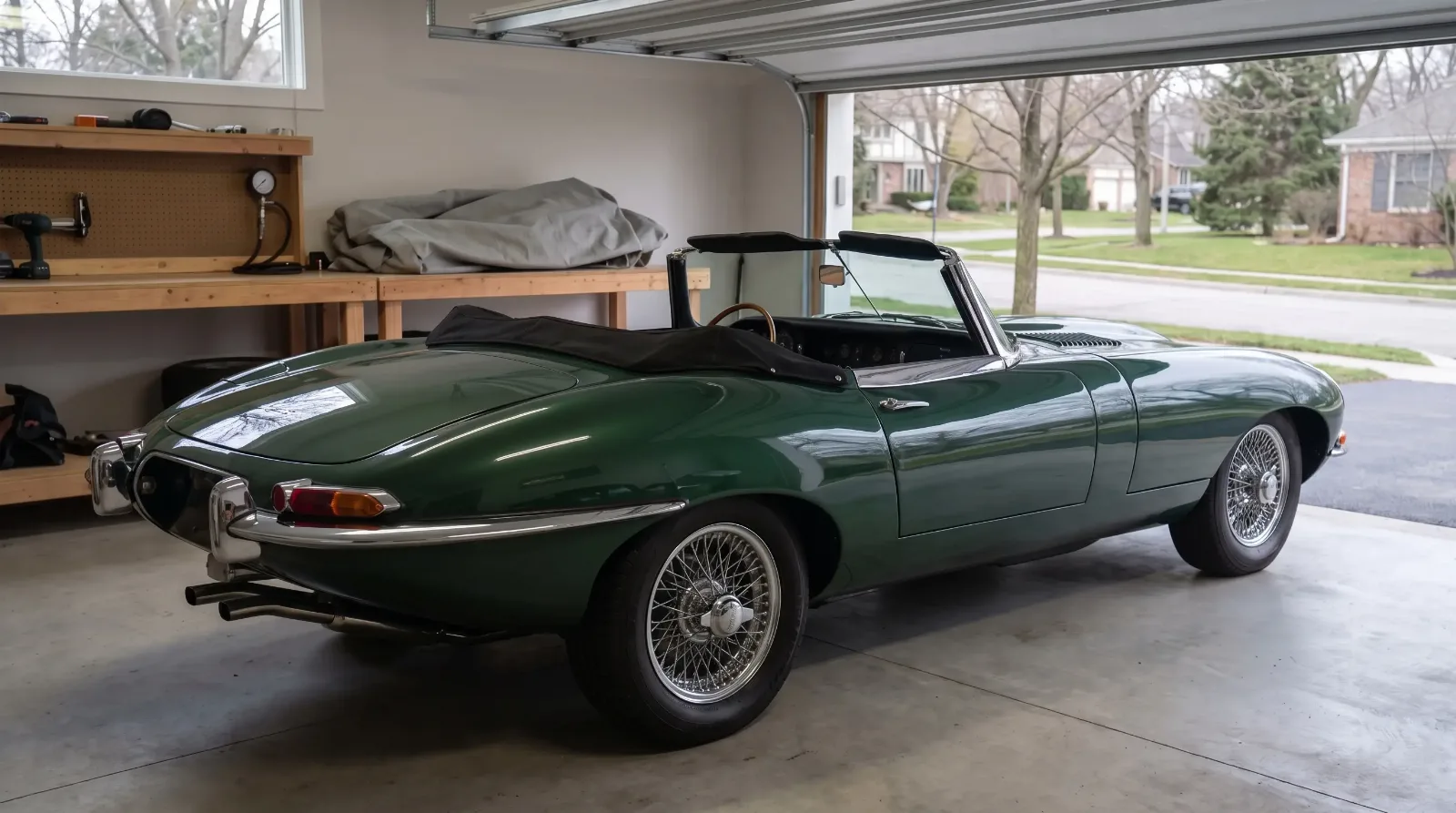
Take a 1965 Jaguar E-Type Series 1 roadster in good #3 condition, a car that commonly sells for six figures. At that price, the choice between a broker and a consignment dealer is not about saving a point of commission. It is about who stands between your car and a stranger with a cashier's check. If you need the full process first, start with our consignment guide. This piece covers only the fork in the road.
What a classic car broker actually does
A broker is a matchmaker with a marketing budget. The broker writes and places the listing, answers inquiries, filters out the tire-kickers and passes qualified buyers to you. In most broker arrangements there is no showroom. The car stays where it is, and the buyer comes to see it by appointment or sends an inspector. When a deal is agreed, the broker coordinates the paperwork. Depending on the business, the buyer may pay you directly or pay through the broker.
The fee is usually a percentage of the sale or a flat amount, and the better structures charge nothing until the car sells. WeBe Autos in Riverhead, on Long Island, describes itself as a "marketing agent, not a dealer." It says listing is free and the fee is 5% of the final sale price with a $500 minimum, owed only if WeBe produces the sale; an owner who sells the car privately owes nothing. WeBe fields the inquiries and sets up showings by appointment at a time that suits the owner.
Both examples charge only on a sale. What neither headline tells you is the order of the money, so ask it directly: does the buyer pay you first and you then settle the fee, or does the broker collect the price and deduct its cut? A fee you pay after your own funds have arrived is a stronger position than a fee deducted from money someone else is holding.
What a broker does not do is take responsibility for the car itself. You keep it insured, you keep it charged and clean, and you open the garage door. If a buyer's inspector finds a weeping rear main seal, that conversation happens in your driveway.
What a consignment dealer does differently
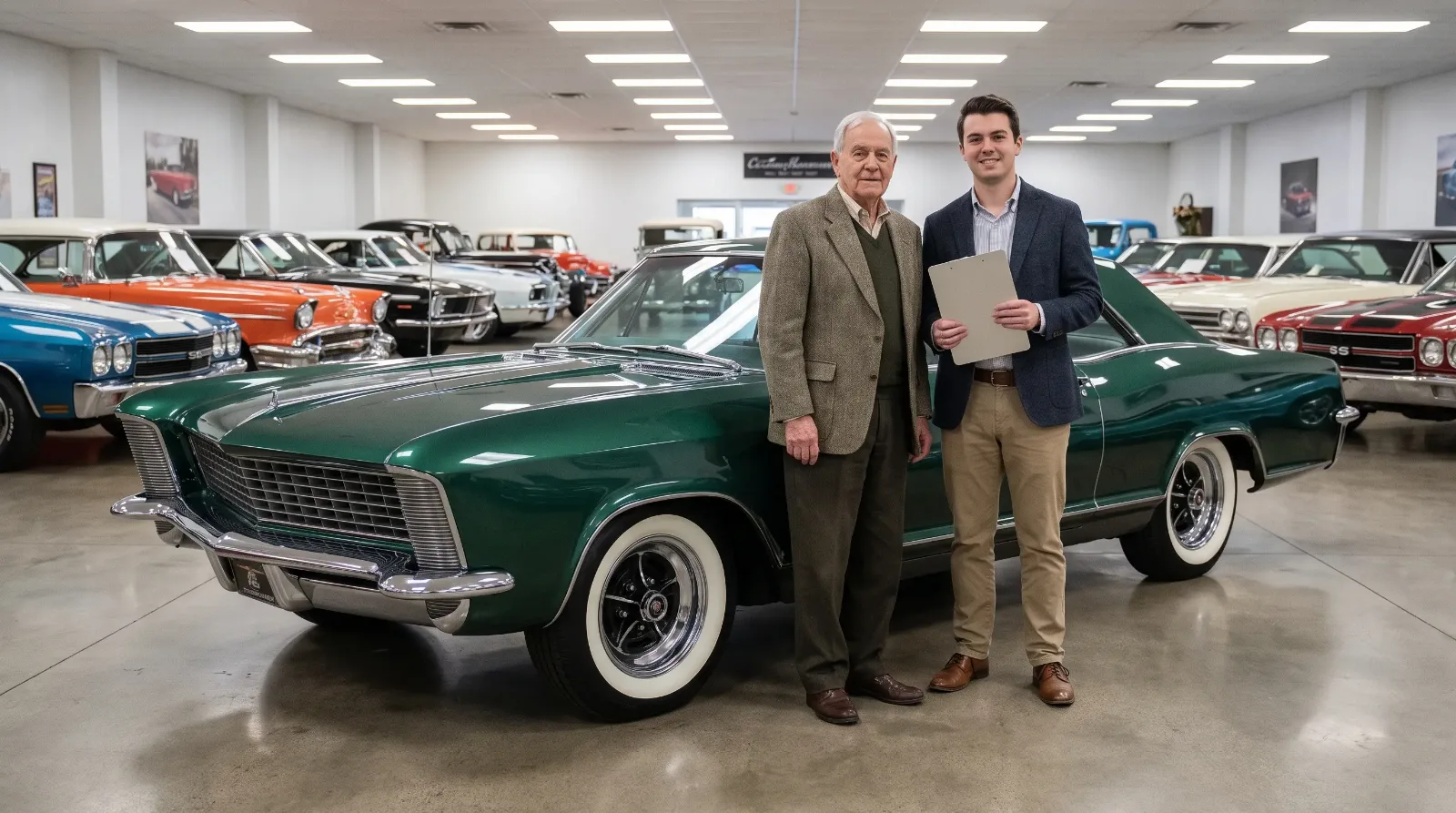
A consignment dealer takes possession. The car is delivered to the dealer's premises, sits under its lights and is sold as part of its stock. The dealer handles showings, test drives, buyer financing questions and the closing. The buyer pays the dealer. The dealer deducts its commission and any agreed charges, then pays you the balance.
The advantages are real. A showroom with steady traffic for your type of car puts it in front of people who did not know they were looking. The dealer's name carries some weight with a buyer who is nervous about a private seller. And you are not the one fielding calls at dinner.
The cost is control. Once the car leaves, you rely on the dealer's insurance terms, the dealer's storage conditions and the dealer's handling of the buyer's money. Consignment commissions commonly run from about 5% to 15% of the sale, usually above the broker figures quoted here, and storage or prep charges can come on top. You can check how long the process takes before you sign, because every extra month on a floor with a monthly fee changes the arithmetic.
Custody, money and fees side by side
The headline percentage tells you the least. Read the two models on where the car sits, who touches the money and what you pay if nothing happens.
| Factor | Classic car broker | Consignment dealer |
|---|---|---|
| Where the car sits | Usually with the owner, shown by appointment | On the dealer's floor or in its storage |
| Who markets it | The broker, online and through its contacts | The dealer, online plus walk-in traffic |
| Who handles showings | Usually the owner | The dealer |
| Who holds buyer funds | Varies: direct to owner, or through the broker | The dealer, before it pays the owner |
| Typical fee | Around 5% or a flat fee, often success-only | Roughly 5% to 15%, sometimes plus storage and prep |
| Insurance during the sale | Owner's own collector policy | Depends on the dealer's policy and your contract |
| Cost if the car does not sell | Often nothing beyond your time | Possible storage, prep, transport and early-exit fees |
The funds row carries the most downside. When a dealer collects the purchase price into its own account and pays you later, you are an unsecured creditor for those days. A broker whose buyer pays you directly removes that exposure entirely. A broker who runs the money through its own account puts you back in the same position as a consignment seller, without the showroom. Ask which one you are signing up for.
Licensing: the question to ask either one
States commonly require a dealer license for anyone who sells other people's vehicles for a fee. California's definition of a dealer, for example, explicitly includes anyone paid a commission or brokerage fee to sell vehicles, and some states also presume dealer status once a person sells more than a set number of vehicles in a year. Consignment dealers almost always fall inside those rules. Brokers sit in a grayer zone. Some states license brokers through a dealer license with a broker endorsement; California, for example, requires an autobroker's endorsement on a dealer license before a dealer may broker retail sales. Other states have no separate broker category, and a business that only advertises cars and introduces buyers may argue it is not selling anything at all.
From the seller's chair, the legal theory matters less than the practical consequence. A licensed dealer is usually bonded and answers to a state regulator. If it fails to pay you, there is a complaint process and often a surety bond to claim against. California, for instance, requires a $50,000 dealer bond that answers for monetary losses caused by a dealer's fraud. An unlicensed intermediary who mishandles your money leaves you with a civil lawsuit. So ask three things in writing: which license the business holds and in which state, whether it is bonded, and whether buyer funds pass through its hands. A specific answer to all three is a good sign. "We've never had a problem" is not an answer.
Which one fits your car
A broker suits a car you can show well yourself, a price high enough that the buyer pool is national rather than local, and an owner who has the time to open the garage. The E-Type is a fair example. Its buyers are spread across the country, they will fly in or send an inspector, and few of them were going to wander into a showroom and buy one on impulse. Paying a showroom rate for walk-in traffic the car does not need is money with nothing behind it.
A consignment dealer suits an owner who cannot or will not handle showings, a car that sells on first impression and benefits from being seen in person, or a seller who lives far from where the buyers are. It also suits an estate where nobody wants to be the contact person for six weeks. The higher fee buys real labor in those cases.
"Price the risk, not the rate. A 5% broker who sends the buyer's wire straight to you and a 10% dealer who holds it for three weeks are selling two different products, and only one of them leaves you exposed if the business folds."
Marcus Feld
There is a third route that neither model replaces. If you are prepared to do the marketing, the calls and the closing yourself, you can sell your classic car online on a flat listing fee and keep the commission. The broker earns its fee by doing that work for you. The consignment dealer earns a larger one by also taking the car off your hands. Decide how much of the work you want to keep, and then choose the business whose answers on custody, funds and licensing hold up in writing.
Sources and notes
Related Reading
#selling a classic car
#consignment fees
#classic car broker
#consignment dealer
#dealer licensing
#classic car commission

About the author
Marcus Feld
Accredited collector-car appraiser who reads the market through hammer prices, condition tiers and risk.
More in Market & Values


Comments
Be the first to comment on this article.