
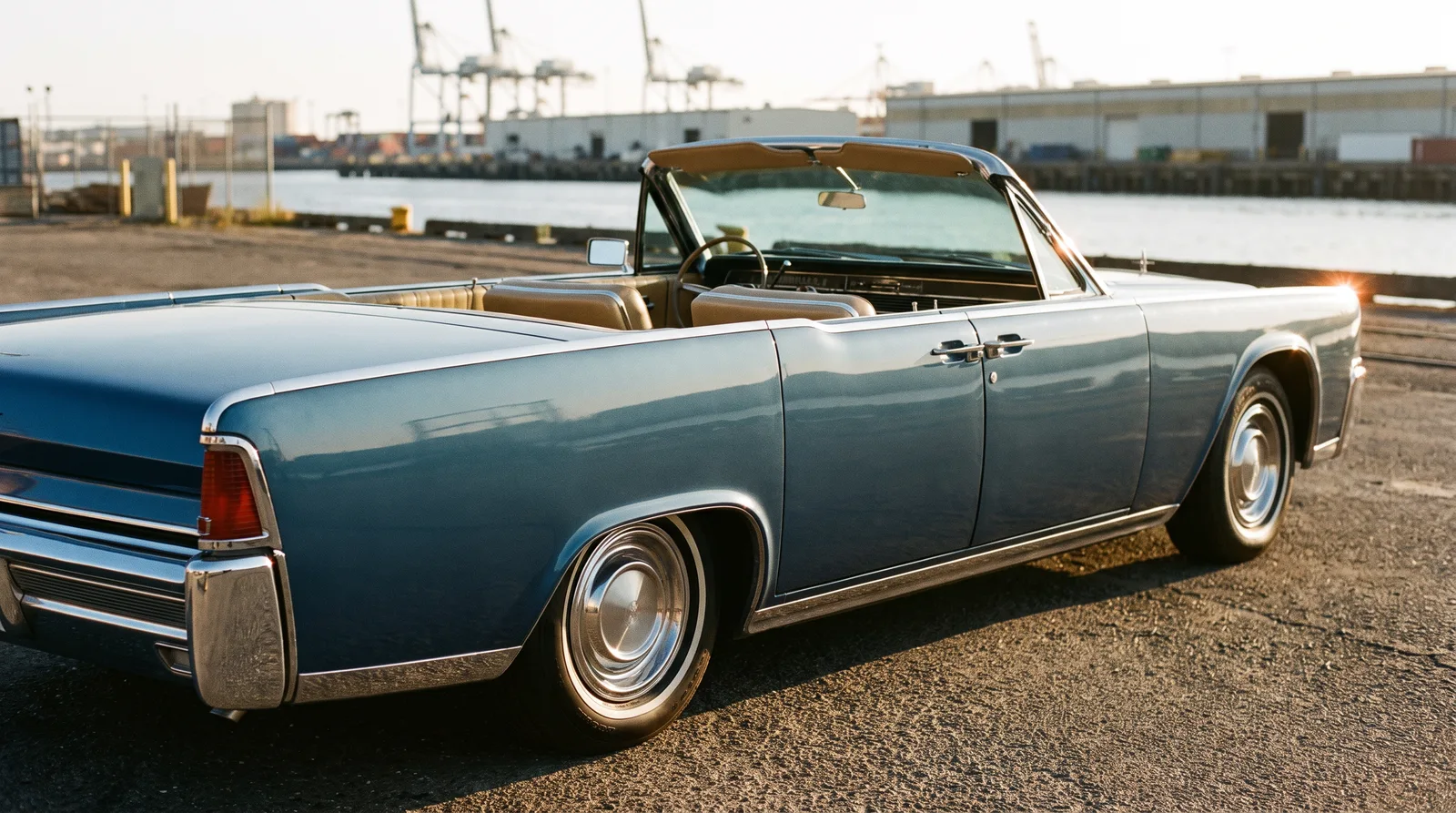
Picture a 1964 Lincoln Continental convertible, the four-door with the rear-hinged back doors and a top that folds itself into the trunk. The owner has decided to consign it, and two offers are on the table. One comes from a showroom dealer two hours away who wants the car on his floor next week. The other comes from an online classic car consignment service that wants photos, a video of the top cycling, and nothing else. The car stays in the owner's garage. Both promise a buyer. They are not selling the same service, and the difference shows up in the commission, in who holds the keys, and in what kind of buyer ever hears about the car.
Market & Values
8 min read
Online Consignment vs Showroom Consignment for a Classic Car
Commission, buyer reach, inspections, insurance and payout: how online consignment and a showroom compare, and which one fits your classic.
The broader mechanics of consignment, from agreements to dealer vetting, are covered in the main guide. Here the question is narrower: for a given car, which model leaves more money in your account with less risk.
Online classic car consignment and the showroom, side by side
The two models share a legal skeleton. In both, you keep the title and the business acts as your agent until a sale closes. Almost everything else differs. The table below sets the main points against each other, using figures the businesses publish where they exist.
| Factor | Online (remote) consignment | Showroom consignment |
|---|---|---|
| Typical commission | Published rates cluster around 5%, often with a minimum (WeBe Autos lists 5% with a $500 minimum); some programs earn their margin above your net price instead | Commonly higher, up to about 10% to 15%, sometimes with a flat fee instead or a lower rate on more expensive cars |
| Who holds the car | You do, in your garage, until it sells | The dealer, on its floor or in its storage |
| Buyer reach | National, through listing sites, email and social posts | Walk-in and regional traffic, plus whatever the dealer lists online |
| Showings and inspection | By appointment at your address; you open the garage | During business hours at the dealer; staff handle it |
| Storage and insurance | Your space, your policy throughout | Dealer's space; coverage depends on both policies and must be confirmed in writing |
| Extra charges | Sometimes photography or video if you do not supply your own | Storage, detailing and transport can be billed on top |
| Payout control | Depends on the contract; some services run buyer funds through their own account | Dealer collects the buyer's money and pays you after closing |
Neither column wins on every row. The showroom costs more and takes the car away, but it also takes the work away.
Commission is the visible gap
On a car selling for $60,000, a 5% online commission is $3,000. A 10% showroom commission is $6,000, before any storage or prep charges. On a slow sale the gap grows, because monthly storage keeps accruing.
The gap narrows once you count the work the showroom absorbs. Online consignment shifts showings, battery maintenance, cleaning before each visit and the test-drive question onto you. If the car needs a person on site three Saturdays in a row, that person is you. A low percentage paired with a minimum fee also changes shape at the bottom of the market: on a $8,000 car, a $500 minimum works out to 6.25%, which is closer to showroom territory than the headline suggests.
The commission is also only one input into the net figure. The other is the asking price, and the two models tend to set it differently. A showroom dealer has floor space to fill and an incentive to agree to an optimistic number at signing. An online service whose margin depends on selling above your net figure has the opposite pressure. Before you sign with either, it is worth understanding how a consignment dealer prices your car, because the price decides how long either model has to work.
Reach, inspection and who handles the buyer
A common assumption is that a showroom sells more cars because people can see them. A walk-in buyer, though, is a regional buyer. For a common driver-quality car with a deep local market, regional traffic may be all the reach you need, and a buyer who can sit in the car on a Tuesday afternoon is a buyer who closes quickly.
For a car with a thin, scattered buyer pool, the picture reverses. Four-door Continental convertibles have a dedicated following, but the people who want one with a working top and a documented history are spread across the country. An online consignment listing reaches them where they already search. A showroom in one city reaches the people who drive past it, plus whatever it posts online. Ask any showroom how many of last year's consignment sales went to out-of-state buyers. The answer tells you how much of the fee buys walk-in traffic and how much buys internet reach an online service also offers.
Inspection access is where the online model asks the most of the seller. A serious buyer will want an independent inspector to see the car, and with remote consignment that inspector comes to your house. Classic Car Deals, an online consignment business, says its listed cars allow personal and third-party inspections and that a good-faith deposit holds a car for seven days, with the buyer paying the balance to the company before paperwork and shipping are arranged. None of that moves the inspection out of your garage. If you cannot be present, or cannot let a stranger drive the car, a showroom may be the better fit.
Storage, insurance and the payout
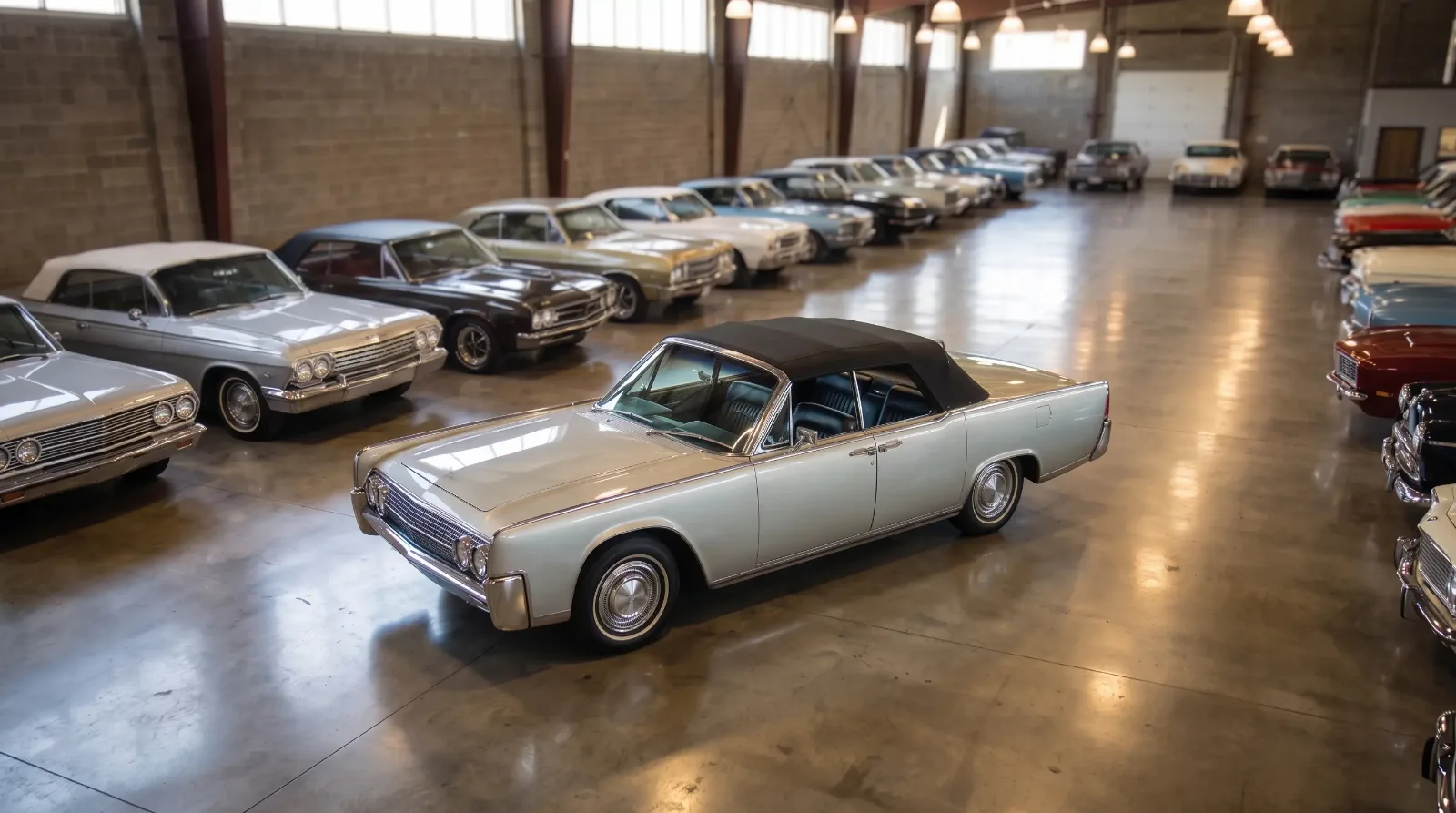
With online consignment the car stays on your policy and in your space, and nothing about your coverage changes unless a buyer drives it. That last point needs a written answer before the first showing: who may drive, who rides along, and whose policy pays if a test drive ends in a ditch. Collector policies typically set rules on who may drive the car and how it is used, so call your insurer rather than assume.
Showroom consignment raises a different question. Once the car is on the dealer's premises, your collector policy may limit or exclude coverage, and the dealer's garage policy may cover its own inventory but not consigned cars. Get both answers in writing before the car is loaded. Expect the odometer to climb, too, as the car is shuffled around the lot and taken on test drives.
Payout control matters in both models, and it is decided by the contract, not the format. The safer arrangement keeps buyer funds in a separate trust or escrow account with a stated number of days to payout. Ask for that number. A business that cannot give it may be using your proceeds as working capital, and if it fails in that window you are an unsecured creditor.
"The format matters less than the record. Ask either kind of business for the cars it sold last year in your price range and where the buyers came from. That list tells you more about your odds than the commission rate does."
Tom Ramirez
Which model fits which car
Online consignment tends to suit cars with national buyer pools and owners who can handle showings: specialist models, rare body styles, well-documented cars whose value rests on paperwork a buyer can review from a distance, and cars valuable enough that a few points of commission add up to real money. If that describes you, it helps to see the main listing sites compared, since an online consignment service is, in effect, paying for placement on several of them on your behalf.
Showroom consignment tends to suit owners who cannot be present for showings, cars that sell on first impression in person, and owners in a region with a strong local dealer whose sales record matches the car. Dealer location matters less than dealer record. A well-run showroom three states away may serve the car better than a weak one nearby, and it is worth looking at dealers in other states before settling on the closest door.
For the Continental, the deciding factor is probably the top. A buyer will want to see it cycle, more than once, and will want an inspector to check the top's motors, switches and the trunk mechanism. If the owner can stand in the garage and run it for each serious caller, online consignment saves several thousand dollars. If not, the showroom earns its fee by being there when the buyer is.
Sources and notes
Related Reading
#classic car consignment
#selling a classic car
#consignment commission
#remote consignment
#online consignment
#showroom consignment

About the author
Tom Ramirez
Corvette researcher and historian based in Bowling Green, Kentucky. Two decades documenting Corvette production history from original factory records.
More in Market & Values


Comments
Be the first to comment on this article.