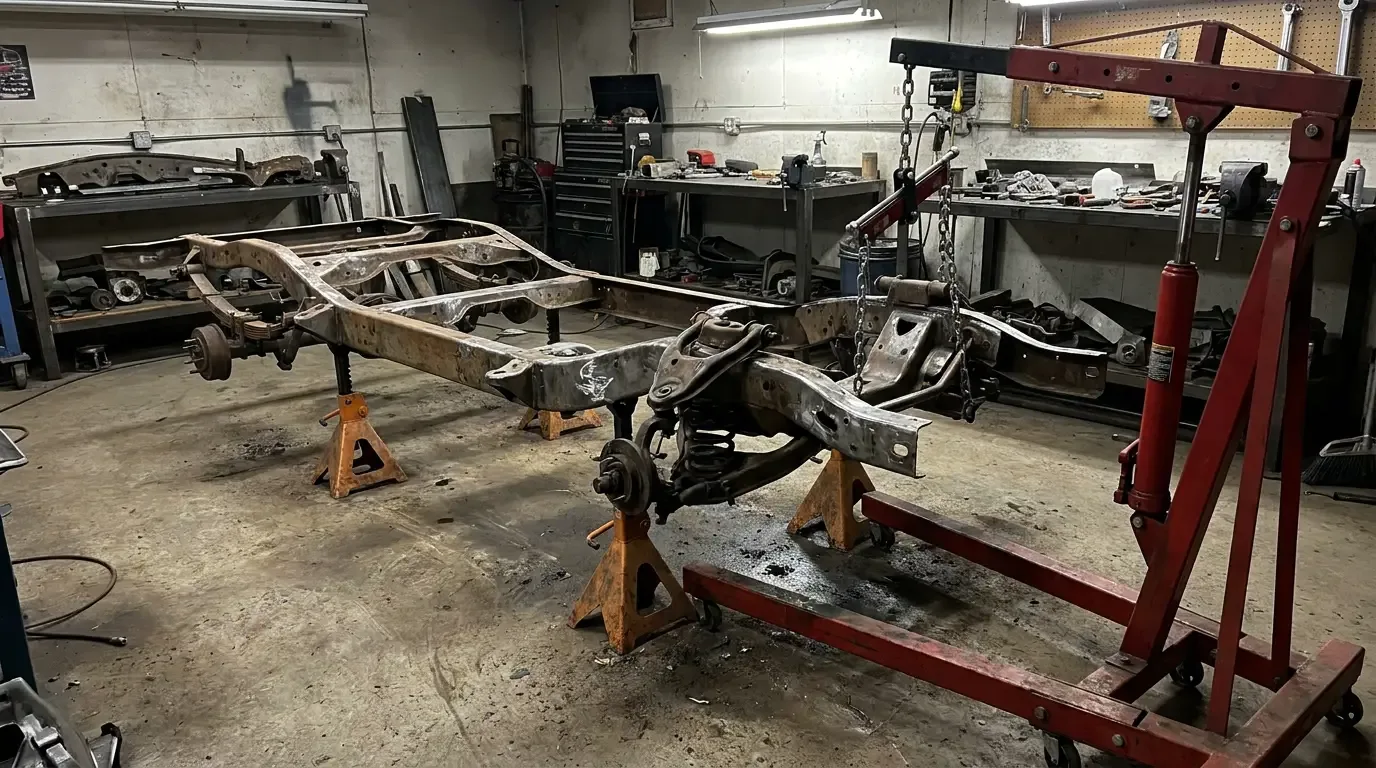
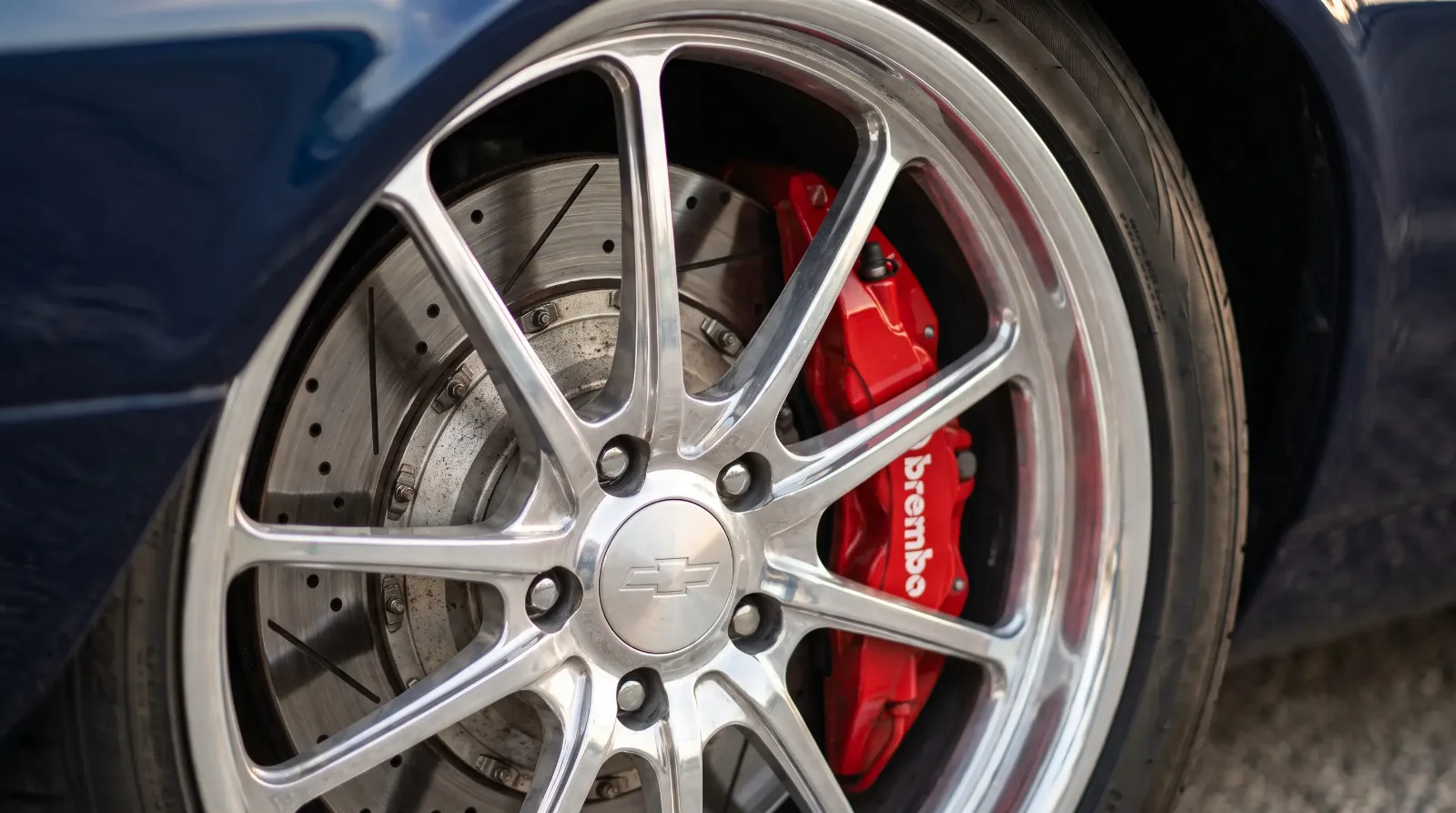
Why drum brakes are not enough for a street-driven first-gen
Factory drum brakes on a 1967-1969 Camaro were sized for a car that weighed around 3,200 pounds and topped out at 110 mph with a small-block. Add a 500-horsepower crate engine, wider tires, and modern traffic, and those drums become a genuine safety problem. Fade sets in after two or three hard stops, pedal travel increases, and proportioning goes out the window when you mix drum rear with disc front. If you are building a street car that sees freeway on-ramps and mountain roads, a full four-wheel disc conversion is not optional gear. It is the first mechanical upgrade you should budget for.
For more context on the broader restomod project, see our overview of pro-touring builds for classic Camaros before diving into individual systems.
Front disc conversion kits: brands, sizing, and cost
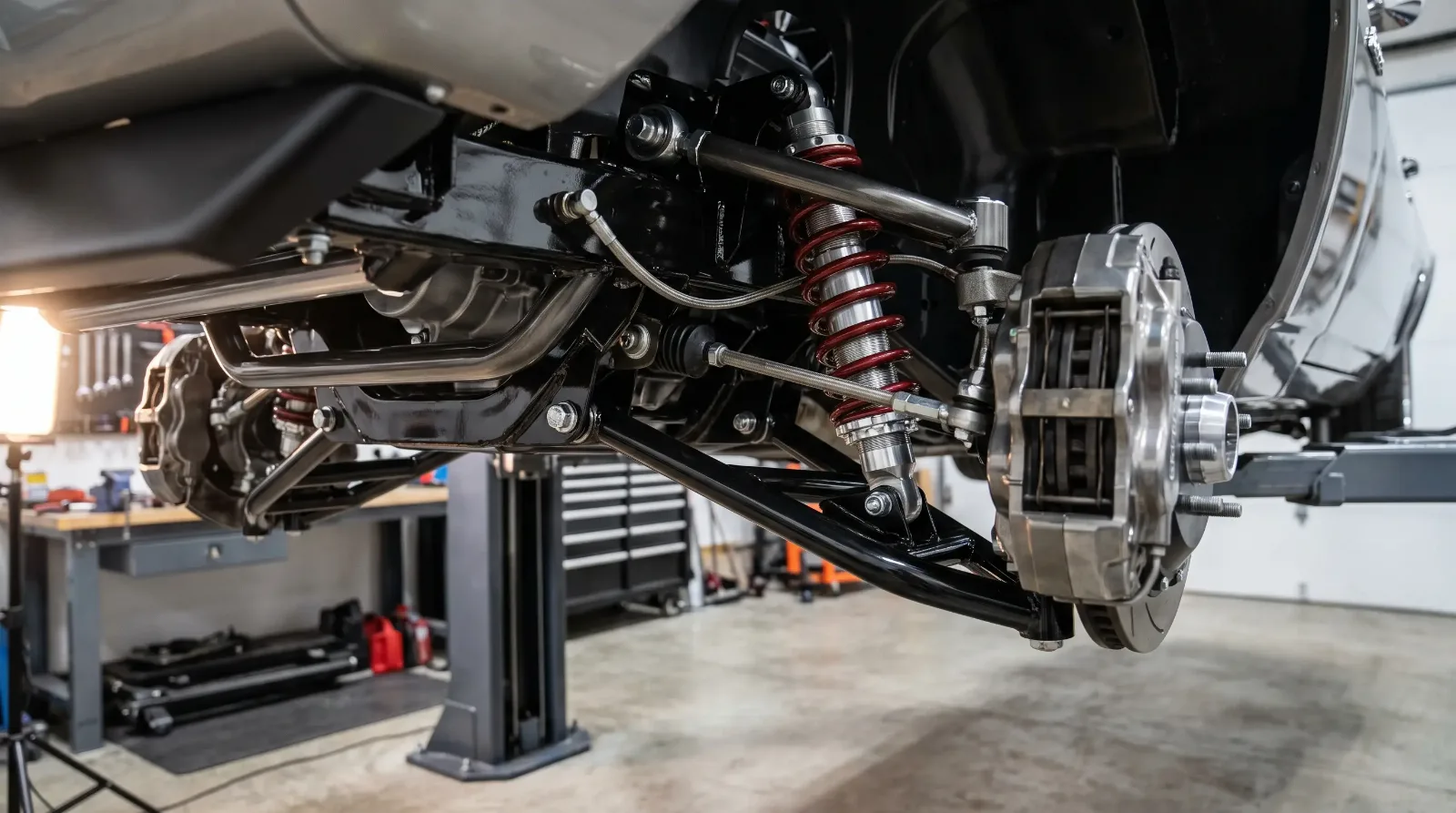
The front end is straightforward because spindle-mount disc kits have existed for decades. Wilwood, Baer, and Classic Performance Products (CPP) all produce bolt-on kits that use the factory spindle. Wilwood's Dynalite kit runs around six to nine hundred dollars for a two-piston caliper setup with slotted rotors. Baer's Sport kit is in the roughly one-thousand-dollar range and includes stainless brake hoses. CPP sells a complete front disc kit starting around five to six hundred dollars that is popular in budget builds.
For a pro-touring car that will also see autocross, consider stepping up to a six-piston Wilwood Superlite or Baer Track4 kit. These use forged aluminum calipers and 12.19-inch or 13-inch rotors. Budget somewhere in the one-and-a-half to two-thousand-dollar range for these track-capable setups. The larger rotor requires a minimum 17-inch wheel with 4.5 inches of backspace to clear.
- Wilwood Dynalite front kit: roughly seven to nine hundred dollars
- Baer Sport front kit: around one thousand dollars
- CPP front disc conversion: roughly five to six hundred dollars
- Wilwood six-piston Superlite upgrade: well over a thousand dollars
Rear disc conversion: the trickier half
The factory 10-bolt or 12-bolt rear axle uses drum brakes bolted directly to the axle flange. Converting to disc requires either a disc-brake–specific rear end or a bolt-on conversion bracket kit. For cars keeping the 12-bolt, CPP and Strange Engineering both sell bracket-and-caliper kits that clamp a rotor to the axle flange. Strange's kit uses a 12-inch rotor and a single-piston caliper for a few hundred dollars per axle side. These kits also accommodate the parking brake cable with an integrated lever arm on the caliper.
If you are swapping to a Ford 9-inch or a GM 12-bolt rebuilt by a performance shop, order it already set up with disc brakes. The cost difference on the build is typically a few hundred dollars versus retrofitting drums after the fact. For cars going to a four-link rear suspension, this is almost always the cleaner path because the rear axle housing is being replaced anyway.
Master cylinder, booster, and proportioning valve
Upgrading to four-wheel disc requires a dual-bowl master cylinder sized for disc-disc operation. The factory drum-drum or front-disc/rear-drum master has a different bore and residual pressure valve arrangement. A 1-inch bore master from CPP or a Wilwood tandem master cylinder, somewhere over a hundred dollars, is the correct replacement. Most bolt directly to the existing booster mount.
The proportioning valve is critical. A Wilwood adjustable proportioning valve (well under a hundred dollars) lets you dial in front-to-rear brake balance on the fly, which matters especially if you have a large-displacement engine pushing weight forward. Mount it in the engine bay where you can reach the adjustment knob without tools.
"The proportioning valve is the one thing guys skip and then wonder why their rear tires lock up in the rain. Spend the $70 and get the adjustable unit. You will thank yourself the first wet-road emergency stop."
-- Mike Sullivan
Fitting the brakes inside your wheel choice
Brake clearance determines wheel selection, and this is where builds go sideways fast. Measure the caliper height and width, then cross-reference wheel manufacturer clearance charts before ordering. Wilwood publishes a wheel clearance tool on their website that lists compatible wheel brands by part number. As a general rule, 17-inch wheels with 4.5 inches of backspace clear the Dynalite six-piston front. Dropping to 15-inch wheels with a track-day single-piston kit is possible but limits tire selection significantly.
Once the brakes are sorted, you will want to read our article on pro-touring suspension upgrades for a classic Camaro because the alignment geometry changes the moment you modify the front suspension, and disc brake clearance recalculation becomes part of that same job. Also see the full Chevrolet Camaro story for context on how these cars evolved from their factory brake specifications over five decades.
| Kit Type | Rotor Size | Caliper | Approx. Cost | Min. Wheel |
|---|---|---|---|---|
| Wilwood Dynalite front | 11.75 in | 4-piston | roughly $700-$900 | 15 in |
| Baer Sport front | 12 in | 4-piston | around $1,000 | 16 in |
| Wilwood Superlite front | 13 in | 6-piston | well over $1,000 | 17 in |
| Strange rear disc kit | 12 in | 1-piston | a few hundred dollars | 15 in |
Sources and notes
Production figures, engine specifications, codes, and dates in this article are cross-referenced from established Camaro references, period documentation, and owner registries. Where sources differ, the most commonly cited value is used. Cost figures are indicative and vary by supplier, region, and condition.