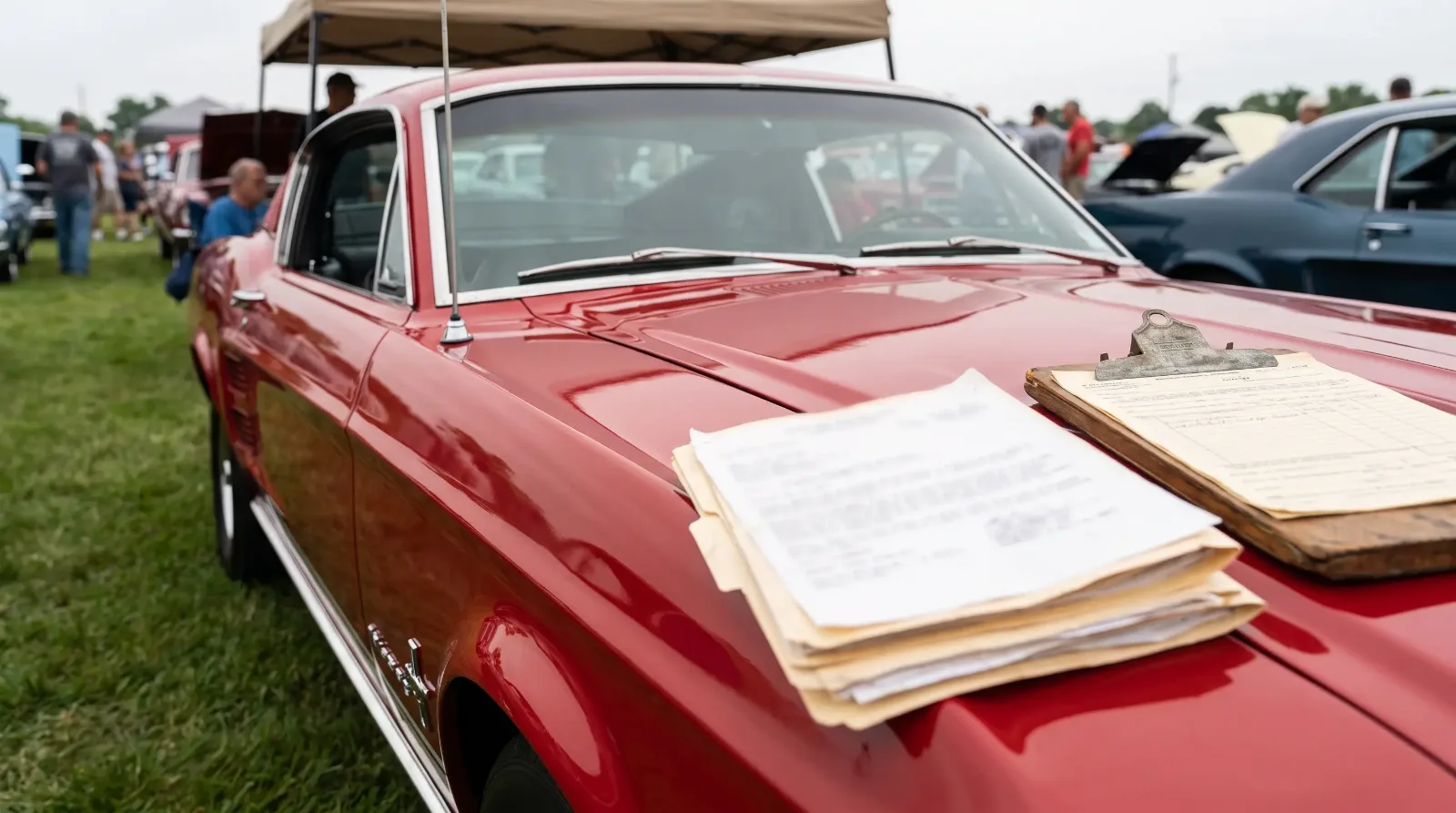
What is a Marti Report and why does it matter?
For anyone buying, selling, or restoring a Mustang built from 1967 onward, the Marti Report has become the single most authoritative piece of documentation available. It is a printed record pulled from Ford Motor Company's own production database, detailing exactly how a specific vehicle was ordered and assembled at the factory. When provenance is in question, a Marti Report answers the question with factory-level evidence rather than guesswork or seller claims.
The company behind it is Marti Auto Works, run by Kevin Marti, who holds an exclusive license from Ford to access and interpret the original production records. That exclusivity is what gives the report its weight. No other researcher, restorer, or service can produce an equivalent document from the same source. For the collector community, the Marti Report sits alongside the window sticker and the original build sheet as one of the foundational documents that establishes what a car is.
If you are working through the full process of authenticating a classic Mustang, understanding what a Marti Report contains and what it cannot tell you is an essential part of that work.
Kevin Marti and the Ford production database
The story of the Marti Report starts with Kevin Marti's acquisition of the Ford production records. When Ford moved away from its older data systems, a significant portion of those historical production records became available. Marti recognized their value and secured the exclusive licensing rights to use them for vehicle history research.
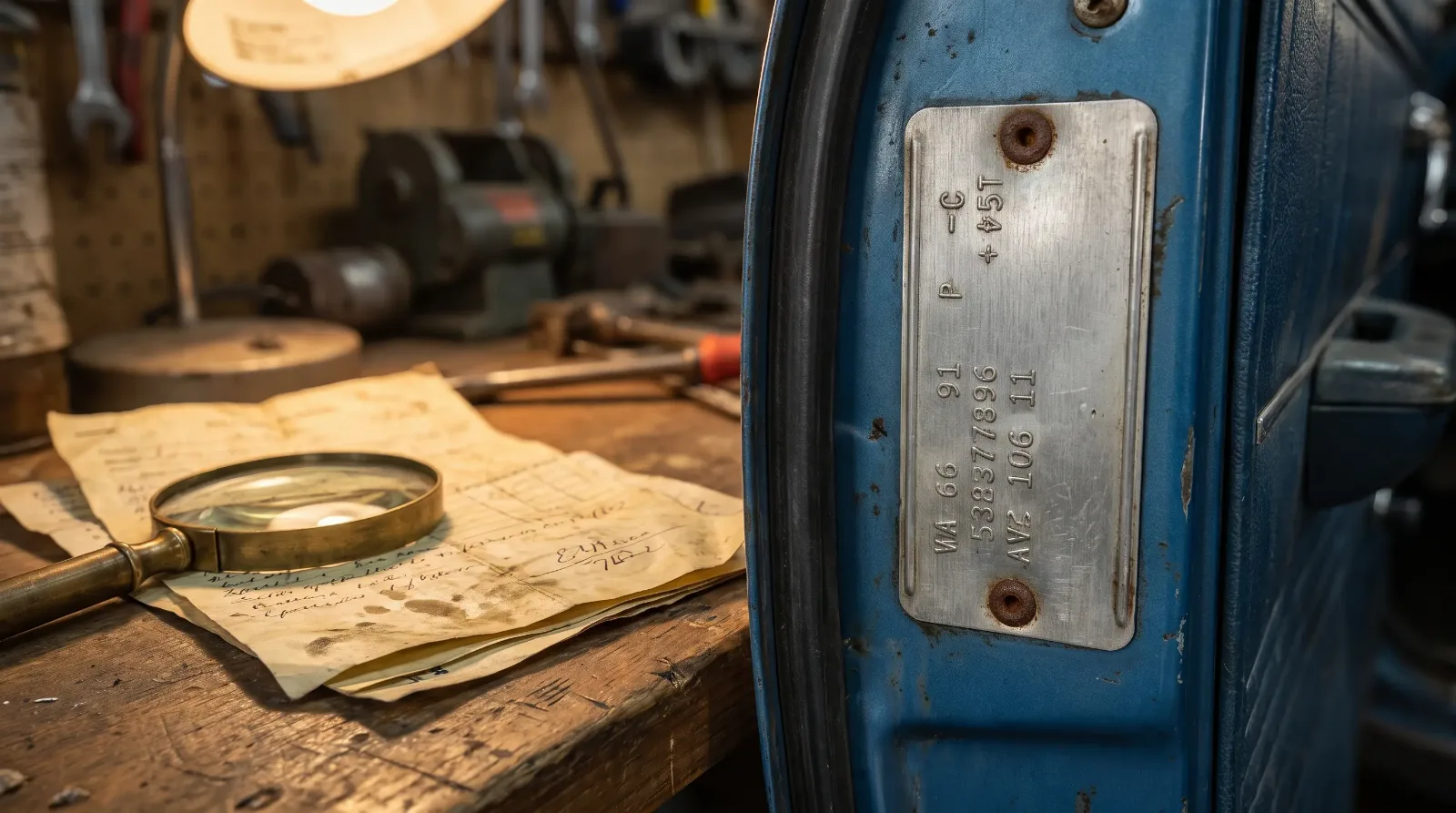
The database covers Ford, Lincoln, and Mercury vehicles from 1967 onward. This is a firm line. Vehicles built before 1967 are not included in the Ford production database that Marti Auto Works licenses, which means a 1965 or 1966 Mustang owner cannot order a Marti Report. For pre-1967 cars, owners rely on other documentation: the original window sticker (Marti Auto Works can produce a reproduction window sticker for a 1965 or 1966 Mustang from the door data plate and any surviving paperwork), the physical broadcast sheet if it survives, original dealer invoices where they exist, and third-party decoding resources. The 1967 cutoff is not arbitrary; it reflects the structure of the records Ford actually preserved in machine-readable form.
For 1967-and-later Mustangs, however, the database is comprehensive. It captures the data that Ford's assembly plants recorded when each car was ordered and produced, including the specific option codes the dealer submitted on the window order form.
What the report reveals about your Mustang
A Marti Report is not a summary document. It is a detailed extraction from Ford's production records, and the information it contains goes well beyond what most owners can confirm from looking at the car itself.
The core data points in a report typically include:
- Build date. The actual date the vehicle was assembled at the plant, distinct from the model year.
- District Sales Office (DSO) code. This identifies the sales district the car was ordered through, which matters for understanding regional option combinations and shipping history.
- Body style and paint code. The factory exterior color, confirmed against Ford's production record, not the owner's claim.
- Interior trim code. The factory-specified upholstery and interior color.
- Engine and transmission codes. The powertrain the car left the factory with, which is central to any numbers-matching discussion.
- Factory-installed options. Every option the car was built with, from power accessories to performance packages, as recorded at time of production.
- Production statistics. How many vehicles were built with the same combination of options as this specific car, and how many in the same exterior color.
That last category is particularly significant for rarity claims. A seller might describe a Mustang as rare because of its color, but the production statistics section of a Marti Report tells you exactly how many cars left the factory in that color in that model year. If 12,000 Wimbledon White fastbacks were built that year, the rarity argument weakens. If the figure is 143, you have documented evidence of genuine scarcity.
"The production statistics section is where I spend the most time. Anyone can claim a car is rare, but the Marti numbers are the only ones that come from the factory's own records."
— Tom Ramirez
The three report tiers: Standard, Deluxe, and Elite
Marti Auto Works offers the Marti Report in three tiers, each providing progressively more detail. Understanding the difference helps owners and buyers choose the level appropriate for their situation.
The Standard Report covers the essential production data: build and scheduling dates, DSO, axle code and ratio, color and trim codes, powertrain, options, and a set of general production statistics covering paint, trim, engine, transmission, and DSO. For most buyers doing basic due diligence, this tier answers the most important questions about what the car is and how it was built.
The Deluxe Report expands on the standard information by adding the selling dealership's name (where available), a reproduction of the original vehicle order, and personalized production statistics that go beyond the general figures in the Standard tier. It is a common choice for sellers who want to present thorough documentation at the point of sale, and for buyers evaluating higher-value cars.
The Elite Report is the most comprehensive offering. It includes the full detail of the Deluxe Report along with a reproduction door data plate and a reproduction window sticker, all mounted in a framed presentation suitable for display. That makes it the appropriate choice for concours-level restorations, significant auction consignments, or vehicles where documentation needs to be as complete as possible. The Elite tier is offered only for select models, primarily the higher-interest cars such as Mustang, Bronco, Cougar, and F-Series trucks.
Pricing for all three tiers is available directly from Marti Auto Works at martiauto.com. The cost is modest relative to the value the documentation adds to any transaction or restoration project, and the turnaround time is generally fast.
Why the Marti Report is the gold standard for Mustang provenance
The Mustang market has a long history of misrepresentation, both intentional and accidental. Cars get rebuilt with replacement engines and mismatched trim. Data plates get swapped. Sellers who received incorrect information pass it forward in good faith. Even experienced buyers have purchased cars that turned out to be something other than advertised, because the physical evidence was ambiguous and there was no documentation to resolve it.
The Marti Report cuts through that ambiguity because it is not based on inspecting the car. It is based on what Ford recorded when the car was built. A car's data plate can be moved, but the factory production record cannot be retroactively altered. If the report says a car was built with a 428 Cobra Jet engine and a close-ratio four-speed, that is what Ford's records show for that VIN. Whether the matching components are still in the car is a separate question, but the baseline is established.
This is why the report has become expected documentation in serious Mustang transactions. High-value cars offered at major auction houses routinely include a Marti Report as part of the documentation package. Buyers at those price levels will not proceed without it, and sellers who provide it demonstrate that they have nothing to conceal about the car's factory configuration.
For the restoration community specifically, the report serves a different but equally important function. When a restorer is trying to return a car to correct factory specification, the Marti Report provides the authoritative reference for what that specification actually was. Paint code, interior code, option-by-option breakdown: the report eliminates the guesswork that otherwise forces restorers to rely on educated estimates and peer consultation.
No document is a substitute for a thorough physical inspection. A Marti Report tells you what the car was built as; it does not tell you what has been done to it since. But as a foundation document, it is irreplaceable. In the absence of the original window sticker and build sheet, it is often the only way to establish with confidence what a 1967-and-later Mustang was when it left the factory.
Sources and notes
This article is for general educational and informational purposes only. Report tiers, inclusions, model availability, turnaround times, and pricing are set by Marti Auto Works and change over time; always confirm current details directly with Marti Auto Works before ordering. References to Ford, Lincoln, and Mercury are made for descriptive purposes; this article is not affiliated with or endorsed by Ford Motor Company or Marti Auto Works.
- Marti Auto Works — Marti Report (official): license, coverage, and the Standard, Deluxe, and Elite tiers
- CJ Pony Parts — What Is a Marti Report and Should You Get One?
- Hagerty — Kevin Marti Has Been Driving FoMoCo History for 50 Years
- Mustang Restoration LA — Marti Report: What It Is and What It Covers
- The Muscle Car Place — Kevin Marti and the Marti Report (1967-and-newer Ford data)