
Oldsmobile 98 Buyer's Guide
The Oldsmobile 98 was GM's statement that luxury and performance need not be mutually exclusive — a full-size flagship that introduced the high-compression overhead-valve V8 to the American public and defined the postwar luxury car formula for a generation.

Sarah Whitfield here. The Oldsmobile 98 is a car that deserves serious historical recognition alongside the Cadillacs and Lincolns it competed with. In 1949, Oldsmobile introduced the Rocket 88 — the car that most historians credit as the first true muscle car — and the 98 carried a version of that same revolutionary overhead-valve V8 in its full-size luxury body. The combination of genuine performance and genuine comfort was unprecedented at the 98's price point.
The 98 ran from 1941 through 1996, but the classic era — the years that define what the 98 means to collectors — runs from the 1949 Rocket V8 introduction through the mid-1970s. These are full-size luxury cars with an engineering pedigree that even Cadillac had to respect, and they're available at prices that reflect the market's incomplete appreciation of their significance.
The Rocket V8 Revolution (1949)
The year 1949 changed American automotive engineering permanently. Oldsmobile introduced the "Rocket" overhead-valve V8 — a 303ci engine producing 135 horsepower that was simply more advanced than anything else offered at its price point. High-compression combustion, excellent breathing through the overhead-valve architecture, and superior thermal efficiency gave the Rocket V8 a power advantage that its contemporary rivals couldn't match.
In the 98 body, the Rocket V8 created something remarkable: a full-size luxury car that was also one of the fastest production vehicles in America. The combination wasn't supposed to be possible — luxury cars were supposed to prioritize comfort over performance, and performance cars were supposed to sacrifice comfort. The 1949 Oldsmobile 98 proved both assumptions wrong, and the American performance car was never the same.
Design Generations
The 1949–1951 Rocket 98 has a transitional aesthetic — the body design was shared with other GM divisions and hadn't fully developed the individuality that later 98s would have. These are historically significant machines but not the most visually distinctive.
The 1954–1956 98s reached a design peak: the panoramic wraparound windshield, the chrome-framed side trim, and the dual taillight treatment created a car that looked expensive from every angle. The 1955 98 in particular is a beautiful machine — longer, lower, and more confident than the 1954 while retaining the chrome discipline that the 1956–1959 cars would abandon in favor of excess.
The 1965–1970 era produced the most capable 98s from a performance standpoint. The 425ci Toronado engine option (available from 1966) in the 98 body gave buyers a full-size luxury car with genuine performance credentials — over 365 horsepower in a comfortable five-passenger sedan. These are the cars that serious collectors seek out for their combination of period luxury and usable performance.
The 98 vs. Cadillac DeVille
The Oldsmobile 98 was positioned as the near-luxury alternative to Cadillac — better than the standard Buick Electra but below the Cadillac in the GM hierarchy. In practice, the mechanical quality difference between a well-maintained 98 and an equivalent Cadillac was negligible, while the price difference was meaningful. Many buyers chose the 98 specifically for this value proposition, and the same logic applies to today's collector market: 98s are priced significantly below equivalent Cadillac DeVilles while offering comparable quality.
Browse Oldsmobile 98 listings
 Dealer
 United States
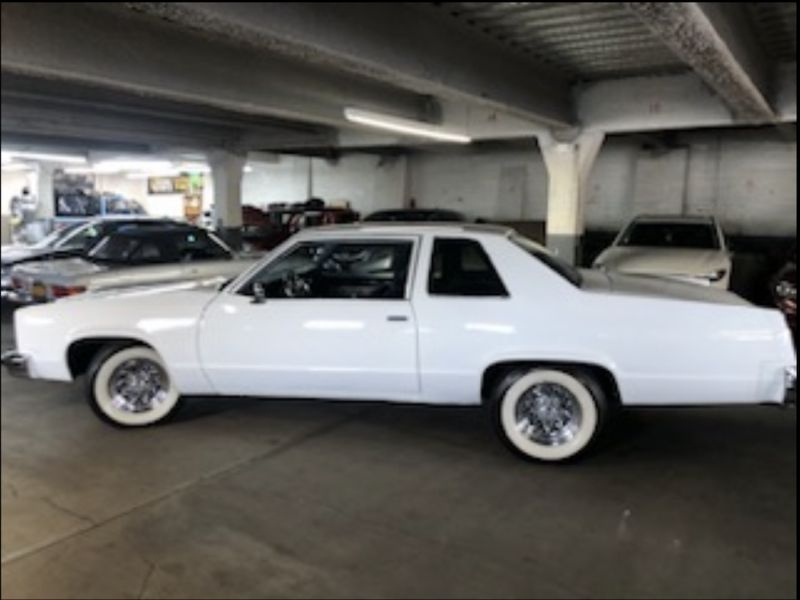
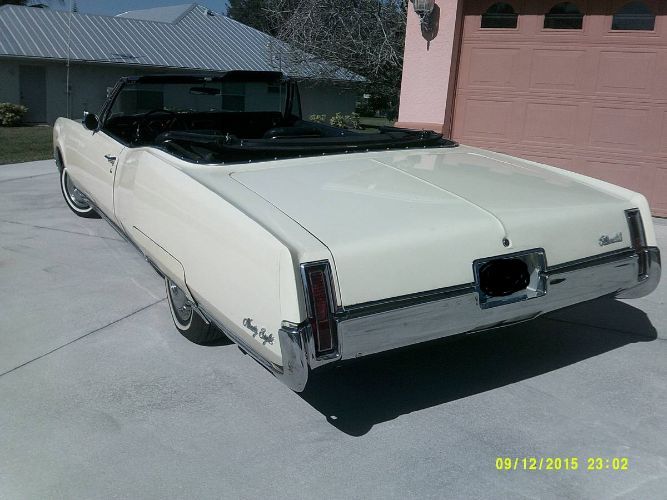
1967 Oldsmobile 98
What to Look For
Inspect the lower rear quarter panels and trunk floor for rust — these are the structural weak points on the C-body GM platform. Check the cowl area under the windshield for water intrusion rust. Verify the Rocket V8 (or later 425ci) runs smoothly without overheating — Olds engines are robust but maintenance-sensitive. On the 1949–1955 cars, confirm the Hydra-Matic automatic transmission engages all four ranges correctly. On post-1965 cars, check the Turbo-Hydramatic for smooth operation. Verify interior material is original — full leather or the correct fabric-and-leather combinations are important for value.Pre-Purchase Checklist
-
Rear Quarter Rust
Probe lower rear quarters and trunk floor — structural rust on the C-body platform is expensive to repair. -
Cowl Area
Check under windshield base for water intrusion corrosion. -
Rocket V8 Condition
Warm the engine and check for oil leaks, especially at the rear main seal, and verify smooth idle. -
Hydra-Matic Operation
On pre-1964 cars, test all four Hydra-Matic ranges — rebuilds run $1,500–$2,500 at a transmission specialist. -
Air Ride Suspension (1958–1960)
On air-suspension equipped cars, check for proper operation — failure is common and restoration is specialized work. -
Interior Originality
Verify interior material and color combination match factory specification for the year. -
Chrome Condition
Inventory all exterior chrome for pitting — re-plating can cost $3,000–$8,000 for a full treatment. -
Engine Identification
Note displacement (303, 324, 371, 394, 425ci) — larger displacement cars command premiums.
Common Issues
Lower rear quarter and trunk floor rust on northern-state C-body examples. Hydra-Matic transmission rebuild requirement on high-mileage pre-1955 cars. Rocket V8 oil leaks from rear main seal. Air ride suspension failure on 1958–1960 equipped cars (expensive and complex to restore). Interior material deterioration — original combinations are difficult and expensive to reproduce. Chrome pitting on exterior trim from environmental exposure.More 98 for sale
 Dealer
United States
Dealer
United States
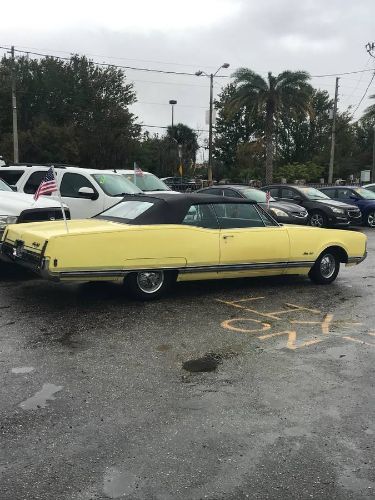
1968 Oldsmobile 98
 Dealer
United States
Dealer
United States
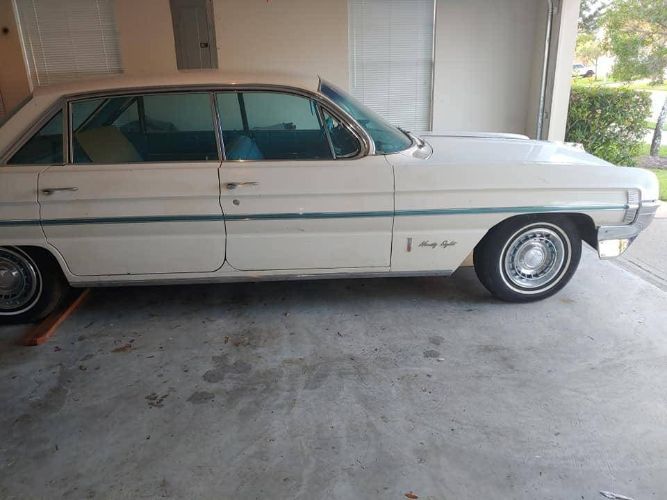
1961 Oldsmobile 98
Pricing Guide
1949–1953 Rocket 98 sedans: $10,000–$22,000. 1954–1957 98 hardtops: $15,000–$35,000. Convertibles (any year): add 30–50%. 1965–1970 98 with 425ci: $12,000–$28,000. Concours-quality restorations: $35,000–$70,000+. Comparison: equivalent years typically sell for 30–50% below comparable Cadillac DeVille, offering significant value relative to quality.Fun Facts
The 1949 Oldsmobile Rocket V8 is widely credited as the catalyst for the American horsepower race — within two years of its introduction, every major American manufacturer had introduced or was developing a high-compression overhead-valve V8. The 98 designation referred to Oldsmobile's internal model numbering, not any specific technical specification. The 1951 Oldsmobile 88 — a lighter-body 98 engine combination — is considered by many historians to be the first true muscle car, predating the GTO by 13 years.Frequently Asked Questions
Ready to find your 98?
Browse 6+ active Oldsmobile 98 listings on Classic Cars Arena.
View Listings →