
Classic Oldsmobile 442 Buyer's Guide
Definitive buyer's guide for classic Oldsmobile 442 1968-1980. Stand-alone model authentication, W-30 verification, A-body frame inspection, current pricing for survivors and concours.

The Oldsmobile 442 launched as a Cutlass option package for 1964 — Oldsmobile's response to the Pontiac GTO. By 1968, the 442 had become a stand-alone Oldsmobile model with its own VIN body designation, distinct from the Cutlass line. Across thirteen years of classic-era production (1968-1980), the 442 spawned legendary high-performance variants: the W-30 (with fiberglass inner fenders, performance cam, and dual-snorkel air cleaner), the W-31 (small-block 350 performance package), and the various Hurst/Olds limited-edition partnerships. The 1968-1972 stand-alone 442 era represents the high-water mark of Oldsmobile factory performance — the 1970 442 W-30 with the 455 V8 is consistently rated among the most desirable American muscle cars ever produced. This guide covers what every buyer should verify before paying premium money for any 442 variant.
Overview
The 442 ran for thirteen years across multiple production phases. The 1968-1971 cars are the stand-alone-model era. The 1972-1980 cars reverted to Cutlass option-package status with declining factory performance due to federal emissions regulations. Each phase has its own buyer profile and its own collector trajectory. The 1969-1970 442 W-30 is the high-water mark of the entire era.
Generations Worth Knowing
Stand-Alone 442 (1968-1971)
The 1968-1971 442 was a stand-alone Oldsmobile model with its own VIN body designation. Engine options included the 350 V8 (1968 only, 442 W-31 package), 400 V8 (1968-1969, base 442), and 455 V8 (1968-1971). The 1970 442 W-30 with the 455 V8 is the high-water mark — driver-quality cars run $55,000-$95,000, documented numbers-matching W-30 cars: $90,000-$220,000+.
Cutlass Option Era (1972-1980)
From 1972 forward, the 442 reverted to a Cutlass option package due to federal emissions regulations and changing market preferences. The 1972-1973 cars retained the 455 V8. The 1975-1976 Hurst/Olds W-25 (gold and white) was the most desirable 442 of this era. The 1979-1980 442 cars (G-body) were the final 442 production until the nameplate revived for 1985-1987 (G-body). Driver-quality 1972-1980 442 cars run $18,000-$38,000.
What to Look For (in person)
PHS Documentation
Pontiac Historic Services covers Oldsmobile A-body production records. PHS Documentation Report ($50-$80) confirms original engine, transmission, axle ratio, paint, and options for any 442. Mandatory for any car priced over $35,000.
Engine Verification
The two-letter stamp code on the front of the block identifies the specific engine type. The most desirable codes for 442 cars: W-30-specific codes (1966-1972), W-31-specific codes (1968-1969 350 small-block performance), and base 442 codes for 400 and 455 V8s.
Pricing Tiers
| Tier | Description | Price Range (2024) |
|---|---|---|
| Driver | 1972-1980 Cutlass 442 with 350/400 V8, decent paint, runs and drives | $18,000-$38,000 |
| Survivor | 1968-1971 stand-alone 442 with 400/455 V8, original drivetrain, PHS documented | $45,000-$80,000 |
| Concours | Documented 1969-1970 W-30 or 1970 Pace Car Edition, frame-off restoration, MCACN-grade | $95,000-$240,000+ |
Common Pitfalls
The biggest pitfall in 442 buying is paying premium money for a Cutlass with 442 trim added. The PHS report instantly resolves this for 1968-1971 stand-alone 442 cars.
The second pitfall is W-30 forgeries. Re-stamped 455 blocks are well-documented. Specialist authentication mandatory for any car priced over $80,000.
"I've inspected dozens of supposedly real 1970 442 W-30 cars over the years, and I'd say maybe one in three has the genuine W-30 engine stamping that matches the PHS documentation. The market premium for a documented W-30 versus a base 442 with W-30 trim added is $40,000-$60,000, and that's real money worth verifying. Spend the $80 on PHS before you spend $100,000+ on the car."
— Mike Sullivan
Final Verdict
The 442 market rewards documentation, frame integrity, and patience. Documented W-30, W-31, and 1970 Pace Car Edition cars are blue-chip A-body investments. Driver-quality 1968-1971 stand-alone 442 cars represent the smart-money entry into Olds muscle ownership.
For new buyers, start with a 1968-1971 stand-alone 442 with the 400 V8 and the Turbo 400 automatic. They're affordable for legitimate stand-alone-era 442s, parts support is excellent, and the cars represent the high-water mark of Oldsmobile A-body muscle. From there, the upgrade path is clear: 1971 442 with 455 V8, then 1969-1970 W-30, then 1970 Pace Car Edition. Patience and PHS documentation beat impulse buys every time.
Browse Oldsmobile 442 listings
 Dealer
 United States
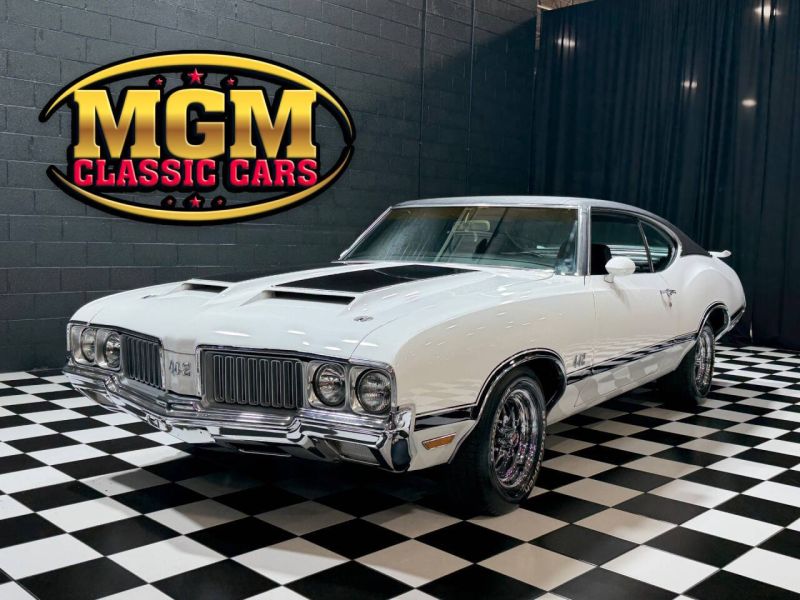
1970 Oldsmobile 442
 Dealer
United States
Dealer
United States
1967 Oldsmobile 442
What to Look For
PHS Documentation is the gold-standard verification for any 442. PHS covers Oldsmobile A-body production records ($50-$80 per report). The report confirms original engine, transmission, axle ratio, paint, options, and dealer destination. Without PHS documentation, treat all 442 claims as Cutlass clones with 442 trim added.For 1968-1971 stand-alone 442 claims, verify the 442 body code on the cowl tag. The 5th digit of the VIN identifies the body type — stand-alone 442 cars have a specific body designation distinct from Cutlass S, Cutlass Supreme, and base Cutlass models.
Engine identification by casting numbers and stamping codes is essential. The Oldsmobile 350, 400, and 455 V8s have specific casting numbers on the back of the block. The two-letter stamp code on the front of the block (just below the cylinder head, on a flat pad) identifies the specific engine type.
For W-30 claims, demand specialist authentication. The W-30 package included a hot performance camshaft, dual-snorkel air cleaner, fiberglass inner fender wells (reducing weight by approximately 30 pounds), and special intake manifold. Re-stamped 455 blocks are well-documented forgeries. Specialist inspection ($200-$500) is mandatory for any car priced over $80,000.
For W-31 claims (1968-1969 350 V8 small-block performance), verify the W-31 engine stamp code and unique trim equipment. W-31 cars are dramatically less common than W-30 but command modest premium over base 442 cars.
For Hurst/Olds claims, verify the Hurst-specific exterior trim package and unique badging. The 1968 H/O (Hurst Cameo White and Black two-tone), 1972 H/O (gold and white), 1975 H/O W-25 (gold and white), and 1983-1984 H/O variants each have specific equipment. PHS documentation confirms original Hurst/Olds equipment.
For 1970 Pace Car Edition claims, verify the unique Pace Car decals, special paint, and trim. Approximately 220 Pace Car Edition cars were built — every chassis is documented through the marque registry.
Frame inspection is the second non-negotiable. The A-body perimeter frame rusts at body mount points and front kick-up. Probe with a screwdriver. Frame replacement is $8,000-$15,000.
Document the car. Photograph every panel, every cowl tag, every engine stamp, every chassis number, and every identifying tag.
Pre-Purchase Checklist
-
Order PHS Documentation Report ($50-$80)
Pontiac Historic Services covers Oldsmobile A-body. Confirms original engine, transmission, axle, options. -
Verify 442 body code on cowl tag
1968-1971 442 was stand-alone model. 1972+ 442 was Cutlass option. VIN body code distinguishes. -
Read engine stamp code on front pad
Two-letter codes identify W-30, W-31, base 442. Critical for premium-trim authentication. -
For W-30 claims, demand specialist authentication
Re-stamped 455 blocks well-documented. $200-$500 specialist inspection mandatory. -
Cross-reference engine casting numbers
Olds 350, 400, 455 V8s have specific casting numbers. Must agree with VIN engine code. -
Inspect A-body perimeter frame
Body mount cushions collapse. Frame rust = $1,500-$3,500 minimum repair. -
Verify W-30 fiberglass inner fender wells
W-30 cars came with unique fiberglass inner fenders. Replacement steel fenders reduce value. -
Check Hurst/Olds equipment if claimed
1968 H/O, 1972 H/O, 1975 H/O W-25 each have specific equipment. Verify against PHS report. -
Magnet test rear quarters and rocker panels
Body filler is non-magnetic. -
Compression test all eight cylinders
Should read 145-185 PSI uniformly. W-30 cars run higher compression — 165-195 PSI.
Common Issues
442 rust patterns follow the GM A-body convention. The 1968-1972 cars rust at body mount points, lower rear quarters, trunk drop-offs, frame rails, floor pans, cowl seam, and lower fenders. The 1973-1980 cars (Colonnade and G-body) share rust patterns with similar A/G-body construction.Mechanically, Oldsmobile V8s (350, 400, 455) are bulletproof when maintained. The 350 Rocket V8 commonly exceeds 200,000 miles. Common issues include broken motor mounts on big-block cars, worn timing chains, leaky valve covers and oil pan gaskets, and tired Rochester Quadrajet carburetors.
The W-30 cars used a high-performance camshaft, dual-snorkel air cleaner, fiberglass inner fender wells, and special intake manifold. Common W-30-specific issues include cam wear (the high-lift performance cam wears faster than standard cams), tired performance valve springs, and difficulty finding period-correct fiberglass inner fender replacement.
The Turbo Hydra-Matic 350 and 400 transmissions are essentially indestructible. The Muncie M21 close-ratio four-speed (in W-30 and high-performance variants) is robust. The Olds 12-bolt rear axle (in 442 and W-30) is strong.
Electrical issues are universal classic-car concerns. Original wiring is brittle 50+ years on. The voltage regulators on 1970-1972 cars commonly fail.
More 442 for sale
 Dealer
United States
Dealer
United States
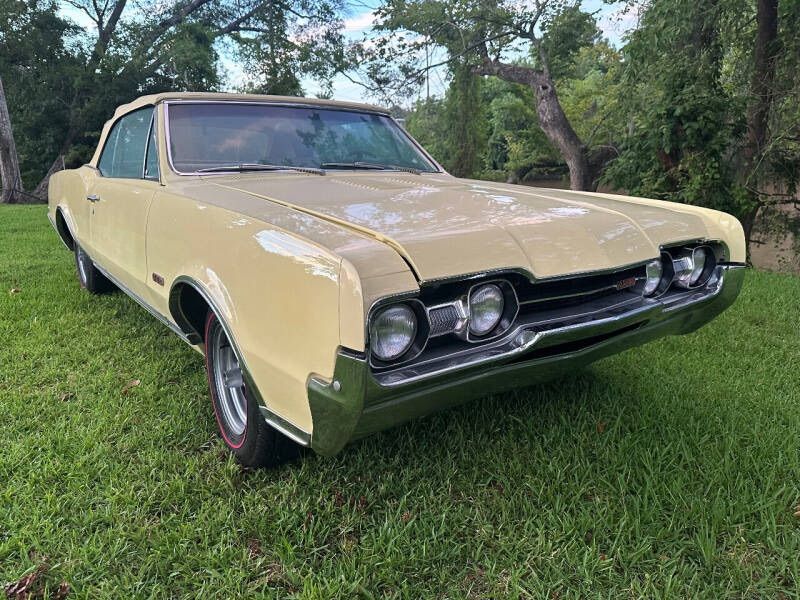
1967 Oldsmobile 442
 Dealer
United States
Dealer
United States
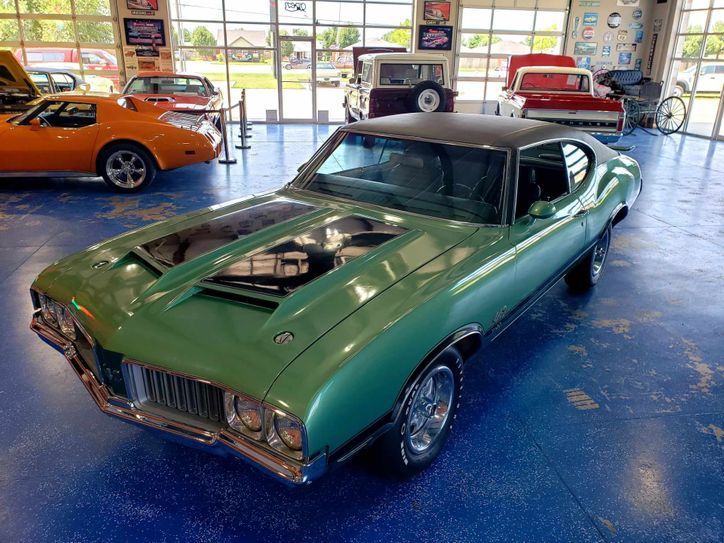
1970 Oldsmobile 442
Pricing Guide
1968 442 (first stand-alone year): driver-quality cars run $40,000-$70,000. The 1968 W-31 (350 small-block performance, only available in 1968-1969 Cutlass and 442): $48,000-$80,000 documented.1969 442: driver-quality cars run $42,000-$72,000. Documented 1969 W-30 cars: $80,000-$160,000+. The 1969 442 W-30 convertible (rare): $120,000-$220,000+.
1970 442: driver-quality cars run $45,000-$80,000. Documented 1970 W-30 cars: $90,000-$200,000+. The 1970 Pace Car Edition: $75,000-$140,000+. The 1970 442 W-30 convertible: $130,000-$240,000+.
1971 442: driver-quality cars run $42,000-$72,000. Documented 1971 W-30 cars: $80,000-$160,000+. The 1971 model year is the final stand-alone 442.
1972 442 (Cutlass option package, with 455 V8): driver-quality cars run $32,000-$58,000. Documented 1972 W-30 cars: $50,000-$95,000.
1973-1976 442 (Colonnade-body): driver-quality cars run $18,000-$38,000. The 1975-1976 Hurst/Olds W-25 (gold and white) commands $25,000-$48,000.
1977-1980 442 (G-body): driver-quality cars run $14,000-$28,000.
Convertible 442 cars (1968-1972 only) command 25-40% premium over equivalent hardtops.
Project 442 cars start around $15,000-$30,000. Stripped roller candidates: $7,000-$15,000.
Fun Facts
The 1969 Oldsmobile 442 was the first American car ever offered with a "Pace Car Edition" trim package commemorating the Indianapolis 500. The 1970 Indianapolis 500 Pace Car was a 442 W-30 convertible, and Oldsmobile produced approximately 268 Y74 Indy pace-car replicas for retail customers featuring unique paint, decals, and equipment. The Pace Car Edition designation was widely copied by other GM divisions for special-edition cars throughout the 1970s and remains a notable trim package designation in modern GM marketing.The W-30 designation was originally a 1966-1972 Oldsmobile internal RPO code for high-performance equipment. The W-30 letter prefix was retained for modern Oldsmobile performance cars (the 1980s W-30 variant of the Cutlass and the 1991-1996 W-30 Cutlass Supreme), maintaining the lineage. Documented original W-30 cars across all eras command premium pricing in the collector market — the 1969-1970 W-30 cars are the high-water mark.
The 442 acronym originally stood for "4-barrel carburetor, 4-speed manual, dual exhaust" — describing the actual factory equipment of the 1964 launch package. The naming convention paralleled Pontiac's GTO marketing approach. By 1968, the meaning had evolved in marketing literature ("400 cubic inch V8, 4-speed manual, 2 exhausts"), but the original three-element interpretation was historically accurate. The 442 nameplate has been revived multiple times over the decades but the original 1968-1971 stand-alone 442 remains the most desirable era.
Frequently Asked Questions
Ready to find your 442?
Browse 6+ active Oldsmobile 442 listings on Classic Cars Arena.
View Listings →