
Classic Pontiac Firebird Buyer's Guide
Definitive buyer's guide for classic Pontiac Firebird 1967-2002. Generation breakdown, Trans Am identification, PHS documentation, frame inspection, and current market pricing.

The Pontiac Firebird launched in February 1967 as Pontiac's F-body sister to the Chevrolet Camaro, and across thirty-five years of production it built one of the most loyal enthusiast followings in American automotive history. From the 1969 Trans Am (the launch of the iconic performance trim that would define Pontiac for decades) through the 1973-1974 SD-455 cars (the last truly raw muscle Pontiacs before federal emissions de-tuning), the 1977 Smokey and the Bandit Trans Am that kicked off second-generation pop-culture immortality, and the 1980s third-generation IROC-era cars, every Firebird era has its own buyer profile and its own pitfalls. This guide covers what every buyer should verify before paying premium money for any Firebird Trans Am or Formula variant.
Overview
The Firebird ran for thirty-five years across four distinct platform generations, and each era has its own buyer profile and its own collector trajectory. The first generation (1967-1969) is the most desirable. The second generation (1970-1981) brought the legendary Trans Am as a stand-alone performance flagship. The third generation (1982-1992) introduced the modern hatchback styling and shared GM platform with the Chevrolet Camaro. The fourth generation (1993-2002) was the final Firebird production era before Pontiac discontinued the nameplate. Understanding which Firebird era is yours is the first step toward smart buying.
Generations Worth Knowing
First Generation (1967-1969)
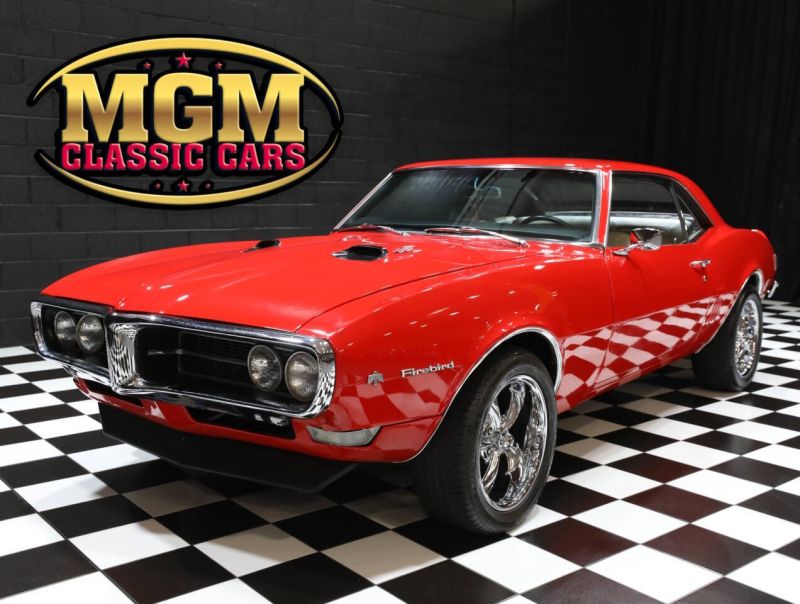
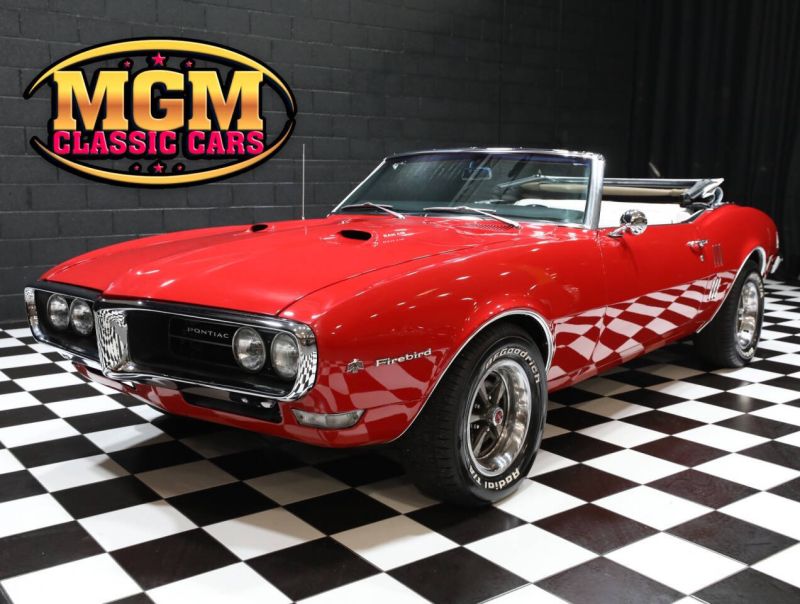
The original. Built on the GM F-body platform shared with the Camaro, the 1967-1969 Firebird is the most collectible era. The 1969 model year introduced the Trans Am performance package (only 697 built that year — the rarest Trans Am variant). Engine options ranged from the 230 OHC inline-six through the 400 cubic inch big-block with the Ram Air III and Ram Air IV cylinder heads. From a collector standpoint, 1969 cars are at the peak of first-generation desirability.
Second Generation (1970-1981)
The 1970 redesign brought longer, lower, wider proportions and the Trans Am became a stand-alone model designation rather than a Firebird option package. The 1970-1973 cars are the high-water mark of second-generation performance, with the 1973-1974 SD-455 (Super Duty 455) representing the last truly raw muscle Pontiacs before federal emissions de-tuning. The 1977 Smokey and the Bandit black-and-gold Trans Am kicked off pop-culture immortality and remains the most photographed second-generation Firebird ever produced.
Third Generation (1982-1992)
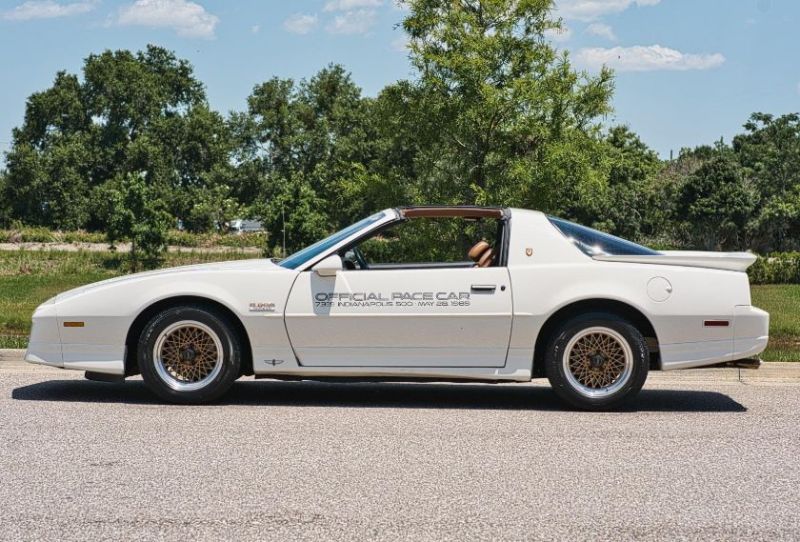
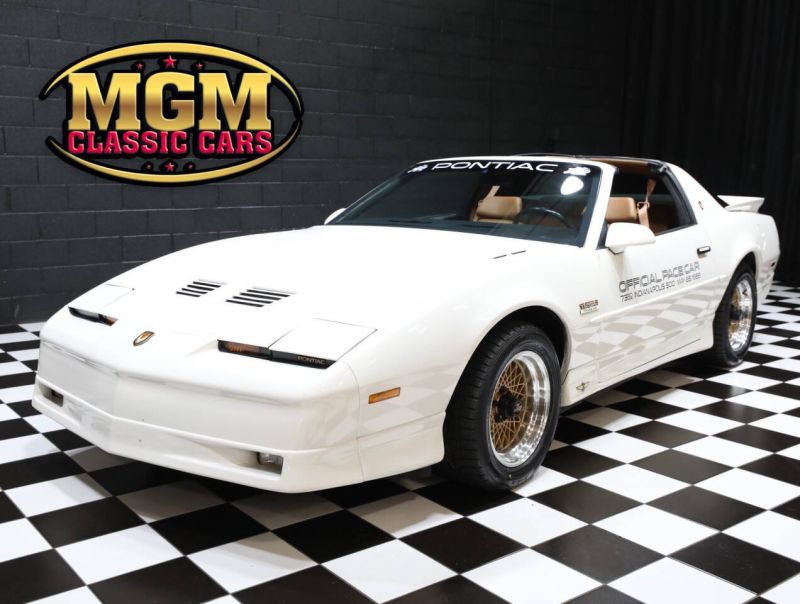
Modern hatchback styling, shared platform with the Chevrolet Camaro, and the introduction of the IROC-Z badging. The 1985-1990 GTA and 1989 Turbo Trans Am Pace Car represent the high-water marks of third-generation performance. Driver-quality cars run $14,000-$28,000.
Fourth Generation (1993-2002)
The final Firebird era. LT1 V8 (1993-1997) and LS1 V8 (1998-2002) brought modern fuel injection and serious performance back to the Pontiac F-body. The 1998-2002 WS6 Trans Am with the LS1 produced 320-325 hp and represents the most powerful factory Firebird ever produced. Driver-quality cars run $12,000-$28,000.
What to Look For (in person)
PHS Documentation First
Before any in-person inspection, request the PHS Documentation Report for any 1967-1986 Firebird. PHS confirms original engine, transmission, axle ratio, paint, options, and dealer destination. For any Trans Am priced over $35,000, PHS documentation is mandatory. Without it, treat all Trans Am claims as Firebird clones.
Frame and Body Inspection
The F-body chassis rusts at the body mount points and the front kick-up — same as Camaro. Crawl under the car with a flashlight. Probe with a screwdriver. Body mount bushings collapse over 50+ years and water pools above them, rotting the frame from inside. The first-generation cars are the most vulnerable due to their age.
Engine Verification
Cross-reference the VIN engine code (5th digit of VIN on 1968+ cars) with the actual block casting and stamping. The most desirable codes for Trans Am buyers: WS (1969 Ram Air III/IV codes), WW/YZ (1970-1972 Ram Air IV), and SD-455-specific codes (1973-1974). Re-stamped blocks and cloned cowl tags are well-documented forgeries — specialist authentication is mandatory for any car priced over $80,000.
Pricing Tiers
| Tier | Description | Price Range (2024) |
|---|---|---|
| Driver | 1982-2002 Firebird or Trans Am, decent paint, runs and drives, light cosmetic wear | $12,000-$28,000 |
| Survivor | 1970-1981 Trans Am with original drivetrain, PHS documentation, original paint | $32,000-$70,000 |
| Concours | Documented 1969 Trans Am or 1973-1974 SD-455, frame-off restoration, MCACN-grade | $120,000-$300,000+ |
Common Pitfalls
The biggest pitfall in Firebird buying is paying Trans Am money for a base Firebird with Trans Am trim added. Probably 50% of cars listed as 1970-1976 Trans Ams are clones — base Firebirds with the shaker hood scoop, Trans Am decals, and a 400 V8 swapped in. The PHS report instantly resolves this.
The second pitfall is re-stamped engine blocks on SD-455 claims. Specialist authentication is mandatory for any car priced over $80,000.
"I've inspected dozens of supposedly real SD-455 Trans Ams over the years, and I'd say maybe one in three has the genuine SD-455 engine stamping that matches the PHS documentation. The market premium for a documented SD-455 versus a clone with a regular 455 is $50,000 or more, and that's real money worth verifying. Spend the $80 on PHS before you spend $150,000 on the car. The factory records don't lie."
— Mike Sullivan
Final Verdict
The Firebird market rewards documentation, frame integrity, and patience. Documented Trans Am, Formula 400, and SD-455 cars are blue-chip investments with steady appreciation curves. Driver-quality second-generation Firebirds remain the smart-money entry into Trans Am styling at attainable prices. Third and fourth-generation cars represent the bargain segment with strong appreciation potential.
For new buyers, start with a 1976-1981 Firebird Esprit or Formula with the 350 small-block and the Turbo 350 automatic. They're the most affordable proper second-generation cars, parts support is excellent, and the styling is essentially identical to the desirable Trans Am variants. From there, the upgrade path is clear: Formula 400, Trans Am 455, then 1969 first-generation Trans Am, then SD-455. Patience and PHS documentation beat impulse buys every time in this market.
Browse Pontiac Firebird listings
 Dealer
 United States
1989 Pontiac Firebird
 Dealer
United States
Dealer
United States
1968 Pontiac Firebird
What to Look For
PHS Documentation is the gold-standard verification for any Firebird claimed as Trans Am, Formula, or SD-455. Pontiac Historic Services sells documentation reports for $50-$80 based on Pontiac factory production records. The report confirms the original equipment of the car: engine, transmission, axle ratio, paint, options, and dealer destination. For any Firebird priced over $35,000, PHS documentation is mandatory.Engine identification by casting numbers and stamping codes is essential. The 326 V8 (1967-1968), 350 V8 (1968-1981), 400 V8 (1967-1979), and 455 V8 (1970-1976) all have specific casting numbers and two-letter stamping codes that identify the specific engine type. Cross-reference against the VIN engine code (5th digit on 1968+ cars) and the PHS report. The most desirable codes for Trans Am cars: WS (1969 Ram Air III/IV), WW/YZ (1970 Ram Air IV), and the SD-455-specific codes (1973-1974).
For 1969 Trans Am claims, demand specialist authentication. Only 697 Trans Ams were built for 1969 — every chassis number is documented in the marque registry. Forgeries with cloned cowl tags and re-stamped engine blocks are well-documented in the muscle-car market.
Frame inspection is the second non-negotiable. The F-body perimeter frame rusts at the body mount points and the front kick-up — same issues as Camaro. Crawl under the car with a flashlight and probe with a screwdriver. Solid steel resists; rotten metal flakes. Body mount replacement is $1,500-$3,500 if the frame is solid; full frame replacement is $8,000-$15,000.
For third-generation cars (1982-1992), inspect T-top weatherstrips. Failed seals leak water that rots floor pans and rear cargo area. Replacement T-top seals are available but installation requires careful body alignment.
Pre-Purchase Checklist
-
Order PHS Documentation Report ($50-$80)
Pontiac Historic Services. Confirms original engine, transmission, axle ratio, paint, options, dealer destination. -
Verify VIN engine code against block casting
5th digit of VIN (1968+) identifies engine. Cross-reference with casting number on rear of block and PHS report. -
For Trans Am claims, demand specialist authentication
Re-stamped blocks and cloned cowl tags well-documented. WS6 and SD-455 cars require expert verification. -
Inspect F-body frame at body mount points
Same chassis as Camaro. Body mount bushings collapse and water pools above. Frame rust = $1,500-$3,500 minimum. -
Probe perimeter frame at front kick-up
Behind front wheels. Solid steel resists; rotten metal flakes. -
Magnet test rear quarters and rocker panels
Body filler is non-magnetic. Driver-quality cars universally have filler — verify how much before purchase. -
Check rear window channel rust (1967-1969)
Hidden rust point. Ruins back of body when allowed to progress. Pop rear seat for inspection access. -
Examine third-gen T-tops and weatherstrips
T-tops on 1982-1992 cars commonly leak. Water rots floor pans and rear cargo area. -
Test all electrical and pop-up headlights
Vacuum-actuated (1967-1981) or electric (1982+) headlight systems commonly fail. -
Compression test all eight cylinders
Should read 145-185 PSI uniformly. Variance over 15% = head gasket or worn rings.
Common Issues
Firebird rust follows the F-body Camaro pattern. The first-generation cars (1967-1969) hide rust under the rear window, in the trunk pan, around the rear wheel arches, and at the cowl seam where the windshield meets the firewall. Second-generation cars (1970-1981) are notorious for rotten quarters, rocker panels, and floor pans. Third-generation cars (1982-1992) suffer from T-top water leaks that rot floor pans and rear cargo area.Mechanically, Pontiac V8 engines (326, 350, 400, 455) are bulletproof when maintained. From 1982 forward, Firebirds used shared GM engines (Chevrolet 305, 350, LT1, LS1). Common issues include broken motor mounts on big-block cars, worn timing chains on tired engines, leaky oil pan and valve cover gaskets, and tired Quadrajet carburetors. The Muncie M20/M21 four-speeds, Borg-Warner T-10, Saginaw three-speed, Turbo 350, and Turbo 400 transmissions are all robust.
Electrical issues vary by era. First-generation cars have brittle 50+ year-old wiring harnesses. Second-generation cars add vacuum-actuated headlight failures (vacuum lines crack), Hood Tach failures (1971-1976 optional), and tail light circuit problems. Third-generation cars suffer from failing TPI sensors (TPI fuel injection 1985-1992), worn front coil-over-shock units, and sloppy T-tops that leak.
More Firebird for sale
 Dealer
United States
Dealer
United States
1968 Pontiac Firebird
 Dealer
United States
Dealer
United States
1989 Pontiac Firebird
Pricing Guide
First-generation Firebirds (1967-1969) are the most desirable era. Driver-quality 1967-1968 cars run $32,000-$55,000. 1969 cars: driver-quality $38,000-$70,000. The 1969 Trans Am (only 697 built) is the high-water mark — documented numbers-matching cars: $130,000-$280,000. The 1969 Trans Am Convertible (only 8 built) is the rarest Firebird ever produced — $500,000-$1M+ for documented examples.Second-generation Firebirds (1970-1981) split into three sub-eras. 1970-1973 cars (split-bumper era): driver-quality Trans Am cars run $42,000-$75,000. Documented 1973-1974 SD-455 Trans Ams: $80,000-$180,000+. 1974-1976 Trans Ams with the 455 HO: $35,000-$65,000 documented. 1977-1979 Smokey and the Bandit-era Trans Ams: $32,000-$60,000 driver-quality, with documented Y82 Special Edition cars (the black-and-gold Bandit cars) at $45,000-$95,000.
Third-generation Firebirds (1982-1992): driver-quality cars run $14,000-$28,000. The 1989 Turbo Trans Am Pace Car (only 1,555 built) commands $30,000-$55,000+. The 1985-1990 GTA models trade at $22,000-$42,000.
Fourth-generation Firebirds (1993-2002): driver-quality cars run $12,000-$28,000. The 1998-2002 WS6 Trans Am with the LS1 produces 320-325 hp and represents the most powerful factory Firebird ever — clean WS6 cars trade at $22,000-$45,000.
Project Firebirds start around $12,000-$25,000 across most generations. Stripped roller candidates: $5,000-$15,000.
Fun Facts
The Firebird was developed in just nine months as Pontiac's response to GM corporate executives canceling Pontiac's planned dedicated sports car project (the Banshee). When Chevrolet's Camaro F-body was approved for 1967 production, Pontiac was given six months to develop a Firebird variant on the same platform. The accelerated timeline forced the Firebird to share virtually all chassis and structural components with the Camaro, distinguished only by Pontiac-specific styling, dashboard, and engine options.The 1977 Smokey and the Bandit Trans Am (the black-and-gold Y82 Special Edition) is widely credited with saving the Pontiac brand. By 1976, Pontiac was struggling against the broader malaise era, and the dramatic visibility of the Trans Am as the hero car in the Burt Reynolds film drove dealer traffic dramatically. Y82 Special Edition production grew from a few thousand cars in 1976 to over 30,000 in 1977-1978, making the Trans Am the best-selling Pontiac performance car of the era.
The 1973-1974 SD-455 (Super Duty 455) was Pontiac's last serious factory performance engine — produced specifically as a homologation package for SCCA Trans-Am racing. The SD-455 features four-bolt main bearings, forged crankshaft, special heads, and unique camshaft, producing 290 hp net (significantly under-rated by Pontiac to keep insurance companies off the buyer's back). Only 1,296 SD-455 Trans Ams were built across two model years, making them among the rarest American muscle cars ever produced.
Frequently Asked Questions
Ready to find your Firebird?
Browse 6+ active Pontiac Firebird listings on Classic Cars Arena.
View Listings →