
1910 Classic Cars for Sale
Ford moves to Highland Park, Barney Oldfield drives a Benz to 131 mph at Daytona, and American automobile registrations cross 450,000.
Ford moves production to Highland Park in 1910 and the transformation begins. The new plant is not yet the moving assembly line, that arrives in 1913, but the scale and organization are already unlike anything the industry has seen. Model T output approaches 20,000 units. The price drops. Ford's competitors watch with a mixture of admiration and alarm.
Barney Oldfield drives a Blitzen Benz at Daytona Beach in March and records 131.72 mph, a land speed record that stuns the American public. The Benz produces roughly 200 horsepower from a 21.5-liter four-cylinder engine. It is less a car than a projectile with a steering wheel. Oldfield, characteristically, makes the most of the attention.
American automobile registrations reach an estimated 458,000 by year end 1910, up from roughly 300,000 in 1909. The infrastructure is struggling to keep up. Road improvement leagues are active in every state. The Good Roads Movement, which began with cyclists in the 1890s, has been thoroughly captured by automobile interests and is finally getting political traction.
- Barney Oldfield sets an American land speed record of 131.72 mph at Daytona Beach on March 16, 1910, driving the Blitzen Benz, a 21.5-liter four-cylinder racing car producing an estimated 200 horsepower, the fastest speed recorded by an American driver to that date.
- Ford Motor Company occupies the Highland Park plant in January 1910, a facility designed by Albert Kahn covering 57 acres, enabling production efficiencies that allow Model T output to reach 19,293 units for the calendar year.
- The American Automobile Association counts an estimated 458,377 registered motor vehicles in the United States at year end 1910, representing a 52 percent increase over 1909 registrations and confirming the automobile's permanent place in American commercial life.
Showing 1 listing
 Dealer
 United States
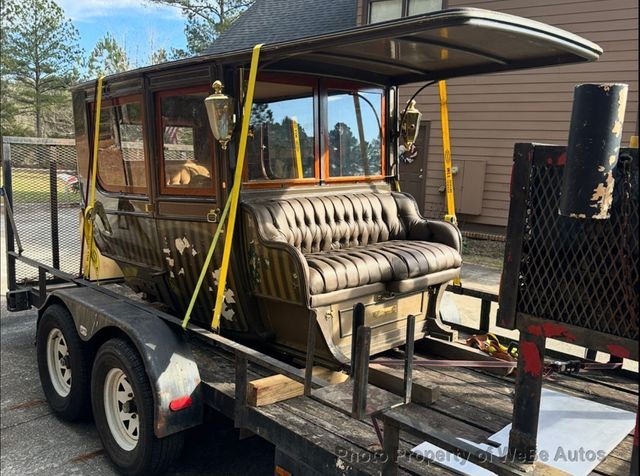
1910 Rolls-Royce Cabriolet
Market: The 1910 Pierce-Arrow Model 48 is among the most desired pre-war American cars, with authenticated examples selling from $150,000 to over $400,000 when coachwork and mechanical history are intact. Marmon Model 32 speedsters, rarely seen at auction, have reached $200,000. Ford Model T examples from Highland Park's first year carry a modest premium over later production, trading between $25,000 and $60,000 for solid original examples.
Buyer's note: On early Pierce-Arrow examples, verify that the engine casting numbers match the factory ledger entries available through the Pierce-Arrow Society's registry, as engines were commonly swapped during commercial use of these chassis before they entered collector hands.