
1944 Classic Cars for Sale
No showrooms open, no new models, no chrome: 1944 America drove prewar cars held together with rationed parts and determination
1944 produced exactly zero civilian automobiles. The war was reaching its peak industrial demand. D-Day happened in June. Detroit was not thinking about next year's tail fins. Chrysler was producing tanks. Packard was building Merlin aircraft engines under license from Rolls-Royce. The entire civilian market was on pause.
Americans kept their prewar cars running through a combination of ingenuity, black market parts, and genuine mechanical skill. Gasoline rationing under the A, B, and C coupon system meant most civilian drivers were limited to roughly four gallons a week. Tires were nearly impossible to source legally. The average 1941 or 1942 car on American roads in 1944 had seen hard use and minimal maintenance.
The collector significance of 1944 sits entirely in the military vehicle category, same as 1943. Jeeps, trucks, and staff cars built this year have a clear historical identity. Low-mileage military vehicles with documented theater service records are legitimate collector pieces with a dedicated and knowledgeable buyer community.
- U.S. automobile factories produced zero civilian passenger vehicles for the second full calendar year running, with all major manufacturers committed entirely to war production contracts.
- Packard Motor Car Company delivered Merlin V-12 aircraft engines to power P-51 Mustang fighters in significant numbers during 1944, engines that were instrumental in Allied air superiority over Europe.
- The War Production Board estimated that Americans were collectively driving prewar automobiles averaging four or more years of age, with deferred maintenance creating a massive pent-up demand for new cars.
Showing 1 listing
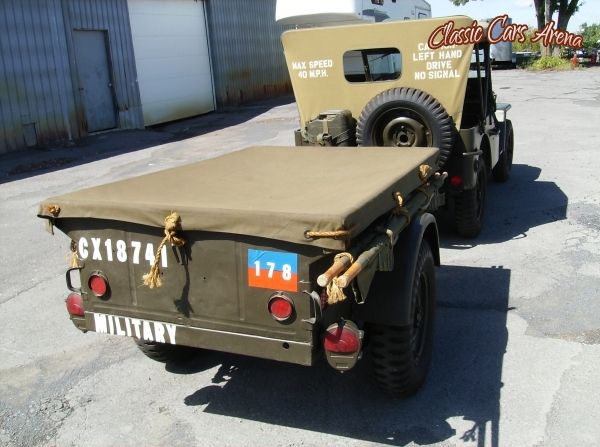

Market: Military vehicles from 1944 follow the same pricing logic as 1943 production. Complete, correct Jeeps in good order run $15,000 to $55,000 depending on originality and documentation. Specialty military vehicles like the Dodge WC ambulance or the CCKW truck attract a narrower but passionate collector base with prices ranging widely based on completeness.
Buyer's note: For 1944 military vehicles, prioritize provenance documentation over cosmetic restoration quality, since a verifiable service record or original contract plate adds more to long-term value than a fresh repaint.