Featured

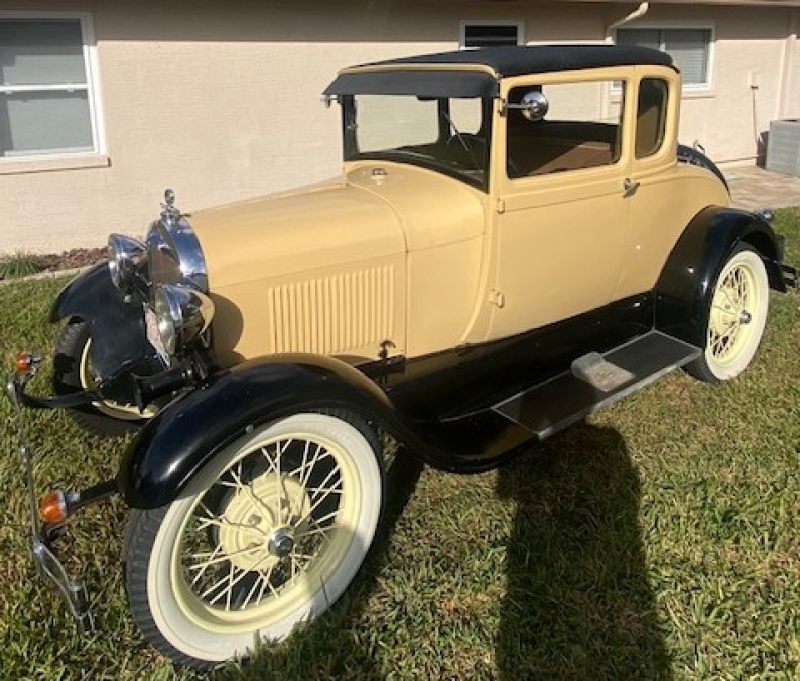
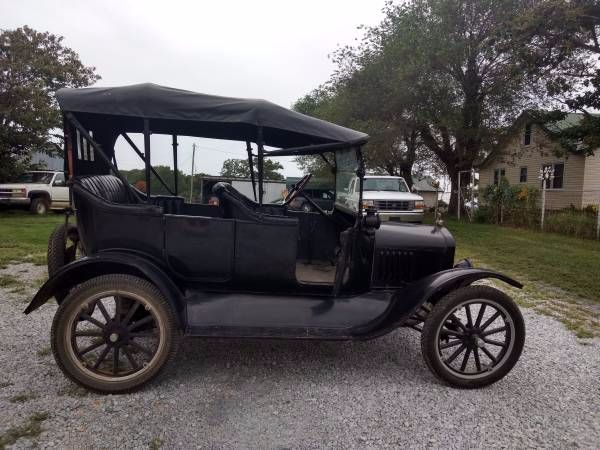
1929 Ford Model A

Florida

$16,499

1929 Ford Model A

Vehicle Details

Make

Ford

Model

Model A

Year

1929

Exterior Color

Beige

Transmission

Manual

Drivetrain

RWD

Fuel Type

Gasoline

Engine

4 Cylinder

Condition

Good

Description

Good condition and runs well. Recently underwent a significant mechanical overhaul by a professional antique car mechanic with details shown below. This is a great car for driving around the neighborhood, to car shows, and parades. This car was rebuilt and restored in the 1980's and has been garaged the entire time. There would need to be time, effort, and a good deal of work to make this a mint condition car. But if you are looking for solid car to drive, please take a look at this one. Many of the parts including the engine and entire body are original. Please contact for more information.

Details of Mechanical Overhaul

Electrical Systems
-checked and all wiring issues resolved
-checked charging system-working with no issues
-brake lights, turn signals, high beams, horn-working

Starter and Battery
-all starter connections cleaned
-new battery installed

Brakes
-all four brake drums removed and checked
-cleaned and repacked front and rear bearings
-loosened brake rods and adjusted all four brakes
-adjusted brake rods and adjusted emergency brake

Points
-checked points, clean and gap points.

Radiator
-drained radiator, refilled with water and flushed
-added radiator flush with car running for 45 minutes
-removed hoses, power flushed radiator and engine
-drained, reattached hoses, filled with antifreeze/water

Transmission
-drained transmission fluid
-removed top of transmission to inspect gears and sprockets
-made a new gasket for top of transmission and installed
-filled transmission with gear oil and put top of transmission back on

Fluids
-drained engine oil and replaced with new
-drained differential and filled with new fluid
-lubed back half of chassis
-greased all fittings

Fuel System
-removed ignition coil, hood, hood rods, lower windshield trim, gauges, kick panel, steering column bolts and all bolts around tank wire harness junction block
-removed fuel tank, sent to shop where tank was cleaned
-prepped tank and body to reinstall tank
-sealed tank to body and installed tank
-installed fuel lines and valves, installed new coil
-installed gas screen, gas cut-out valve and line
-installed clear replaceable in line fuel filter
-remove carburetor to check and adjust float
-cleaned out carburetor, removed jets and blew out any foreign material
-reset float and reassembled

Steering Wheel/Column
-pulled rod out of column and unbolt steering wheel to check spline
-unbolted steering box, removed steering column
-cleaned shaft and removed steering gear from box
-disassembled steering box and cleaned out all old grease
-check gear and bushings-installed new gear and bushings
-packed with grease, installed cap and steering box
-installed new steering wheel

Exhaust
-removed exhaust pipe from exhaust manifold and cleaned exhaust manifold clamps
-wire wheeled exhaust manifold flange and sanded exhaust pipe flange
-installed new seal

Classic Ford Model A Buyer's Guide

Full guide
S
Sarah Whitfield
Pre-War Classics
1928–1931
~5 min read
Updated Apr 2026
Definitive buyer's guide for Ford Model A 1928-1931. Body style verification, four-cylinder engine inspection, mechanical brake adjustment, MAFCA Authority verification, current market pricing.
This guide covers
10-point inspection checklist
Common issues & what to avoid
In-person inspection guide
Market pricing by year & condition
5 FAQs answered
History & fun facts

Ford Model A Market Overview

Based on 234 Ford Model A listings currently on ClassicCarsArena.com

234
Listed Now
$31,813
Avg. Asking Price
1923–1990
Year Range
Price Position on Our Site — Below Average
This car: $16,499
Low: $5,995 High: $87,495
Transmission Distribution
Automatic 32%
Manual 40% ◄
Condition Distribution
Excellent 14%
Good 11% ◄
Fair 3%
Poor 0%
Data from ClassicCarsArena.com listings Browse all 234 listings →
💰

What is this car worth?

Check sold prices for the 1929 Ford Model A

Valuation Tool →

Classic Ford Model A Buyer's Guide

The Ford Model A was produced from October 1927 through March 1932 and represents the foundation of the pre-war American collector car hobby. Replacing the Model T after eighteen years of production, the Model A introduced standardized hand controls, a sliding-gear transmission, four-wheel mechanical brakes, and the styling vocabulary that defined American motoring through the 1930s. Approximately 4.85 million Model As were produced across all body styles, and a remarkable percentage of them survive today — supported by perhaps the most active marque club in the world (Model A Restorers Club, MAFCA, and the Model A Ford Club of America). For new buyers, the Model A represents the most accessible genuine pre-war American collector car, with strong parts support, an active community, and pricing that has remained remarkably stable for decades.

What to Check Before Buying

Cross-reference against MAFCA Authentic Specifications — Model A Ford Club of America volume documents factory-correct specifications. Mandatory reference for any purchase.
Verify body style code on firewall data plate — Over 30 body styles produced. Specialty styles (Town Car, Victoria) command significant premium pricing when documented.
Verify engine number against production records — Stamped on top of block, driver side, behind cylinder head. Replacement engines reduce value 10-20%.
Probe wood inner body framing — Door pillars, windshield post, rear body corners. Wood rot = $5,000-$15,000 specialist coachbuilding repair.
Inspect lower body panels and running boards — Universal rust zones. Behind rear wheels, below doors, fender attachment points.
Test mechanical brake adjustment — Stop at 20 mph. Pull should be straight without grabbing or fading. Brake failure is most common Model A accident cause.
Compression test all four cylinders — Should read 60-75 PSI uniformly. Pre-war engines run lower compression than overhead-valve engines.
Verify three-speed transmission operation — Sliding-gear transmission requires double-clutching. Verify smooth shifts and no synchro grinding.
Test 6V positive-ground electrical or verify conversion — Original 6V positive-ground; many cars converted to 12V negative-ground. Verify conversion done properly.
Inspect cowl seam for water damage — Where windshield base meets firewall. Water damage here rots wood structure and steel cowl.

Common Issues

Model A rust patterns are predictable across all body styles. Lower body panels (especially behind the rear wheels and below the doors), running boards, fender attachment points, the rear cargo floor on roadsters and pickups, and the cowl seam where the windshield base meets the firewall are universal rust zones. The wood structure inside Model A bodies (most have wood inner framing supporting the steel outer panels) rots when water penetrates through failed weatherseals — repair requires specialist coachbuilding skill. Mechanically, the 200.5 cubic inch L-head four-cylinder is among the most over-engineered engines of the pre-war era — bulletproof when serviced correctly. Common issues include burnt valves on cars run with poor ignition timing, worn camshaft lobes (camshaft replacement is a significant job), oil leaks at the rear main seal (Model As had no rear main seal — leaks are normal), and worn timing gears. The three-speed sliding-gear transmission is robust but requires specialist knowledge to operate (no synchromesh, double-clutching required). The four-wheel mechanical brakes are one of the most safety-critical Model A maintenance items. Failed or poorly-adjusted brakes are the most common cause of Model A accidents. Brake adjustment requires specialist knowledge — the cable-and-rod system must be balanced front-to-rear and side-to-side. Many cars have been converted to hydraulic brakes over the years; from a concours judging perspective, original mechanical brakes are essential to authenticity. Electrical issues are universal: original 6-volt positive-ground systems require specific bulbs and components increasingly difficult to source. Many cars have been converted to 12-volt negative-ground systems for modern reliability — verify the conversion was done properly.

What to Look For

From a concours judging perspective, the Model A inspection is fundamentally about originality and proper documentation. The Model A Restorers Club (MAFCA) maintains the Authentic Specifications volume that documents factory-correct specifications for every body style, year, and option across the production run. Cross-reference any car you're considering against the Authentic Specifications before purchase. Body style verification is critical. The Model A was offered in over thirty body style variants across its production run — Tudor and Fordor sedans, Roadster, Phaeton, Victoria, Cabriolet, Coupe, Sport Coupe, Town Sedan, Town Car, Pickup, Panel Delivery, Mail Truck, and many specialty configurations. Each body style has its own collector trajectory and pricing structure. Verify the body style code on the firewall data plate against the actual body configuration. Engine number verification is essential. The engine number is stamped on the top of the block on the driver's side, just behind the cylinder head. Cross-reference against the original delivery records (where available) and against Ford's production sequence — the engine number range identifies the production date within several months. Replacement engines are common (Model A blocks were widely interchanged during the 1930s and 1940s) and reduce value 10-20% versus matching numbers cars. Wood structure inspection is unique to Model A buying. Most body styles have wood inner framing that supports the steel outer panels. Probe the wood structure at the door pillars, the windshield post, and the rear body corners. Soft, spongy, or rotten wood requires specialist coachbuilding repair — $5,000-$15,000 typical depending on extent. Mechanical condition: the four-cylinder should idle smoothly at 400-500 rpm, run cleanly through the rev range to 2,800 rpm, and produce no smoke at any operating condition. Compression should read 60-75 PSI uniformly across all four cylinders (Model A engines run lower compression than later overhead-valve engines). Test the brake adjustment by stopping the car at 20 mph — pull should be straight without grabbing or fading.

Price Guide

Model A pricing varies dramatically by body style. Closed sedans (Tudor and Fordor) are the most common and most affordable: driver-quality 1929-1931 Tudors run $15,000-$28,000. Fordors: $14,000-$26,000. Open body styles command premium pricing. Phaeton convertibles run $22,000-$42,000 for driver-quality cars. Roadsters: $25,000-$48,000. Sport Coupes: $22,000-$38,000. Cabriolets: $28,000-$55,000. Specialty body styles are the rare end of the market. Town Cars (with chauffeur partition): $45,000-$95,000. Town Sedans: $25,000-$45,000. Victorias: $30,000-$55,000. Pickups and Panel Deliveries are the modest premium segment: $22,000-$45,000 depending on condition and originality. Documented original-paint, low-mileage cars across all body styles command 20-40% premium over equivalent restorations. The unrestored survivor in original livery is consistently preferable to the freshly-restored car of unknown provenance from a concours judging perspective. Project Model As remain extraordinarily affordable: $5,000-$12,000 for running but rough cars across most body styles. Stripped roller candidates: $2,500-$6,000. The strong parts support and active marque community mean Model A restoration costs are dramatically lower than equivalent post-war classic restoration — $15,000-$35,000 for proper driver-quality refresh on a complete car.

Did You Know?

The Model A succeeded the Model T after eighteen years of production. By 1927, the Model T's antiquated planetary transmission, hand-throttle ignition control, and Tin-Lizzie aesthetic had become a serious sales liability against more modern competitors. Henry Ford famously resisted updating the Model T for years — the Model A's development represented a complete redesign of every component, completed in remarkable time once Ford committed to the project. The four-month gap in Ford production between May 1927 (last Model T) and October 1927 (first Model A) was the only break in Ford passenger-car production from 1908 through World War II. Ford retooled the entire River Rouge complex during the gap and emerged with completely new production lines, completely new body stamping equipment, and a completely new car. Industry observers at the time considered the gap an enormous risk — but the Model A launch was the most successful in automotive history at the time, with over 400,000 advance orders before the first car was delivered. The 1928 Model A introduced the iconic "flying quail" radiator cap mascot designed by Ford stylist William Schmidt. The mascot was offered as a factory option through 1931 and is one of the most recognized vintage Ford accessories. Original flying quail mascots in good condition trade for $300-$800 in collector circles; reproductions are widely available but reduce concours value when installed on otherwise-original cars.

How Does It Compare?

Head-to-head matchups for the Ford Model A:

Browse all comparisons →

Similar Listings

Contact Seller

Share only if you'd like the seller to call you directly.

By contacting this seller you accept the Visitors Agreement

Send to a Friend

Share this 1929 Ford Model A listing.

Report this Ad

Help us keep the marketplace clean. Our moderation team reviews every report within 24 hours.