
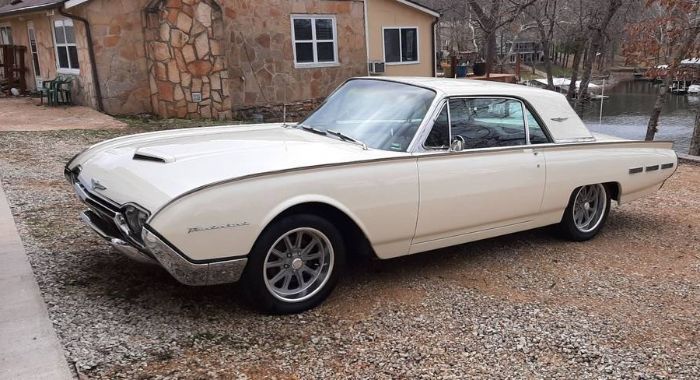
There is a fellow in our club, a retired machinist named Roy, who has owned the same 1961 ford thunderbird since 1974. He bought it out of a want ad for eight hundred dollars when it was already thirteen years old and unfashionable, drove it to his own wedding, and has never seriously considered parting with it. Every time we get together he tells the same story about the first time he pointed it down an open road at night, watched that pointed nose swallow the center line under the headlights, and understood why they called these cars Bullet Birds. Roy is not a poetic man. But he gets a little poetic about that car, and after you have spent an evening around one, you understand.
Car Features
11 min read
The Bullet Bird (1961-1963): Jet-Age Thunderbird at Its Boldest
The pointed, rocket-inspired Bullet Bird brought the Swing-Away wheel and the Sports Roadster. A club member's look at the boldest classic Thunderbird.
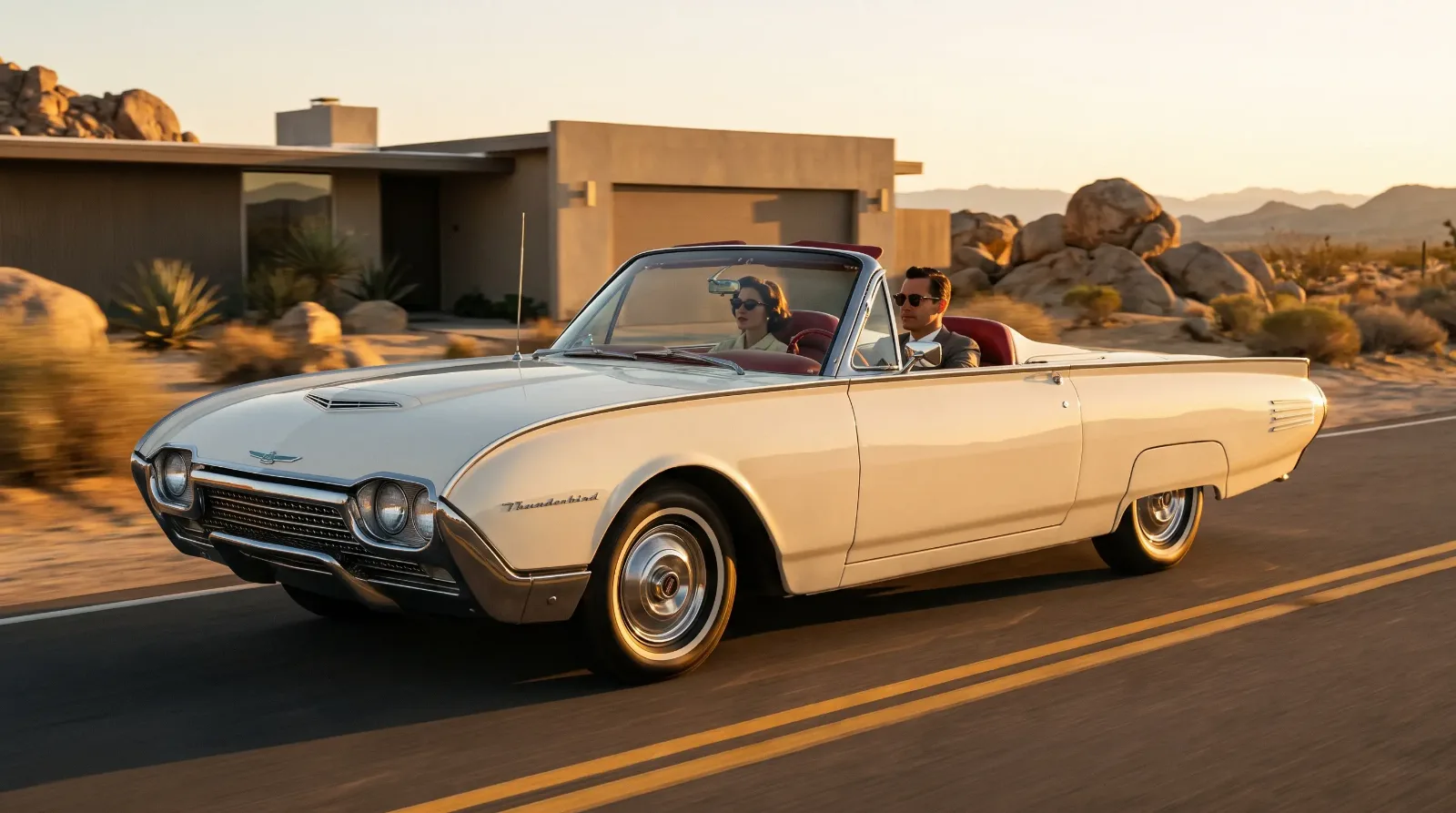
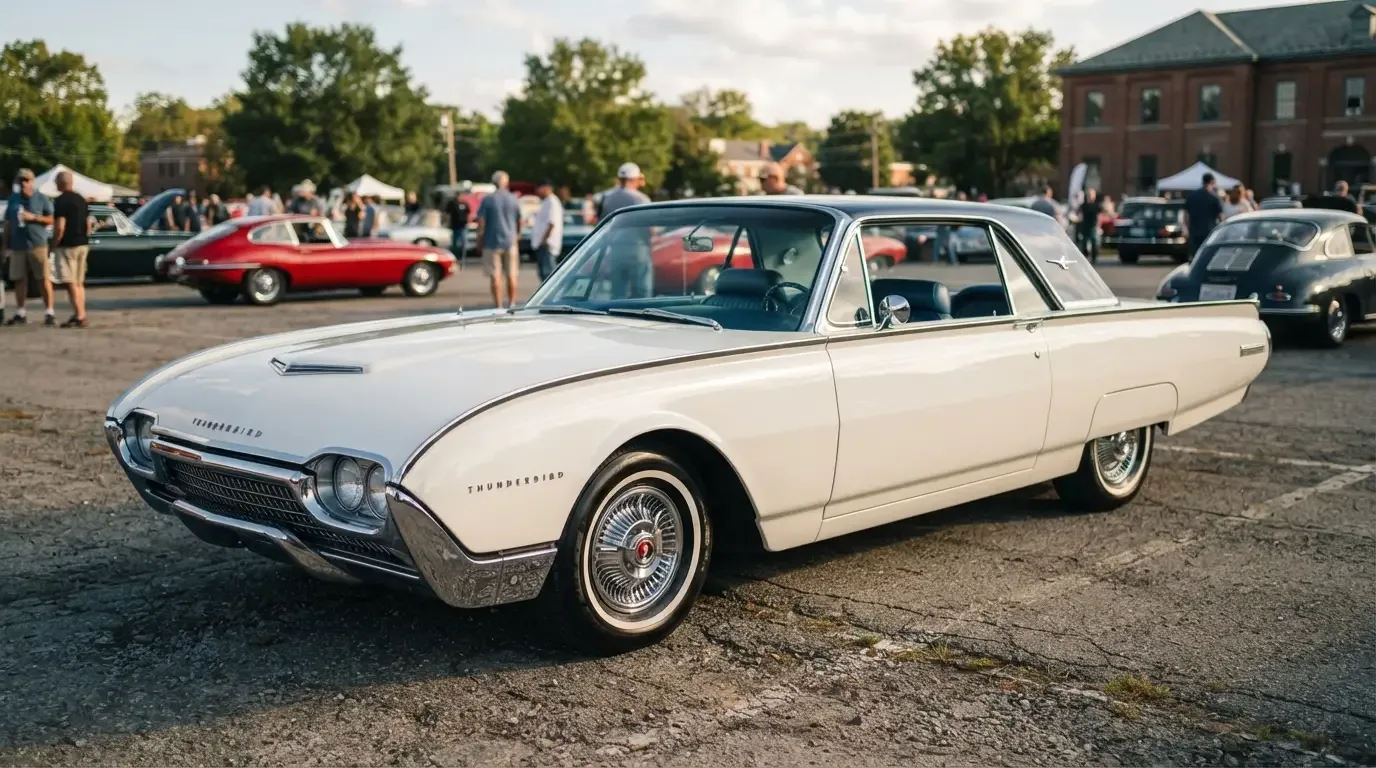
The third-generation Thunderbird, built from 1961 through 1963, is the one that leaned hardest into the jet age. It is pointed, low, and dramatic in a way that the models before and after it are not, and it has a following in our world that borders on devotion.
A shape built for the space race
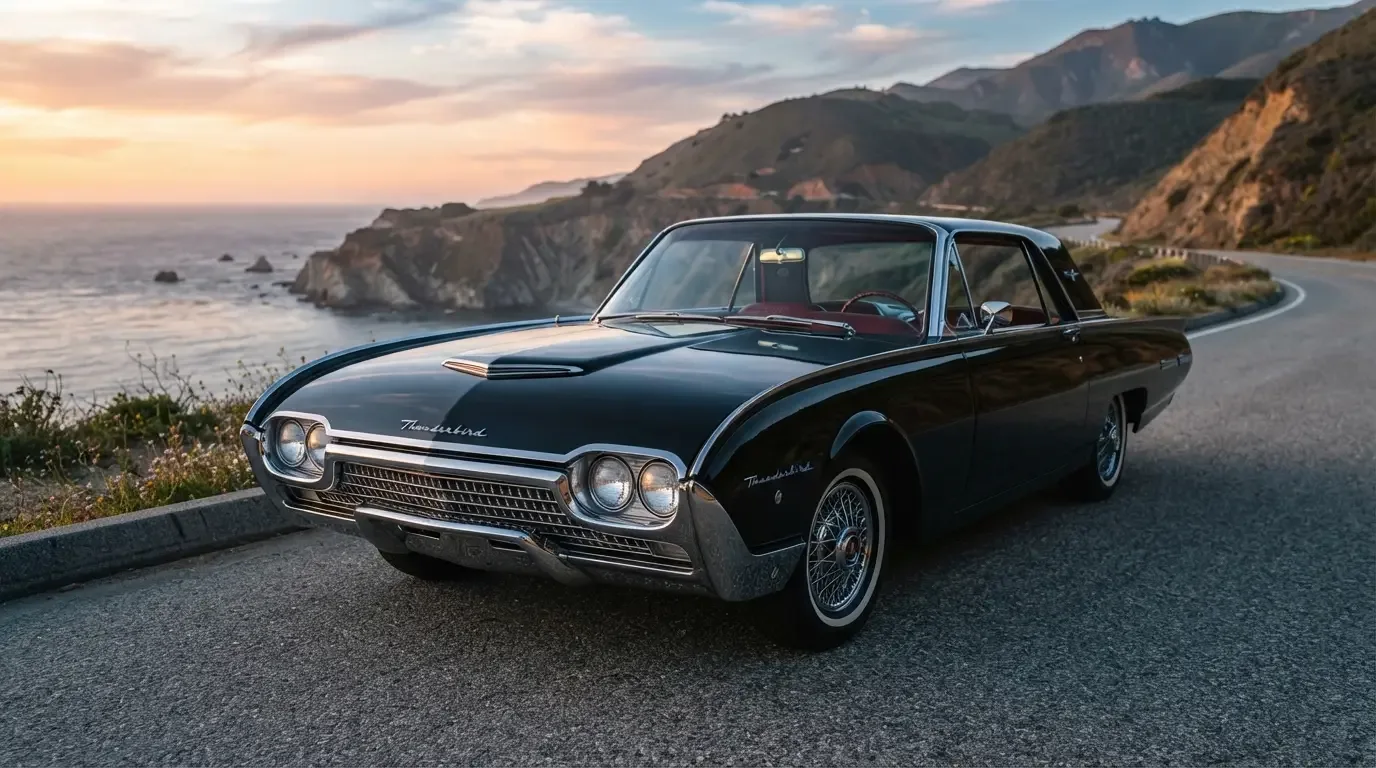
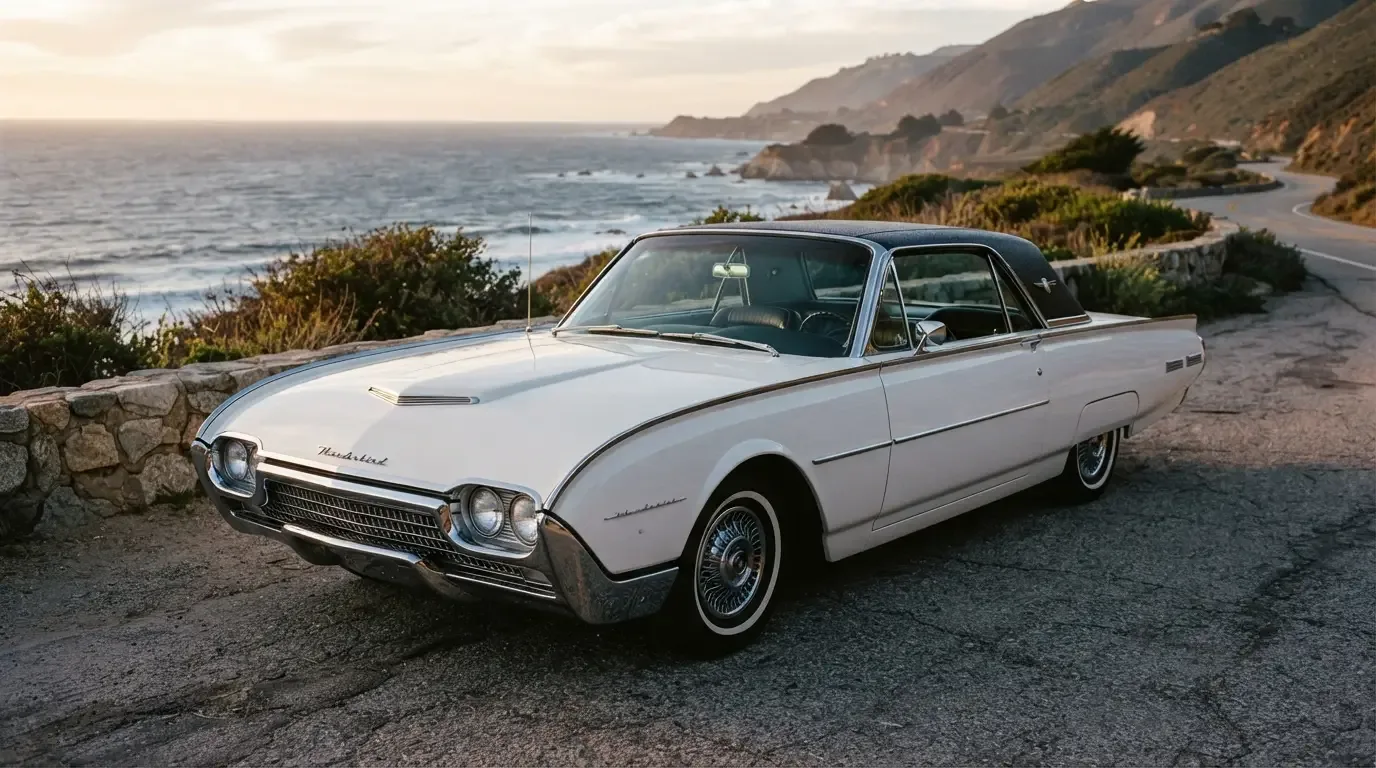
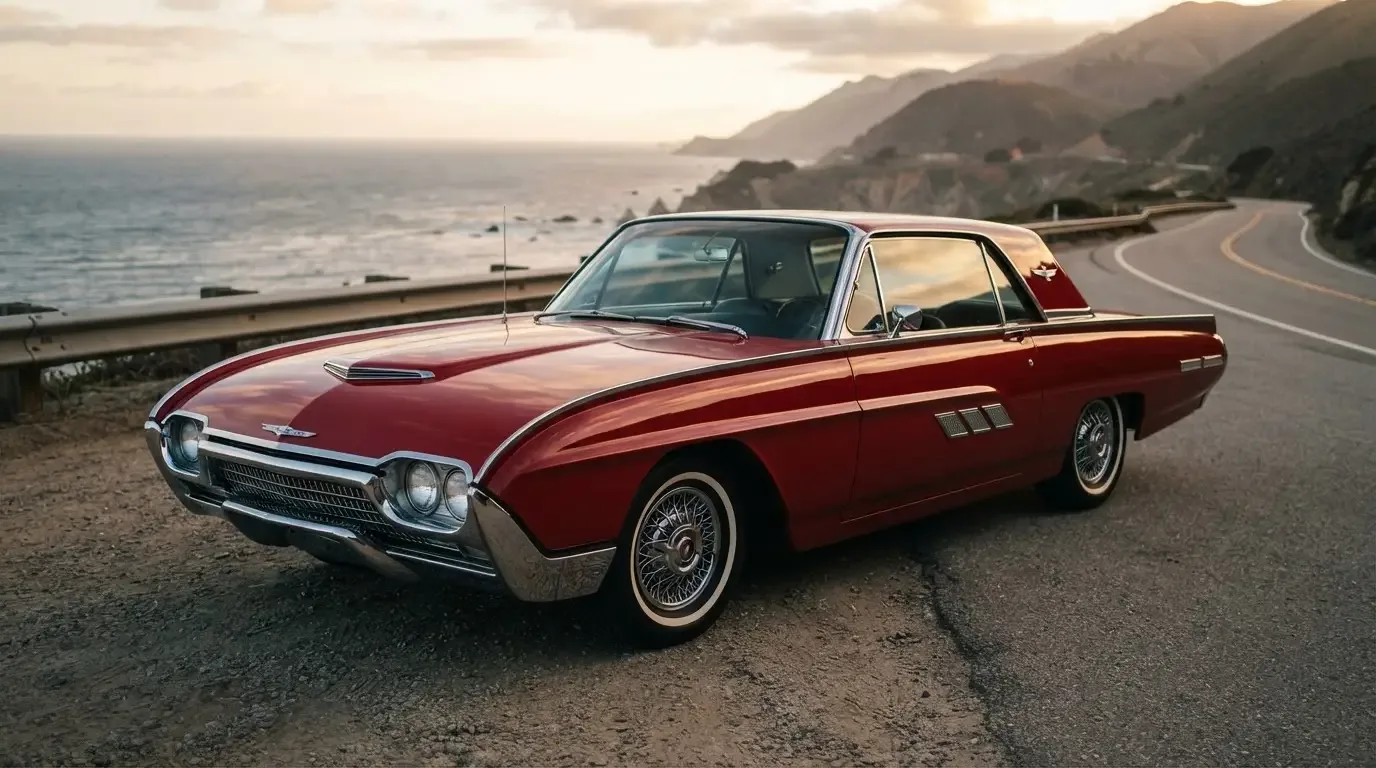
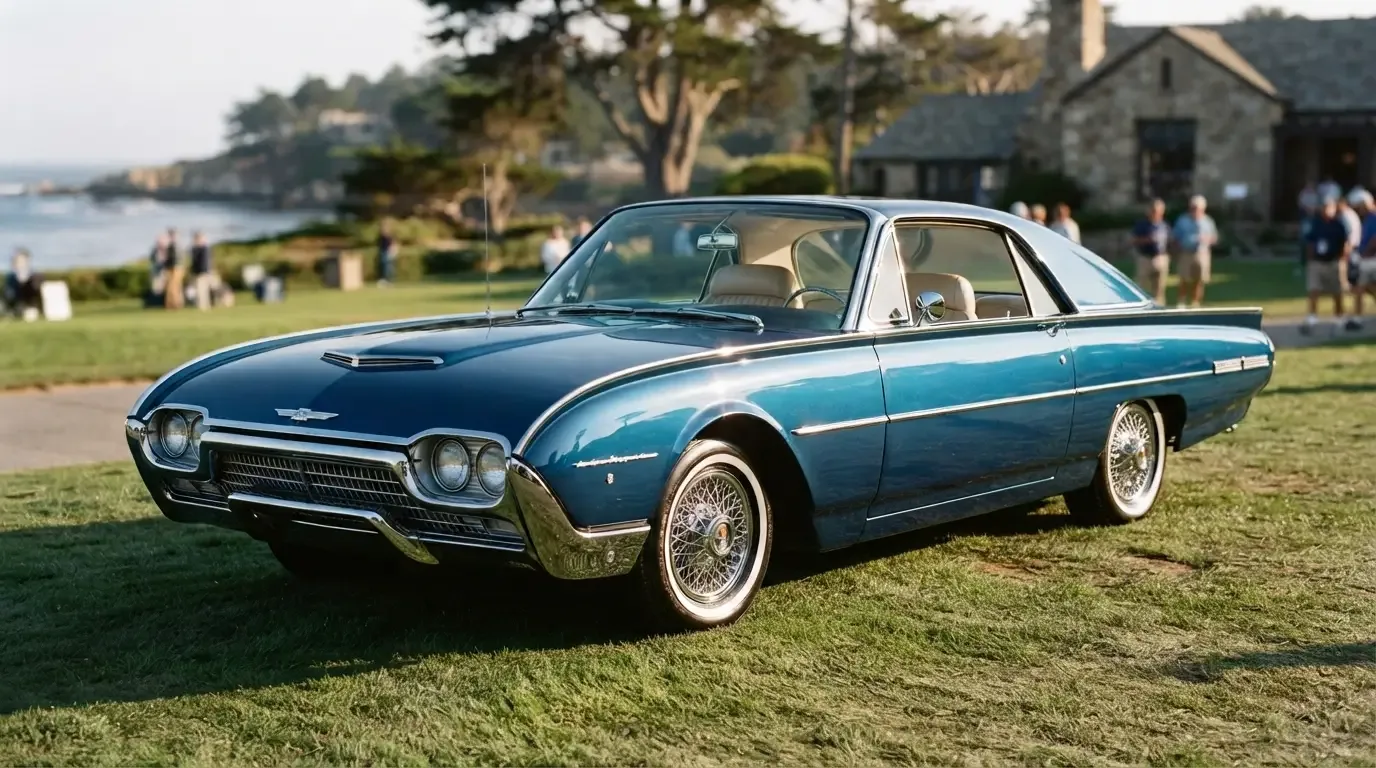
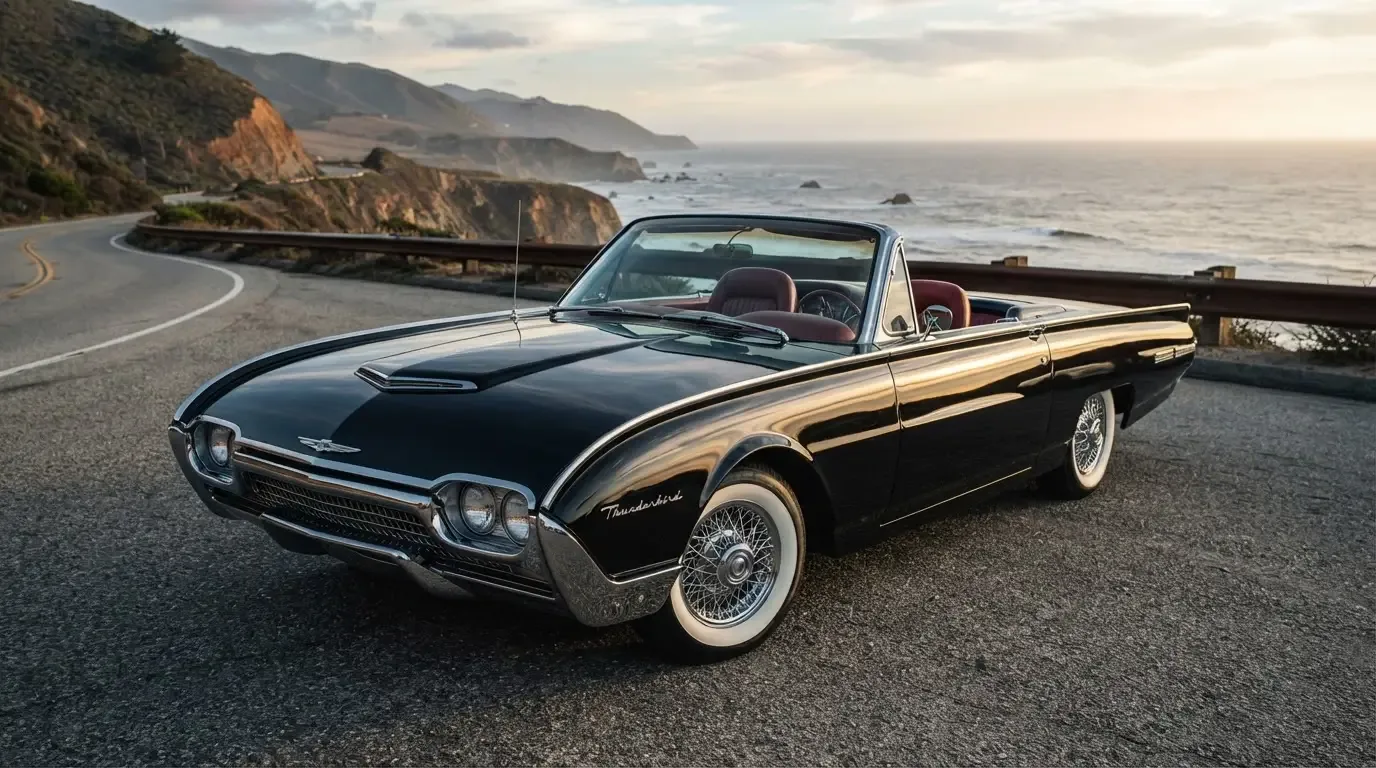
The Bullet Bird arrived at the peak of American fascination with rockets and jets, and the design does not apologize for it. The whole car is organized around a projectile theme. The front comes to a blunt point, the body sides sweep back in a single unbroken line, and the rear taillights are huge round units that look for all the world like afterburners. Somebody at Ford clearly spent time looking at aircraft and missiles, and the result is a car that seems to be moving even when it is parked in Roy's garage under a bedsheet.
What I love about telling this part of the story is that the styling was not just for show. The pointed nose and the smooth flanks were genuinely aerodynamic for the period, and the car cut through the air more cleanly than the boxier Square Bird it replaced. Ford had figured out that the jet-age look and honest aerodynamics could be the same thing, and the Bullet Bird is where those two ideas met. If you want the whole family tree of how one generation flowed into the next, our ford thunderbird retrospective lays it all out.
The Swing-Away wheel and other party tricks
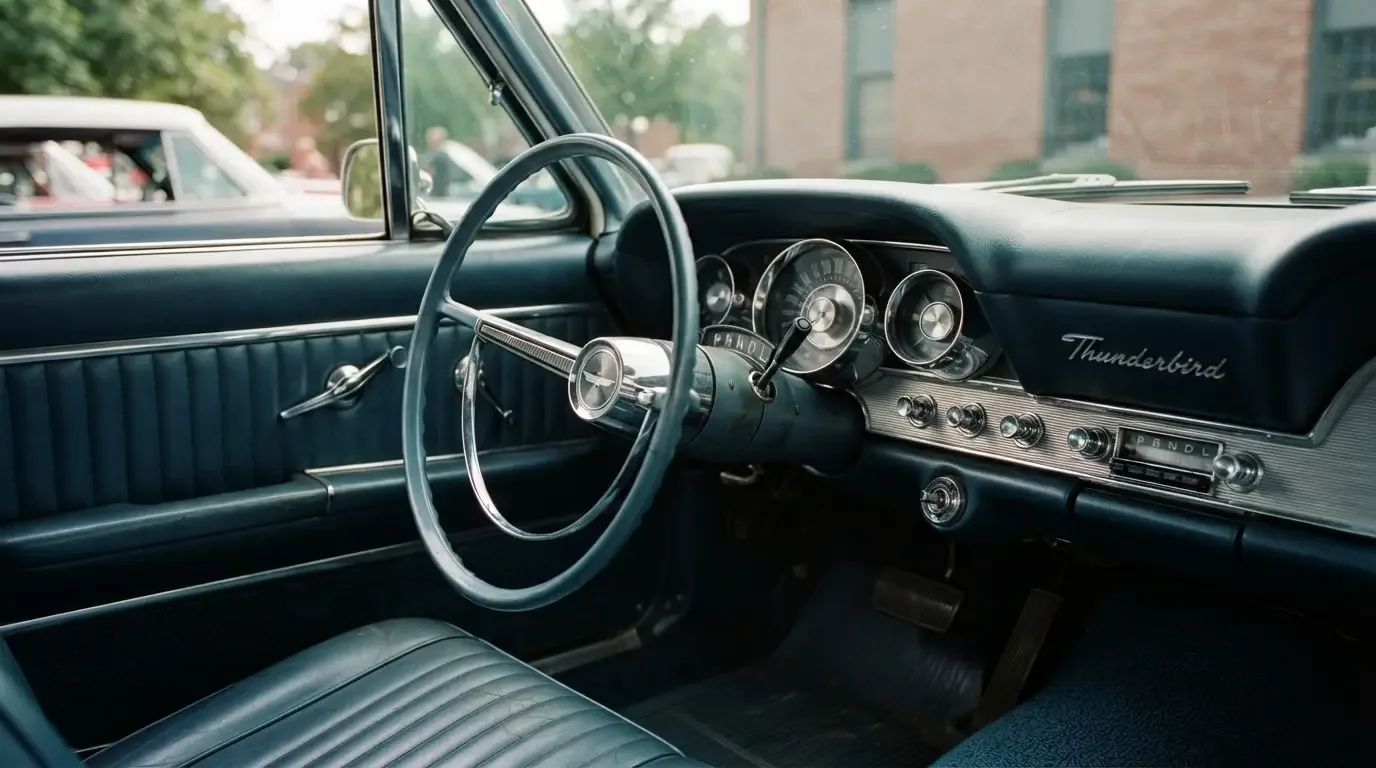
Now, here is the detail that gets the biggest reaction whenever we bring a Bullet Bird to a show. In 1961 Ford introduced the Swing-Away steering wheel. With the car in park, you could slide the entire steering column about ten inches to the right, giving yourself room to climb in and out without folding yourself around the wheel. People who have never seen it always assume it is a modern retrofit. It is not. It came from the factory more than sixty years ago, and it still works on Roy's car, still clunks over with that satisfying mechanical certainty.
That kind of feature tells you what the Bullet Bird was really about. This was a car meant to feel special every single time you used it. The interior wrapped around you, the console ran the length of the cabin, and little theatrical touches like the Swing-Away wheel turned the simple act of getting in into an event. Ford understood that a personal luxury car had to earn its name in the details, and the Bullet Bird earns it.
| Detail | Bullet Bird (1961-1963) |
|---|---|
| Production years | 1961, 1962, 1963 |
| Body styles | Hardtop coupe, convertible, and limited Landau and roadster variants |
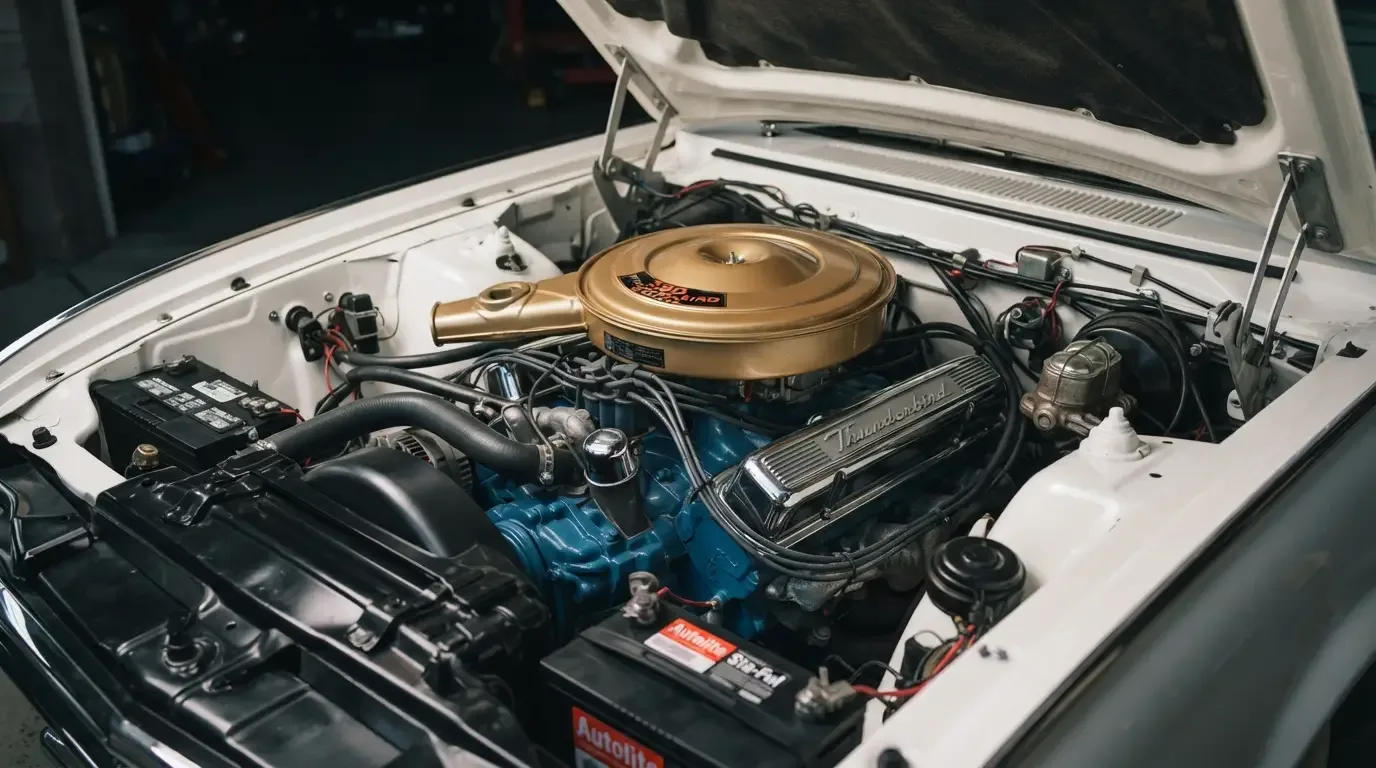
| Standard engine | 390 cubic inch FE-series V8 |
| Signature feature | Swing-Away steering wheel |
| Special editions | Sports Roadster with tonneau, M-code triple-carb 390 rated at 340 hp |
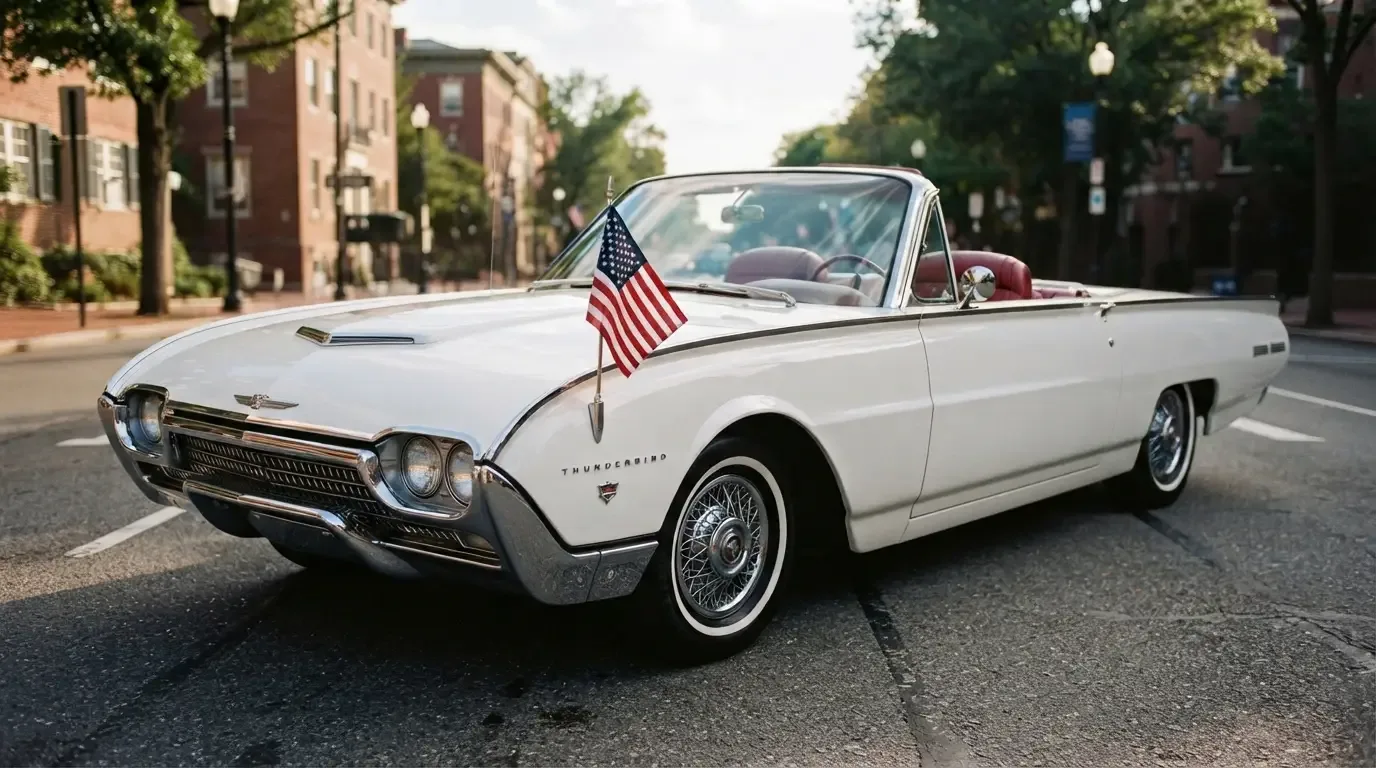
| Notable honor | Fifty convertibles used in the 1961 Kennedy inaugural parade |
The Sports Roadster, the one everybody wants
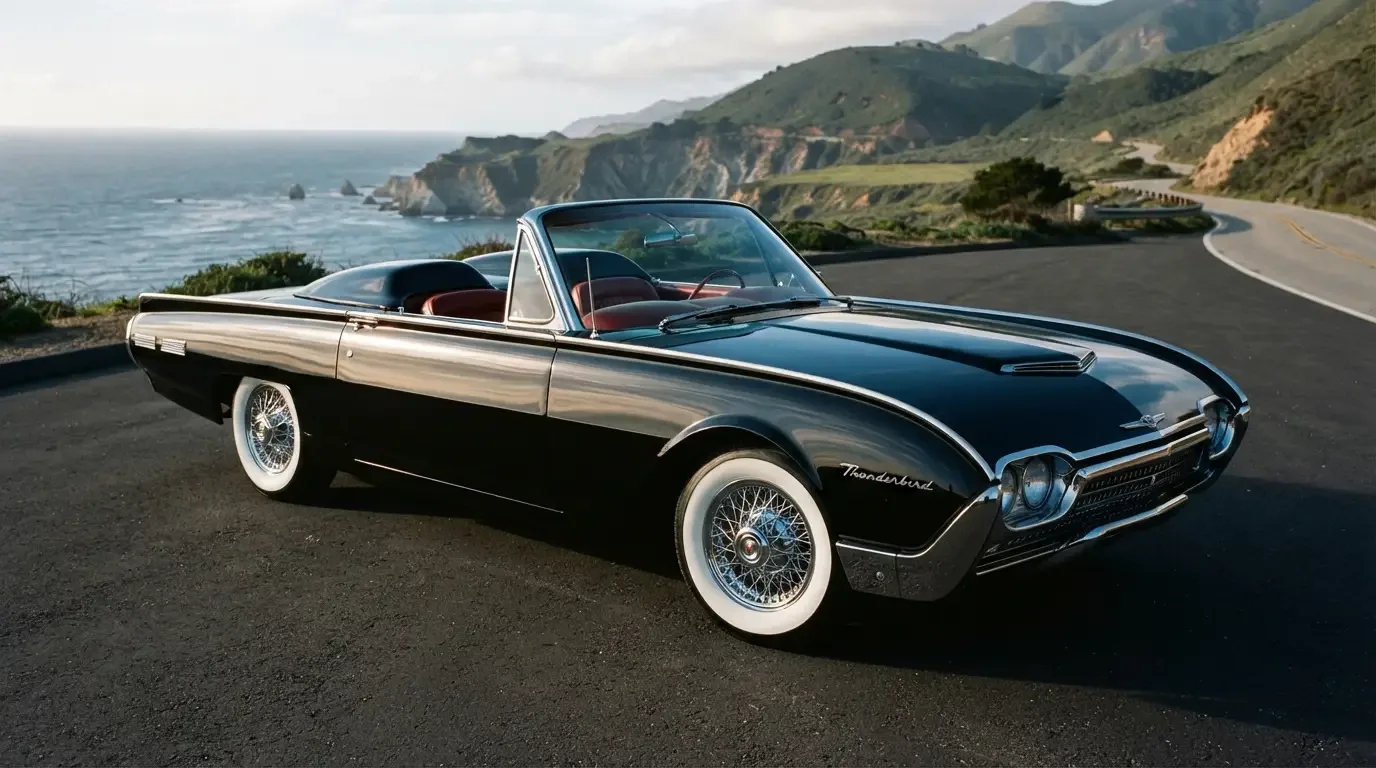
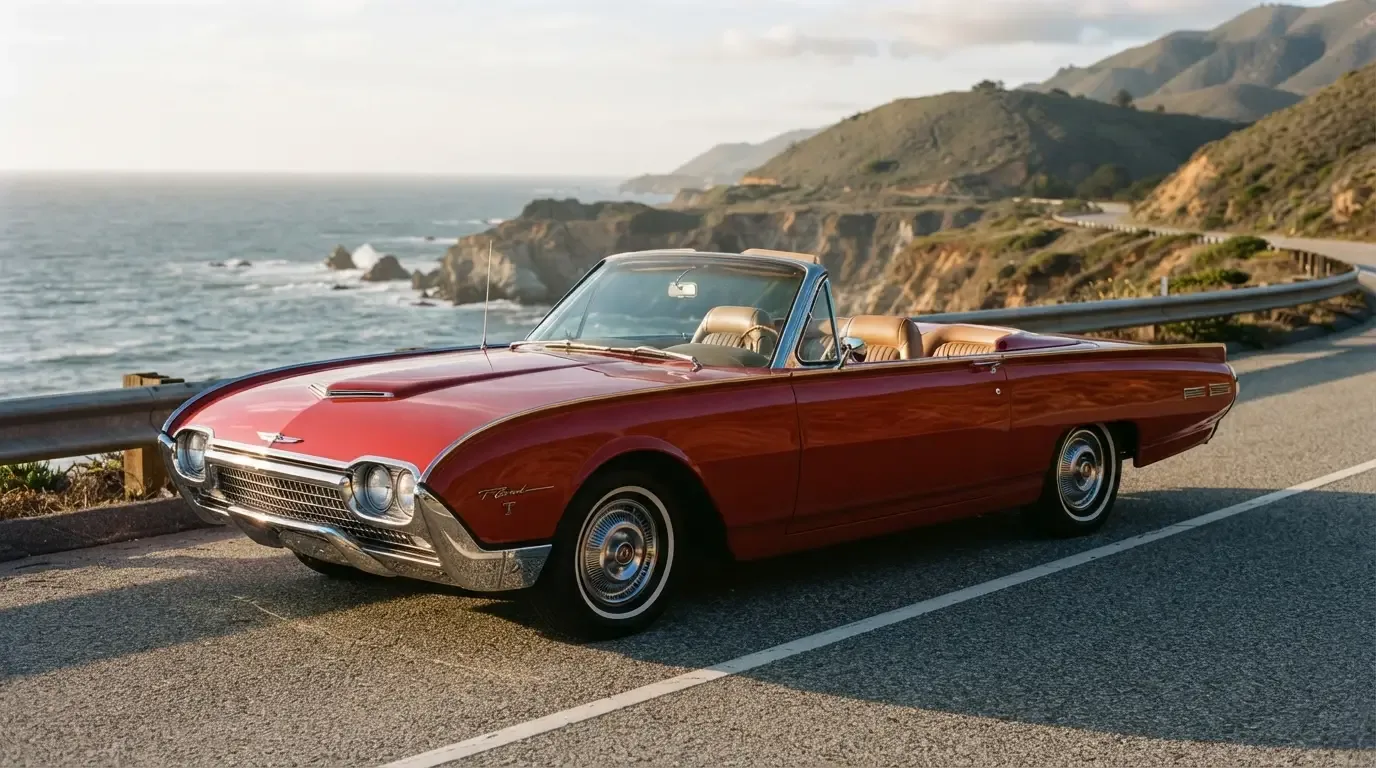
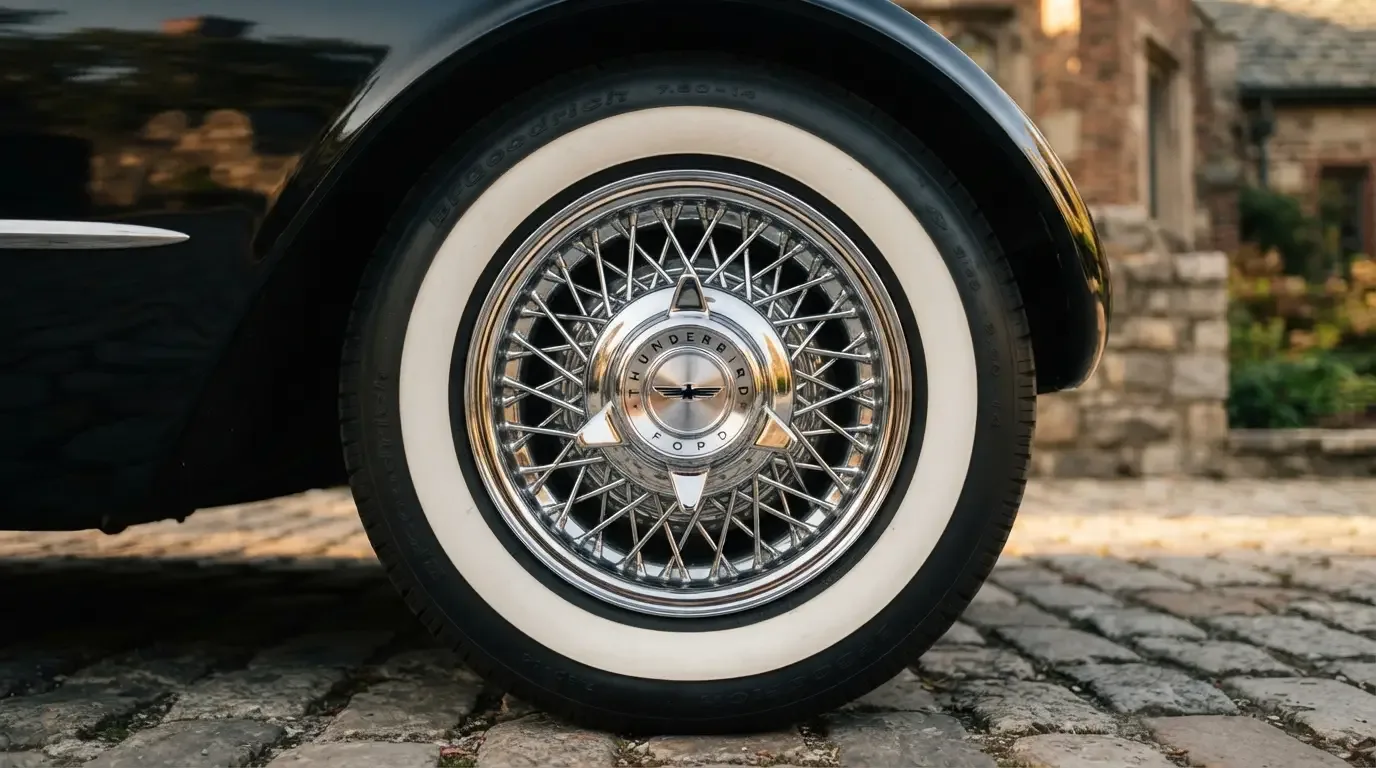
If the club had a most-wanted list, the 1962 and 1963 Sports Roadster would sit near the top. Ford took the convertible and added a fiberglass tonneau cover that fitted over the rear seat, turning the four-seater back into the profile of a two-seat sports car. It came with genuine Kelsey-Hayes wire wheels and a grab bar across the dash for the passenger. The whole package was a nod to the original two-seat Thunderbird, a wink to the folks who had never forgiven Ford for going to four seats.
The trouble was the price. The Sports Roadster cost a great deal more than a standard convertible, and buyers stayed away in droves. Ford built only a few thousand across two years, which is exactly why they are so coveted now. The math that hurt the car in 1962 is the math that makes it valuable in the present. We have one member who waited eleven years to find a documented Sports Roadster he could afford, and he still grins about it. There is a related story in how these limited editions kept the sporting flame alive even as the cars grew heavier, and it is worth following that thread.
The M-code and the quiet fast ones
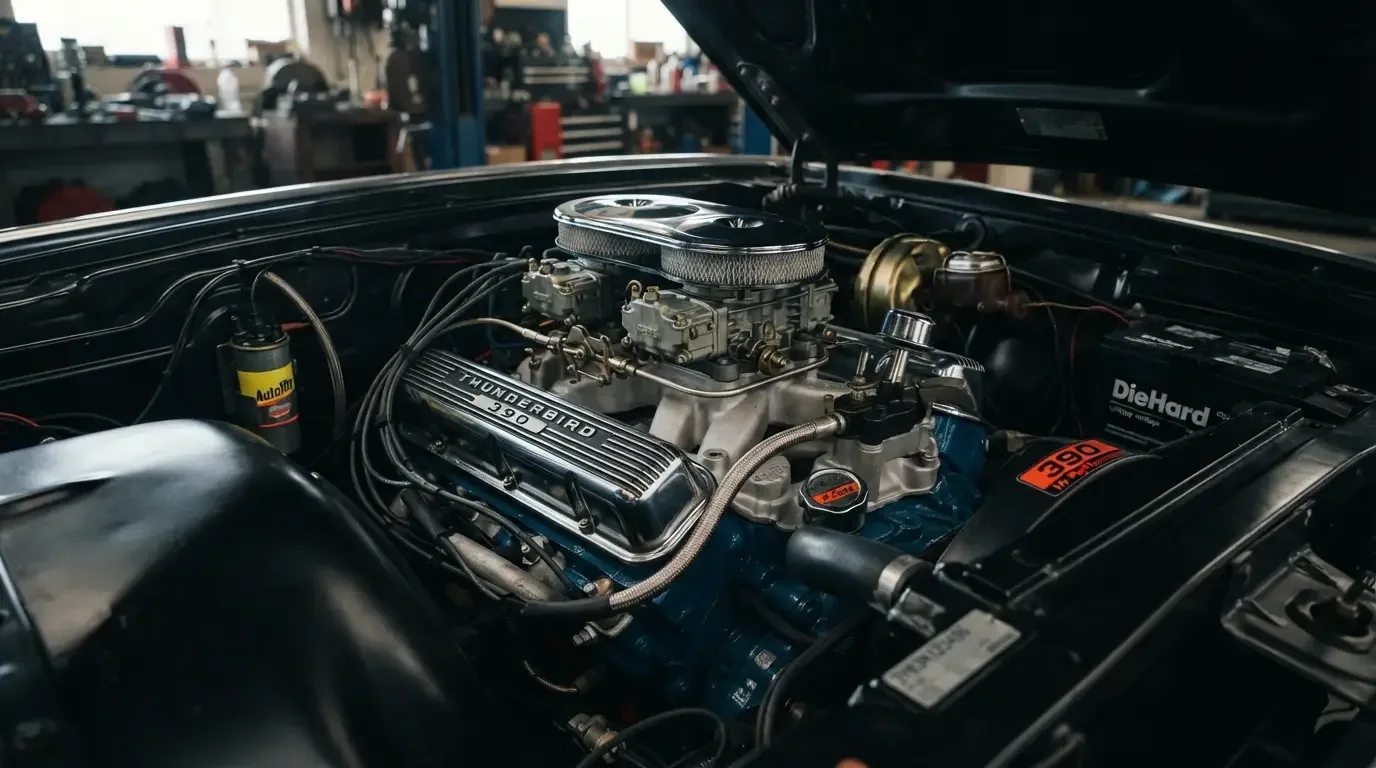
Most Bullet Birds left the factory with a single four-barrel carburetor on the 390 V8, plenty of engine for a luxury cruiser. But Ford also offered an M-code version with three two-barrel carburetors, and those cars are the sleepers of the generation. They do not look different from the outside, but they move with real authority, and among the members who chase performance, an M-code Bullet Bird is a genuine find.
These were never common. The buyer of a personal luxury car in 1962 mostly wanted comfort and presence, not a stoplight weapon, so the triple-carb option went home with only a small fraction of customers. That rarity, combined with the fact that many were driven hard and worn out, means a surviving documented M-code car is a serious catch today. Roy does not have one. He reminds us of this at every meeting, in the tone of a man who missed a bus fifty years ago and still thinks about it.
"You can read all the production numbers you want, but the Bullet Bird only really makes sense when you are sitting in one at dusk with the Swing-Away wheel clunked into place and that pointed hood stretching out in front of you. It was built to make an ordinary evening feel like an occasion, and the good ones still do exactly that, decades after the men who designed them retired."
- Wayne Coburn
The Landau, the Principality, and a car for the world stage
One story our older members love to tell involves a car that most people have never heard of. In January 1963, Ford presented Prince Rainier and Princess Grace of Monaco with a special-edition Thunderbird Landau at a ceremony at the Grimaldi palace, a limited run of about 2,000 cars that Ford salesmen marketed as the "Princess Grace" model. It put the Thunderbird name in front of cameras all over the world. Whether or not you care about royalty, the point our club always makes is that Ford knew exactly what it had. The Thunderbird was a car you put important people in when you wanted the world to see them arrive in style, and Ford leaned into that reputation every chance it got.
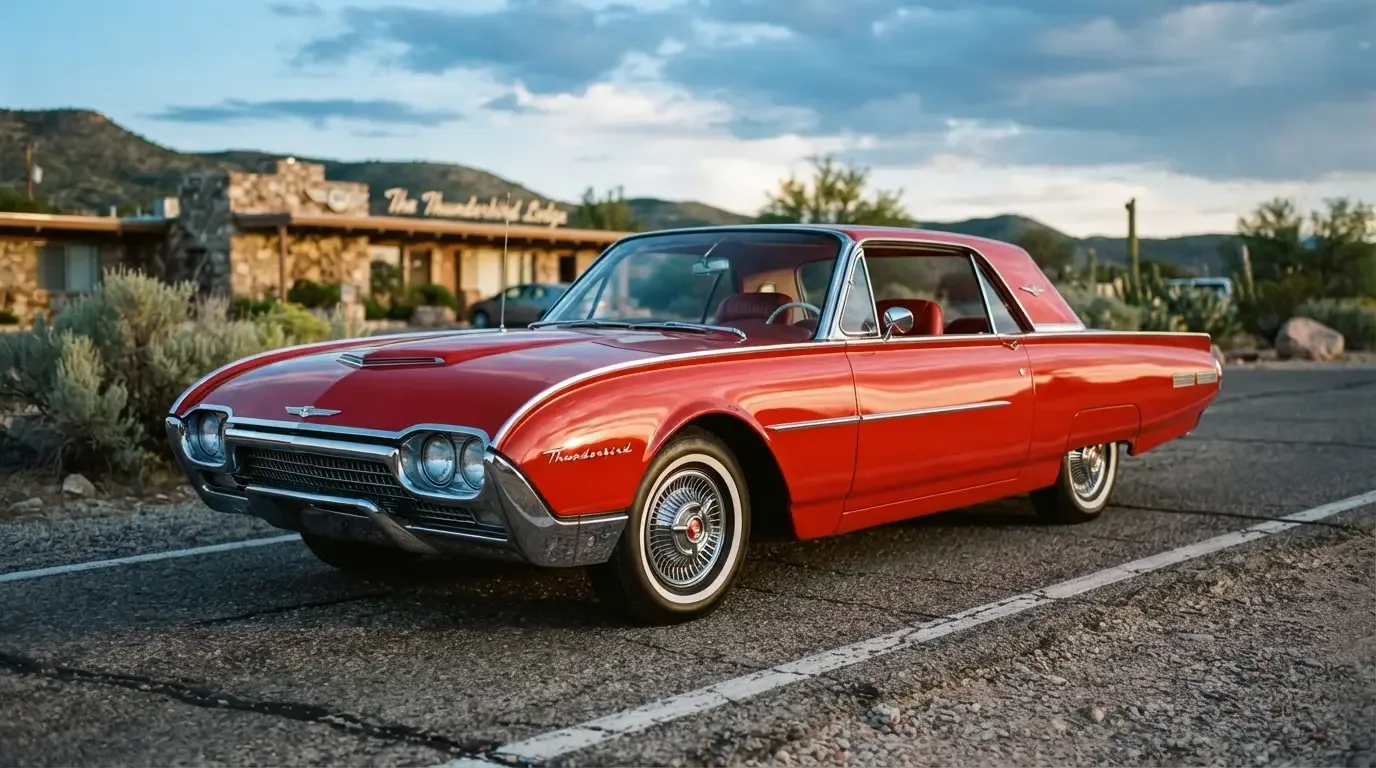
Closer to home, the Landau version of the Bullet Bird brought a vinyl-covered roof and those little S-bar ornaments on the rear pillars, giving buyers the enclosed, formal look that was beginning to overtake the convertible in popularity. The Landau sold well, and it foreshadowed where the whole personal luxury market was heading. Our members who own Landaus like to remind the convertible crowd that the closed cars were the sensible choice, and then everybody laughs, because sensible was never really the point of a Thunderbird.
What ties all of this together is presence. The Bullet Bird had it in a way that is hard to manufacture deliberately. Park one anywhere, a show field, a grocery lot, a wedding, and people gather around it. That magnetism is exactly what Ford was selling, and it is exactly what keeps the cars desirable in our circle. A car does not earn a place in a royal motorcade and a thousand family photo albums by being ordinary.
What sixty years has taught the owners
Spend enough evenings in a club like ours and you accumulate a kind of folk knowledge about these cars that no factory manual contains. We know which years had which quirks, which parts are getting hard to find, and which shops can still rebuild a Swing-Away mechanism without butchering it. That collective memory is one of the quiet reasons cars like the Bullet Bird survive at all. When Roy needs a bit for his 1961, somebody in the club usually knows where one is, or knows a man who does.
The cars themselves have taught us patience. The power windows and seats that felt like miracles in 1961 are the same systems that strand an owner on a Sunday afternoon, and the complex trim and brightwork that make these cars glitter are precisely the pieces that are hardest to restore correctly. None of it is beyond a determined owner, but none of it is quick either. The people who thrive with a Bullet Bird are the ones who understand that the car is a long-term relationship, not a weekend fling.
That understanding is really the heart of why these cars mean so much to the people who keep them. A Bullet Bird is not a difficult car so much as a demanding one, and the demands are what forge the bond. Roy did not fall in love with his 1961 despite the fifty years of fettling. He fell in love with it because of them. Every hour he has spent under that car is an hour that ties him to it, and that, more than any production number, is what the club is really about.
Living with a Bullet Bird
Ownership in our club has taught us what these cars need. The unibody structure that gave the Bullet Bird its low, clean lines also means rust is a structural concern rather than a cosmetic one, and the cars have a reputation for hiding corrosion in the cowl and floors. The Swing-Away mechanism, wonderful when it works, needs care and occasional attention to keep swinging freely. And the complex power accessories that made these cars feel luxurious in 1961 are the same accessories that test an owner's patience in the present.
None of that dampens the enthusiasm. If anything it deepens it, because sorting out a Bullet Bird and getting it right is a badge of honor in our circle. The members who have done it wear it proudly, and the cars reward the effort with a driving experience that nothing else from the era quite matches.
Why the club keeps the flame
The Bullet Bird occupies a particular place in the affection of people who actually own and drive these cars. It is bold in a way that later Thunderbirds toned down, and it carries the optimism of its moment right there in its sheet metal. When Roy finally does hand his car on, and he swears he never will, it will go to someone who understands that they are not just buying an old Ford. They are inheriting a piece of the jet age, complete with the stories that have accumulated on it over half a century.
That is the thing about these cars in a club like ours. The documentation and the production numbers are the punchline, but the history lives in the people. Every good Bullet Bird has a Roy attached to it somewhere in its past, and the folks looking at Thunderbirds for sale now are really shopping for the next chapter of a story that started rolling off the line in 1961.
Sources and notes
- Ford Thunderbird (third generation) - Wikipedia
- 1962 Thunderbird M-code 390 340hp discussion - Ford FE Engine Forum
- 50 Special Topless Ford Thunderbirds for JFK - Gary Crossley Ford
- The Iconic Thunderbird Convertibles of JFK's 1961 Inaugural Parade - Classic Industries
- 1 of 2000: 1963 Ford Thunderbird Principality of Monaco - Barn Finds
- Rare M-Code Roadster: 1962 Ford Thunderbird - Carscoops
Related Reading
Article
The Ford Thunderbird Story: How Ford Invented the Personal Luxury Car
Article
The Square Bird (1958-1960): The Four-Seat Gamble That Created a Segment
Article
The Flair Bird (1964-1966): The Last Convertible Thunderbird
Article
The 1961 Thunderbird: The Rocket Redesign
Article
The Sports Roadster: Wire Wheels and a Tonneau
Article
The 1961 Kennedy Inaugural Thunderbirds
Article
The 390 FE V8 in the Bullet Bird
Article
The 1962 Thunderbird and the Landau Debut
Article
The 1963 Thunderbird
Article
The Swing-Away Steering Wheel
Article
The 1962 Italien: The Thunderbird Fastback Show Car
Article
The M-Code Tri-Power 390
Article
Bullet Bird Styling: The Missile Look
Article
The Bullet Bird Convertible
Article
Colors of the Bullet Bird
Article
The Sports Roadster's Kelsey-Hayes Wire Wheels
Article
Collecting the Bullet Bird Today
Have a
Ford Thunderbird
for Sale?
Reach thousands of serious classic car collectors across the US.
Sell It Here →
Are You a Classic Car Dealer?
List your full inventory and connect with targeted classic car buyers.
Join as a Dealer →

About the author
Wayne Coburn
Longtime Corvette owner, judge and club figure who knows the cars, the records and the people behind them.
Related Listings - Ford Thunderbird
Comments
Be the first to comment on this article.