
Cadillac told buyers in 1976 they were purchasing the last American convertible, and a meaningful number of them believed it enough to bet real money on the claim. Some bought a car to drive. Others bought a car to store, betting that a permanently discontinued body style could only go up in value once the last one rolled off the line. That bet is worth examining closely, because it did not pay off the way the buyers expected, and the reasons why are a useful lesson for anyone evaluating a collector car on a scarcity story rather than fundamentals.
Car Features
7 min read
When Speculators Hoarded the Last 1976 Convertibles
Buyers stored 1976 Eldorado convertibles at delivery mileage betting on permanent scarcity. Cadillac brought the convertible back in 1984, and the bet did not pay off the way they expected.
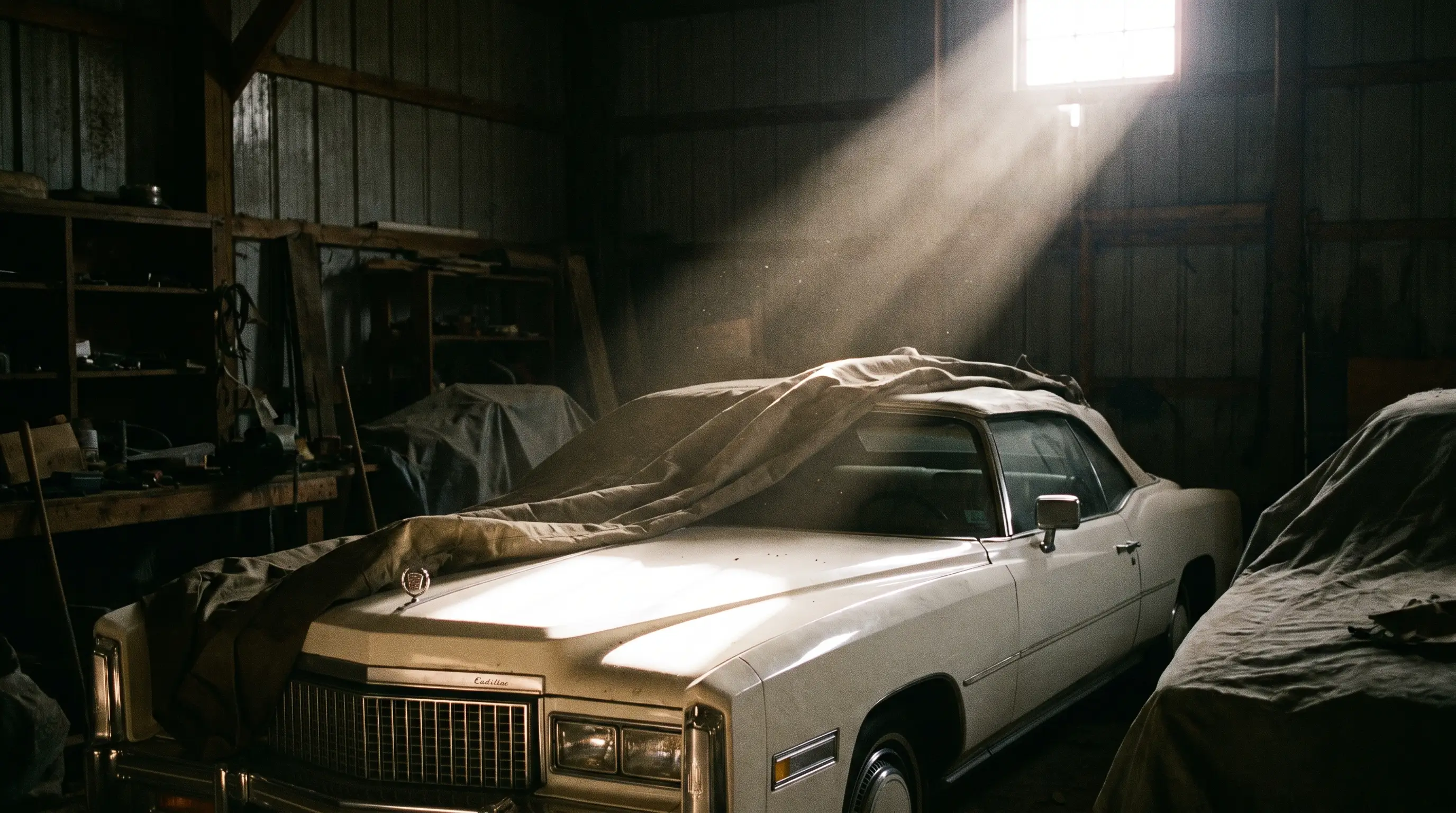
The bet, as it was actually placed
Speculative buyers in 1976 were not doing anything unusual by the logic of the moment. A manufacturer had announced, publicly and repeatedly, that a specific body style was ending forever. Buying one and parking it, delivery miles only, was a straightforward wager that permanent scarcity would drive appreciation over time. Dealers reported requests for the lowest mileage cars available, some buyers asking that vehicles be delivered on a trailer rather than driven off the lot, and a documented handful of 1976 Eldorado convertibles surviving today with mileage low enough to confirm the bet was real and not just hobby folklore.
Where the bet went wrong
The flaw in the wager was not the buyers' logic, it was the premise they were relying on. Cadillac's "last convertible" claim was a marketing decision responding to a moment of regulatory uncertainty and softening demand, not a permanent industry commitment. When rollover standards never materialized in the feared form and convertible demand recovered through the early 1980s, Cadillac itself brought the Eldorado convertible back for 1984, followed by other manufacturers reviving their own open top models. The scarcity premise speculators had paid for evaporated within roughly eight years, well inside the holding period most of those buyers had planned around.
| Factor | What speculators expected | What actually happened |
|---|---|---|
| Convertible availability | Permanently discontinued | Cadillac revived it in 1984 |
| Scarcity premium | Compounding indefinitely | Diluted once the claim proved temporary |
| Holding period assumed | Indefinite, one-time event | Market corrected within under a decade |
Why the cars still hold value anyway
Here is the part that surprises people expecting a clean story about a failed speculation. Low mileage, well documented 1976 Eldorado convertibles do command a real premium today, just not for the reason the original buyers were betting on. The premium now comes from originality and preservation, not from permanent scarcity of the body style. A time capsule condition car with verified low mileage is valuable because it is an unusually well preserved example of a specific historical moment, the closing weeks of a discontinued model, regardless of whether that model stayed discontinued forever. The speculation was wrong about the mechanism. It was accidentally right about which specific cars would end up desirable decades later.
"I appraise a fair number of these low mileage 1976 convertibles, and I tell every owner the same thing. You are not sitting on a rare body style anymore, because that stopped being true in 1984. You are sitting on an unusually well preserved car from a specific moment, and that is a different, smaller kind of value than the one your grandfather thought he was buying."
- Marcus Feld
How this compares to other scarcity bets in the hobby
The 1976 Eldorado speculation is not an isolated case. Collector car history is full of buyers betting on an announced ending, whether a discontinued model, a final model year before a redesign, or a manufacturer's stated retreat from a body style or engine configuration. Some of those bets have paid off exactly as planned. Others, like this one, ran into a manufacturer reversal that speculators had no way to predict at the time of purchase. The lesson from the 1976 case generalizes reasonably well: betting on a permanent industry shift based on a single manufacturer's public statement carries real risk, because that statement reflects a snapshot of conditions at one moment, not a binding commitment across future decades.
What separates the 1976 Eldorado speculators from buyers who simply got lucky with a well preserved car is intent and documentation. A buyer who can show, through delivery records or period correspondence, that a car was purchased and stored specifically because of the last convertible claim has a more interesting and more valuable story to tell than one whose low mileage simply happened by chance. That distinction rarely moves the appraised number dramatically, since condition and originality still do most of the work, but it does matter to serious collectors assembling a car's full documented history rather than just its current specification sheet.
What this means for a buyer today
Anyone evaluating a 1976 Eldorado convertible now, speculator-preserved or otherwise, should separate the car's condition and documentation from the marketing story attached to its production year. A pristine, low mileage example with clean paperwork is a genuinely strong asset in this market. A well used driver with an interesting but unverifiable story about original speculative intent is not the same asset, no matter how the seller frames the history. Liquidity also matters here more than in some other Eldorado segments. These convertibles have an established, active buyer pool, which is a meaningful downside protection compared to more obscure limited editions with thinner demand.
The wider context behind why speculators made this bet in the first place, and how Cadillac's marketing shaped the moment, is covered where readers can read the background on the model year as a whole. Buyers interested in the generation these convertibles came from, the largest Eldorados Cadillac ever built, may find the earlier years of that same platform worth a look too, since the sizing and market dynamics carried over from the start of the run. Those ready to evaluate a specific car can shop classic Eldorado listings and weigh documentation and condition the way an appraiser would, rather than betting on a scarcity story that has already proven fragile once.
The bottom line for anyone weighing a 1976 Eldorado convertible purchase today, speculation era or not, is straightforward. Price the car on what is in front of you, not on a marketing claim that expired decades ago. Documentation, originality, and liquidity carry the appraisal. The story is worth telling. It is not worth paying an extra premium for on its own.
Sources and notes
- Cadillac Eldorado - Wikipedia
- Last Time Around: The 1971-1976 Cadillac Eldorado Convertible - Ate Up With Motor
- The Last* Cadillac Convertible: 1976 Eldorado - Mac's Motor City Garage
- 3,200-Mile 1976 Cadillac Eldorado Convertible Up For Auction - GM Authority
- CC Capsule: 1976 Cadillac Eldorado Convertible - Curbside Classic
Related Reading
Have a
Cadillac Eldorado
for Sale?
Reach thousands of serious classic car collectors across the US.
Sell It Here →
Are You a Classic Car Dealer?
List your full inventory and connect with targeted classic car buyers.
Join as a Dealer →
#Cadillac Eldorado
#classic car appraisal
#eldorado convertible
#1976 Cadillac
#collector car speculation
#car market history

About the author
Marcus Feld
Accredited collector-car appraiser who reads the market through hammer prices, condition tiers and risk.
Related Listings - Cadillac Eldorado

Comments
Be the first to comment on this article.