
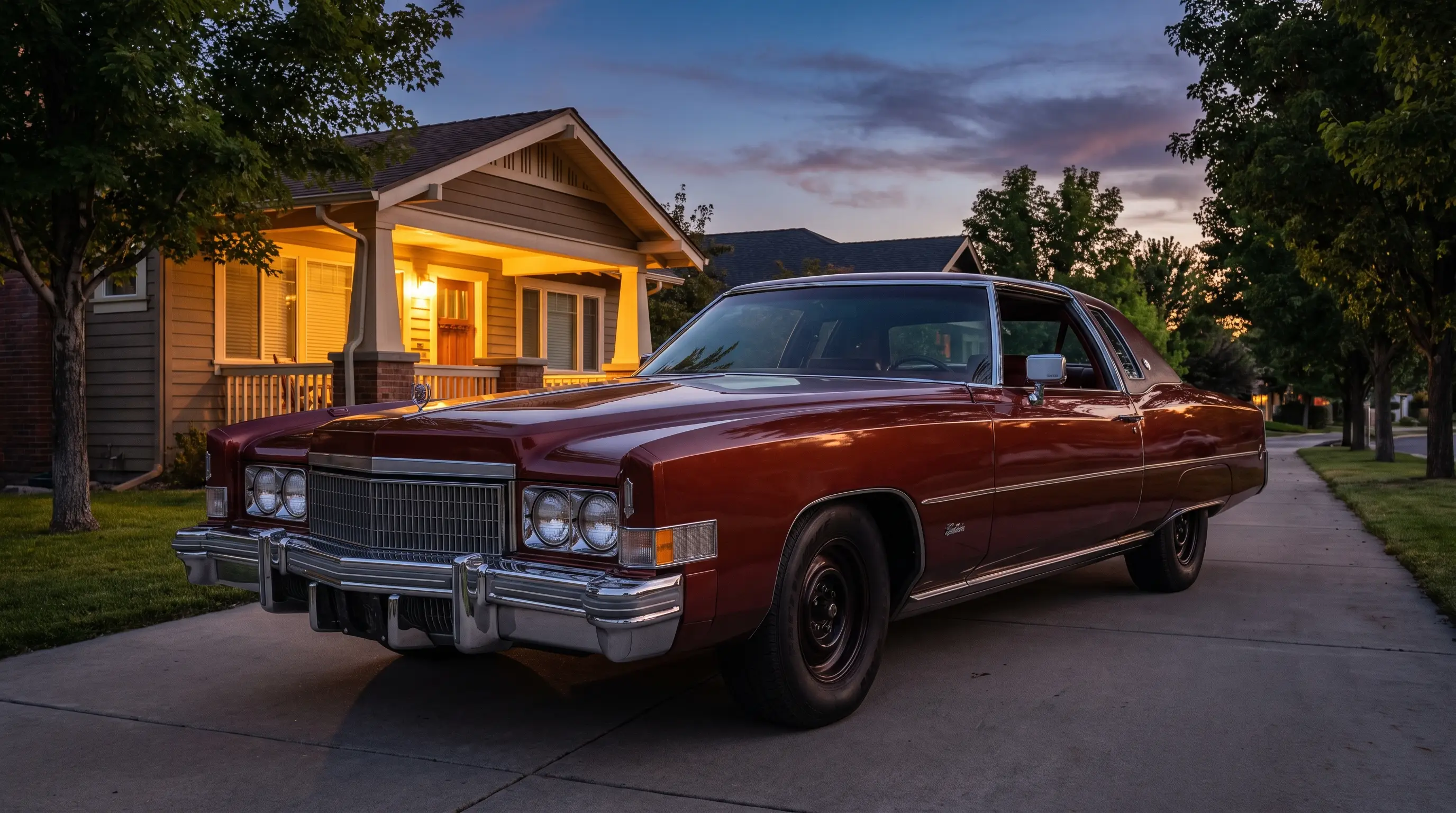
Park a 1971 Cadillac Eldorado next to the 1967 model that preceded it and the growth is immediate and obvious. Cadillac had not simply updated the Eldorado for a new decade. It had let the car grow into the largest, heaviest version of itself the nameplate would ever produce, and it kept building that same basic size and philosophy through 1976, the year the generation, and the convertible body style along with it, finally came to an end.
Car Features
7 min read
The 1971-1976 Eldorado: The Biggest Eldorados Ever
The 1971 redesign grew the Eldorado to its largest ever dimensions, brought back the convertible, and carried a 500 cubic inch V8 through to the model's famous 1976 close.
Carrying the front wheel drive idea forward
The 1967 Eldorado had introduced something genuinely unusual for an American luxury car: front wheel drive, built on the E-body platform Cadillac shared with the Oldsmobile Toronado and, later, the Buick Riviera. That layout freed up interior packaging in ways a conventional rear drive luxury car could not match, and Cadillac carried the concept forward into the redesigned 1971 generation rather than retreating to a more conventional layout as the car grew larger. The engineering ambition of the original front wheel drive Eldorado survived the transition to a much bigger body, which is easy to overlook given how thoroughly the 1971 redesign changed the car's presence and proportions.
The engine that defined the era
Underpinning the size increase was Cadillac's 500 cubic inch V8, introduced for the Eldorado in 1970 and continued through this generation, the largest displacement V8 ever installed in a mass production American passenger car. That engine was not chasing outright horsepower figures so much as effortless, unstressed torque suited to moving a car of this scale without strain, a priority that fit the entire philosophy of the early 1970s land yacht era. Output figures shifted from year to year as emissions regulations tightened through the decade, with gross and net horsepower ratings both in play depending on the model year in question, so any specific number attached to a given year should be checked against that year's own factory literature rather than assumed to carry across the whole generation.
| Detail | 1971-1976 Eldorado |
|---|---|
| Platform | E-body, front wheel drive |
| Engine | 500 cubic inch V8 |
| Convertible availability | Reintroduced 1971, ended 1976 |
| Body styles | Two door hardtop coupe, convertible |
Bringing the convertible back
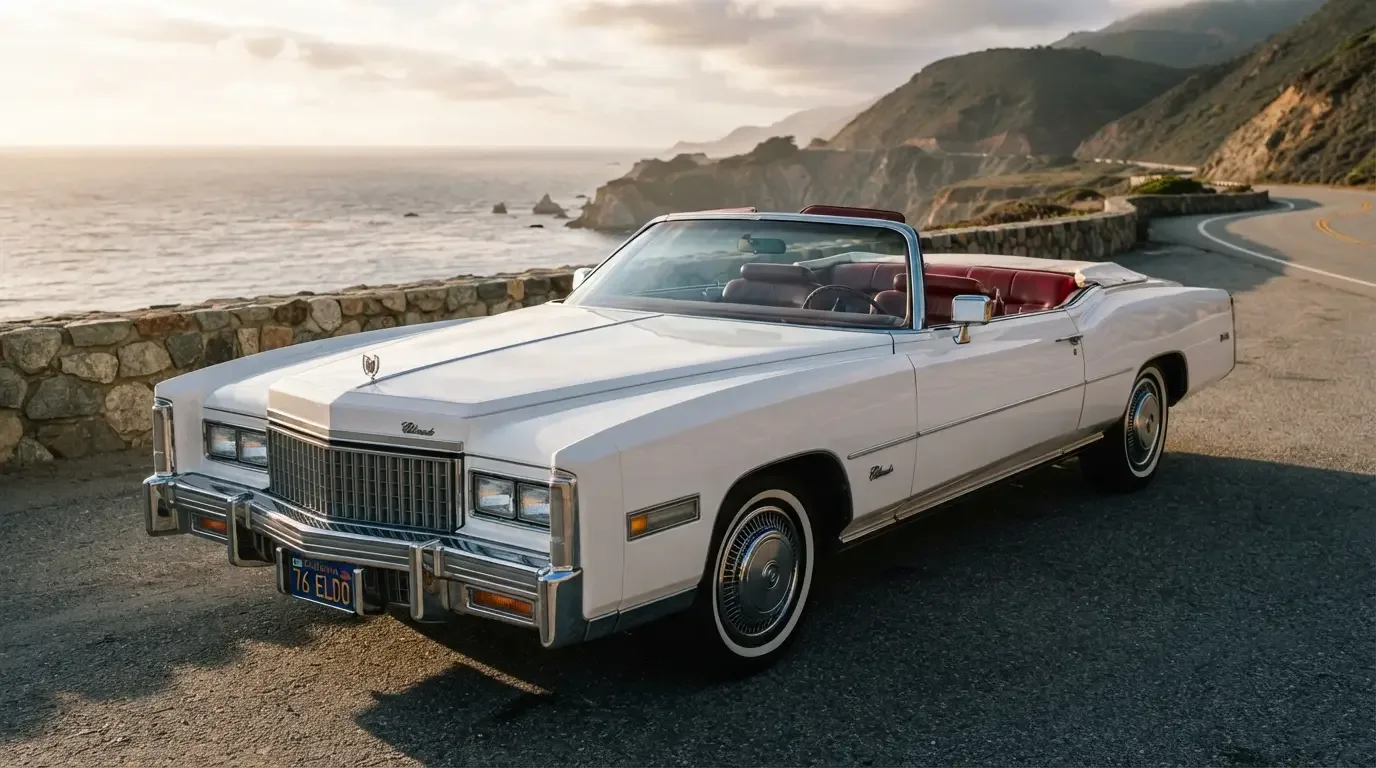
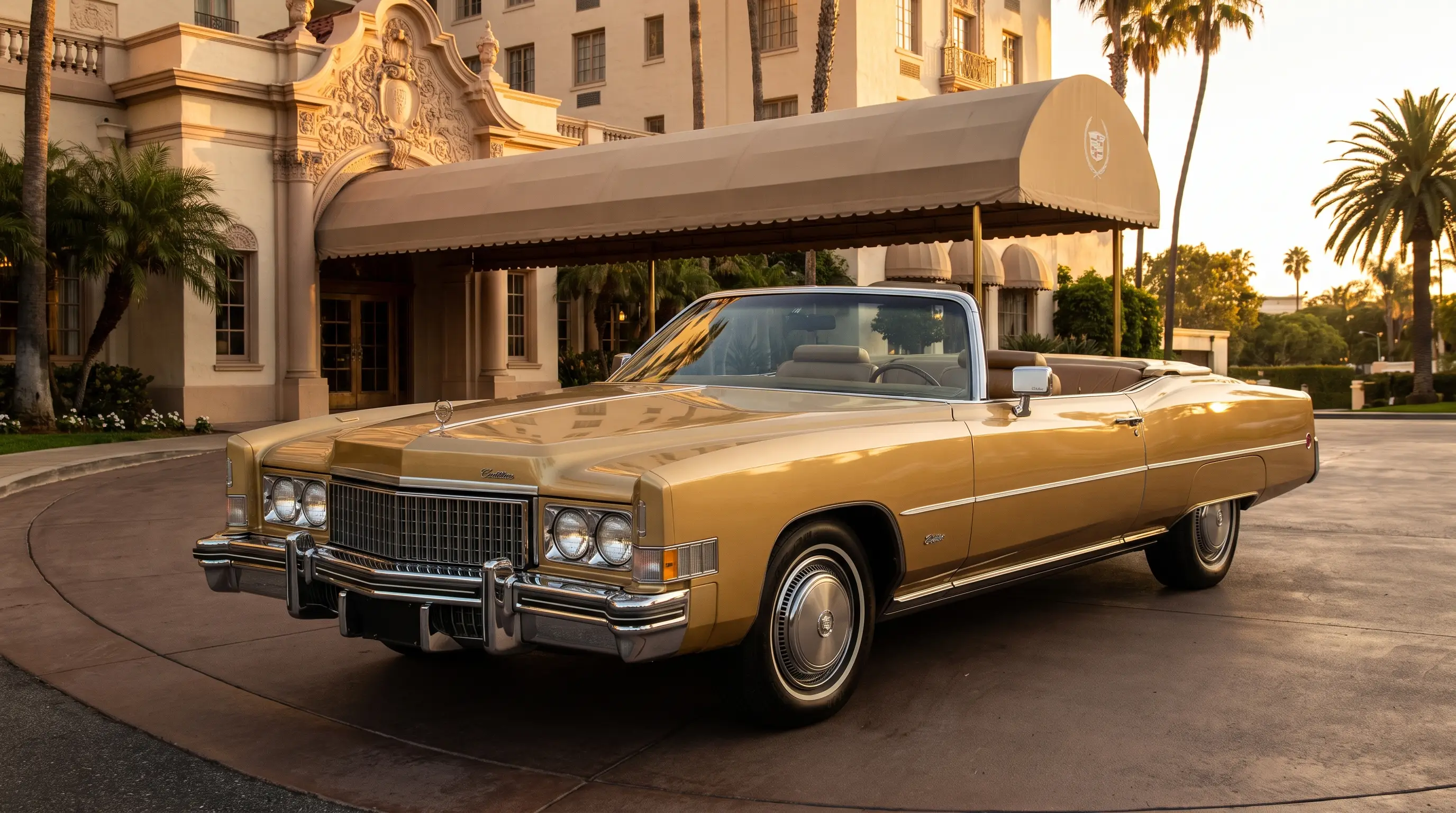
Cadillac had dropped the Eldorado convertible entirely for the 1967 through 1970 model years, offering the car only as a coupe during that stretch. The 1971 redesign reversed that decision, reintroducing an Eldorado convertible for the first time in several years and setting up the body style that would carry through to its widely publicized close in 1976. That reintroduction matters for understanding the generation as a whole, because it meant the biggest Eldorados Cadillac ever built were also, for their final six years, available with the top down, a combination of scale and openness that no later Eldorado generation would attempt to replicate at anywhere near the same size.
Design language built for the size
Styling across this generation leaned into its dimensions rather than disguising them. Long hoods, substantial chrome bumpers that grew even heavier as federal impact standards phased in through the mid 1970s, and a formal, upright roofline on the coupe all reinforced the sense of a car built to project scale and presence rather than agility. Hidden headlamps, carried over and refined from earlier Eldorado generations, kept the front end clean when the lights were off, a detail that added a touch of restraint to a car that otherwise made no attempt at subtlety. Interior trim followed the same logic, prioritizing space, brougham style comfort, and a genuinely enormous cabin over anything resembling sporting intent.
"People sometimes describe this generation as excessive, and they are not wrong, but excessive was the assignment. Cadillac built the biggest, most confident version of the Eldorado it ever would, right before regulation and changing taste forced the whole industry toward smaller cars. This generation is what American luxury looked like at its absolute physical peak."
- Sarah Whitfield
Facelifts inside a single generation
Cadillac did not leave this generation static across its six model years. Front and rear styling shifted incrementally through the run, with grille treatments, taillight designs, and bumper details all updated year to year to keep pace with federal safety requirements and the division's own sense of what a contemporary Cadillac should look like. The most visible break came around the middle of the run, when revised front and rear treatments gave later cars a noticeably different face from the earliest 1971 and 1972 models, even though the underlying platform, engine, and overall dimensions remained consistent throughout. Collectors and researchers who treat this generation as one unchanging car risk missing details that matter for both identification and value, since a well preserved early example and a well preserved late example of the same generation can look meaningfully different despite sharing a chassis and drivetrain philosophy.
Interior trim and available options also evolved across the run, tracking the industry wide shift toward more standard equipment and more elaborate brougham style trim packages as the decade progressed. Buyers researching a specific model year within this generation should treat each year's options list and styling details as distinct data points rather than assuming uniformity across a run that, while visually related, changed more from year to year than casual observers often assume.
How the generation ended
The convertible body style closed out its run in 1976 under Cadillac's much discussed last American convertible marketing, a claim covered in detail in the more on the 1976 cadillac eldorado feature. That closing chapter should be read as the culmination of everything this generation had built toward since 1971, not as an isolated event, since the same size, the same engine family, and the same design philosophy carried through the entire six model year run. Readers wanting the fuller arc of how the nameplate reached this point in the first place can find it in where this started, tracing the Eldorado back to its 1953 origins as a limited production show car turned production halo model.
For collectors today, the 1971 through 1976 Eldorado represents a specific, identifiable era inside the broader nameplate's history, distinct from both the smaller front drive cars that preceded it and the downsized generation that replaced it starting in 1979. Buyers interested in comparing coupe and convertible examples from across this run can view classic Eldorados on the market and see how the biggest Eldorados Cadillac ever built are represented in today's collector inventory.
What ties the whole generation together, from the earliest 1971 coupe to the last 1976 convertible, is a design and engineering philosophy that never apologized for its own scale. Cadillac built these cars during a window when American luxury still meant physical presence first, and every detail, from the front wheel drive layout to the 500 cubic inch V8 to the sheer footprint of the body, reflects that priority. Later Eldorado generations would be lighter, more efficient, and in some ways better engineered by modern standards. None of them would be built with quite the same unapologetic confidence in size as the answer to almost every design question.
Sources and notes
Related Reading
Have a
Cadillac Eldorado
for Sale?
Reach thousands of serious classic car collectors across the US.
Sell It Here →
Are You a Classic Car Dealer?
List your full inventory and connect with targeted classic car buyers.
Join as a Dealer →
#Cadillac Eldorado
#1970s cadillac
#eldorado convertible
#E-body Cadillac
#1971 Cadillac
#500 cubic inch V8

About the author
Sarah Whitfield
Third-generation classic car collector specializing in pre-war American and European coachbuilt automobiles. Researcher and concours enthusiast.
Related Listings - Cadillac Eldorado




Comments
Be the first to comment on this article.