
The 1958 Impala vs Bel Air question sounds simple until you try to answer it with a straight face, because for the first year of its existence the Impala was not a separate car at all. It was a Bel Air with a longer options sheet and a different name stamped on the trunk lid. Chevrolet dealers in early 1958 sold Bel Air sedans, wagons, and the plain Bel Air Sport Coupe right next to the new Impala Sport Coupe and Convertible, built on the same body shell, riding on the same new X-frame chassis, and sharing most of the same sheet metal below the beltline. The split between them was real, but it was a split in trim, not in engineering.
Car Features
7 min read
1958 Impala vs Bel Air: The Split
In 1958 the Impala was not yet its own model but an upscale Bel Air sub-series, sharing a body and chassis while differing in trim, taillights, and available options.
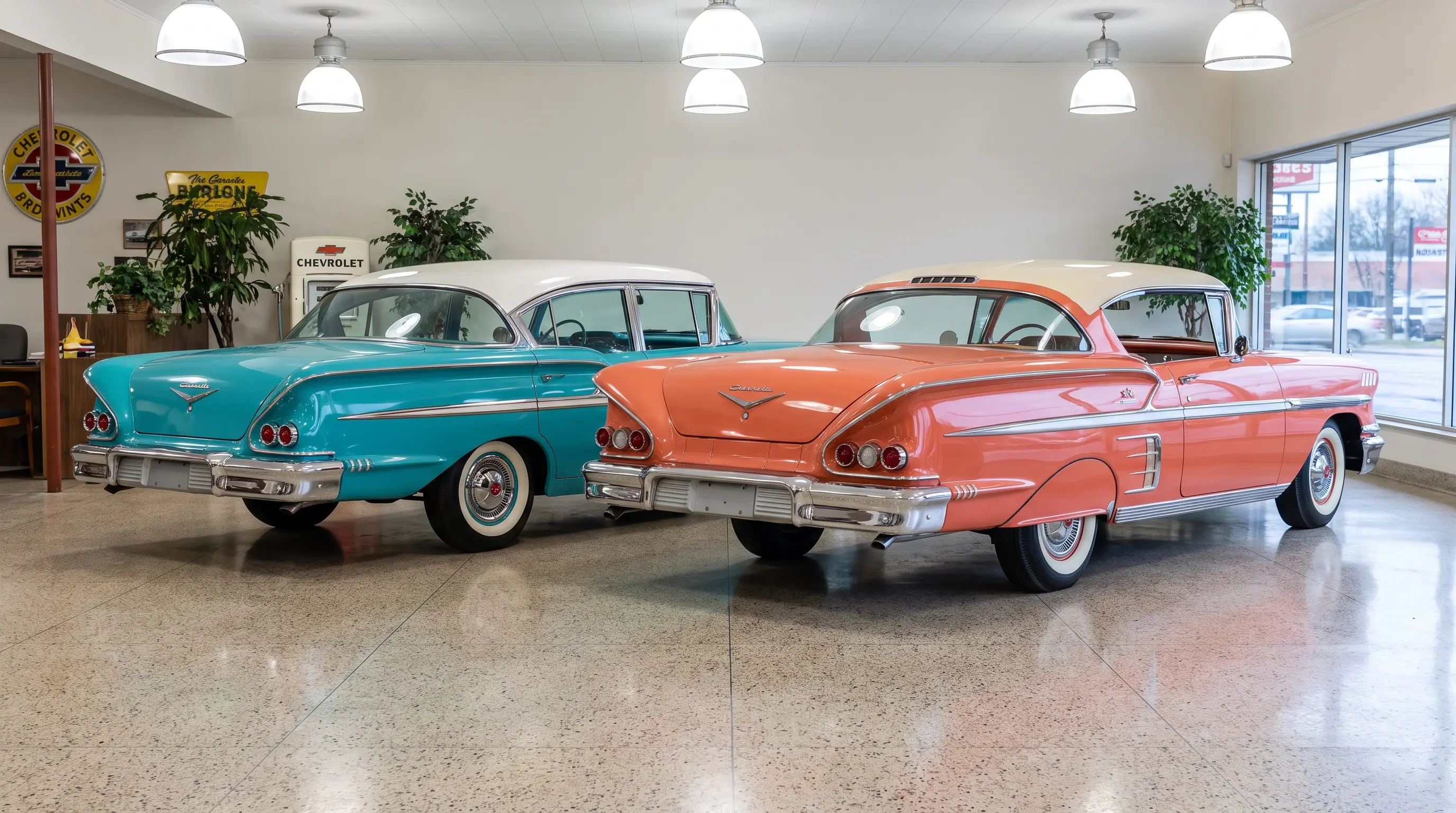
That distinction matters because it explains why so many collectors today argue over what actually separates a 1958 Impala from a loaded Bel Air, and why some 1958 cars get misidentified at shows when their badges or trim have been swapped over the decades. Understanding the split means understanding what Chevrolet was actually selling in 1958, and why the company chose to carve Impala out of Bel Air in the first place rather than inventing a wholly new nameplate from scratch.
Same body, different intentions
Chevrolet's full-size range for 1958 was built around one basic body shell shared across Biscayne, Bel Air, and Impala, differentiated mostly by trim level and standard equipment. Biscayne sat at the bottom, Bel Air occupied the middle, and Impala was introduced as an upper sub-series within the Bel Air line, available only as the Sport Coupe hardtop and the Convertible. A buyer walking a 1958 showroom floor would have seen a Bel Air four-door sedan, a Bel Air wagon, a Bel Air Sport Coupe, and then the Impala versions of the two-door body styles sitting apart with extra brightwork and a distinct rear treatment. The mechanical underpinnings, the new perimeter frame, and the available engines were identical across the range. What changed was presentation.
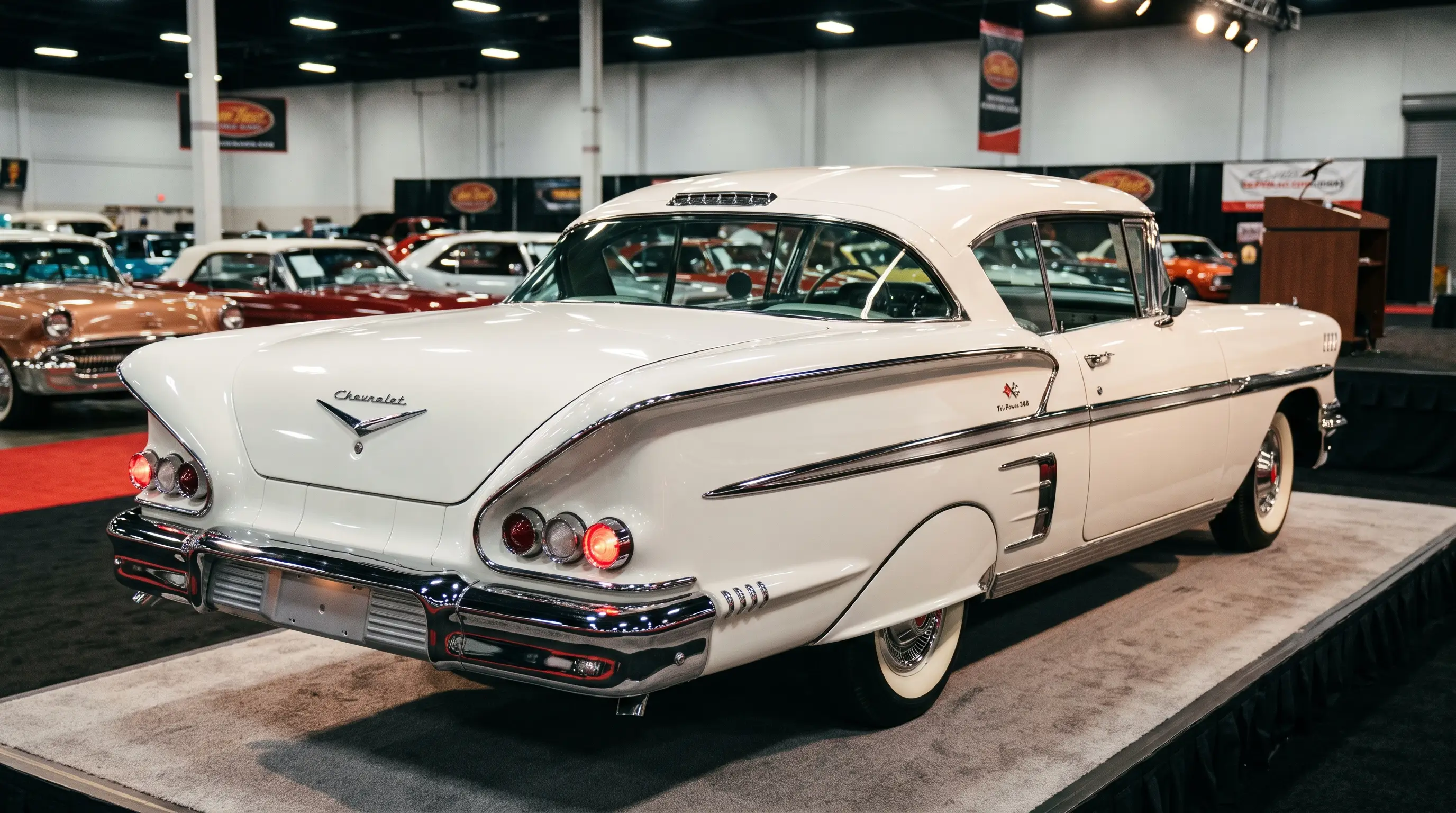
The clearest visual separation was at the rear. Impala got a wider rear bumper housing triple taillights on each side, while Bel Air kept a single round lamp per side, a detail that remains one of the fastest ways to spot a genuine Impala from across a parking lot today. Inside, Impala buyers got more chrome accents, upgraded cloth and vinyl combinations, and a dashboard treatment that leaned more upscale than the Bel Air's simpler presentation, even though the underlying gauge cluster and switchgear were shared.
Why Chevrolet split the lineup at all
Chevrolet's product planners needed an answer to the increasingly upscale Pontiacs and Oldsmobiles pulling buyers away from Bel Air's top trims, but building an entirely new body from scratch for 1958 was not in the budget given how much money General Motors had already sunk into the new X-frame and the corporate-wide switch to quad headlights. The cheaper solution was to dress the existing Bel Air two-door body styles as a distinct halo trim and let the Impala name do the work of signaling something more special without the cost of new tooling. It is, in a sense, the story of the whole industry. Automakers regularly test upscale positioning through trim rather than through investment in new platforms, because trim is reversible if the market does not respond and Impala's market response left no room for doubt.
Dealers reported that the Impala coupe drew showroom traffic even from buyers who eventually left with a cheaper Bel Air or Biscayne, which is the exact outcome a halo trim is supposed to produce. That kind of aspirational pull persuaded Chevrolet within a year to stop treating Impala as a Bel Air variant and to promote it into its own full lineup for 1959, with sedans and wagons added to the coupe and convertible body styles that had defined the debut year.
"People ask which trim is which as if Chevrolet drew a hard line in 1958. There wasn't one yet. Impala was Bel Air's best clothes for exactly one year before it became its own thing entirely."
- Tom Ramirez
What it means for buyers and collectors today
Because the split between 1958 Impala and Bel Air was a matter of trim rather than a different chassis or drivetrain, verifying an original example comes down to checking the details that cannot be easily faked: the triple taillight housings, the correct trim tags, and the factory build sheet where one survives. Cars that have had Impala trim added to a Bel Air body over the years show up at auctions and swap meets more often than buyers expect, and the difference in value between a documented original and a re-trimmed Bel Air can be significant. For anyone trying to understand the whole picture of how the 1958 model year worked, the Bel Air relationship is not a footnote, it is the starting point.
The practical upside for today's buyers is that the shared body and chassis mean parts interchangeability between Bel Air and Impala examples from the same year is generally straightforward, which keeps ownership costs more reasonable than the Impala badge alone might suggest. Anyone looking to compare an original Impala against a well-kept Bel Air from the same model year can shop classic Impala listings and see how the trim distinction still shows up in asking prices decades later.
A split that only lasted one year
The Impala versus Bel Air question is really a question about a single transitional model year that Chevrolet never repeated in quite the same form. By 1959 Impala stood on its own, and Bel Air settled into a mid-range trim it would occupy for the rest of its production life. The 1958 season is the only year buyers had to choose between a Bel Air Sport Coupe and an Impala Sport Coupe built on the identical body, and that narrow window is exactly what makes the distinction worth understanding rather than glossing over as a simple trim upgrade.
Look at production numbers from the two nameplates in 1958 and the story gets more interesting. Bel Air still outsold Impala by a wide margin that year, simply because Bel Air came in every body style Chevrolet offered while Impala was limited to two. A family buying a wagon or a four-door sedan had no Impala option at all in 1958, so the raw sales totals understate how much attention the Impala coupe and convertible actually drew relative to their limited availability. Chevrolet's own planners read the numbers that way too, which is exactly why the following year's expansion added sedans and a wagon to the Impala range rather than leaving it as a two-body-style specialty car.
There is also a paperwork wrinkle collectors run into. Because Impala and Bel Air shared production lines, plants, and in many cases the same week's build schedule, a 1958 Impala and a 1958 Bel Air Sport Coupe can carry sequential or near-sequential body numbers despite wearing different badges and trim. That is normal, not a red flag, but it does mean buyers verifying an original car should lean on trim tags, option codes, and factory paperwork rather than assuming body sequence alone proves anything about which nameplate a given car left the factory wearing. Get that verification wrong and an honest restoration can end up misrepresented as something it never was.
Sources and notes
Related Reading
Have a
Chevrolet Impala
for Sale?
Reach thousands of serious classic car collectors across the US.
Sell It Here →
Are You a Classic Car Dealer?
List your full inventory and connect with targeted classic car buyers.
Join as a Dealer →

About the author
Tom Ramirez
Corvette researcher and historian based in Bowling Green, Kentucky. Two decades documenting Corvette production history from original factory records.
Related Listings - Chevrolet Impala

Comments
Be the first to comment on this article.