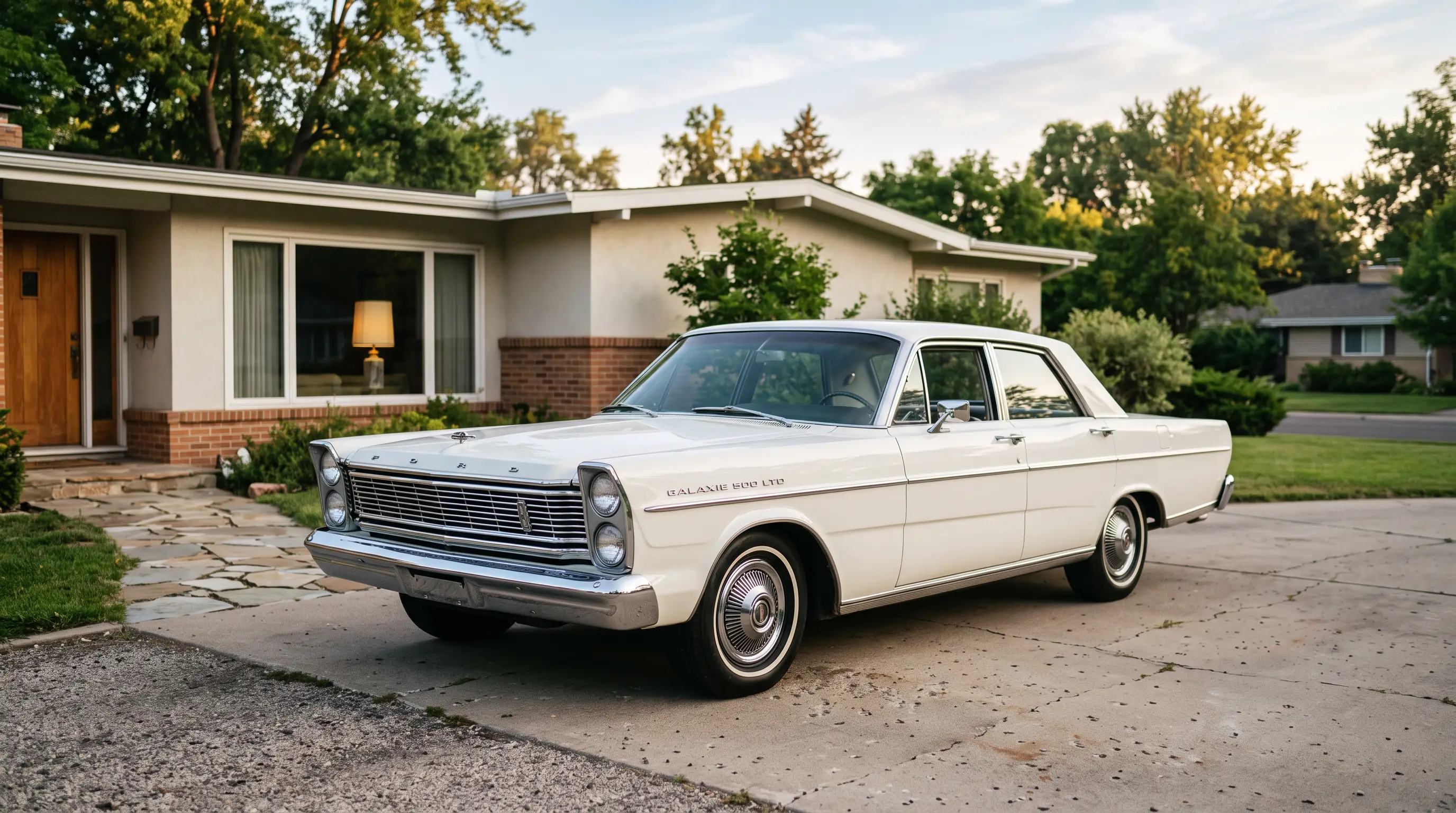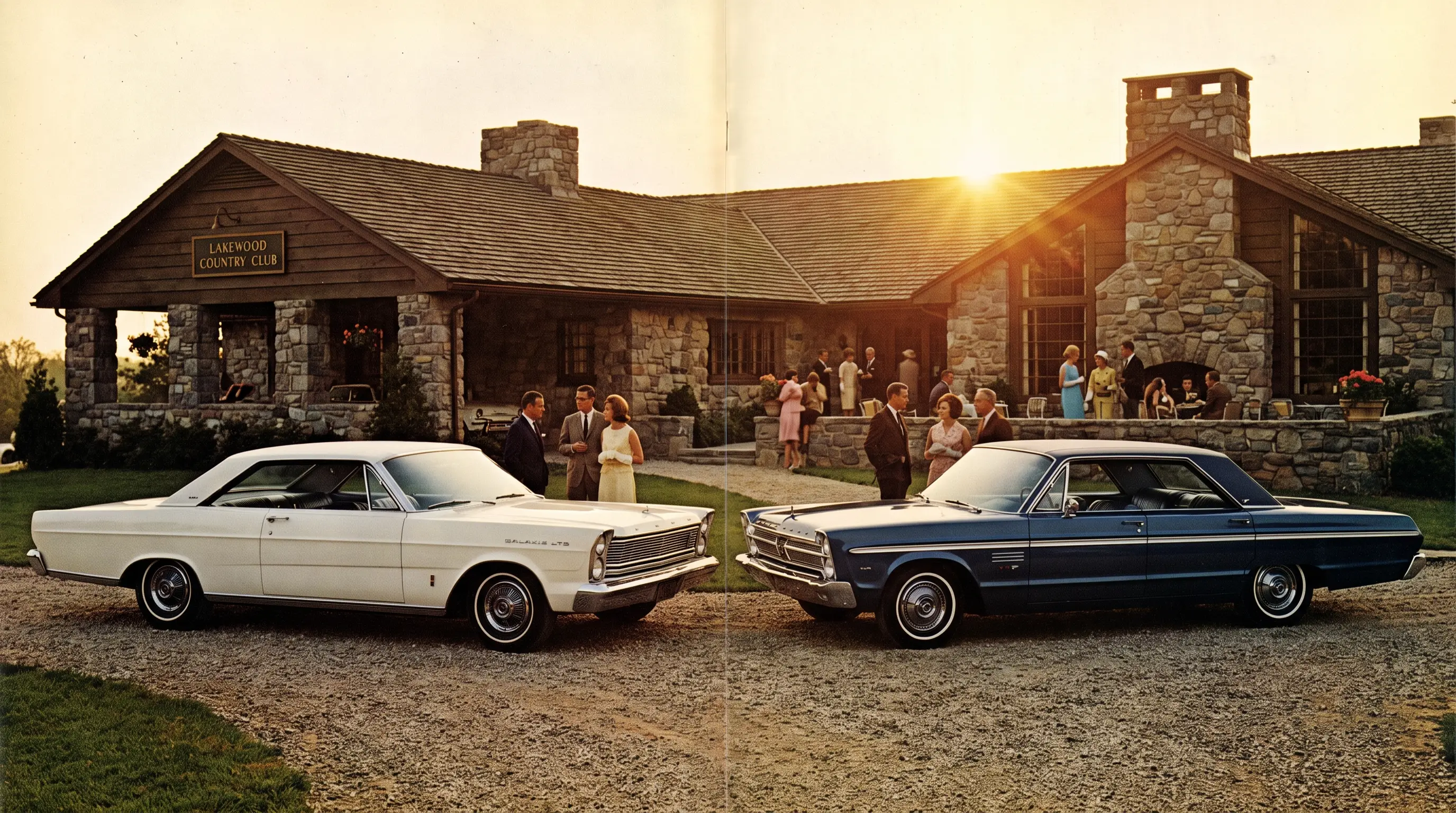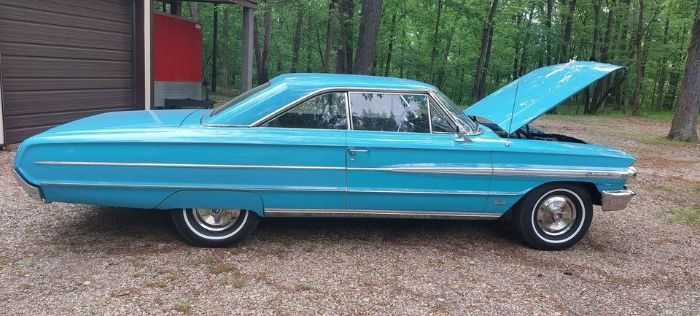
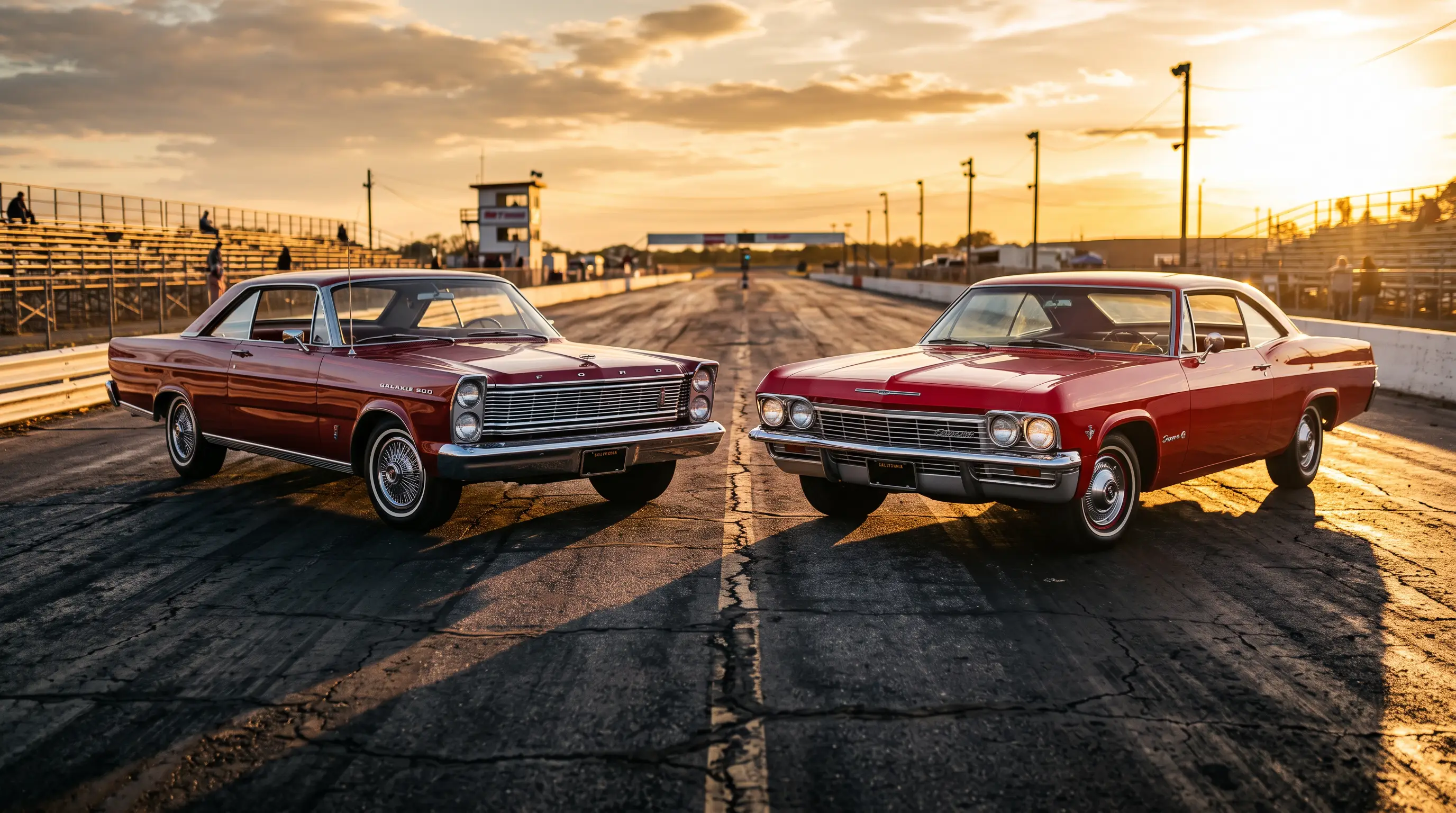
Ford's production records for 1965 tell a story the sales brochures never printed: the Galaxie was a genuinely good car in a year when Chevrolet built one of the best-selling cars in American history. The ford galaxie 1965 vs 1965 impala argument gets framed as a rout because Impala moved more than a million units that model year, a figure no single nameplate has matched since. But the record books miss what the two engineering departments were actually doing under the sheet metal, and that gap is worth closing.
Two companies, one design year
Ford and Chevrolet both went all-in on restyled full-size cars for 1965, and neither one was bluffing. Ford dropped the stacked quad headlights onto the Galaxie for the first time, a look the division would keep refining through the rest of the decade, and paired it with a new frame architecture the previous generation never had. Chevrolet answered with what enthusiasts still call the Coke-bottle Impala, a shape so resolved that GM barely touched the basic proportions for two more years. Both companies understood that 1965 was the year to spend real tooling money, and both did.
What separated the results was not effort. It was market position. Chevrolet walked into 1965 as the default full-size car for millions of American households, and a genuinely improved Impala on top of that reputation was close to unbeatable. Ford was still building back the trust it lost in the years before Total Performance, and a new Galaxie, however good, was fighting an uphill argument with buyers who already owned a Chevrolet.
The numbers ford would rather forget
Chevrolet built 1,046,514 Impalas for the 1965 model year, a figure that includes the sedans, hardtops, convertibles and wagons across the full Impala range, and it remains the highest single-year total any American nameplate has ever posted. Galaxie sales were strong by Ford's own standards, comfortably ahead of the prior year, but nowhere near Chevrolet's total. Ford's own annual reports treated the gap candidly rather than spinning it, which is unusual for a company selling cars to the public. The internal read was that Chevrolet had simply built the more broadly appealing shape, and Ford's engineers agreed even as its ad copy stayed upbeat.
None of that erased what Ford accomplished elsewhere in 1965. The Total Performance push into NASCAR was paying off on Sundays even as Impala outsold Galaxie on Mondays, and that split between racetrack credibility and showroom volume is one of the more interesting tensions in Ford's mid-1960s history.
Under the skin: perimeter frame vs x-frame heritage
The Galaxie's new-for-1965 chassis moved to a full perimeter frame with coil springs at all four corners, replacing the older setup and giving Ford a genuine ride and handling improvement to talk about. Chevrolet's full-size cars had already made a similar structural jump a few years earlier, so Impala buyers were not getting a comparable leap in 1965. That means the "restyled rivalry" of that model year was lopsided in an odd way. Ford had the bigger engineering story to tell, and Chevrolet had the bigger sales story to show for it.
Road testers of the period generally credited the new Galaxie chassis with a quieter, more composed ride than its predecessor, closing some of the refinement gap with Impala without erasing it. The whole picture of what changed under a 1965 Galaxie is really a chassis story dressed up as a styling story, and it gets lost whenever people reduce the comparison to sales charts alone.
Where galaxie actually won
Strip away raw volume and the comparison gets more interesting. Ford's 427 R-code cars gave Galaxie a genuine performance halo that Impala's SS trim, strong as it was, did not fully match on the NASCAR ovals that mattered so much to brand image in 1965. Collectors today also tend to rate the 1965 Galaxie's dashboard and instrument cluster as more driver-focused than the same-year Impala's, a small detail that barely registered with period buyers but matters to restorers chasing originality now.
There is also the matter of what actually survived. Impala production numbers were enormous, but survival rates for ordinary six-cylinder sedans were never high, and most surviving 1965 Impalas people see at shows are SS models that were cared for precisely because they were special from day one. Surviving 1965 Galaxies skew similarly toward the XL and LTD trims, so the cars that made it to today's market from either brand tell a narrower story than the sales charts from 1965 ever did.
"Everybody quotes the Impala's production total like it settles the argument. It settles the sales argument. It does not settle whether the Galaxie was the better-engineered car that year, and honestly, in a few ways, it was."
- Tom Ramirez
What the collector market says now
Six decades later, the sales gap between the two cars barely factors into what a 1965 Galaxie brings at auction versus a 1965 Impala. Condition, documentation, and drivetrain matter far more to today's buyers than which nameplate outsold the other in period. A well-kept 427 Galaxie XL commands real respect from people who know the platform, regardless of how many Impalas Chevrolet built that year. If a 1965 Galaxie in strong original condition interests you, it is worth looking at what is actually on the market rather than at a sales chart from 1965. Buyers who want to compare the two directly can shop classic Galaxie listings and judge the cars on their own terms.
Part of why the comparison still gets argued at shows and swap meets is that both companies were telling the truth about their own strengths in 1965. Chevrolet was telling the truth about mass appeal, about a shape that worked in a driveway in Ohio and a driveway in California without alienating either buyer. Ford was telling the truth about engineering ambition, about a company willing to redo a full-size chassis from the ground up rather than carry over a compromise for one more year. Sales charts reward the first kind of truth immediately. Collector markets, decades later, tend to reward the second kind more generously, which is part of why 427 Galaxies now draw attention out of proportion to how few Ford actually built compared to Chevrolet's SS cars.
It also helps to remember that 1965 buyers were not thinking about restoration values or matching numbers. They were thinking about payments, trade-in value, and whether the car looked right parked in front of the house. Impala won that argument decisively. The Galaxie's case had to wait fifty years to be made properly, and it is being made now by people restoring 427 cars to a standard nobody in 1965 would have paid for.
Two shapes, two legacies
The rivalry was real in 1965, and it stayed real for exactly one model year before both companies moved on to their next restyle. What lingers is not who sold more, but that both Ford and Chevrolet built full-size cars in 1965 that their respective engineering departments could be genuinely proud of, even if only one of them could brag about the production totals. Anyone weighing a 1965 Galaxie against a 1965 Impala today is really choosing between two different kinds of period authenticity, and both are worth respecting on their own terms.