
Pop the hood on any 1966 A-body intermediate and you're looking at the same basic idea from four different GM divisions: take a mid-size car nobody expected much from and stuff a big engine between the shock towers. I've had all four through my shop over the years, GTOs, Chevelle SS 396s, 4-4-2s, and Gran Sport Buicks, and they share more DNA than most owners want to admit. What separates them isn't the concept. It's the execution, and after enough time with a torque wrench in hand, you start to notice which division actually sweated the details.
Car Features
7 min read
GTO vs the A-Body Field: Chevelle, 442, and GS
A shop-floor comparison of GM's four A-body muscle cars, what each one does best and what actually fails after fifty years of ownership.
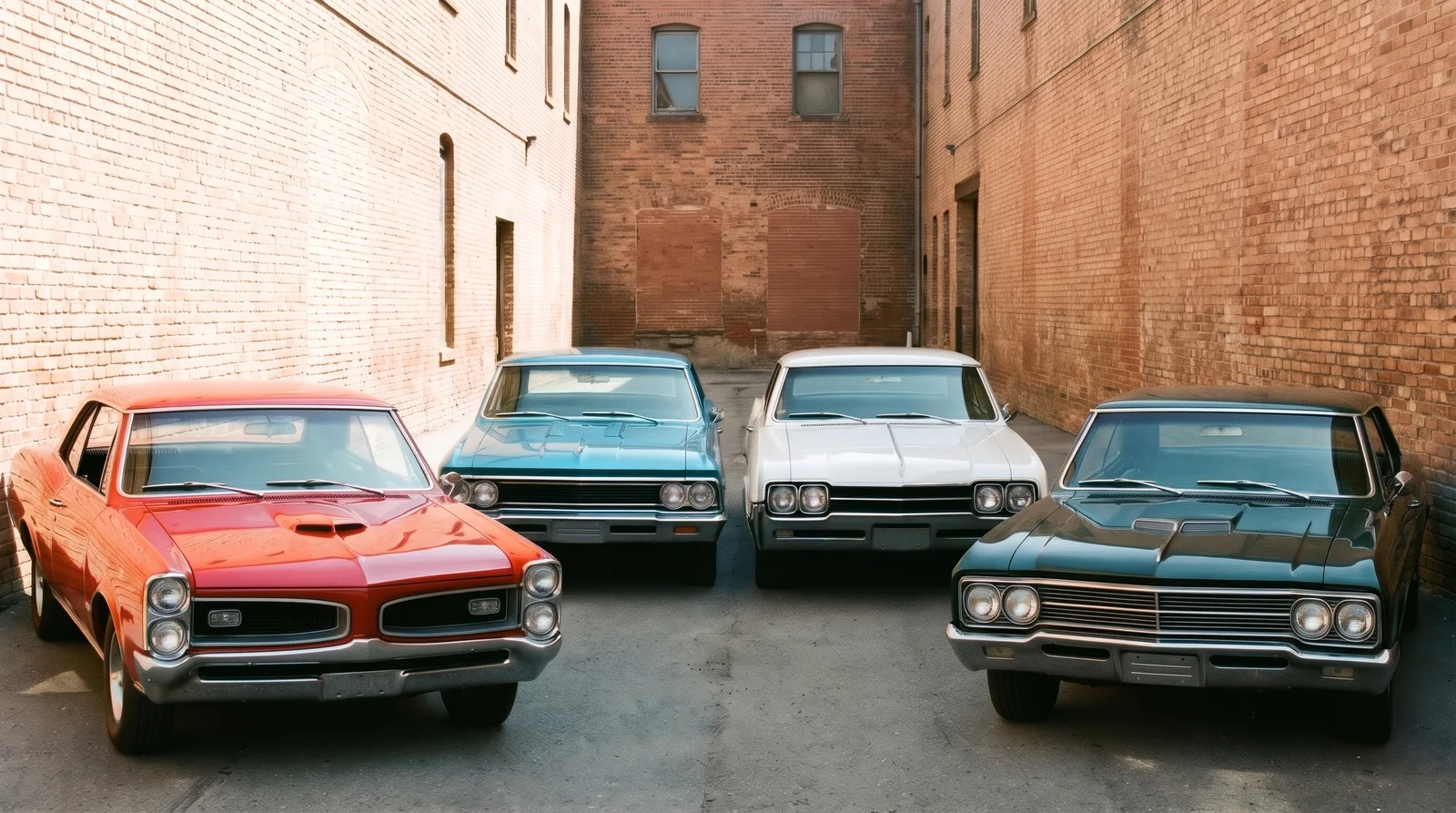
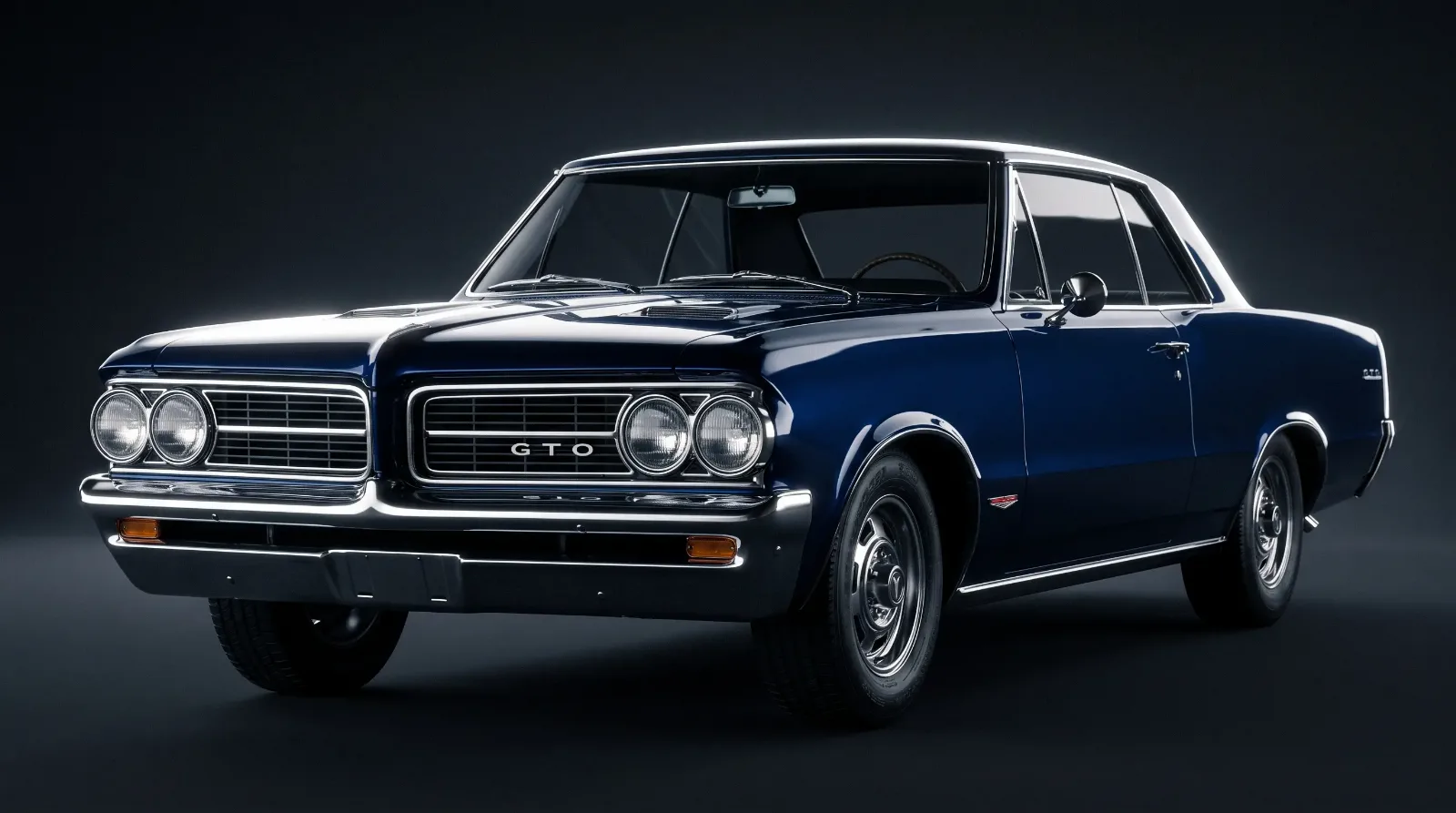
The GTO started this whole fight in 1964. Oldsmobile scrambled a response the same year with a limited-production 4-4-2 option, but it landed late in the model year with barely 3,000 built and a marketing push too thin to make a dent. Buick didn't field the Gran Sport until January 1965, and Chevrolet didn't back the Chevelle SS 396 with a real production run until 1966. That head start matters mechanically, not just historically, because Pontiac's engineers had an extra development cycle or two to sort out suspension geometry and driveline durability that Chevrolet and Buick were still working out on their own timelines.
The Pontiac 389 versus the Chevy 396
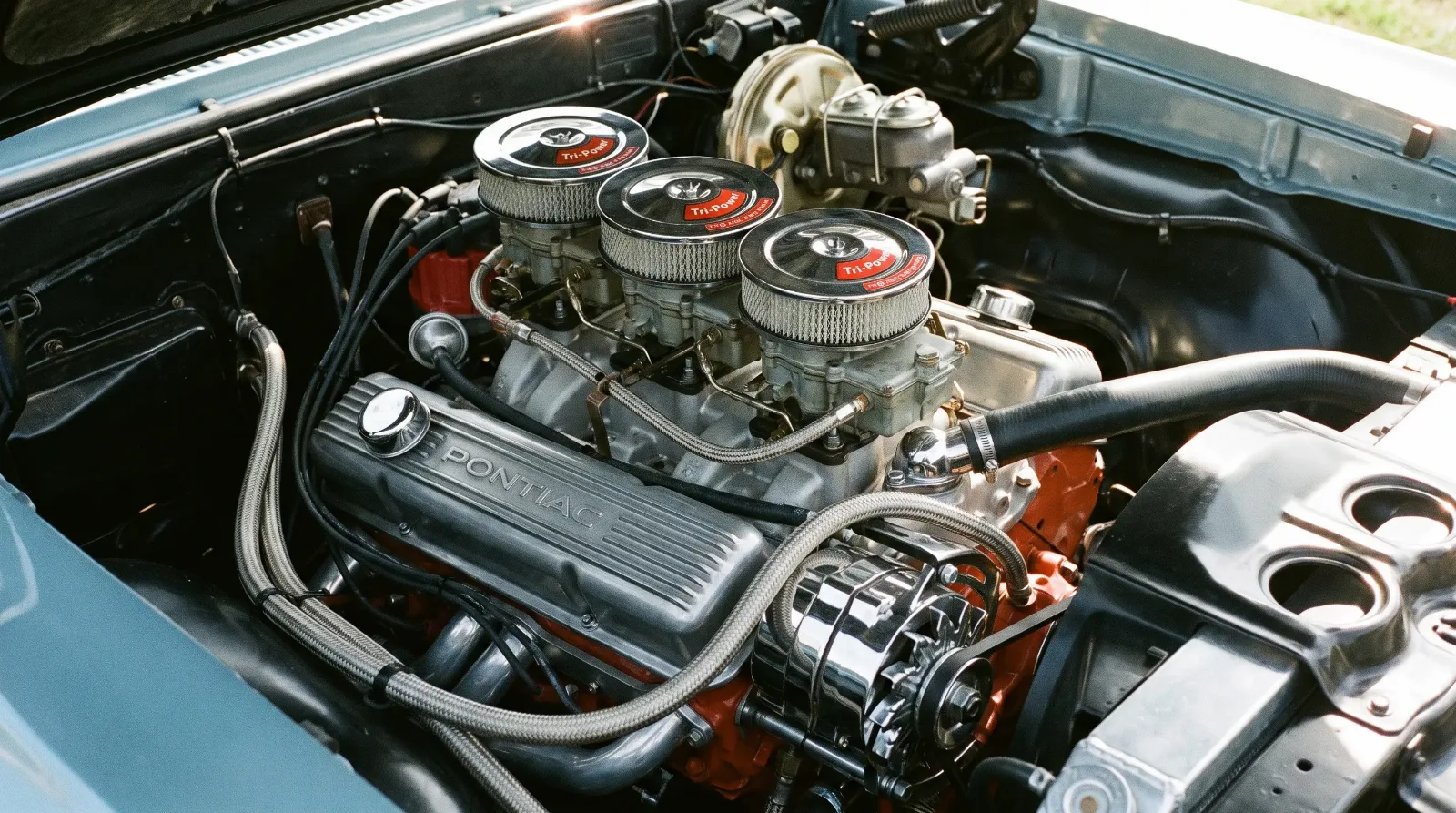
The GTO's 389 cubic inch V8, especially with the Tri-Power carburetor setup, made torque low in the rev range in a way that suited street driving better than a lot of owners expect from a "muscle" engine. It's not a screamer. It pulls hard from just off idle, which is exactly what you want when you're rolling away from a stoplight rather than holding it pinned at the strip. The Chevelle SS 396, once it arrived as a broad production option in 1966, brought a genuinely stronger high-rpm engine to the fight, and on paper the numbers land close together. The Tri-Power 389 made 360 hp at 5,200 rpm and 424 lb-ft of torque, and the mid-tier L34 396 matched it almost exactly at 360 hp with 420 lb-ft, while the solid-lifter L78 396 pulled ahead to 375 hp for buyers who wanted to rev it out. Close on paper, but the two engines feel different under your right foot in a way spec sheets never capture.
I've rebuilt both, and the Pontiac 389 is the more forgiving engine to live with long term. Parts availability, casting consistency, and the sheer number of these motors Pontiac built means a competent machine shop rarely struggles to source what you need. The Chevy 396 has more aftermarket support today simply because Chevrolet built so many small and big blocks across every model line, but that's a modern advantage, not a period one.
442 and Gran Sport: the quieter competitors
Oldsmobile's 4-4-2 gets overlooked by people who never drove one, and that's a mistake. The chassis tuning on a well-optioned 442 is arguably tighter than a stock GTO, with less body roll through a corner and a more planted feel at speed. Where the 442 loses ground is in raw street presence. Oldsmobile never built the marketing machine Pontiac did, and a 442 in traffic doesn't turn heads the way a GTO does, even when the Olds is the better-handling car underneath.
Buick's Gran Sport takes the opposite approach entirely. It's the quiet one of the group, more of a gentleman's muscle car with a smoother power delivery and less drama at wide-open throttle. Buick buyers of the era wanted performance without giving up the comfort they expected from the brand, and the GS delivers exactly that. It's the car I'd recommend to someone who wants period-correct muscle without the harshness some GTO and Chevelle owners actually enjoy.
| Model | Signature engine | Character on the street |
|---|---|---|
| Pontiac GTO | 389 cid V8, Tri-Power optional | Low-end torque, loudest brand image |
| Chevelle SS 396 | 396 cid V8 | Higher-revving, strongest modern parts support |
| Oldsmobile 4-4-2 | 400 cid V8 | Best-handling chassis of the group |
| Buick Gran Sport | 400/401 cid V8 | Smoothest, most comfortable daily driver |
You can go deeper on the full backstory behind the GTO legend, since a lot of what makes this rivalry interesting traces back to how Pontiac's original option package forced the rest of GM's divisions to respond. For a closer look at the platform these four cars actually shared, the A-body muscle war covers how close the internal competition really got.
What actually breaks, and what to check before you buy
Every one of these engines has known weak points that show up after fifty years of ownership, and knowing them saves you money at purchase time. The GTO's Tri-Power carb setup, when it's still original, needs a mechanic who actually understands progressive linkage, not a generic carb guy who's only worked on single four-barrels. The Chevelle's 396 is generally the most tolerant of amateur wrenching, which is part of why so many survive in decent mechanical shape today. The 442's Rocket engine wants clean oil and regular maintenance more than the others, since Oldsmobile's tolerances ran tighter from the factory. The Buick 400/401 nailhead-adjacent big blocks are the least understood by generalist shops, so budget for a specialist if something goes wrong.
"People ask me which of the four is the best muscle car and I tell them the same thing every time. Best for what. Best for bragging rights is the GTO. Best for a daily driver is the Buick. There's no single winner here, just four different answers to the same question Pontiac asked first."
Mike Sullivan
Buying advice from someone who's wrenched on all four
If you're actually shopping this segment rather than just arguing about it online, my advice changes depending on what you plan to do with the car. Buying to drive daily and enjoy without babying it, the Chevelle's parts network makes ownership the least stressful of the four, full stop. Buying for long-term value appreciation, the GTO still commands the strongest recognition and the deepest collector base, which tends to translate into steadier demand even when the broader market softens. Buying because you actually want the best-driving car in a corner, test drive a well-sorted 442 before you commit to anything else, because most buyers skip it entirely and miss out on genuinely superior chassis tuning.
Condition matters more than brand loyalty across all four cars at this point in their lives. A rough GTO with a tired drivetrain is a worse purchase than a clean, well-documented 442 or Gran Sport, regardless of what the badge on the fender says about resale value in the abstract. I tell every customer the same thing before they write a check: pay for documentation and mechanical condition first, pay for brand prestige second, and you'll end up happier five years down the road than someone who chased the name and inherited someone else's deferred maintenance.
Why the GTO still leads the conversation
None of this is meant to talk anyone out of a Chevelle, a 442, or a GS. They're all legitimate, well-engineered cars that deserve more respect than they sometimes get standing in the GTO's shadow. But the GTO leads the conversation for a reason beyond nostalgia. It was first, it sold in bigger numbers, and it built the cultural reputation that made the other three worth building in the first place. If you're shopping this segment and want the full Pontiac GTO history before you commit to a purchase, that's the right place to start. And if you're ready to see what's actually on the market right now, you can browse GTO listings and compare condition and pricing against everything discussed here. For how this rivalry played out against a lighter, cheaper competitor from Chrysler, read on.
Sources and notes
Related Reading
Have a
Pontiac GTO
for Sale?
Reach thousands of serious classic car collectors across the US.
Sell It Here →
Selling a classic? Here's how: sell my classic car
Are You a Classic Car Dealer?
List your full inventory and connect with targeted classic car buyers.
Join as a Dealer →
#A-body muscle cars
#Oldsmobile 442
#Pontiac GTO
#Chevelle SS 396
#buick gran sport
#gm intermediate muscle

About the author
Mike Sullivan
Detroit-area muscle car enthusiast and restoration specialist with three decades of hands-on experience working on American iron.
Related Listings - Pontiac GTO




Comments (1)
T
Tom Addison
1 month ago
Concur on the 442. Rode in one in '78, flatter through the turns than any GTO I knew. Over.