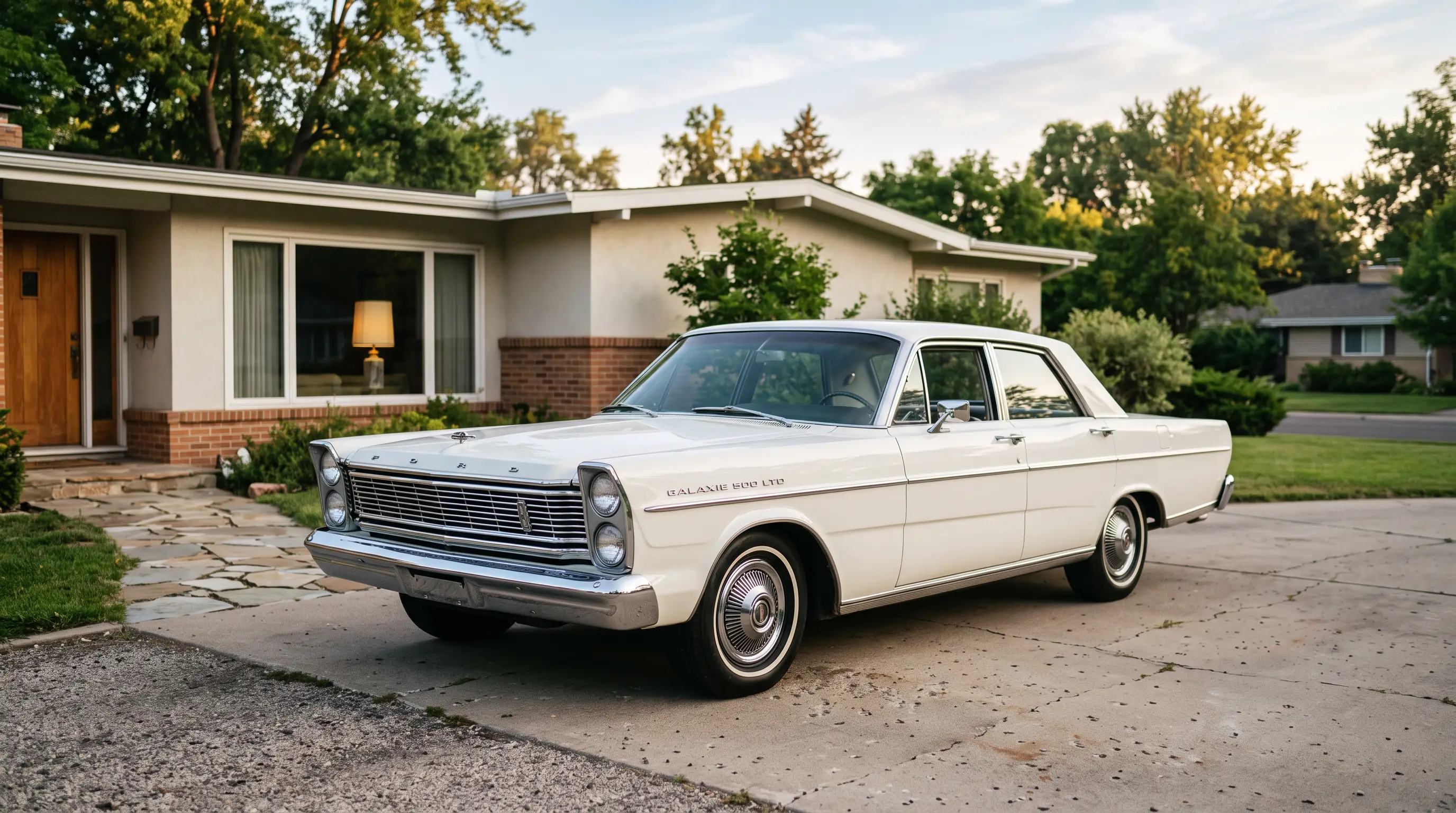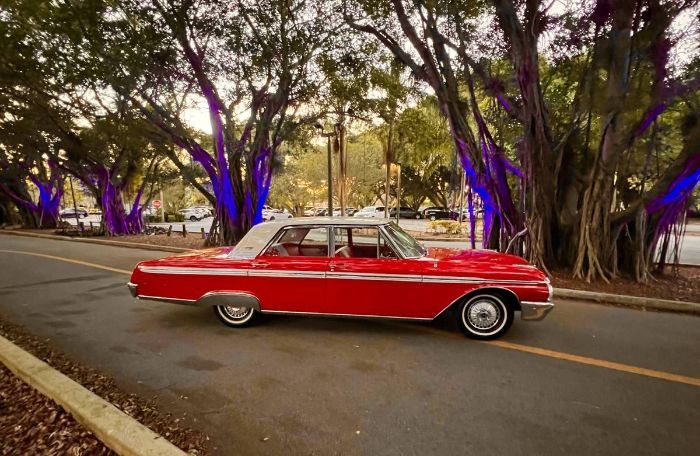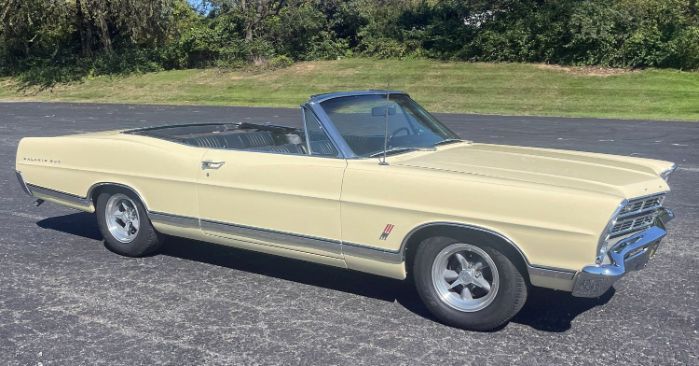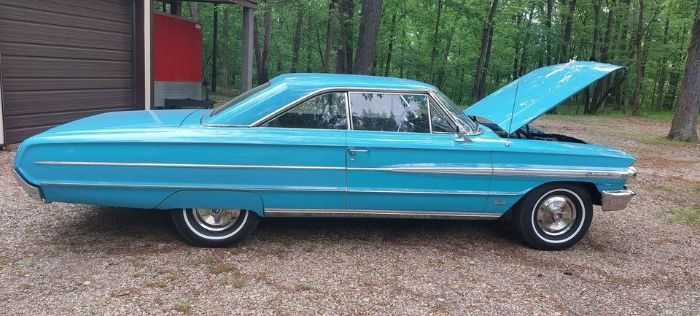
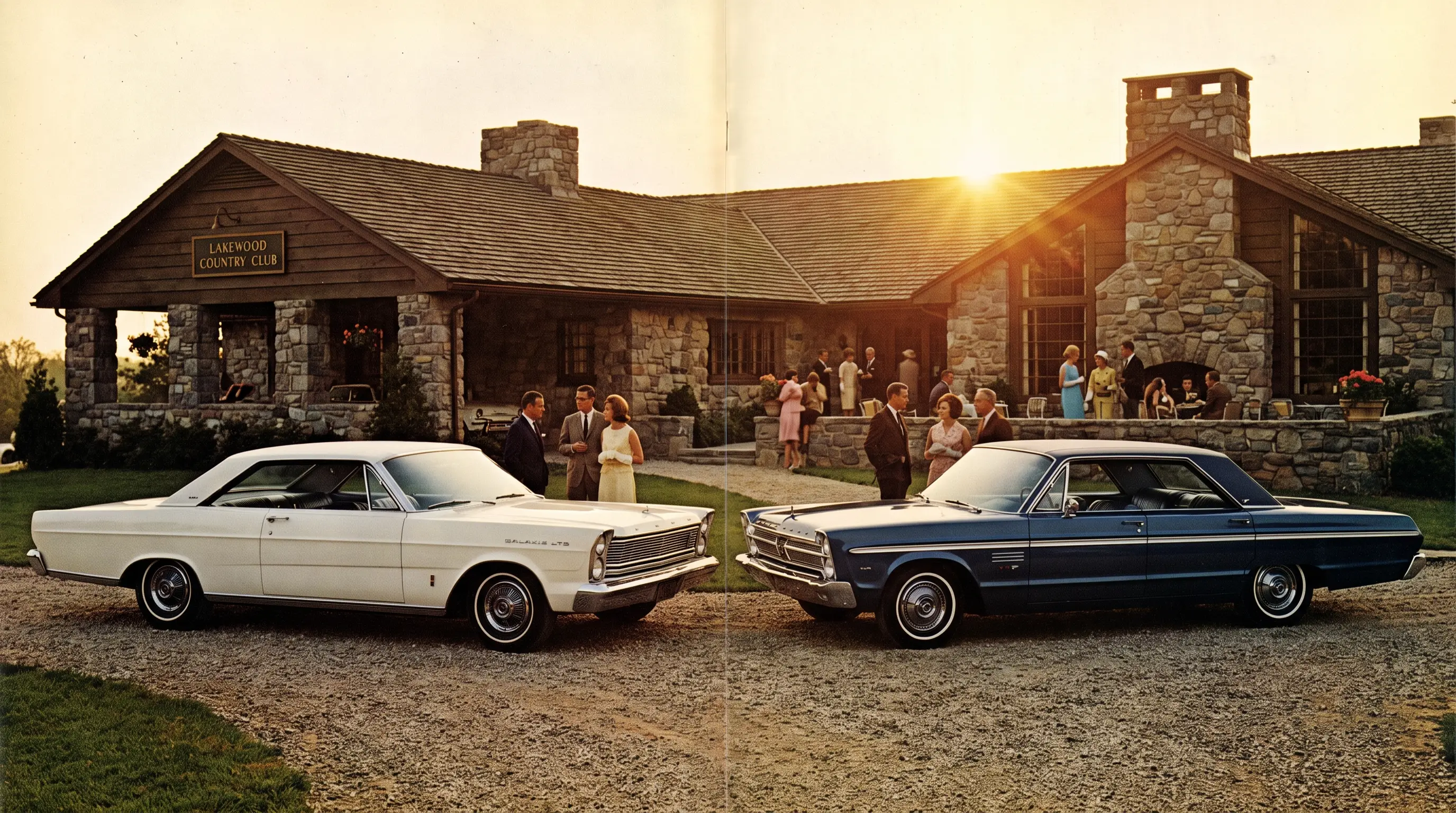
Put a 1965 Ford Galaxie LTD next to a Plymouth Fury VIP and you are looking at two Detroit answers to the same question: how do you sell a luxury car to a full-size buyer who cannot quite afford a Cadillac or a Lincoln. The ford galaxie 1965 vs 1965 fury vip comparison rarely comes up outside serious concours circles, but it is one of the more telling matchups of the mid-1960s, because both cars represent their makers trying something genuinely new rather than just adding chrome to an existing model.
Two brands chasing the same customer
Ford introduced the LTD as a top trim package for the Galaxie in 1965, and it worked well enough that the company spun it into its own model line within a couple of years. Plymouth's VIP trim, applied to the Fury, arrived for the 1966 model year, a year after the Galaxie LTD, as Chrysler's parallel attempt to give a full-size car near-luxury trappings without asking the buyer to switch to Chrysler or Imperial. Both companies had noticed the same gap in the market: buyers who wanted plush trim and a quiet cabin but were not ready to pay Cadillac money or commit to a Cadillac-sized car.
What makes the comparison interesting to a researcher is how differently the two companies executed the idea. Ford treated LTD almost as a standalone identity from the start, with unique badging and a dashboard treatment that set it apart from lesser Galaxies at a glance. Plymouth's VIP trim read more like an options package layered onto an existing Fury, tasteful but less committed to a distinct identity of its own.
What the LTD actually delivered
The 1965 Galaxie LTD added extra sound insulation, thicker seat padding, simulated walnut trim on the dashboard, and a noticeably quieter ride than a standard Galaxie 500. Ford's engineers were explicit in period literature that they were targeting Cadillac-level quiet, and while the LTD did not fully close that gap, it closed it further than most contemporaries expected from a Ford-badged car. The extra sound deadening alone represented a real engineering investment, not just a trim exercise, and reviewers of the period noticed the difference on the road.
Sales validated the approach almost immediately. The LTD outsold Ford's own internal projections in its first year on the market, and that success is part of why the 1965 ford galaxie story treats LTD as a turning point rather than a footnote. Ford had proven that full-size buyers would pay extra for hushed comfort even when the mechanicals underneath were shared with cheaper Galaxies.
Where the fury vip held its own
Plymouth's approach with the VIP trim leaned on genuinely comfortable seating and a well-finished interior that period road testers rated as competitive with Ford's LTD in day-to-day livability. What the VIP lacked was the marketing muscle Ford put behind LTD and the follow-through of turning the trim into its own persistent model identity. Plymouth buyers who wanted the VIP treatment got a well-appointed car, but the brand never built the same lasting cachet around it that Ford managed with LTD.
That difference in follow-through says as much about corporate priorities at Chrysler versus Ford in the mid-1960s as it does about the cars themselves. Ford was mid-swing through its Total Performance era, spending heavily on both racing image and showroom refinement at the same time, and LTD benefited from that broader push. Plymouth was still finding its footing as Chrysler's mainstream full-size brand, competing for internal resources against Dodge and Chrysler-badged cars.
| Trait | 1965 Galaxie LTD | Plymouth Fury VIP |
|---|---|---|
| Positioning | Standalone premium trim, later its own model | Top trim package on existing Fury |
| Interior focus | Extra insulation, padded seats, simulated wood | Upgraded upholstery and trim |
| Long-term identity | Became a decades-long Ford nameplate | Absorbed back into Fury lineup over time |
"People assume a top trim package is just an options list. The LTD proves otherwise. Ford treated it like a new car wearing a Galaxie badge, and buyers noticed the difference immediately."
- Sarah Whitfield
Documenting a genuine 1965 LTD today
For concours judges and serious collectors, telling a genuine 1965 LTD from a well-dressed Galaxie 500 comes down to details that are easy to miss: the specific dashboard trim, the correct badging placement, and interior fabric or vinyl codes that match factory build sheets. Cars that have lost their original interior are far harder to authenticate properly, which is part of why documentation matters so much more with LTD examples than with base Galaxies. The full story of how LTD fits into Ford's broader full-size lineup helps explain why these details carry so much weight with judges today.
Plymouth VIP cars face a similar authentication challenge, complicated further by lower survival numbers overall. Fewer VIP-trimmed Furys were built relative to Galaxie LTDs, and fewer still survive in unmolested condition, which makes a documented example genuinely rare rather than merely uncommon.
Why the comparison still matters
Neither car won a decisive sales victory over the other, but the LTD's longer institutional life inside Ford makes it the more historically significant of the two experiments. The Fury VIP represents a road Chrysler chose not to fully commit to, while Ford's bet on LTD reshaped how the entire industry thought about dressing up a full-size sedan. Within a few years, General Motors and Chrysler were both running their own versions of the same trick, softer trim packages layered over volume sedans and marketed as near-luxury alternatives. Ford got there first with a name that stuck, and that head start matters more to automotive historians than any single year's sales figures.
If you are weighing an LTD against a comparable Chrysler product, it is worth looking closely at surviving examples rather than assuming the badge tells the whole story. A car wearing LTD script but missing the correct interior trim and insulation package is really just a well-dressed Galaxie 500, and pricing should reflect that distinction. The same caution applies in reverse to Fury VIP cars carrying trim that does not match factory documentation. Concours judging exists precisely because badges can be added or removed long after a car leaves the factory, and only the underlying build details tell the truth.
For anyone researching a specific example, factory build sheets, dealer invoices, and period photographs remain the most reliable way to confirm what a car actually was when it left the assembly line. Absent that paperwork, a careful visual inspection of trim details, seat construction, and dashboard materials can still narrow down authenticity, though it will never fully replace documentation. Patience matters here more than enthusiasm. A quick eyeball at a swap meet will miss the small inconsistencies that separate a genuine LTD from a re-badged Galaxie 500, and those inconsistencies are exactly what a careful researcher is trained to catch. Buyers interested in seeing what has actually survived can look at classic Galaxies on the market and compare documented LTD examples directly.