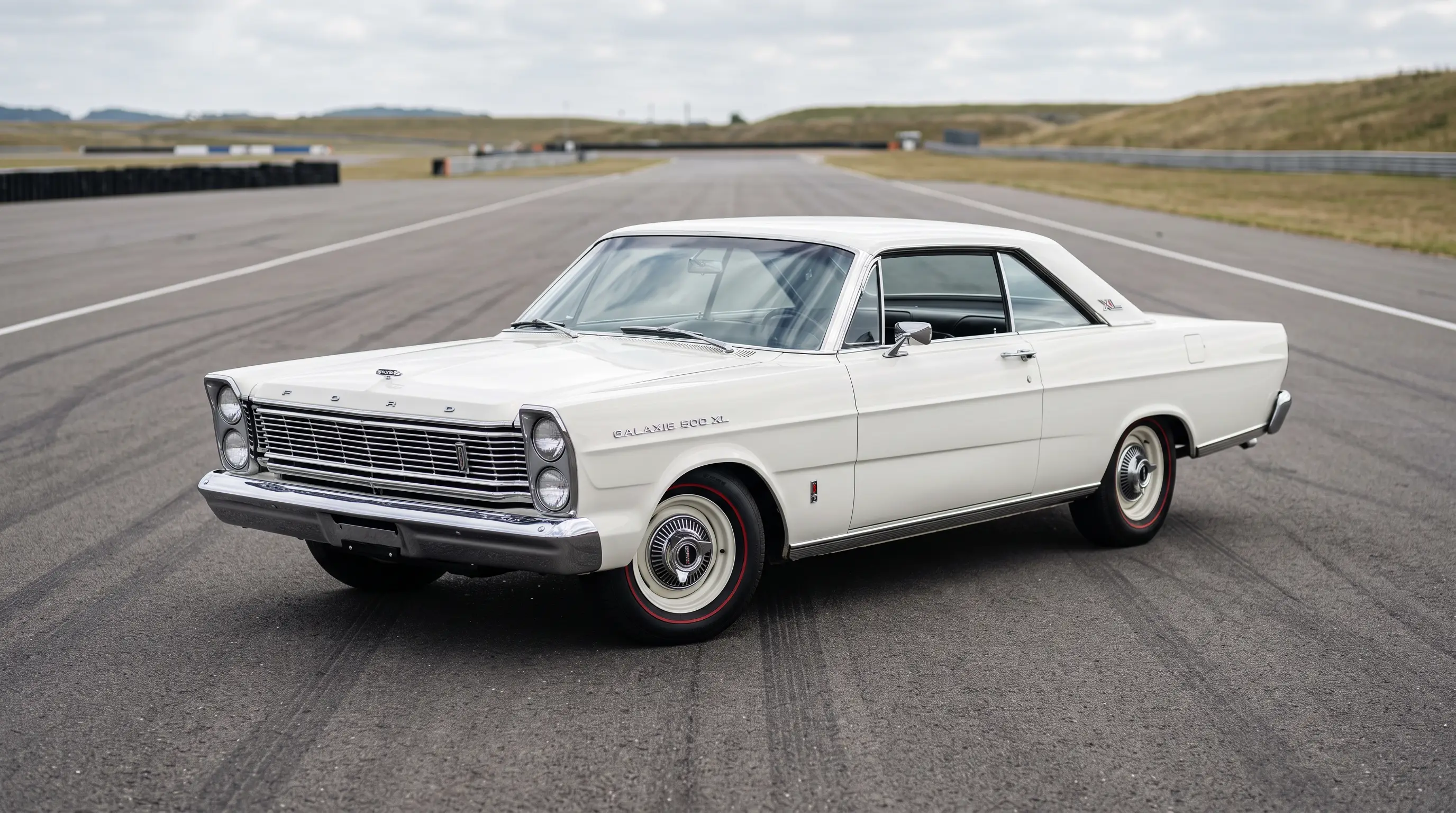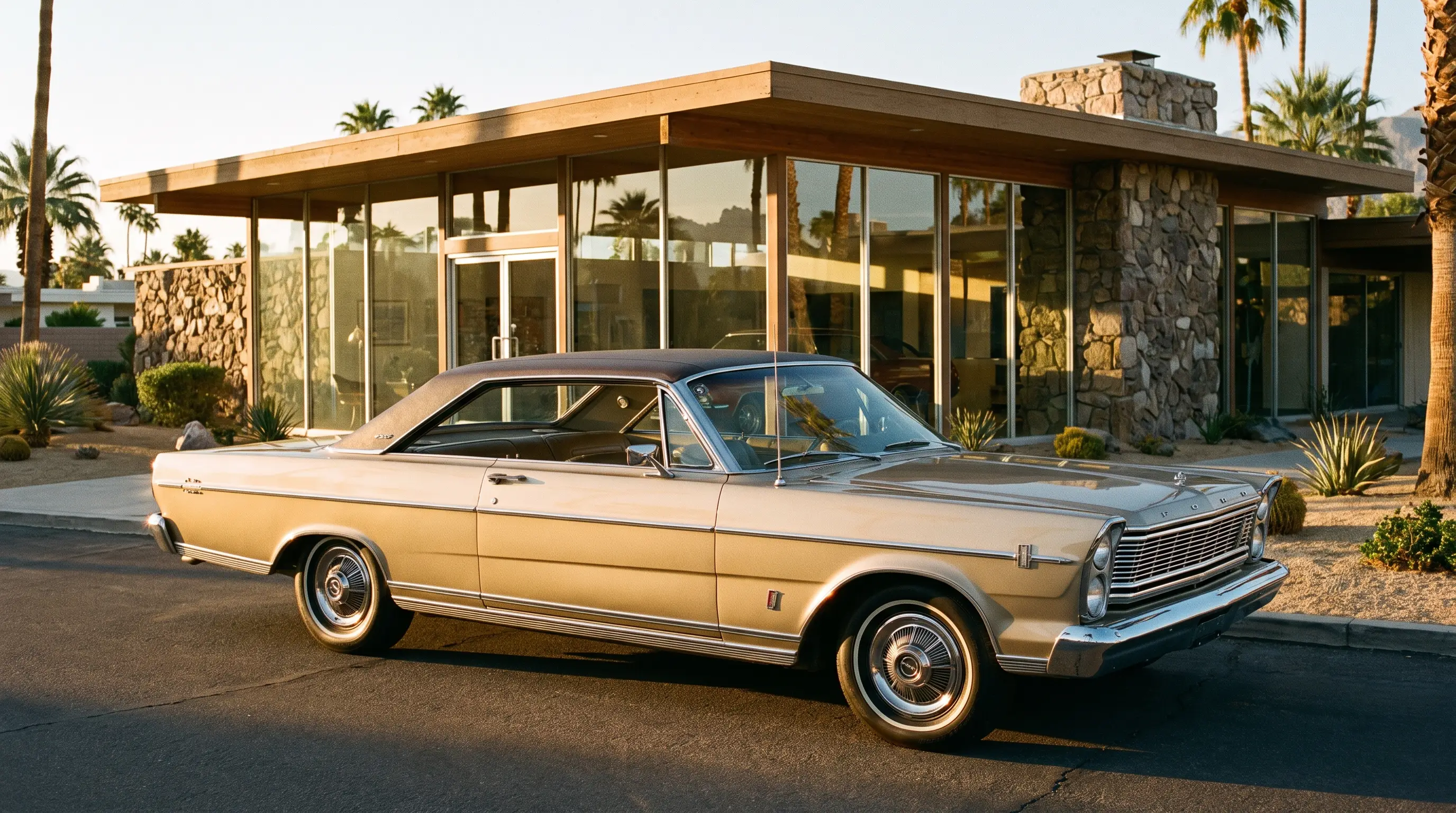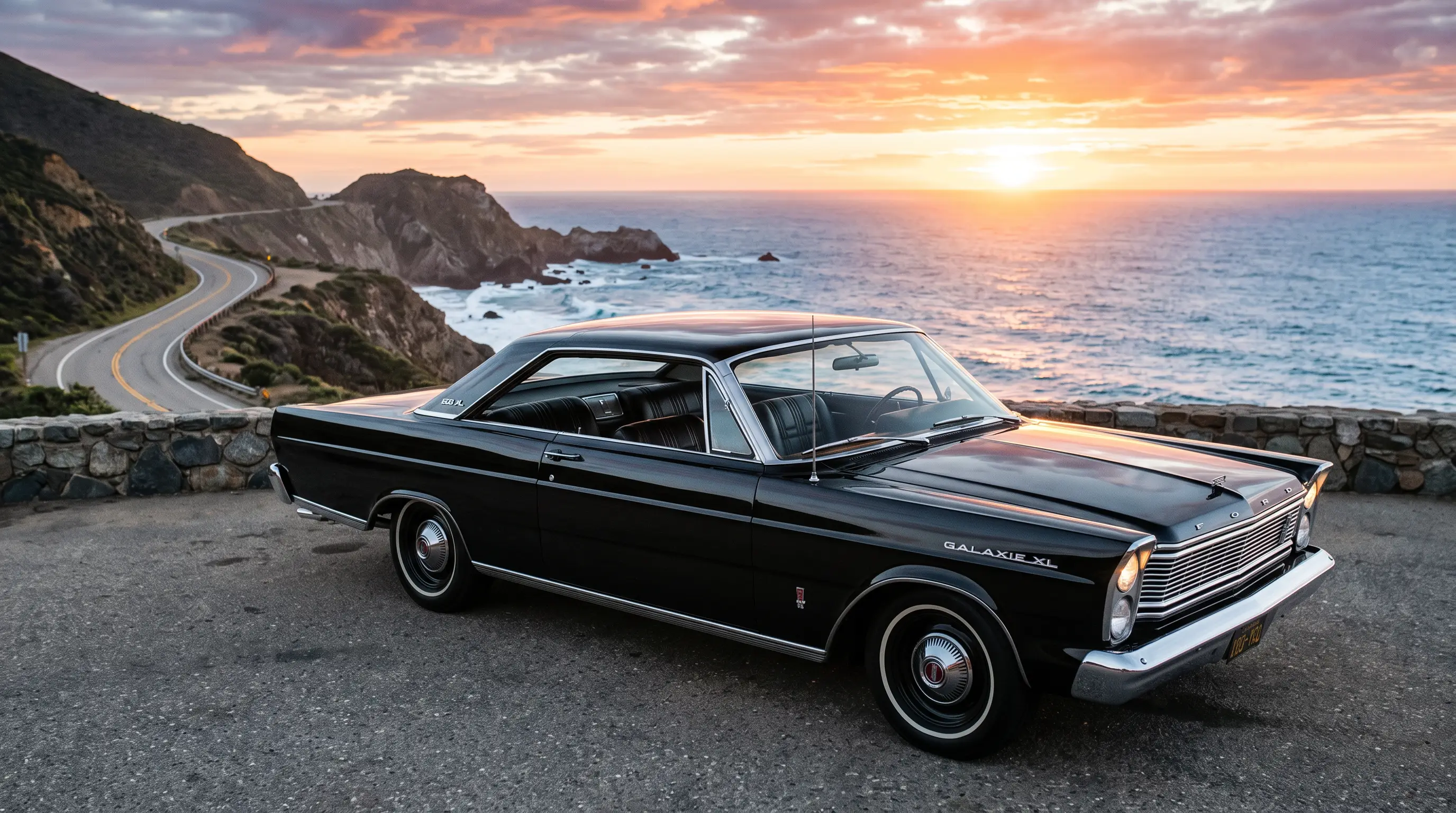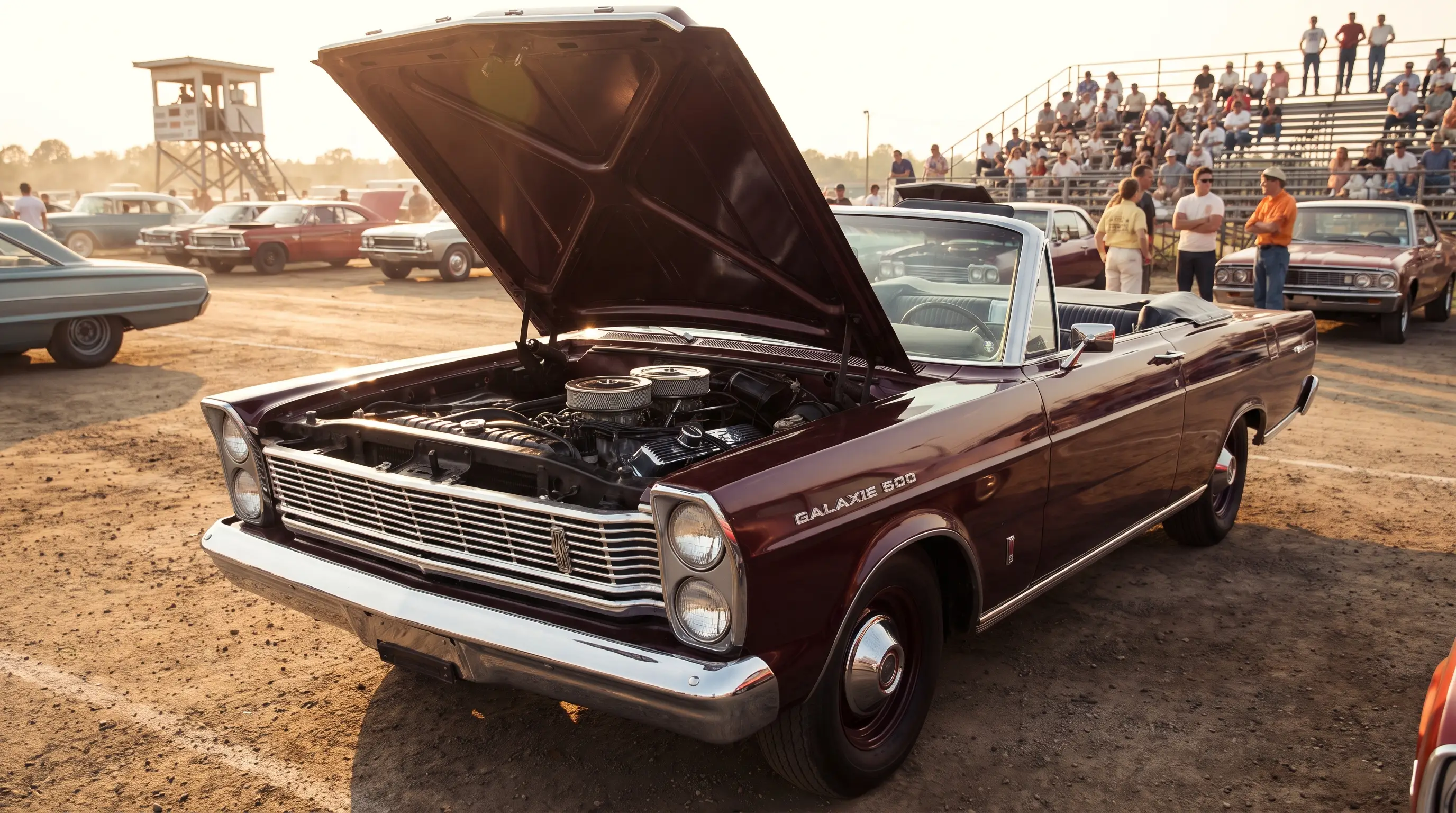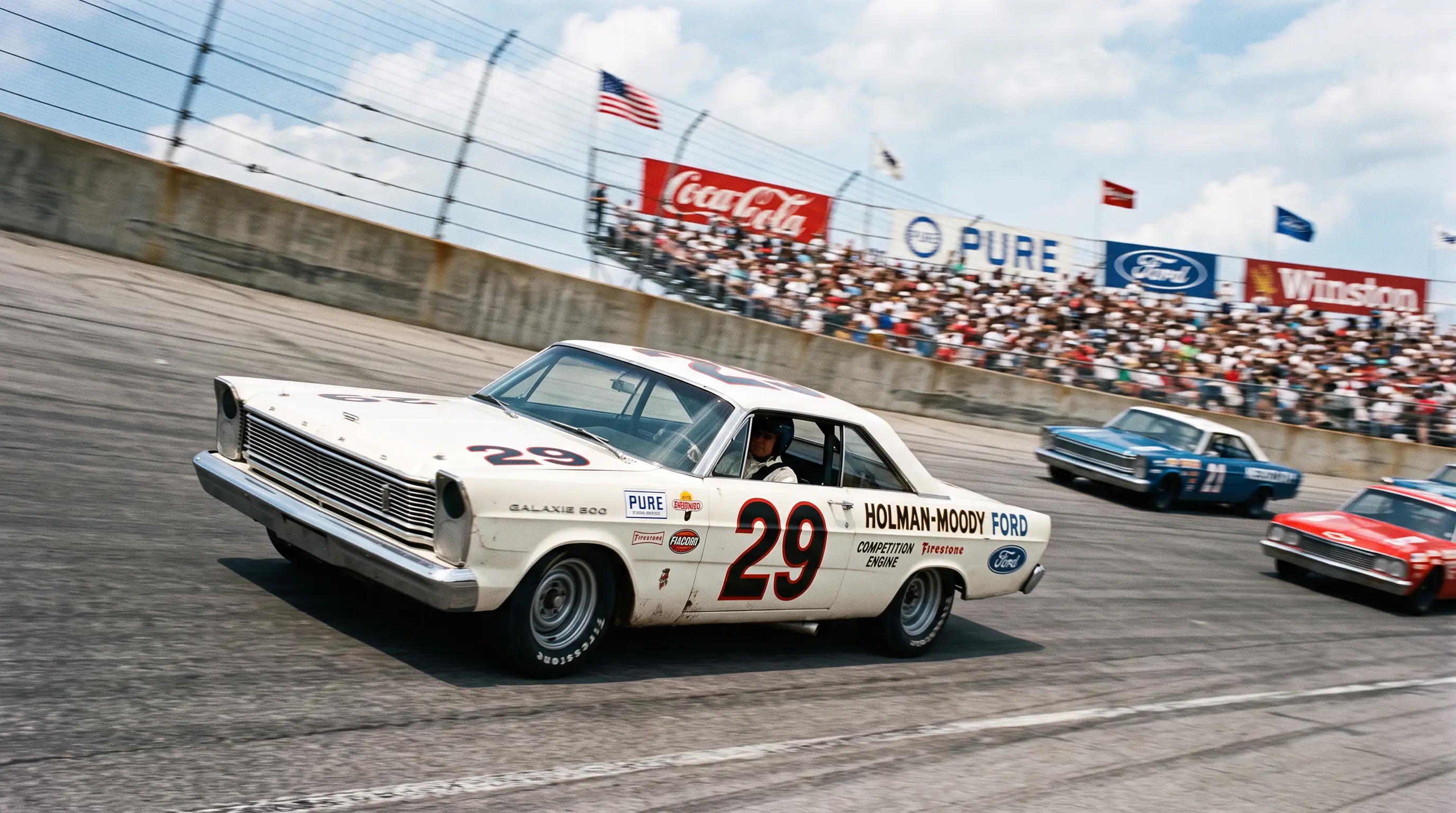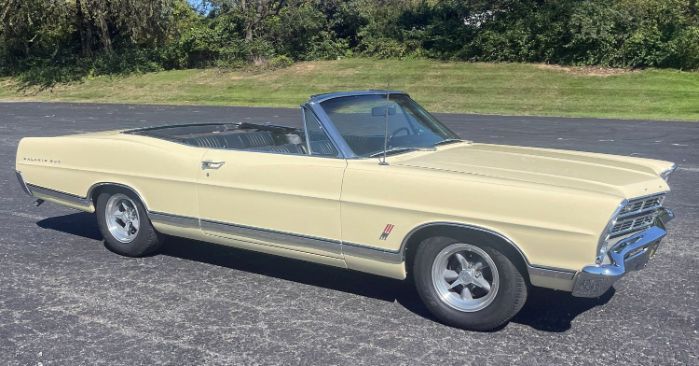
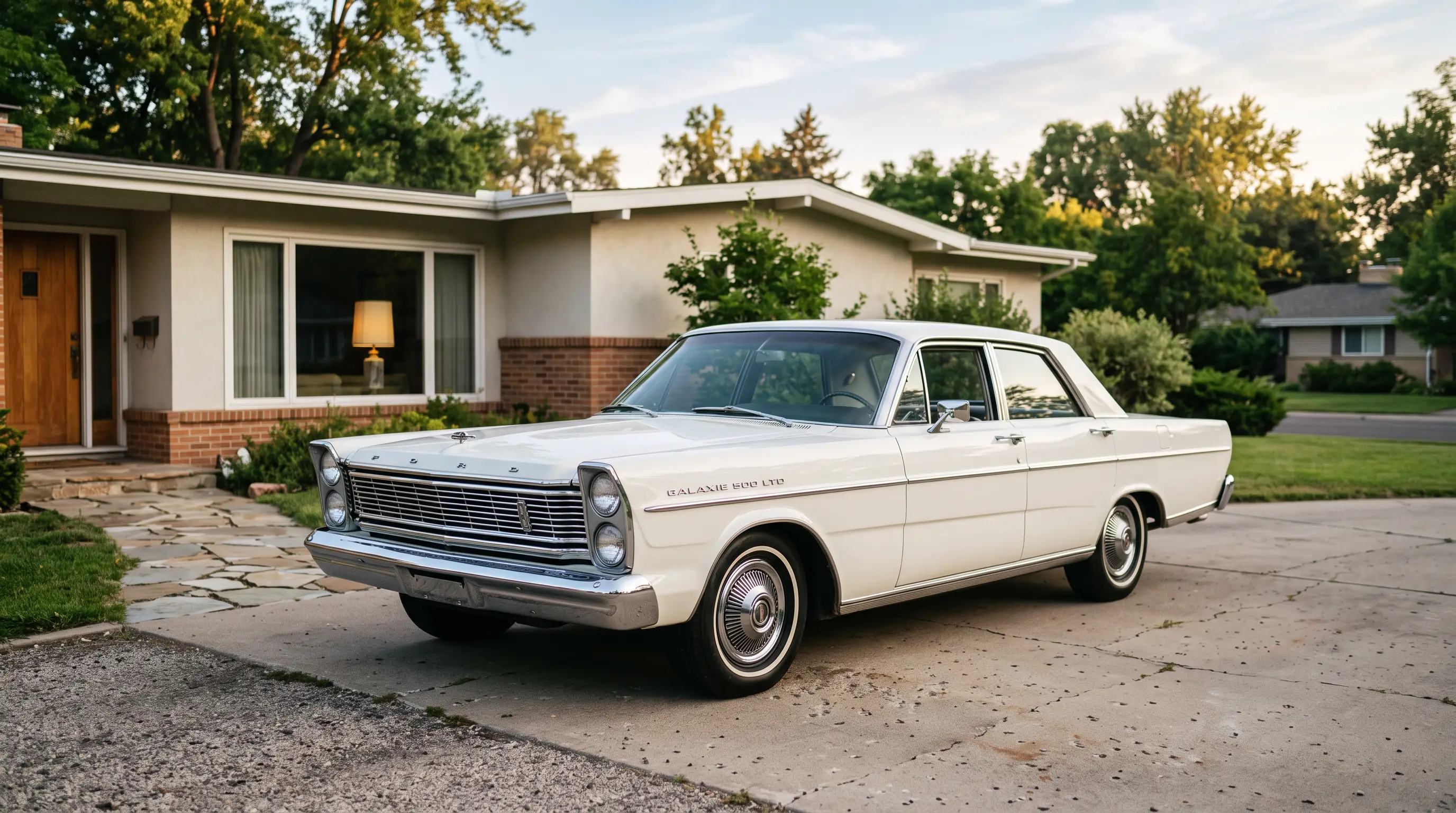
Walk up to a 1965 Ford Galaxie and the first thing your eye lands on is the face. Ford stacked the headlights vertically that year, two round lamps on each corner sitting one over the other, and it turned a big, friendly family car into something that looked squared-off and serious. I have spent enough hours with a block and a sanding board on old Ford sheetmetal to tell you the 1965 restyle was more than a nose job. It was the year the whole full-size car got tighter, straighter, and better built, and it set the look that would carry Ford through the rest of the 1960s.
I care about how a car is put together, and the 1965 Ford Galaxie is one of those years where the factory clearly cared too. Let me walk through it the way I would if we were standing in the shop looking at one on the lift.
The restyle that reset the full-size Ford
The 1963 and 1964 Galaxies were handsome cars, but they still carried a little of the rounded, softer feeling left over from the start of the decade. For 1965 Ford threw that out and started with hard, knife-edge lines. The body sides went slab-flat, the corners went crisp, and the whole car looked like it had been drawn with a straightedge. From a bodyman's chair, that matters, because flat panels with sharp character lines are honest. There is nowhere for a bad repair to hide, and there is nowhere for the factory to fake a shape. The 1965 is what it is, all the way down.
This was a full reskin on a new platform, not a facelift. Ford invested real money in the tooling, and you can feel it in the way the doors hang and the way the panels meet. If you want the long view of how the model arrived at this point, the the ford galaxie story covers the earlier chapters that led here.
Stacked headlights, up close
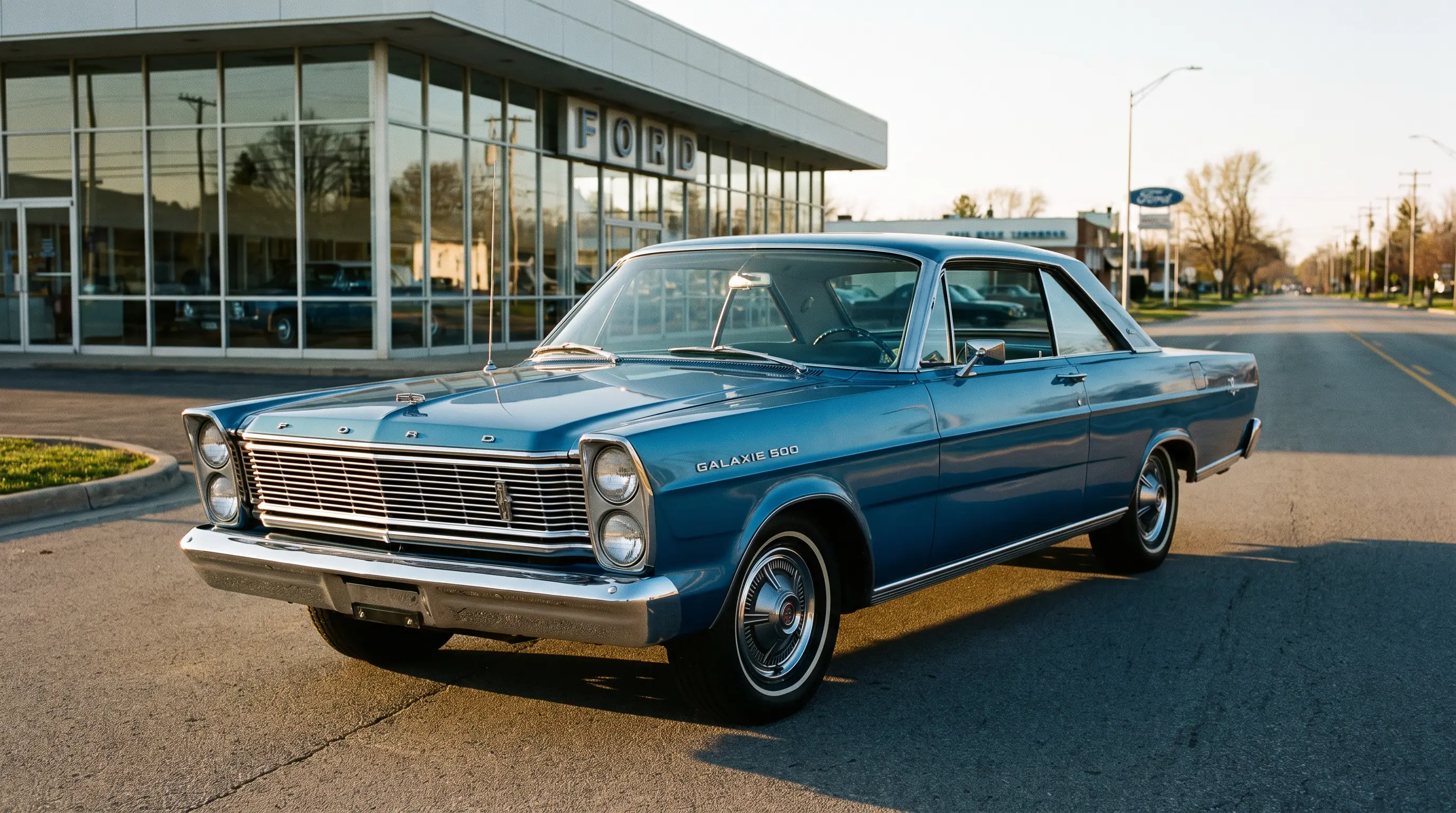
The stacked headlights are the signature, so they deserve a closer look. Ford ran the vertical layout from 1965 through 1968, and 1965 was the first year, which is why enthusiasts treat this face as the start of a distinct styling era. The lamps sit in squared buckets flanking a wide grille, and the front fenders were drawn to frame them with a strong horizontal brow across the top.
From the inside of the trade, the interesting part is how that front clip goes together. The fender-to-hood and fender-to-grille gaps are what make or break the look, and on a clean original 1965 they are tight and even. A lot of the cars you see now have had the nose apart at some point, and a builder can read the quality of that work in ten seconds by sighting down the gaps. When somebody has done it right, the face looks like it did on the showroom floor. When somebody has hurried it, the stacked lamps sit crooked and the whole car looks wrong even if you cannot say why. That front end rewards patience and punishes shortcuts.
The chassis change nobody sees
Here is the part that never shows up in a photo. For 1965 Ford put a new frame under the Galaxie and switched the rear suspension to coil springs with a three-link setup, replacing the old leaf springs. The car rode noticeably better, quieter and more settled, and Ford leaned hard on that improvement in its advertising. From under the car, the coil rear is a cleaner, more modern arrangement, and it is one of the reasons a 1965 feels less like a truck and more like a proper touring car when you drive one.
I bring this up because people buy these cars for the face and forget that the bones changed too. The 1965 is not just a prettier 1964. It is a different platform, and if you have driven both back to back on a rough road you know it immediately. The ride quality Ford was bragging about was real engineering, not just copywriter enthusiasm.
| Detail | 1965 Ford Galaxie |
|---|---|
| Signature styling | Vertically stacked dual headlights |
| New for the year | Fresh platform, coil-spring three-link rear |
| Top luxury trim | Galaxie 500 LTD (new for 1965) |
| Engine range | Six, plus 289, 352, and 390 V8s, with a dual-quad 427 rated at 425 hp available on the 500 XL |
| Popular bodies | Two-door hardtop, four-door hardtop, convertible |
| Styling era | First of the 1965 to 1968 stacked-lamp look |
The LTD revolution
The biggest news of 1965 was not under the hood, it was in the showroom. Ford introduced the LTD as the top trim of the Galaxie 500, and it changed the ceiling on what a full-size Ford could be. The LTD brought a quieter cabin, richer materials, and a level of interior finish that had belonged to more expensive brands. Ford ran a famous campaign claiming the LTD was quieter than a Rolls-Royce at speed, and whether or not you buy the exact test, the point landed. A Ford could now be a genuine luxury car.
For a guy who works on these cars, the LTD interior is a real step up in the way it is assembled. The trim panels, the seat construction, the sound insulation, all of it is a grade above the standard Galaxie, and a well-preserved LTD cabin is a pleasure to sit in even now. The LTD grew into its own model line within a couple of years, but 1965 is where the badge started, riding on the back of the Galaxie 500. Buyers who want the sporting side of the same era should read the next chapter on the bucket-seat XL.
Engines and the everyday Galaxie
Most 1965 Galaxies left the factory as sensible cars, and I think that is part of the charm. The bread-and-butter versions came with a six or a mild V8, moved a family around in comfort, and asked very little in return. The V8 range ran up through the 352 and the 390, and the big 427 was available for buyers who wanted the full performance treatment, though those cars are rare and were built for a different purpose.
From a builder's standpoint, the everyday 390 cars are the sweet spot. The engine is durable, parts are plentiful, and it has enough torque to shove that slab-sided body down the road with authority. You do not need the exotic hardware to enjoy a 1965. A clean 390 hardtop with the coil-spring ride and the stacked-lamp face is a complete car exactly as Ford built it, and I would rather have an honest one of those than a tired car wearing a badge it did not earn.
Colors and trim that made the year
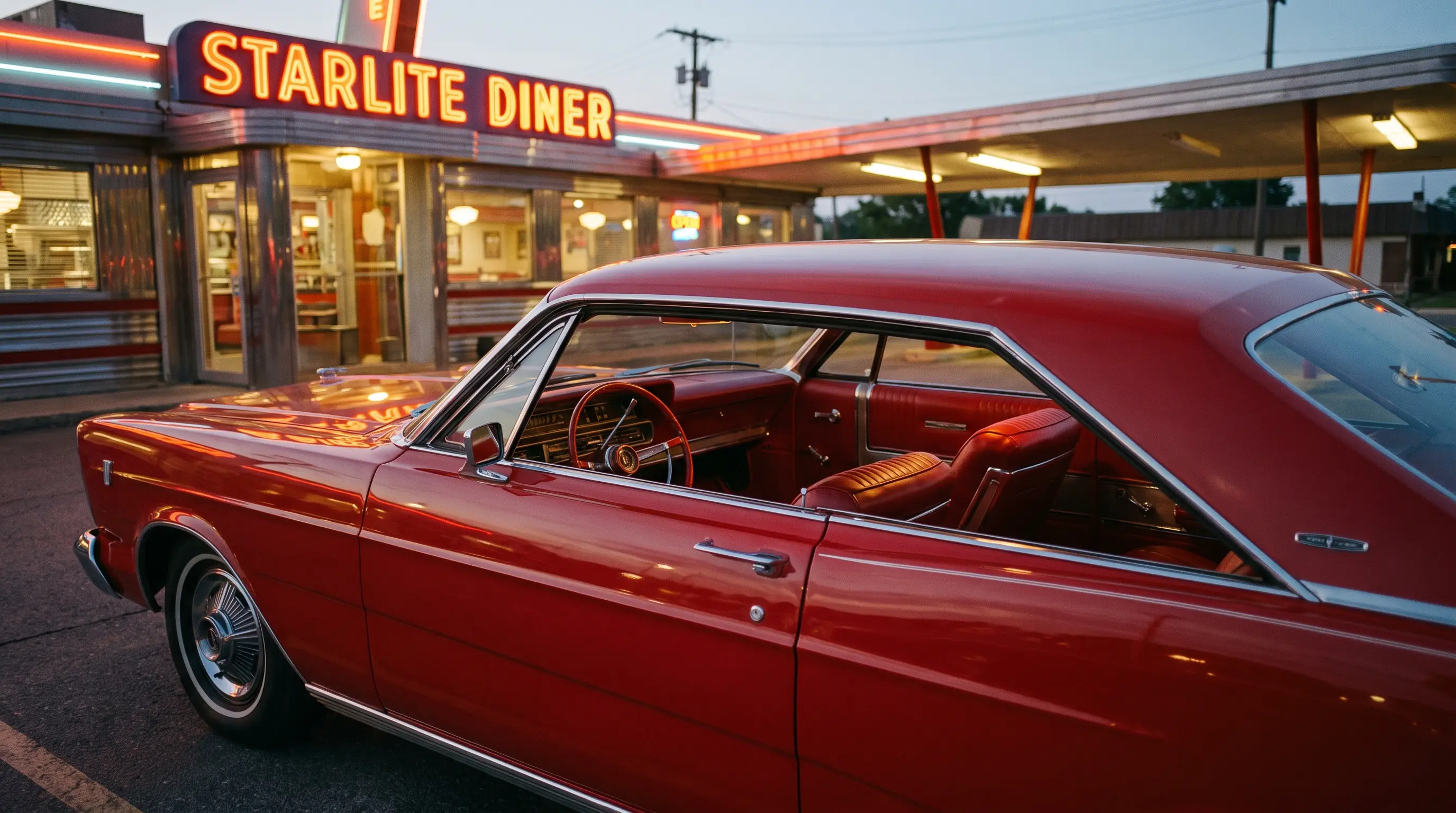
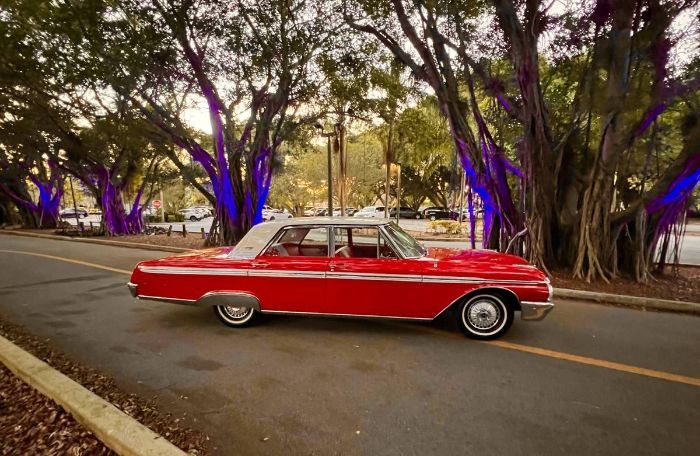
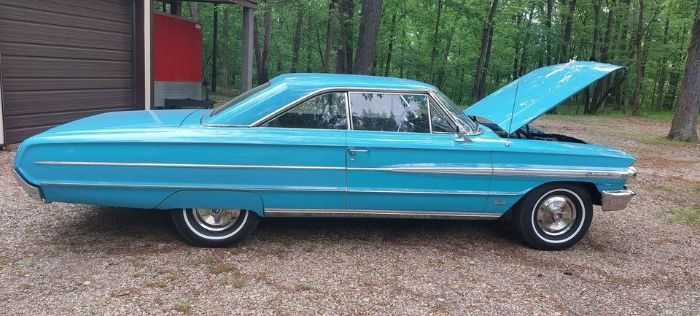
Paint is my world, so I have to say a word about how a 1965 wears color, because it changes the whole car. The flat, upright sides that make the body so honest also make it a canvas. A dark car, something like a deep maroon or a black cherry, reads formal and heavy and suits the LTD character perfectly, and the light plays down those long straight panels in a way you just do not get on a curvier body. A bright car, a red or a light blue over a white top, snaps the stacked-lamp face into focus and looks every bit the mid-decade optimist Ford was selling.
The two-tone treatments and the vinyl roofs that came into fashion around this time work on the 1965 too, and a period-correct color combination is worth respecting rather than repainting into something trendy. I have seen too many honest cars lose their character to a fashionable modern color that never came near a 1965 order sheet. When the paint, the top, and the interior all agree with what the factory offered that year, the car has a rightness to it that no amount of shine can fake. Color on these cars is not decoration, it is documentation, and a builder who understands that treats the original combination as something to preserve.
Building and buying a 1965 today
When one of these comes into the shop, the first thing I check is whether the car is honest. The 1965 has become popular enough that people dress plain cars up to look like something rarer, and I have strong opinions about that. A period-correct Galaxie, built the way the factory built it or restored to that standard, is worth real money and real respect. A poseur, a base car with a spray-bomb repaint and a pile of reproduction badges, is just a plain car with extra lies on it. The flat panels and sharp lines that make the 1965 so clean also make bad bodywork easy to spot once you know how to look.
My advice is the same one I give on every full-size Ford of this era. Buy the straightest, most original body you can afford, because sheetmetal and correct trim are the expensive part to put right, and let the mechanical bits follow. A solid 1965 with tight panel gaps and an untouched interior is a far better starting point than a shiny car hiding filler under fresh paint. Anyone ready to start hunting can see how the survivors are trading and find classic Galaxies on the market in a range of conditions.
"The stacked headlights get all the attention, but the 1965 is really a bodyman's car. Flat panels, sharp lines, nowhere to hide. Build one right and it looks like a million bucks. Cut a corner and everybody can see it."
- Jim Vasquez
The 1965 Ford Galaxie is the year everything came together for the big Ford. New face, new bones, a new luxury badge, and a body that a builder can admire for its honesty. It is a car that looks its best when someone has done the work properly, and that, more than any spec sheet, is why I keep coming back to it.