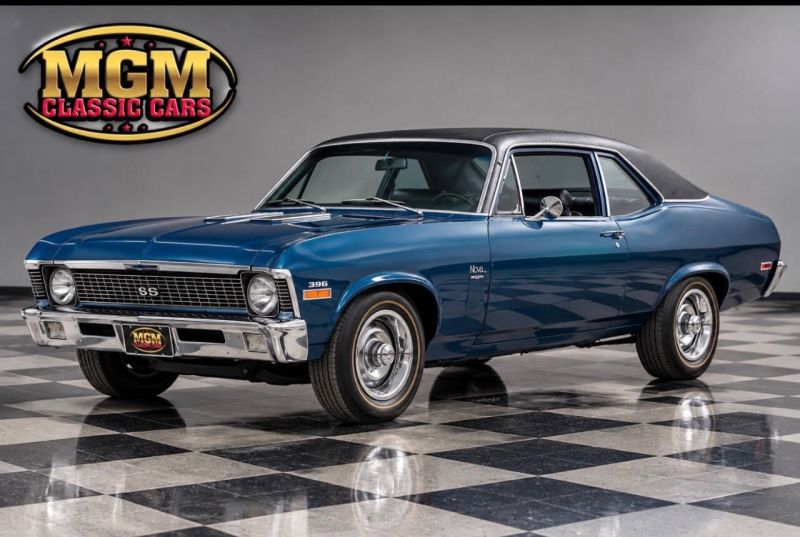
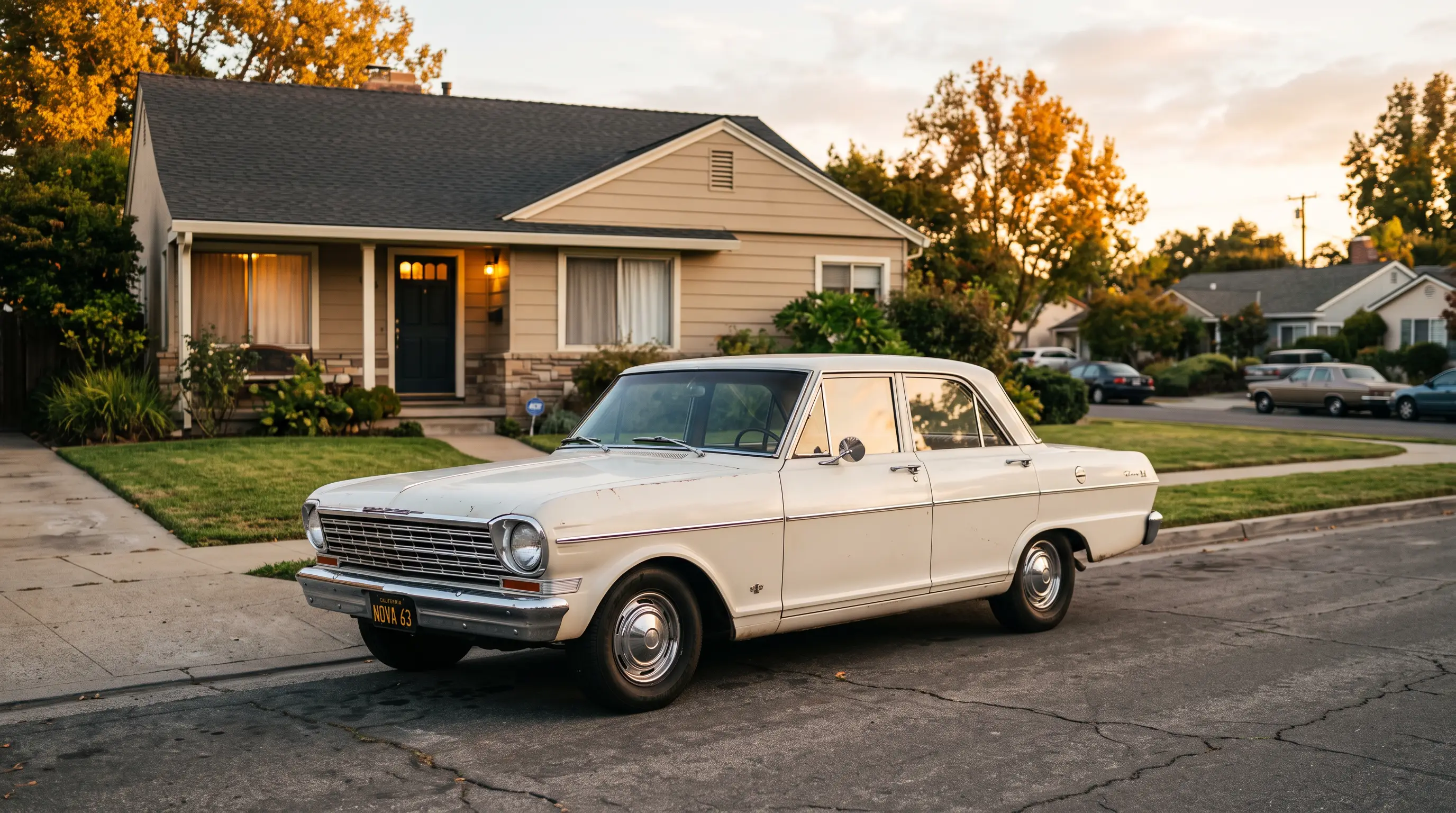
My grandfather kept a photograph in his wallet for forty years, a faded square of a young man leaning against a 1968 Chevrolet Nova outside a diner that doesn't exist anymore. He never said much about it. Just that it was his first car, bought used, paid off in installments he could barely afford at the time. When he passed, the photograph went into a shoebox with the rest of what mattered to him. The Nova itself was long gone, sold decades before I was born, but somehow that unremarkable little compact had earned a permanent place in the story of his life. It's a small thing. It's also, I think, exactly why the Nova's legacy matters more than its numbers ever will.
A car built to be forgettable, and not
Chevrolet never intended the Nova to be sentimental. It arrived in 1962 as the Chevy II, a plain, practical compact meant to answer the import cars quietly eating into GM's market share, nothing more ambitious than that. It was reliable. It was cheap to fix. It was, by every design intention, meant to disappear into driveways across the country without leaving much of a mark. And yet across six decades, three body generations, and a genuinely startling range of transformations, the Nova became something its own engineers likely never imagined: a car people remember by name, decades after selling it.
Part of that comes from timing. The Nova existed at exactly the moment when a first car, a first job, a first real independence, was affordable to an enormous swath of working American families. It wasn't aspirational. It was attainable, and attainable cars end up woven into more personal history than the ones people only ever admired from a distance.
I think about that difference often when I read collector forums where people describe the cars they wanted as teenagers versus the cars they actually drove. The wanted car stays a fantasy, polished and unblemished by real use. The driven car accumulates scratches, breakdowns, long trips, borrowed keys handed to a nervous younger sibling. It becomes a character in a life rather than a picture on a bedroom wall, and the Nova, more than almost any other Chevrolet of its era, was the car people actually drove.
The quiet ordinariness that made it matter
There's a particular kind of car that becomes beloved precisely because it asked so little of the people who owned it. The Nova rarely broke your heart with repair bills. It rarely embarrassed you by failing to start. For a generation of first-time car owners, that reliability translated into something less mechanical and more emotional: trust. A car you can trust becomes a car you remember fondly, long after you've forgotten the ones that impressed you but let you down on a cold morning.
What the SS years added to the story
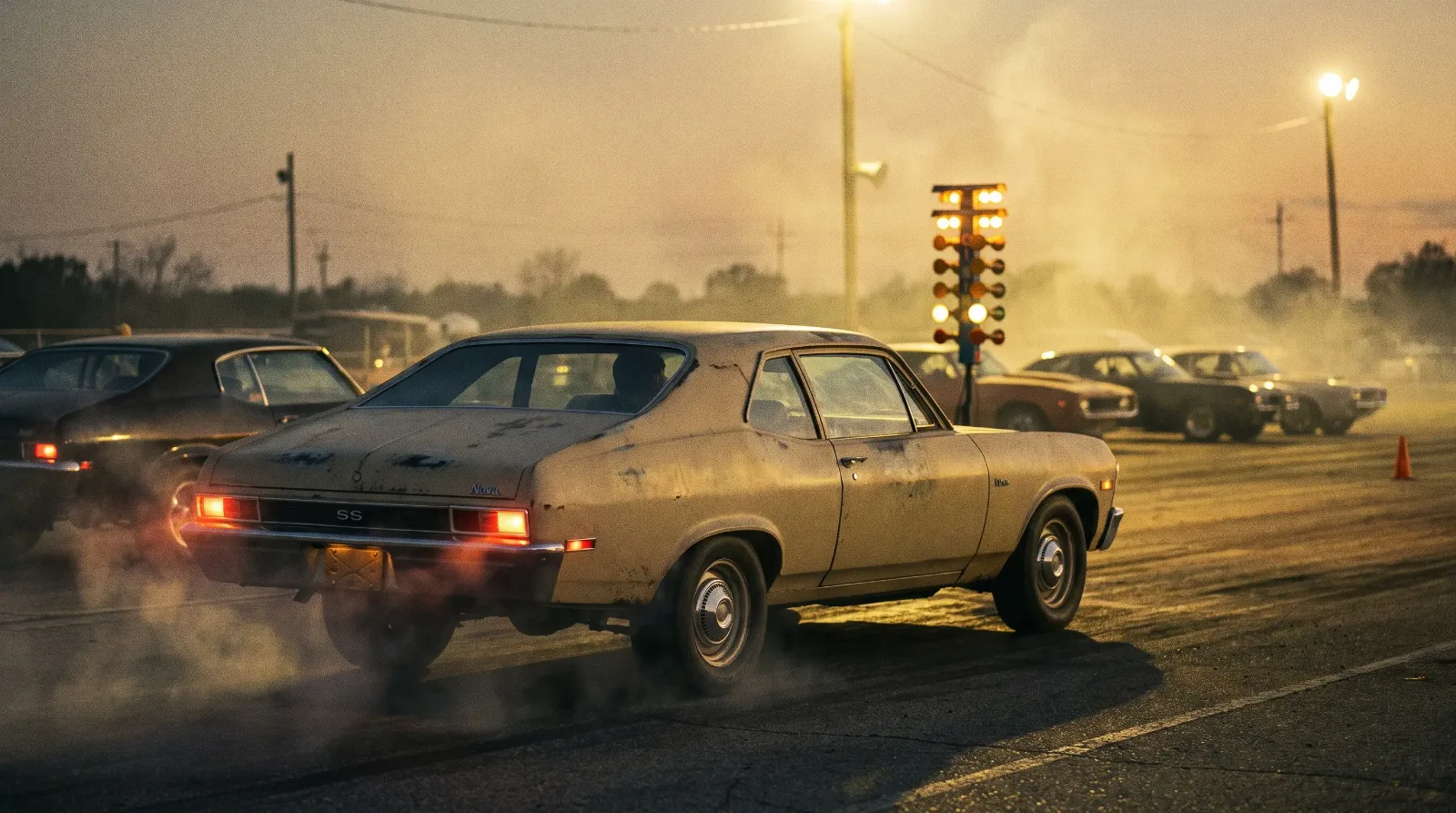
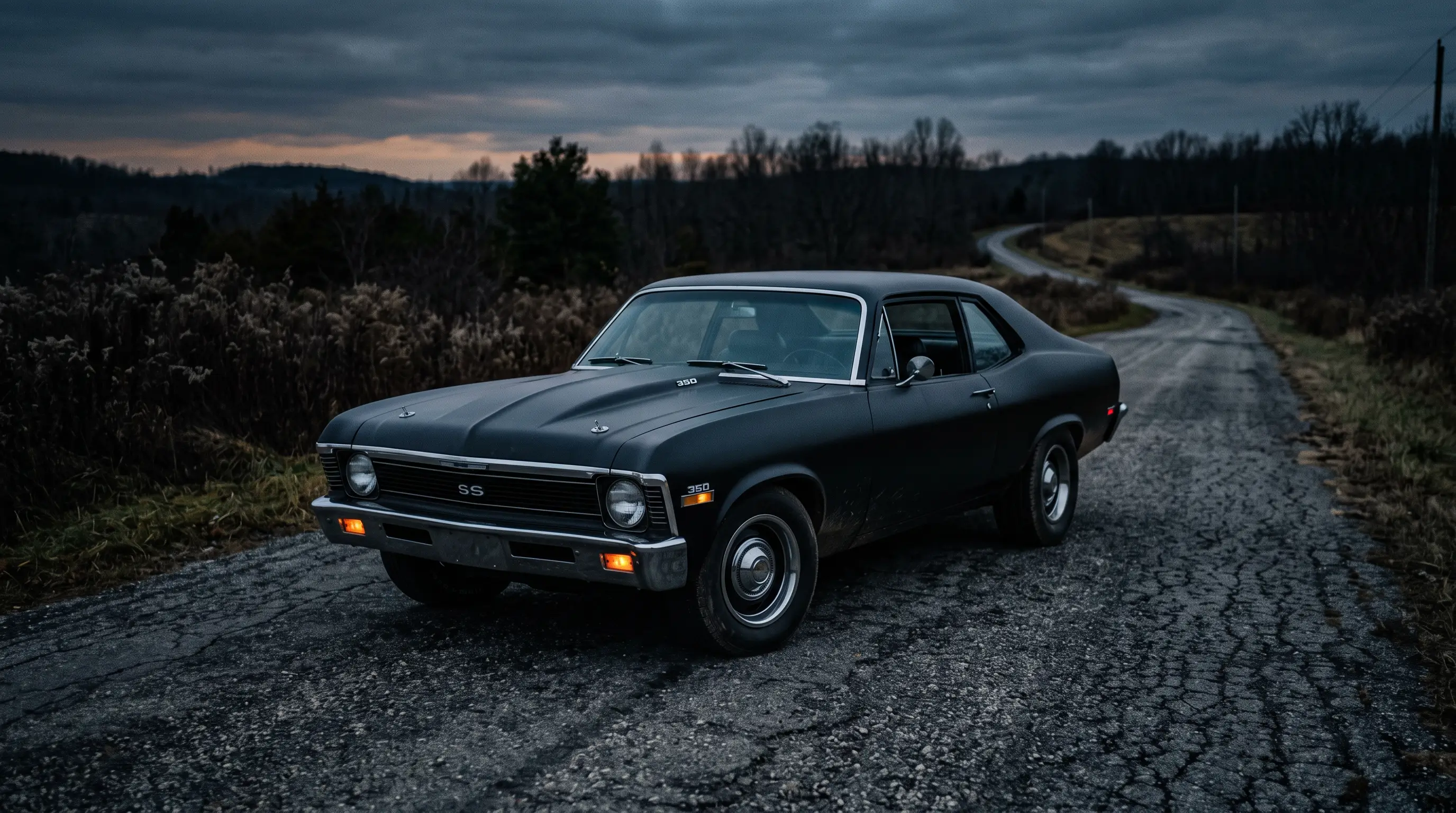
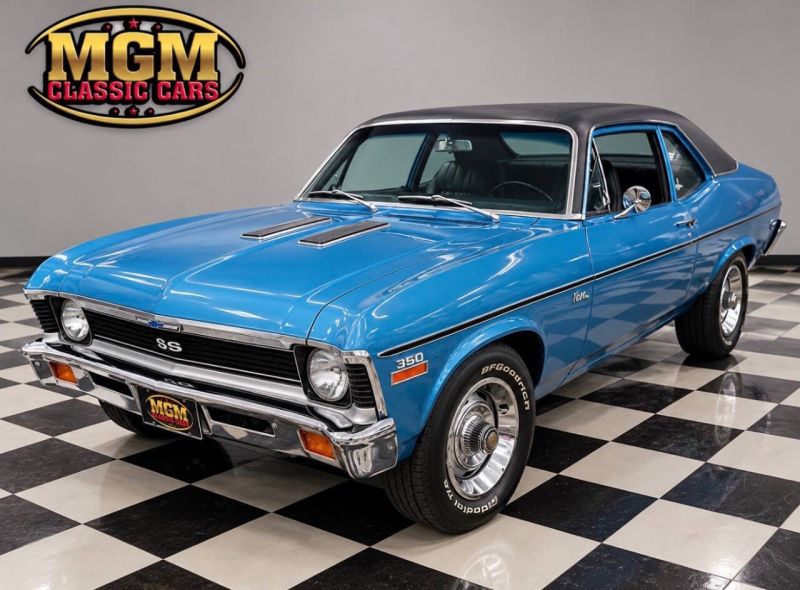
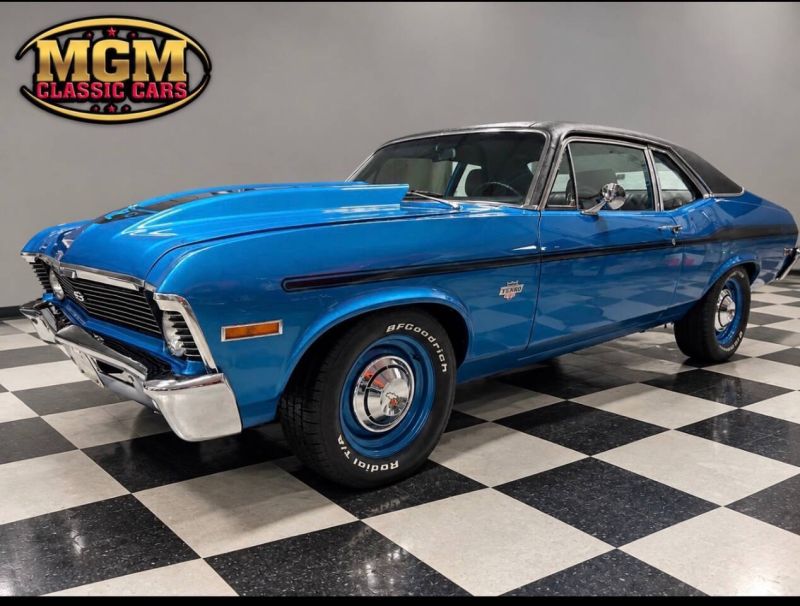
Of course, the Nova wasn't only ever the quiet compact. The SS performance variants, especially the big-block cars of 1968 and 1969, gave the model a second identity entirely, proof that Chevrolet's humble economy car could be built into something genuinely fast when the factory decided to try. That duality, dependable commuter on one hand, capable performance car on the other, is part of what keeps the Nova's legacy interesting rather than one-note. It never had to choose a single identity, and generations of owners found their own version of the car within that range.
"People don't fall in love with the fastest car they ever owned nearly as often as they fall in love with the one that was there. The Nova was there, for an enormous number of people, at exactly the moment it mattered."
— Nora Beckett
Why the legacy is still being written
What strikes me most, researching cars like this, is how much of the Nova's legacy exists outside any factory record. It lives in photographs like my grandfather's, in stories passed down at family gatherings, in the quiet pride of someone restoring the exact model their mother drove them to school in. Chevrolet's engineering documents can tell you the compression ratio of a 350 small-block. They can't tell you why a stranger will stop you at a gas station decades later just to say their father had one just like it.
That's the real inheritance a car like the Nova leaves behind, not a spec sheet, but a shared, quietly accumulated memory across millions of ordinary lives. Reading the Nova culture story traces how that memory took shape across drag strips, boulevards, and driveways alike, and it's worth a look if this piece leaves you wanting the fuller picture. From here, the next story in this set follows the Nova into an entirely different kind of cultural moment.
Carrying it forward
Somewhere out there, someone still has a Nova exactly like the one in my grandfather's photograph, kept running out of stubbornness or sentiment or both. That's really the whole legacy in miniature: not a museum piece behind velvet rope, but a car ordinary enough that ordinary people kept choosing to hold onto it, generation after generation, long after it stopped making any practical sense to do so.
Maybe that's the truest measure of a car's legacy in the end, not the number built, not the auction record, but how many people, decades removed from ever sitting in one, still feel a small tug of recognition at the sight of that badge on a fender.
Sources and notes
- Wikipedia: Chevrolet Chevy II / Nova
- SlashGear: How the Chevrolet Nova Became a Toyota Corolla
- CarBuzz: How Chevrolet Turned a Performance Icon into a Rebadged Toyota
- The Washington Post: GM and Toyota Decide to Halt Production of Chevrolet Nova
- Curbside Classic: 1988 Chevy Twin Cam Nova, a Hot Toyota from Chevrolet
- National Nova Association: Production Numbers