
I have had my hands on more early GTOs than I can count, and I will say this plainly: a 1966 or 1967 Goat with the factory suspension and bias-ply tires is a car you point down a straight line and hope for the best once the road starts to curve. That is not an insult, it is just what a mid-1960s muscle car was built to do. So when I got my first real seat time in a 1973 Colonnade GTO a few years back, I went in expecting the same thing, maybe worse given the extra weight. I came out of that drive surprised, and I have been telling anyone who will listen ever since that this car's reputation does it a disservice.
Car Features
7 min read
Why the Colonnade GTO Handles Better Than Its Reputation
A 1973-74 GTO will not win a drag race against a 1969 Judge, but on a real road with corners it earns more respect than it gets.
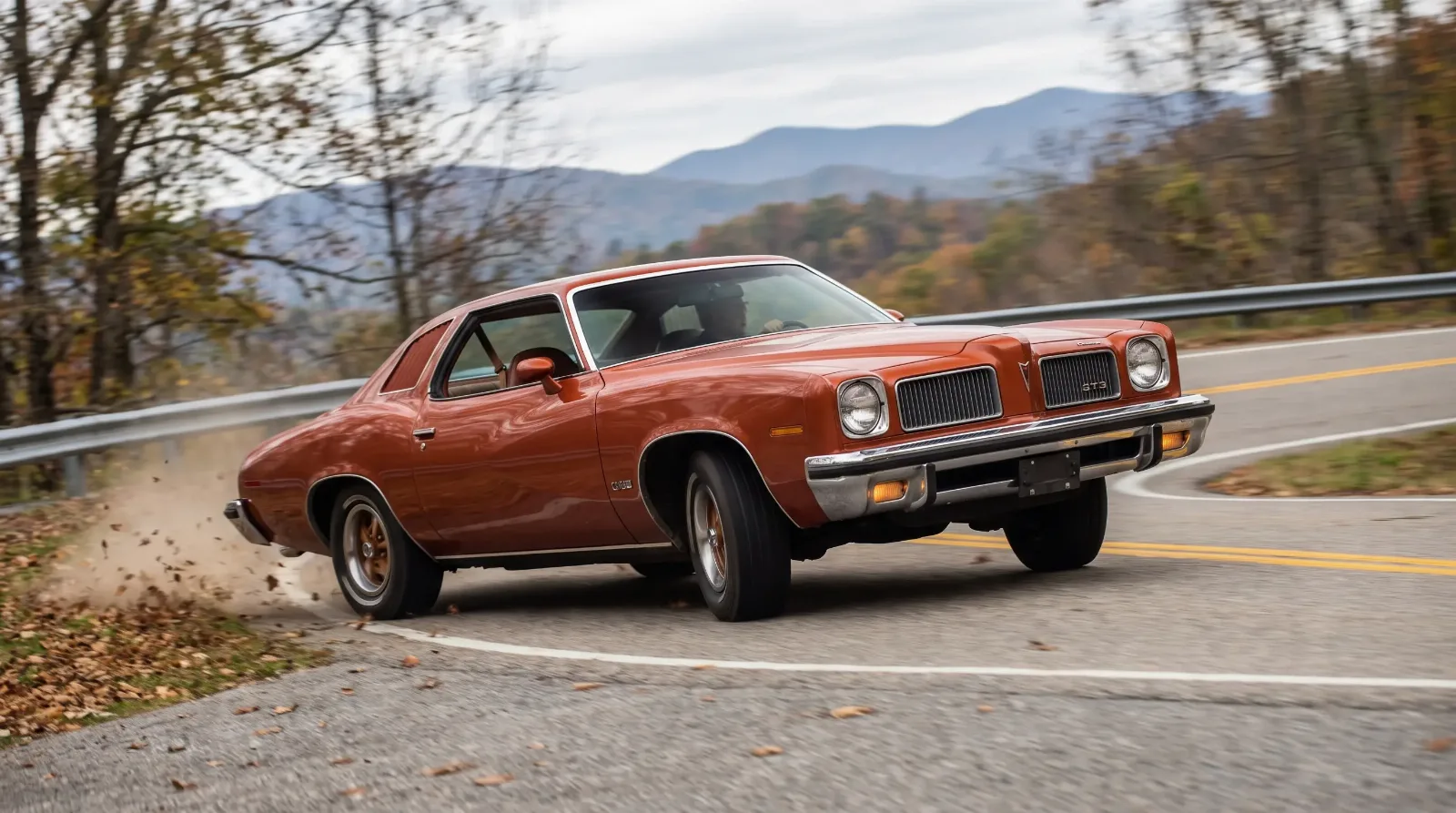
Where the bad reputation actually comes from
The 1973-74 GTO gets written off fast, usually by people who have never driven one, and I understand why. This was the Goat's last chapter, built during the exact years when horsepower numbers were dropping across every American performance car thanks to emissions requirements and the switch to net ratings. A car that measures out at a lower number on a spec sheet than its 1966 ancestor gets assumed to be worse in every category, handling included, and that assumption is lazy. Power and handling are not the same conversation, and Pontiac's engineers were actually doing better work on the chassis side during this era than the horsepower numbers would suggest.
Part of the reputation also comes from raw curb weight. The Colonnade body added structural bracing for the new federal side-impact rules, plus the 5-mph bumper hardware front and rear, and none of that came for free. A 1973 GTO tips the scales meaningfully heavier than a 1966 car, and heavier usually means softer feeling in a straight comparison. But weight and suspension tuning are two different problems, and Pontiac actually addressed the second one better than most people give them credit for.
What Pontiac's engineers actually changed
The Colonnade platform GM rolled out for 1973 had a genuinely stiffer body structure than the intermediates it replaced, still on a full perimeter frame, and Pontiac's chassis engineers used that stiffness to run firmer spring rates and better-controlled damping than the softer setups you find on late 1960s GTOs built for a boulevard ride first and cornering grip second. The front sway bar diameter on GTO-optioned cars stayed aggressive relative to the standard LeMans, and the radial-ply tire option, which became far more common by 1973 as radials started replacing bias-plies across the industry, made a real and immediate difference in how the car tracked through a corner compared to anything Pontiac offered a GTO buyer in 1967.
I have set up enough front ends on both eras to tell you this from feel, not just spec sheets. A well-sorted 1973 GTO with good bushings and correct spring rates turns in more predictably than an early car, holds its line better mid-corner, and does not get nearly as unsettled over mid-corner bumps. It will not out-accelerate a 1966 Tri-Power car, and nobody should pretend otherwise, but point-to-point on a road with actual curves in it, the later car is doing more things right than its reputation suggests.
What I actually check before I trust a "sorted" example
Anytime somebody tells me their 1973-74 GTO handles great, I ask a handful of specific questions before I take their word for it. First, what is the tire? A lot of these cars are still running old bias-ply reproductions for period-correct show judging, and no amount of suspension work fixes what a bias-ply tire does to steering feedback and cornering grip. Second, what is the alignment, specifically the caster setting? Pontiac's factory specs left some room for interpretation, and a car set up toward the higher end of the caster range tracks straighter and returns to center more naturally at speed, a difference you feel within the first mile of driving it.
Third, and this one gets overlooked constantly, what condition are the rear coil springs and the four-link control arm bushings actually in. A GTO that has spent forty years sitting with a full tank of gas and a trunk full of spare parts develops sag that changes the entire rear geometry, and a sagged rear end will make even a properly bushed front suspension feel disconnected from what the back of the car is doing. I have driven "restored" examples that looked immaculate and drove like a canoe because nobody bothered to check the rear spring rate against factory spec during the rebuild. Handling on these cars is not one part, it is the whole system working together, and skipping any one piece undoes the benefit of getting the rest right.
Where it still falls short
I am not going to sell you a fantasy here. The extra weight is real and it shows up under hard braking, where a 1973-74 GTO needs more room to shed speed than a lighter early car with the same brake hardware, especially on cars that never got the optional front discs and are still running the base drum setup. Body roll, while better controlled than a stock 1966 car, is still noticeable by modern standards, and the recirculating-ball steering feels numb compared to anything built even ten years later. If you drive one expecting sports car reflexes, you will be disappointed no matter how well the suspension is sorted.
The other honest issue is what forty-plus years of neglect has done to these cars. A lot of 1973-74 GTOs sat unloved for decades because the market did not value them, which means a lot of the examples still on the road are running on tired bushings, sagged springs, and worn ball joints that make the whole car feel worse than it did from the factory. That gap between a properly sorted example and a neglected one is bigger on these cars than on almost any other GTO year, simply because fewer of them got the restoration attention early cars received.
The verdict from the driver's seat
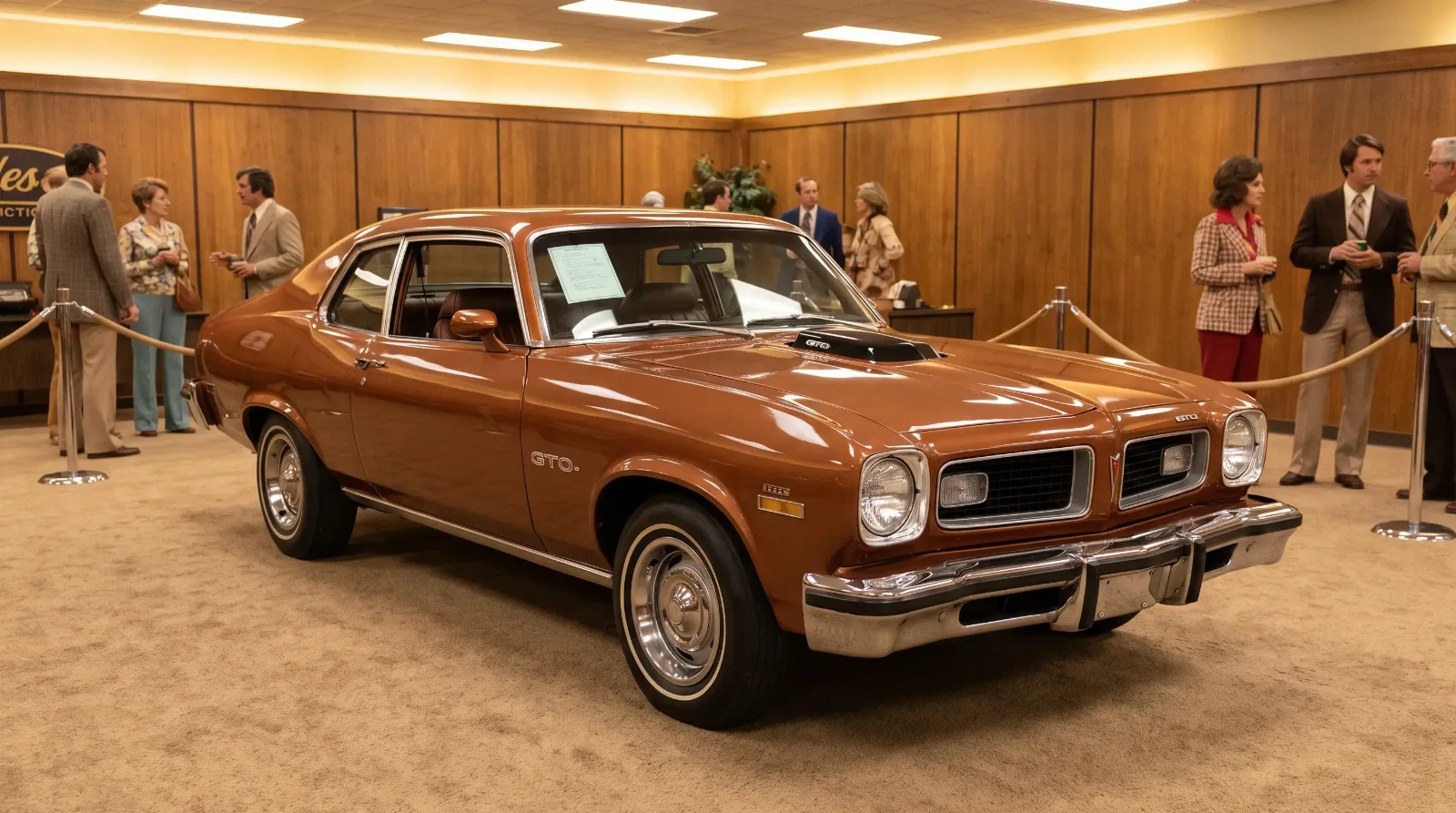
A 1973 or 1974 GTO is not going to win a stoplight drag race against a 1969 Judge, and anyone buying one for straight-line bragging rights is buying the wrong car. But judged on its own terms, as a car meant to be driven on real roads rather than a quarter-mile strip, it does more right than its reputation admits. The chassis is stiffer, the suspension tuning is more deliberate, and with decent tires and fresh bushings it corners with a confidence that would surprise most people who have only read about these final GTOs rather than actually driven one. Before you go shopping for one, it helps to understand what it was actually like to walk into a Pontiac dealer and order the last of them new, which is exactly what we cover next. Read on.
"Everybody wants to talk about what these cars lost in horsepower and nobody wants to talk about what they gained in the chassis. Drive one on a road with real corners before you write it off."
Mike Sullivan
Sources and notes
Related Reading
Have a
Pontiac GTO
for Sale?
Reach thousands of serious classic car collectors across the US.
Sell It Here →
Selling a classic? Here's how: sell my classic car
Are You a Classic Car Dealer?
List your full inventory and connect with targeted classic car buyers.
Join as a Dealer →

About the author
Mike Sullivan
Detroit-area muscle car enthusiast and restoration specialist with three decades of hands-on experience working on American iron.
Related Listings - Pontiac GTO

Comments (1)
J
Jimmy Borowski
1 month ago
73-74 colonnade A bodys are coil springs in back not leafs, four link same as my 71 Chevelle, so if thier rear end wanders check the coils and the upper arm bushings, dont go hunting for a leaf pack that isnt there