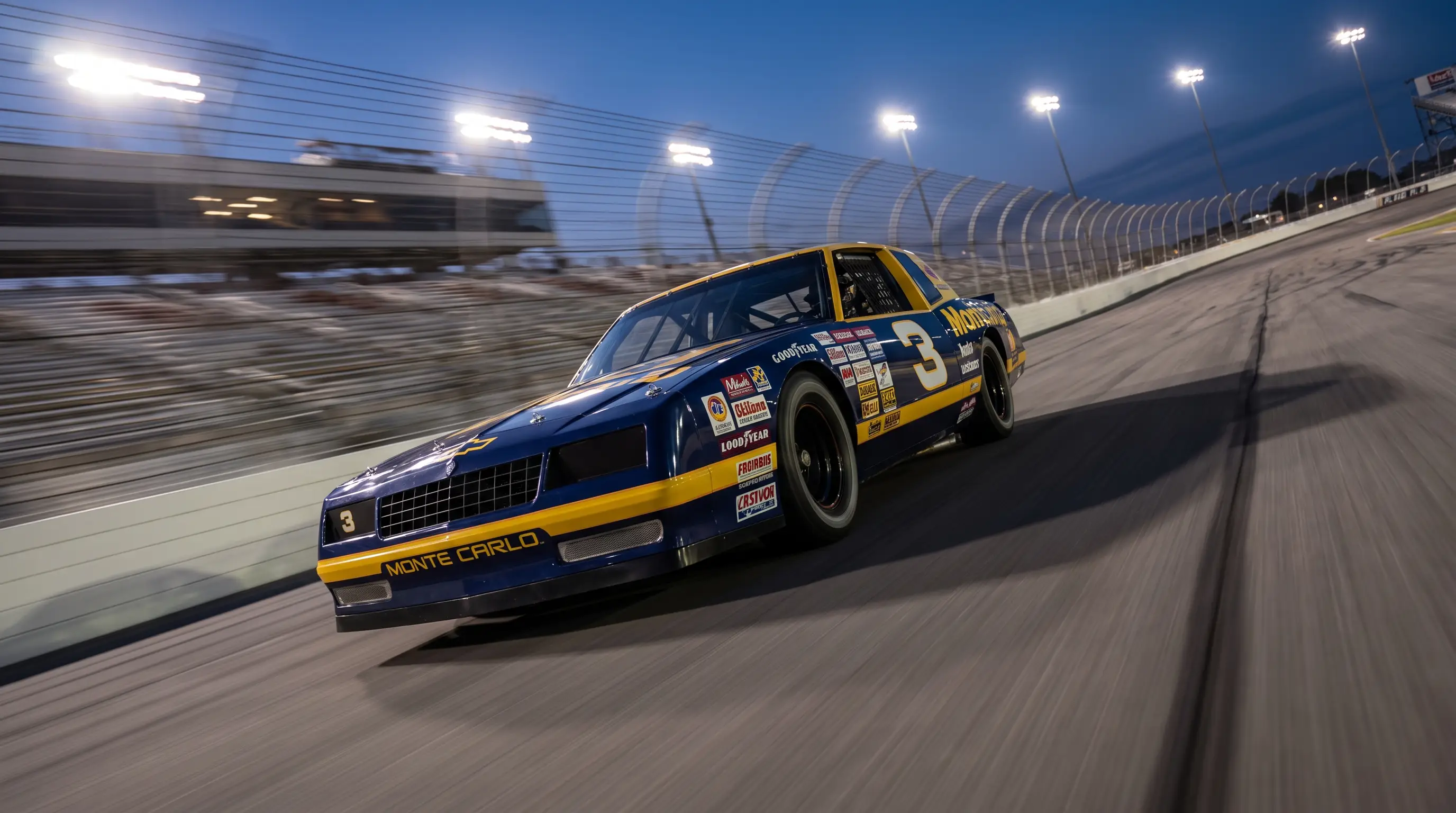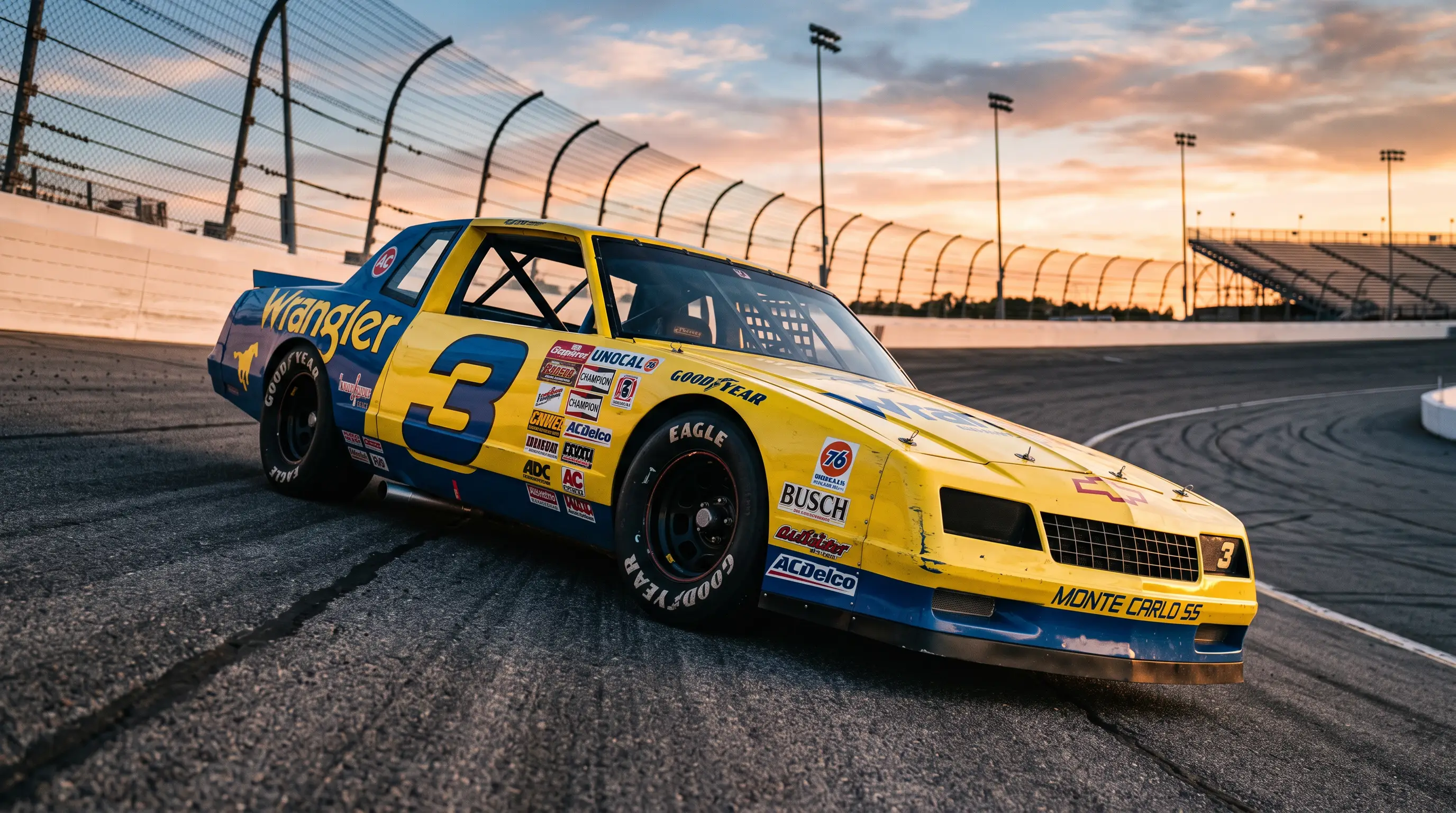
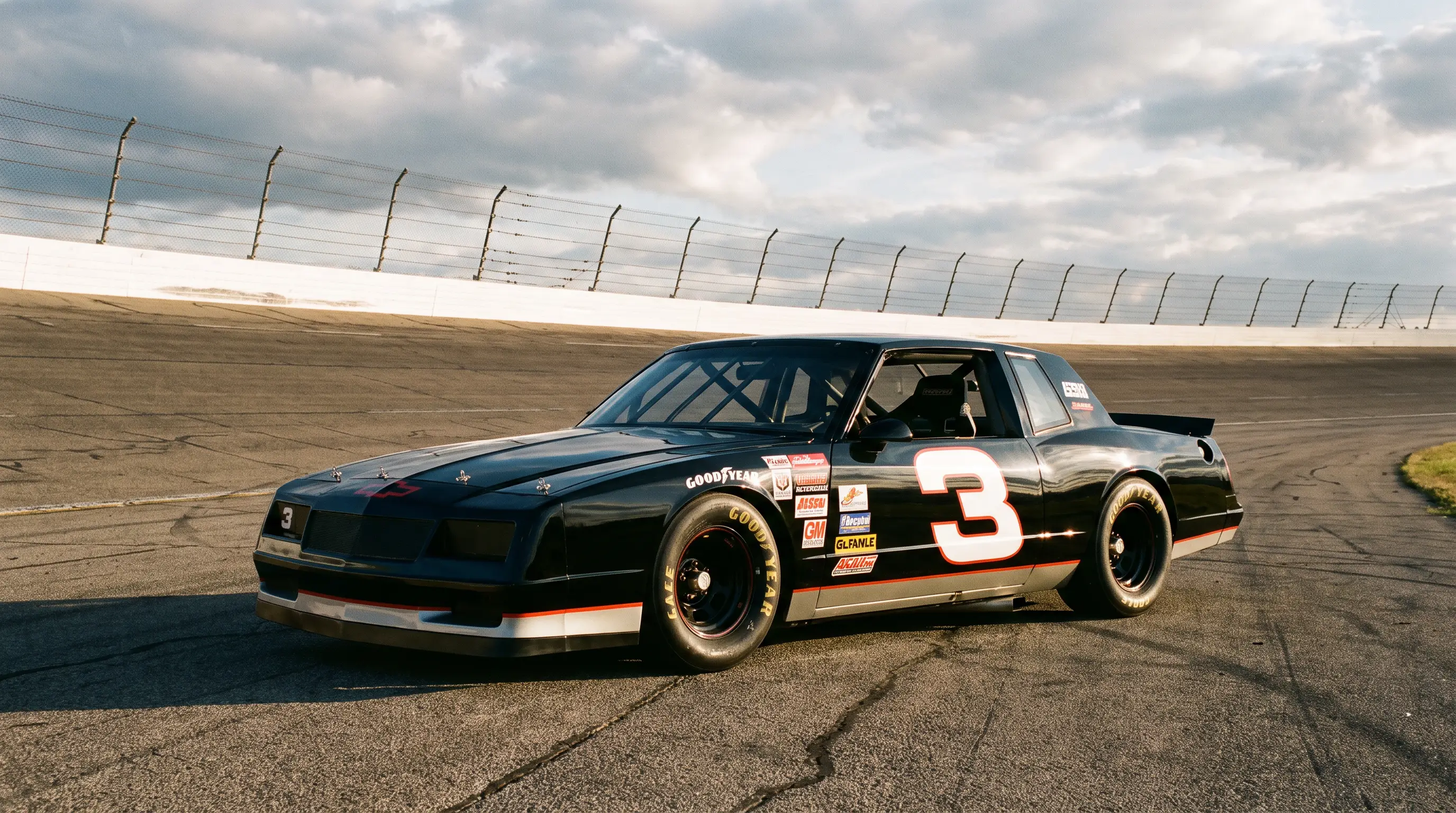
Ask any old-timer at a Carolina swap meet what year built the Dale Earnhardt legend and most of them will not say 1980, when he won his first championship in a Ford. They will say 1987, the year the Wrangler blue and yellow Chevrolet Monte Carlo SS became the car every other team spent the winter trying to catch. Earnhardt drove for Richard Childress Racing that season, and the Monte Carlo he wheeled was the car that made "The Intimidator" a household name outside the sport too.
Eleven wins and a championship that was never really in doubt
Earnhardt won eleven races in 1987, a career best at the time, and took his third Winston Cup championship by 489 points over Bill Elliott in a Monte Carlo SS built by Childress and crew chief Kirk Shelmerdine. The car was not the prettiest thing on the grid. It was blunt-nosed, notchback-roofed at some tracks and running the newer Aerocoupe glass at others, and it did not need to be pretty. It needed to be fast enough on the straights and stubborn enough in traffic, and the Monte Carlo was both.
What made the season different from Earnhardt's first two titles was how he won. He was not the fastest car everywhere. He was the car that refused to lose position, and that reputation became inseparable from the Monte Carlo nameplate for a decade after.
The Winston and the pass that never happened
The single moment most fans remember from that year did not even count toward the championship. At The Winston all-star race at Charlotte on May 17, with eight laps to go, Elliott tapped Earnhardt's rear bumper trying to make the pass, Earnhardt's Monte Carlo was shoved into the frontstretch grass, and he came back out of it still leading. NASCAR fans still call it the Pass in the Grass. It was reckless, it was arguably against the letter of the rules of the day, and it is the single clip that plays every time a broadcast wants to explain why people either loved or hated Earnhardt. Either way, it happened in a Monte Carlo, and it happened because that chassis could take a beating on rough pavement without stepping sideways.
Building on a car that already had a reputation
By 1987 the Monte Carlo SS was already three seasons into being NASCAR's answer to the aerodynamic Ford Thunderbird, and Chevrolet teams up and down pit road were running variations of the same body. Earnhardt's Childress car benefited from that shared development the way every Monte Carlo team did, borrowing wind tunnel lessons that had been paid for collectively by Chevrolet's factory-backed effort. The difference in 1987 was not really the sheet metal. It was the driver willing to use every inch of it, and a crew willing to build a car that matched his temperament.
Shelmerdine's setups were not subtle. They were built for a driver who wanted the car loose enough to rotate under him in traffic, and that suited Earnhardt's style of racing three-wide when other drivers would have lifted. It made for a Monte Carlo that looked, from the stands, like it was always one small mistake from a wreck, and somehow it never was, at least not that year.
"You watch the tape of 1987 now and the car looks like it should not be doing what it is doing. That is the whole story of that Monte Carlo season in one sentence."
- Wayne Coburn
A season built on more than one car
Earnhardt's title run did not happen with a single chassis bolted together in January and raced all year. Childress and Shelmerdine ran a rotation of Monte Carlos through 1987, some set up for the short tracks at Martinsville and Richmond, others built lower and stiffer for the superspeedway pack racing at Daytona and Talladega. That flexibility mattered. A car tuned to survive a hundred laps of bump-drafting at Talladega was not the same car you wanted underneath you at a half-mile bullring, and the team's willingness to build to the track rather than force one setup everywhere is part of why the Monte Carlo held up across the full 29-race 1987 schedule and delivered eleven wins and 24 top-10 finishes.
It also meant the crew was managing a fleet, not babying one favorite car, which is a less romantic but more accurate description of how championships actually get won. Fans remember the driver and the paint scheme. The people who kept that Monte Carlo on the track remember the spare parts inventory, and 1987 is remembered as much for consistency as for any single highlight.
What 1987 left behind
The championship that year cemented two things at once. It cemented Earnhardt as the sport's biggest personality for the next decade, and it cemented the Monte Carlo as the car most associated with him before he ever moved into the black and silver Goodwrench colors that came later. Collectors and club members who chase early Wrangler-liveried memorabilia today are chasing a specific season, not a generic era, and 1987 is the one they mean.
It also mattered for Chevrolet's broader NASCAR program. A championship built on a Monte Carlo, following on the heels of Earnhardt's earlier titles and alongside strong runs from other Chevrolet teams, gave the factory effort proof that the aero investment of the mid-1980s had paid for itself. For readers who want more on the monte carlo nascar program as a whole, the 1987 season is the hinge point where the car stopped being one competitive entry among several and became the benchmark the other manufacturers were chasing.
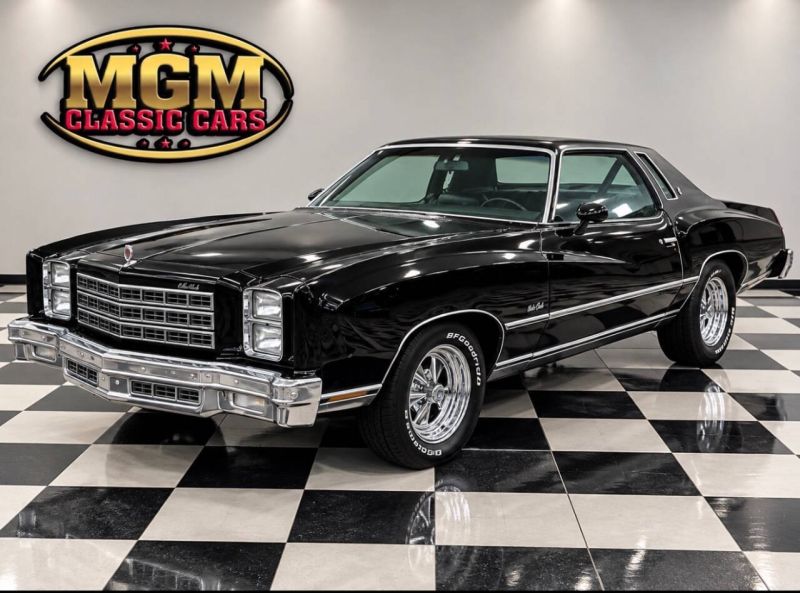
None of it happened in a vacuum. The Monte Carlo's racing story did not begin with Earnhardt, and understanding where this started on the showroom floor back in 1970 explains why Chevrolet had a nameplate worth building a race program around in the first place. The street car earned the loyalty first. The 1987 season is where that loyalty turned into a legend that outlived the car itself.
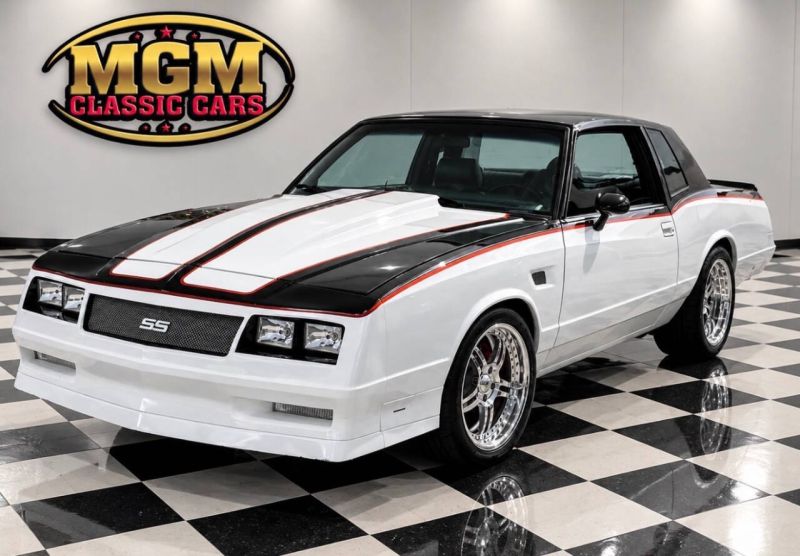
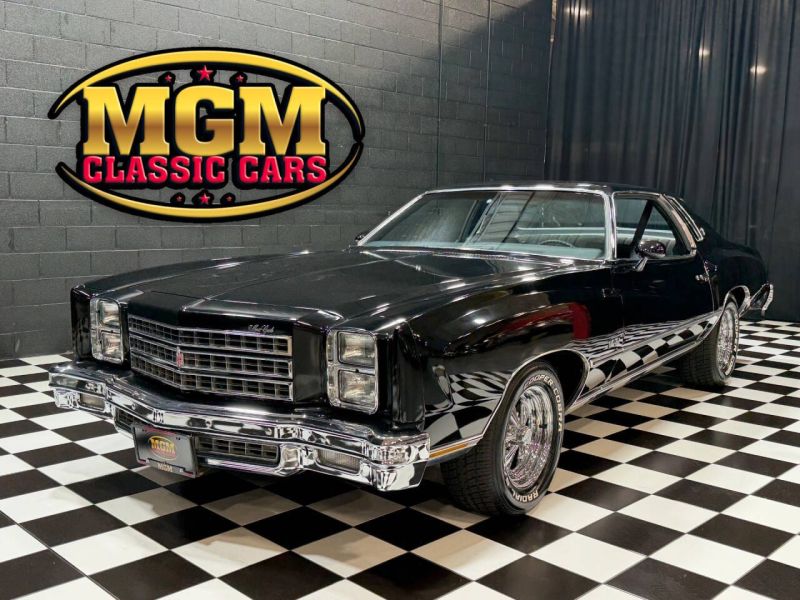
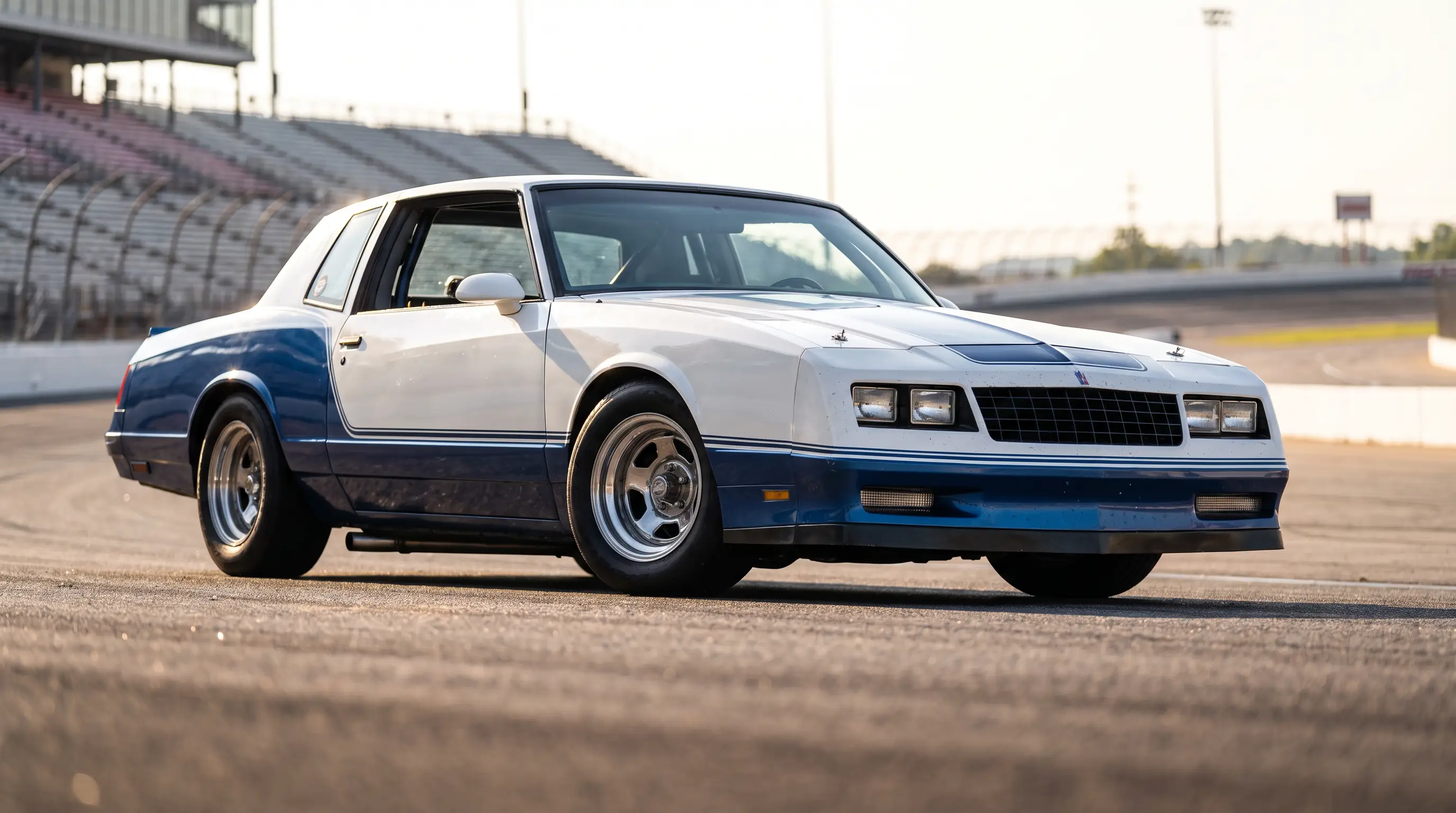
Anyone chasing a piece of that era in person, rather than on a highlight reel, can still find classic Monte Carlos on the market wearing the same silhouette Earnhardt raced, minus the roll cage and the Wrangler decals.
Why the story still gets told
Every generation of stock car racing produces a season that fans point to as the moment a driver stopped being merely good and became something else. For the Monte Carlo, and for Earnhardt, 1987 is that season. The car was tough, the driver was fearless to the point of recklessness, and the combination produced a championship that people still argue about at car shows more than three decades later. That is a rare thing for any race car to earn, and the Monte Carlo earned it fair.