
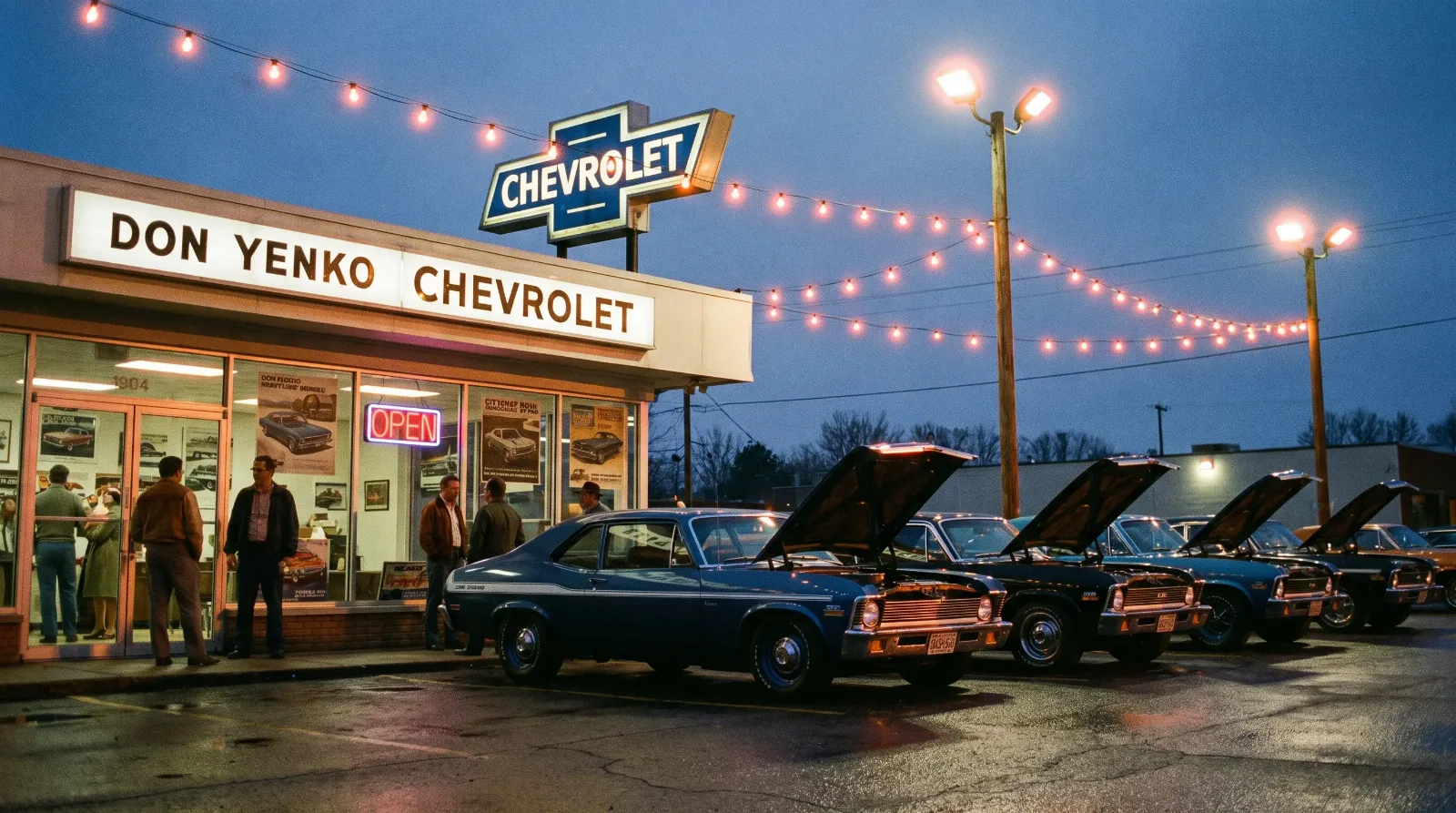
The Chevrolet Nova did not get its factory teenage muscle from one shop. It got it from a loose confederation of high-volume dealers who understood a simple truth: the factory would build almost anything if you ordered enough of it under the right paperwork code. Call it the yenko dealership network, though nobody printed that phrase on a business card in 1969. Don Yenko's store in Canonsburg, Pennsylvania was the best known name in the group, but it was never the only one moving big-block Novas off dealer lots and into buyers' hands.
Car Features
6 min read
Yenko Dealerships and the Super Car Network
Don Yenko's shop was the famous name, but a loose network of high-volume Chevrolet dealers, not one man, built the era's big-block Novas through the factory's COPO system.
What the network actually was
There was no formal corporation, no shared letterhead, no dues. What existed was a handful of Chevrolet dealers who sold enough cars, and who had enough clout with zone managers, to push special orders through the Central Office Production Order system. COPO existed for mundane reasons: fleet buyers needed a police package, a taxi spec, a heavy-duty trailering option. A dealer with volume and a relationship could also use COPO to request a combination the regular order guide did not offer, like a 427 cubic inch big block in a car that was only supposed to accept a 350.
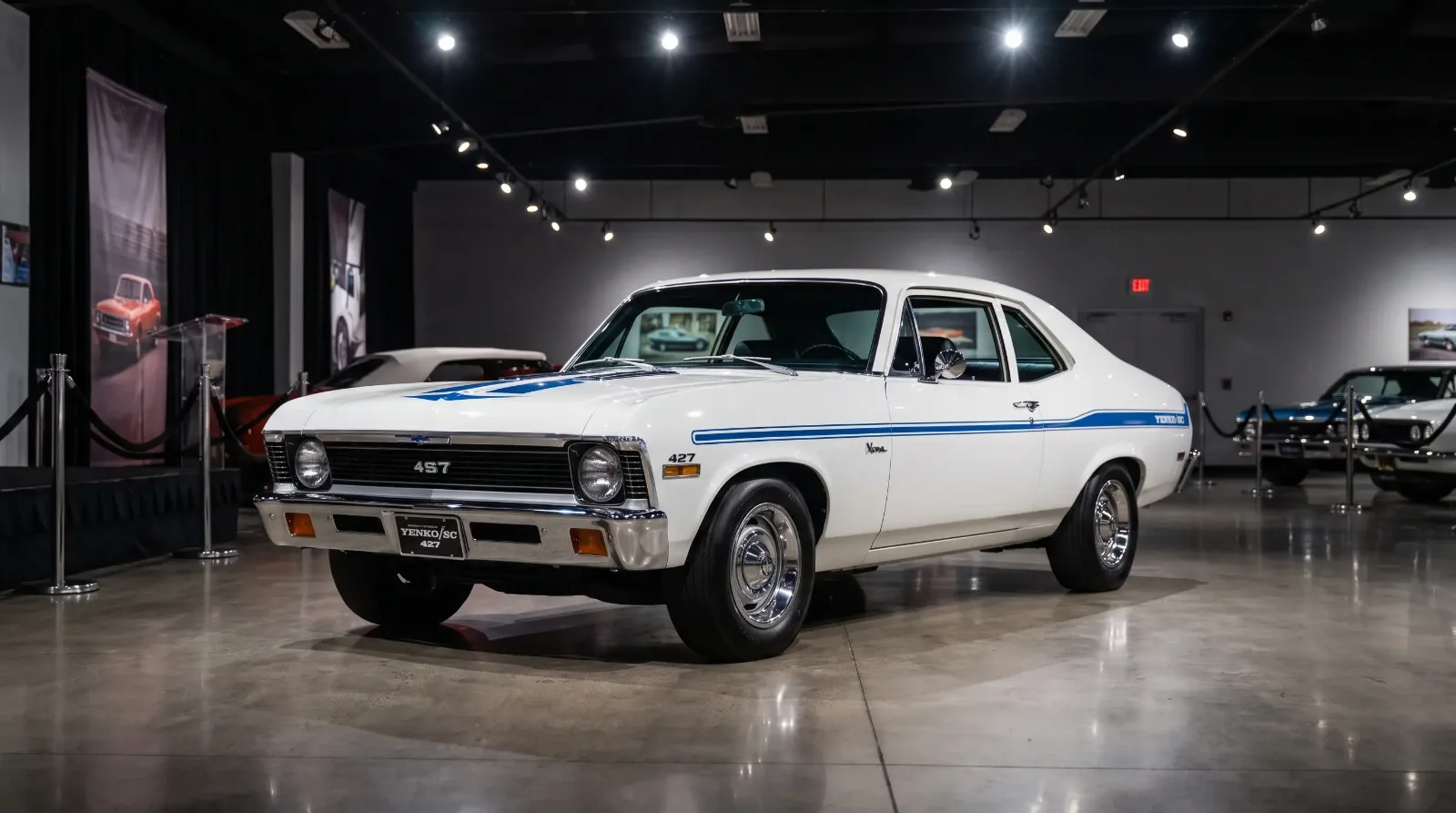
Don Yenko ran the highest profile operation, and his name became shorthand for the whole phenomenon. But Nickey Chevrolet in Chicago, Berger Chevrolet in Grand Rapids, Dana Chevrolet in South Gate, California, and Baldwin Chevrolet paired with Motion Performance on Long Island were doing versions of the same thing. Some ordered COPO cars straight from the factory and sold them as delivered. Others took a factory car and finished the job in their own shop, swapping engines, retuning suspensions, adding their own badges. The result is a family of cars that share a philosophy without sharing a single build sheet.
How a COPO Nova order actually moved
The mechanics were unglamorous. A dealer identified a COPO code that unlocked the option combination he wanted, in this case the 427 cubic inch L72 engine in a Nova body that normally topped out well short of that displacement. He placed a bulk order tied to that code, sometimes for a dozen cars, sometimes for far fewer. The factory built them to spec and shipped them like any other order. There was no special sales brochure, no factory advertising, and often no dealer paperwork trail beyond the invoice itself, which is exactly why documentation matters so much to buyers chasing these cars fifty years later.
Don Yenko's shop is the one most associated with the 427 super Novas, and for good reason: his volume and his relationship with Chevrolet's Central Office gave him access other dealers had to work harder for. But calling every big-block Nova from this era a "Yenko car" overstates his direct involvement. Plenty came from other dealers in the same network, built to the same COPO codes, sold under different names on different showroom floors.
Regional patterns worth knowing
Each dealer in this network had its own regional footprint and its own habits, and those habits still show up in how cars are described today. Nickey Chevrolet leaned toward Camaros and full-size cars more than Novas, so genuine Nickey Novas are thinner on the ground than the shop's overall reputation might suggest. Berger Chevrolet, working out of Michigan, had closer ties to Chevrolet's engineering staff given the proximity to Detroit, which occasionally meant earlier access to option codes than dealers further from the factory. Dana Chevrolet on the West Coast built a smaller but fiercely loyal following, and its cars turn up less often at major national auctions simply because fewer of them were built and fewer have migrated east into the larger collector marketplace.
None of this changes the underlying mechanics of a COPO order. It does change how a buyer should read a listing. A seller claiming a rare regional dealer connection should be able to back it up the same way a Yenko claim needs backing: casting dates, a build sheet, and a paper trail that predates the current owner's involvement by decades, not a story passed down at a swap meet.
What the network's cars sell for now
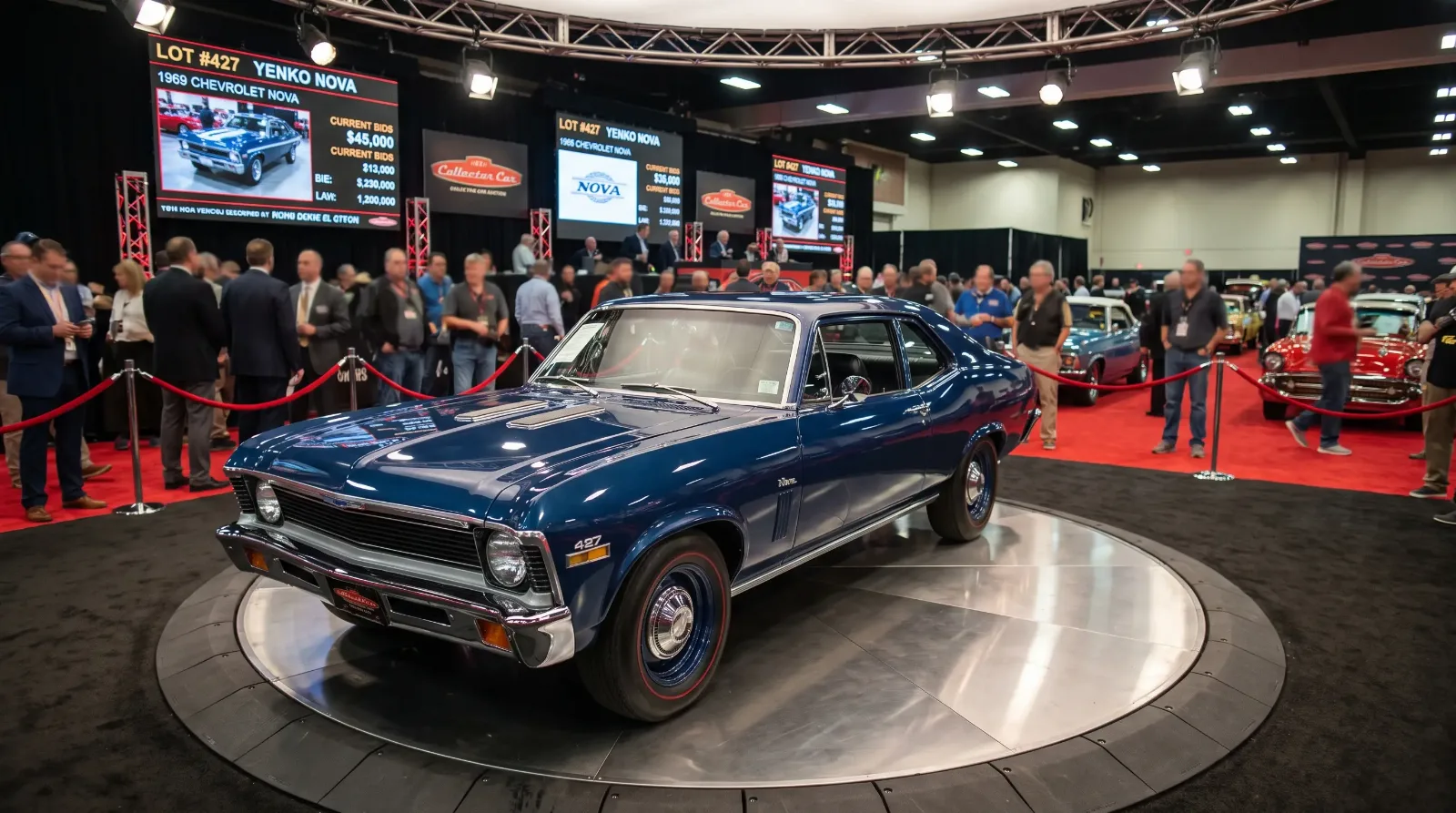
Documentation is the single biggest price variable in this segment, ahead of condition, ahead of color, ahead of options. A COPO Nova with a verified build sheet, matching-numbers drivetrain, and a paper trail back to the selling dealer routinely brings two to three times what a visually identical but undocumented car brings at the same auction. That gap has only widened over the last decade as buyers have gotten more sophisticated about spotting recreations.
| Documentation level | Typical market position | Buyer confidence |
|---|---|---|
| Factory COPO paperwork + matching numbers | Top of the market | High |
| Partial records, verified engine code | Solid mid-market | Moderate |
| No paperwork, period-correct build | Discounted, "tribute" pricing | Low without third-party verification |
Auction results over the past several seasons show the same pattern repeating: documented cars from any dealer in this network, not just Yenko-badged ones, hold value better than undocumented cars with better cosmetic presentation. Buyers have learned to pay for paper, not just paint.
"I've watched two nearly identical Novas cross the same auction block eighteen months apart. The one with the invoice sold for roughly double. That is not a coincidence, that is the market pricing in risk."
David Mercer
My take: buy the paper, not the story
If you are shopping this segment, the dealer name on the windshield sticker matters less than most sellers want you to believe. A genuine COPO Nova from Berger or Dana is not a lesser car than one from Yenko's shop, it is simply less famous, and famous names carry a premium that has nothing to do with rarity or engineering. For a reader looking for a companion piece on where the rarest examples actually sit in this hierarchy, that context matters before you write a check.
My working rule: verify the build sheet before you fall for the badge. A well-documented car from a lesser-known dealer in this network is a better buy than a famous-name car with a thin paper trail. The engineering is the same either way. The risk is not.
There is also a financing and insurance angle worth flagging. Agreed-value policies for muscle car collectibles want documentation before they will write a number anywhere near top-of-market, and lenders financing a six-figure purchase want the same thing before they release funds. A car without paperwork is not just harder to sell later, it is harder to insure and finance properly right now. That practical reality should factor into your offer as much as any auction comparable does. Price the paperwork first, then price the car.
Sources and notes
- Hagerty: How Dealers Bulked Up Factory Muscle to Create Street-Racing Monsters
- Hagerty: Baldwin-Motion Supercars
- OnAllCylinders: Who Was Don Yenko?
- Wikipedia: Don Yenko
- HotCars: How a Chicago Chevy Dealer Beat GM's Own COPO Program
- Classic Industries: 427 Camaro History, Yenko, Baldwin, Nickey, and More
Related Reading
Have a
Chevrolet Nova
for Sale?
Reach thousands of serious classic car collectors across the US.
Sell It Here →
Are You a Classic Car Dealer?
List your full inventory and connect with targeted classic car buyers.
Join as a Dealer →

About the author
David Mercer
Classic car market analyst with two decades of experience tracking collector car valuations, auction results, and investment trends.
Related Listings - Chevrolet Nova
Comments
Be the first to comment on this article.