
The Chevrolet Monte Carlo arrived for the 1970 model year, and almost everything the nameplate became over the next eighteen years traces back to decisions made in that single season. The monte carlo 1970 legacy launch decade story is less about one car than about a set of choices that let Chevrolet keep selling a personal luxury coupe, through two fuel crises and three complete redesigns, without ever losing the thread of what the car was for. Get the founding year right and the rest of the run becomes an argument about execution rather than survival.
Car Features
7 min read
How 1970 Set Up a Decade of Monte Carlo Success
The choices Chevrolet made in the Monte Carlo's first year set up eighteen model years of success. Here is what 1970 really established.
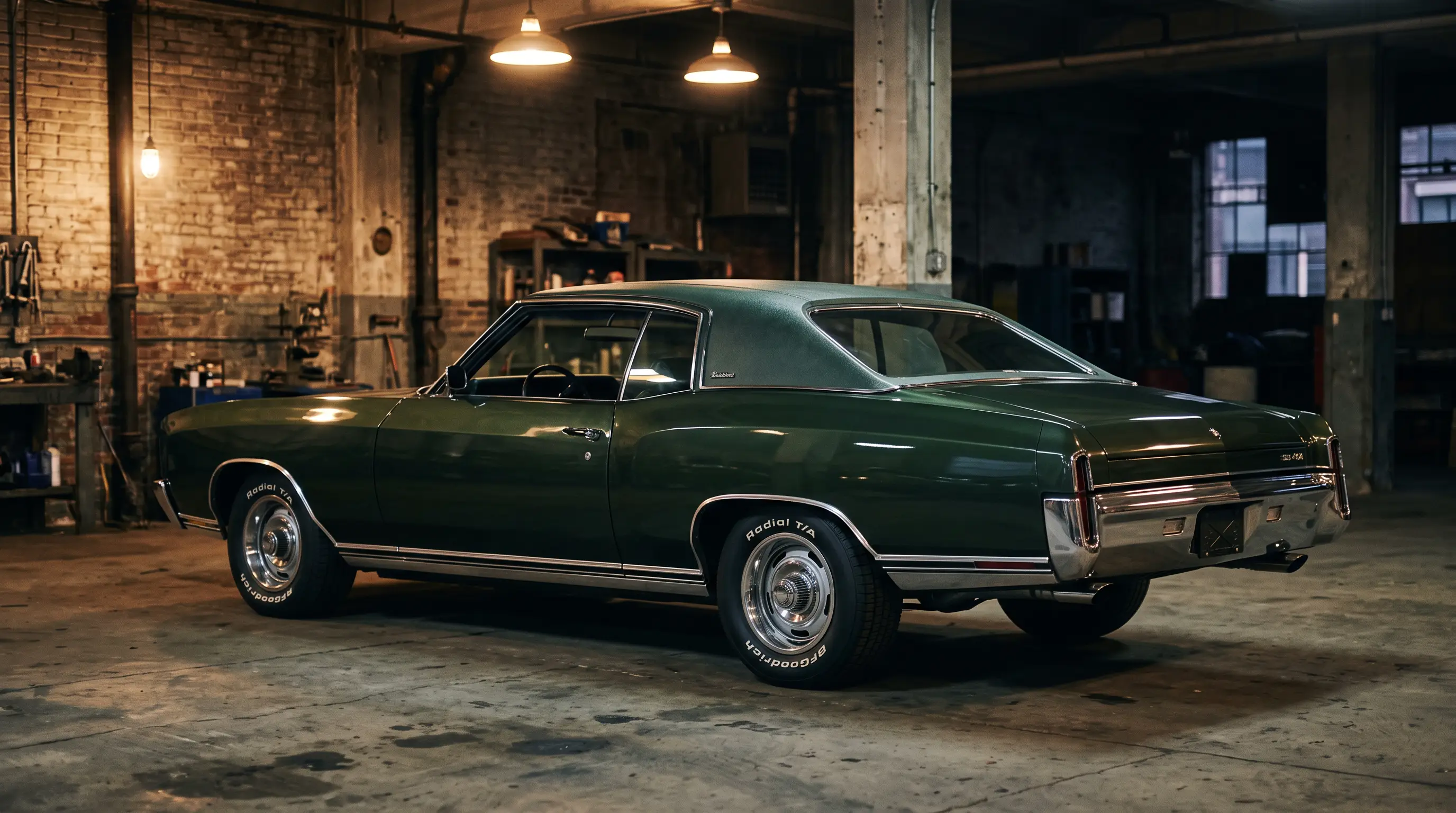
Chevrolet had never fielded a personal luxury coupe before the Monte Carlo went on sale in September 1969. The division watched Pontiac prove the idea with the Grand Prix and watched Ford prove it with the Thunderbird, then decided the segment was worth a Chevrolet badge of its own. General manager Pete Estes championed the program, and the studio under Dave Holls gave it the longest hood Chevrolet had put on a car to that point. That was the bet, and one model year would tell everyone whether it worked.
A launch with no margin for error
The Monte Carlo shared most of its structure with the A-body Chevelle, differing mainly in the front clip, the rear fenders, the sail panels, and the outer doors. That kept development cost down, which mattered, because a new nameplate with no track record is exactly the kind of program that gets cancelled after one soft year. Chevrolet priced the car at roughly 3,123 dollars, only about 200 dollars over a comparable Malibu hardtop, and let the styling do the selling. The 116-inch wheelbase came straight from the Chevelle, but the sheet metal read as something far more expensive than the price tag suggested.
It worked immediately. First-year demand ran ahead of Chevrolet's own projections, and dealers who had been unsure about stocking a car with no predecessor were reordering within months. That early validation is easy to underrate now, but it is what convinced the product planners to keep funding the nameplate instead of writing it off as a one-season experiment. For the full account of how the car came together, read our complete history of the launch.
The formula that survived three redesigns
What lifted 1970 above a good debut is that Chevrolet correctly identified which parts of the car the buyer cared about and which parts were negotiable. The long hood and short deck proportion mattered. The formal grille mattered. A quiet, well-isolated cabin mattered. The specific engine under the hood mattered far less, which is why the same car could be ordered as a mild 350 cruiser or as an SS 454 without confusing anyone about what a Monte Carlo fundamentally was.
That flexibility, built in from year one, is what carried the nameplate through the Colonnade cars of 1973 to 1977, the downsized 1978 redesign, and the G-body SS coupes of the 1980s. Each of those was a different car in almost every measurable way. What none of them abandoned was the founding promise of a formal, comfortable, individually styled coupe wearing a Chevrolet price tag. Nameplates that tied their identity to a single engine or a single styling gimmick tended to stumble when engineering realities shifted. This one did not, because its core idea never depended on any one spec.
| Model year span | Body generation | Inherited from 1970 |
|---|---|---|
| 1970-1972 | First generation | Formula established, 116-inch wheelbase |
| 1973-1977 | Colonnade | Long hood proportion retained |
| 1978-1980 | Downsized | Personal luxury identity retained |
| 1981-1988 | G-body, SS era | Performance option carried forward |
What 1970 actually proved about the buyer
The most useful thing the first year established was not a sales record but a customer profile. Chevrolet learned that a real slice of its audience wanted presence and comfort more than it wanted outright performance, and would pay a modest premium to get it. That customer did not disappear during the malaise years. If anything the profile grew more valuable as horsepower faded across the industry, because a car sold on style and quiet rather than quarter-mile times had far less to lose when the engines got smaller.
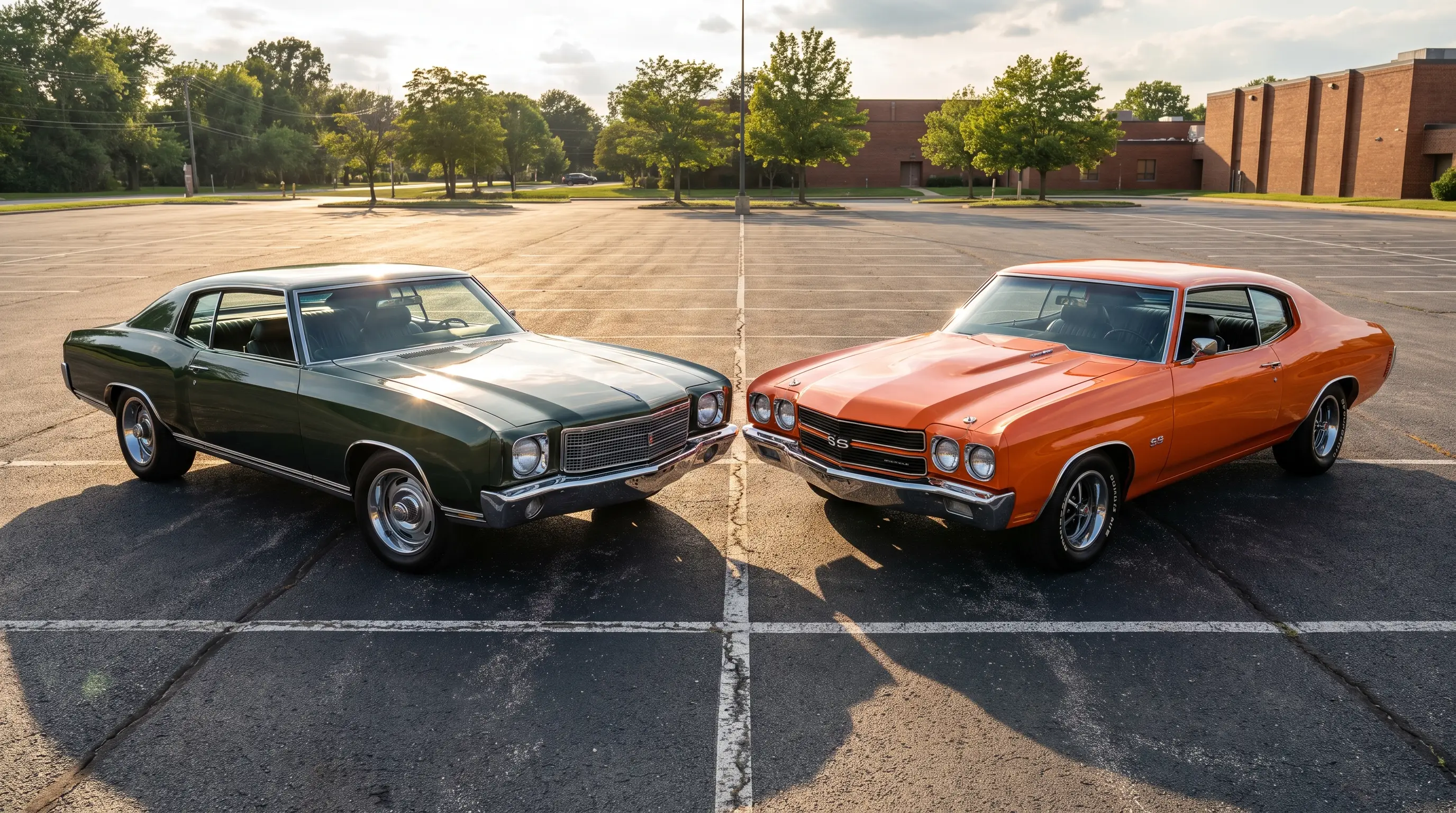
The SS 454 makes the point by contrast. It paired the LS5 big-block, rated at 360 gross horsepower, with the formal body, and it is the most collectible first-generation car today. Yet it was a slow seller when new, with roughly 3,823 built for 1970 and about 1,919 for 1971 before the package was dropped. Fewer than 6,000 buyers wanted the muscle version. The overwhelming majority wanted the quiet luxury coupe. Chevrolet read that result correctly and built the rest of the decade around the comfortable car, not the fast one.
Correcting the record on that first year
Two misconceptions follow the 1970 car around, and both are worth clearing up. The first is that the Monte Carlo was just a dressed-up Chevelle. It shared a platform, yes, but the unique front clip, doors, and rear quarters gave it a distinct silhouette, and the long hood was a genuine engineering choice rather than a trim change. The second is that the SS 454 defined the early cars. It did not. It was a low-volume option, and the nameplate's real character was set by the mild, well-trimmed coupes that made up the bulk of production.
Getting those two points straight matters, because they explain why the car survived. A Chevelle clone would have been cancelled the moment the Chevelle was restyled. A muscle-car nameplate would have died with the muscle era. The Monte Carlo was neither. It was a purpose-built personal luxury coupe that happened to offer a big-block for the handful of buyers who wanted one, and that distinction is the whole reason the badge lasted into the late 1980s. For a closer look at the styling decisions behind the shape, keep exploring the design work that set the template.
"Most nameplates get one clean chance to define themselves, and plenty of them waste it chasing whatever competitor made noise that year. Chevrolet did not do that in 1970. They built the car around a customer they actually understood, and that customer kept showing up for eighteen model years because the car never stopped being built for them."
- Tom Ramirez
What the rest of the decade inherited
By the time the Monte Carlo reached its downsized 1978 form, almost none of the original sheet metal or engineering survived. What did survive was the market position. Chevrolet never had to reintroduce the idea of a Chevrolet personal luxury coupe, because the 1970 car had already spent years proving the idea sold. Every redesign after that was a conversation about how best to execute an accepted premise, not whether the premise held up at all.
That is a rare outcome. Whole nameplates get killed after a single disappointing cycle. The Monte Carlo absorbed a full downsizing, a fuel crisis, and a completely different body architecture without losing its customer base, largely because the founding year had already answered the hard questions about who that customer was and what they would pay for. Collectors tracing that arc from the beginning can still find the earliest cars carrying the founding story with them. Browse a classic Monte Carlo for sale and you are looking at the exact model year that made the case.
Eighteen model years is a long run for any nameplate, and it did not happen by luck. It happened because Chevrolet got the fundamentals right in 1970 and then had the discipline to leave them alone.
Sources and notes
- Wikipedia: Chevrolet Monte Carlo
- Ate Up With Motor: Disco-Era Darling, The Chevrolet Monte Carlo
- Motogallery: 1970-1971 Chevrolet Monte Carlo SS 454 Specs and History
- Conceptcarz: Chevrolet Monte Carlo History and Specifications
- Mac's Motor City Garage: A New Dimension in Luxury, The 1978 Chevrolet Monte Carlo
Related Reading
Have a
Chevrolet Monte Carlo
for Sale?
Reach thousands of serious classic car collectors across the US.
Sell It Here →
Are You a Classic Car Dealer?
List your full inventory and connect with targeted classic car buyers.
Join as a Dealer →
#first-generation
#nameplate history
#personal luxury
#chevrolet monte carlo
#ss 454
#1970 monte carlo
#pete estes

About the author
Tom Ramirez
Corvette researcher and historian based in Bowling Green, Kentucky. Two decades documenting Corvette production history from original factory records.
Related Listings - Chevrolet Monte Carlo




Comments
Be the first to comment on this article.