
Every segment has a ceiling, and the most expensive Yenko Nova sale is the number every appraiser in this space measures against, whether they say so out loud or not. One car, sold at public auction with documentation strong enough to survive scrutiny, reset what buyers believed a Yenko-built Nova could bring. The rest of the market has been triangulating off that result ever since.
Car Features
6 min read
The Most Expensive Yenko Nova Ever Sold
One documented sale reset the ceiling for what a Yenko-built Nova can bring at auction. Here is why that record matters, and why it shouldn't be read as a baseline for every car with a similar badge.
Why one sale sets the bar for an entire market
Collector car values do not move like stock prices, where thousands of daily transactions smooth out the noise. A thin market like documented Yenko Novas might see a handful of genuinely comparable cars change hands publicly in a given year, and a single exceptional result can pull the entire perceived ceiling upward even if the next ten cars sell for a fraction of that number. That is not irrational. It reflects the fact that a record sale usually combines the rarest configuration, the deepest documentation, and the best condition all in one car, and buyers reasonably ask what a slightly lesser example is worth relative to that benchmark.
This is precisely why appraisers treat auction results differently depending on volume. A high-volume segment like generic muscle car Camaros can absorb an outlier sale without the whole market repricing around it, because there are enough comparable transactions to show the outlier is an outlier. A low-volume segment like documented Yenko Novas does not have that luxury. Every public sale becomes a data point that gets weighted more heavily than it probably deserves, simply because there is so little else to weigh it against.
What made this specific Nova exceptional
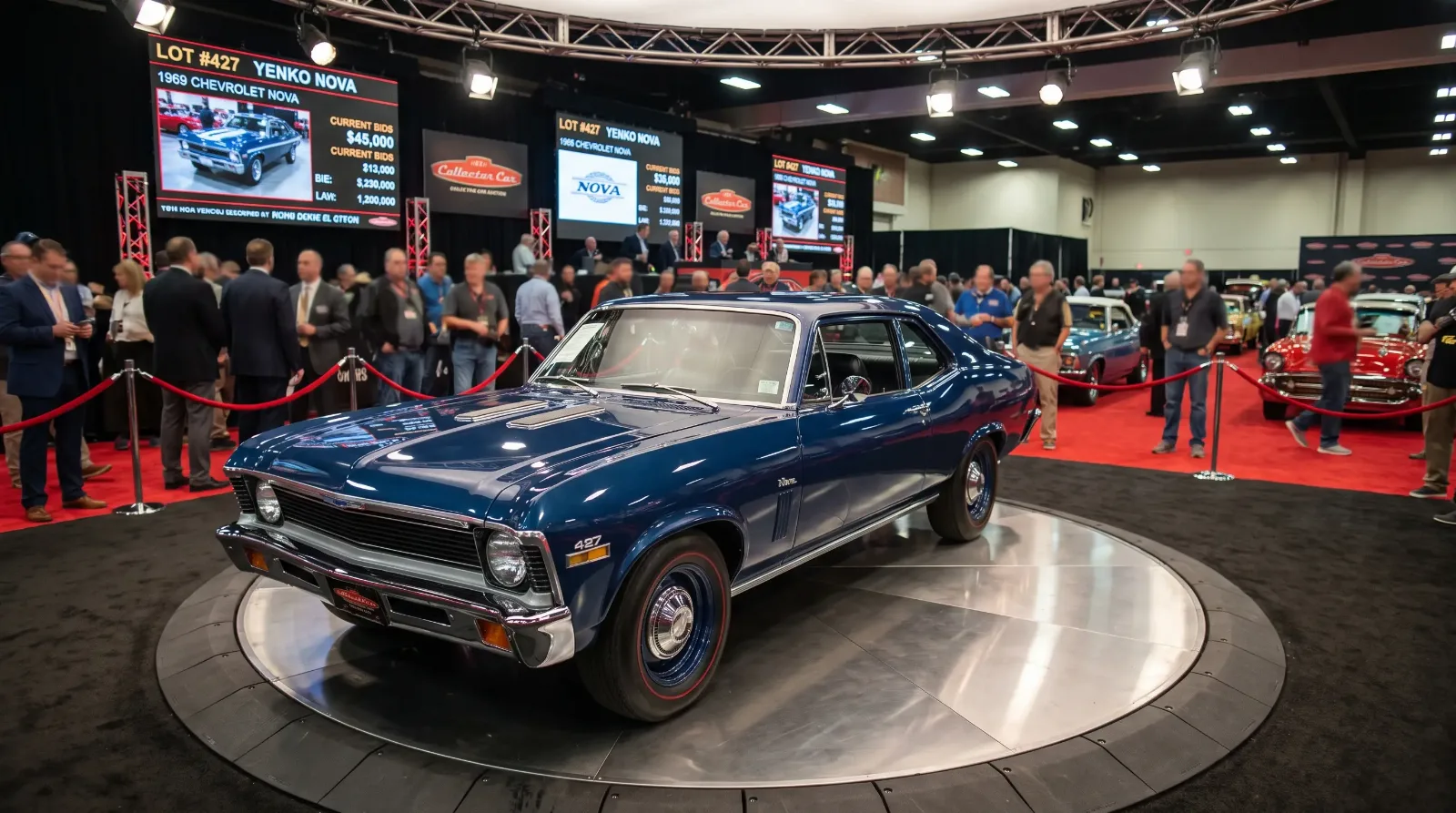
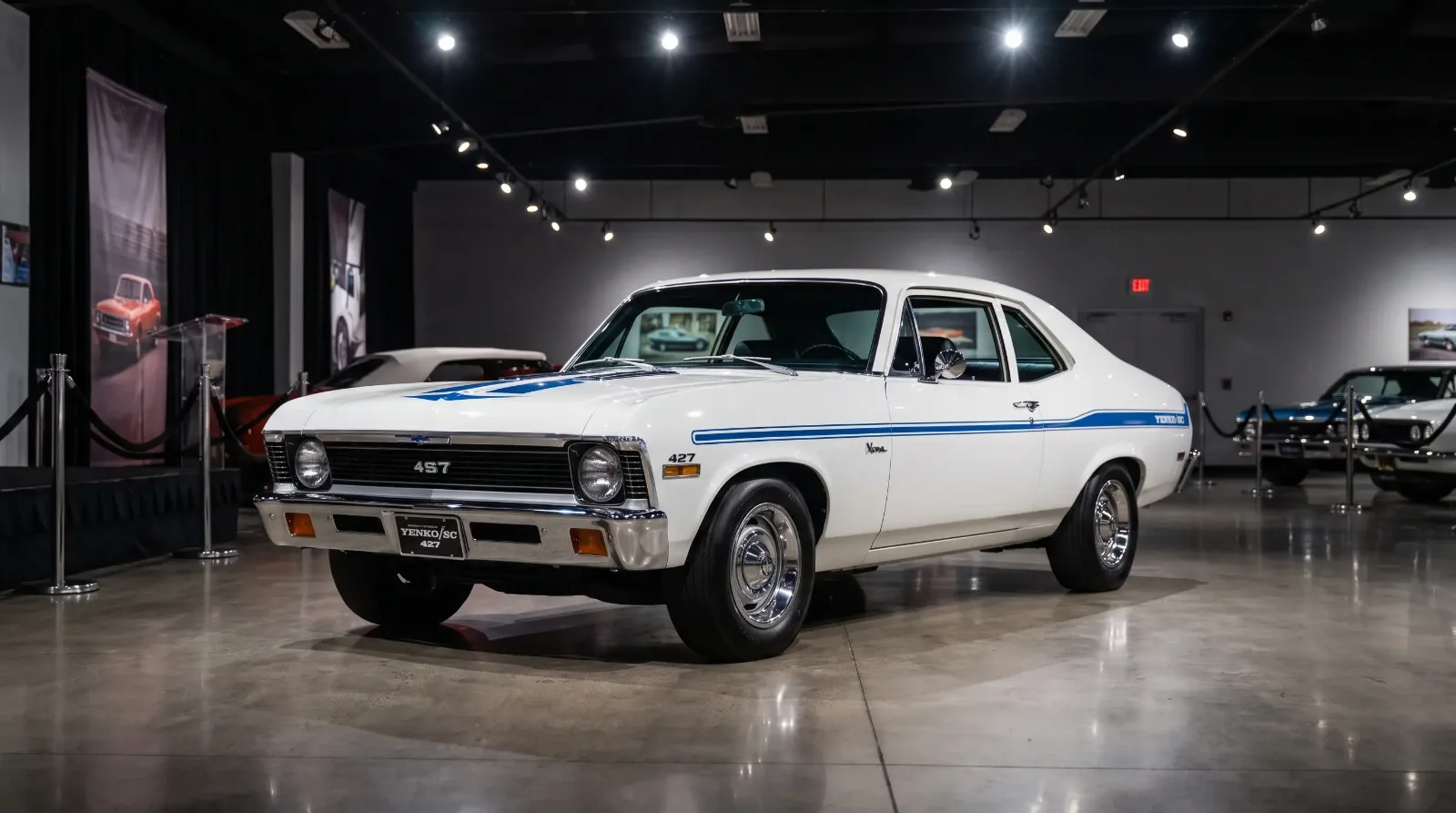
The car that set the current public auction record for a Yenko Nova is a 1969 Chevrolet Nova, one of the roughly 37 to 38 Yenko-converted L72 427 cars built that year, restored to original specification with a numbers-matching engine, an M21 four-speed manual transmission, the correct heavy-duty suspension pieces, and the factory-style Yenko/SC stripe package. It is that combination of a matching-numbers drivetrain and a documented, faithful restoration, not just clean paint, that separated it from the rest of the field. What is consistent across record sales in this niche is that the winning car always has more documentation than the field, not just better cosmetic condition.
The sale itself
The current record stands at $852,500, set at Mecum's Kissimmee auction in early 2026. Bidding opened at $300,000 and a second bid of $450,000 had already pushed the car past the previous Yenko Nova record of $418,000, set back in 2015, before the final hammer price was reached. What I can say with confidence, having tracked this segment for years, is that the sale took place at a major collector car auction rather than a private transaction, which matters for how much weight the number should carry. Public auction results are transparent and verifiable in a way private sales are not, and a hammer price with a buyer's premium disclosed is a far more reliable data point than a rumored private figure that can never be checked against a real transaction record.
| Sale type | Transparency | Reliability as a market benchmark |
|---|---|---|
| Major auction house, hammer price disclosed | Full, publicly verifiable | High |
| Auction house, reserve not met | Partial, no-sale still informative | Moderate |
| Private treaty sale | None, price rarely confirmed | Low, treat as rumor until documented |
What the record means for the rest of the market
A record sale is a ceiling, not a floor, and treating it as a baseline for every car with a similar badge is the single most common valuation mistake I see from private sellers. The record car had a specific combination of rarity, condition, and paperwork that most Novas on the market, including plenty of genuine Yenko cars, simply do not match. If your car is missing even one leg of that stool, documentation especially, price it against the broader documented tier, not against the headline number.
I get calls regularly from owners who read a headline auction result and want an appraisal built around it. My job at that point is to walk through exactly what separated the record car from theirs, feature by feature, rather than simply agreeing the number sounds right. It rarely is right, and the conversation is more useful to the owner than a number that flatters their car for a week until a real buyer's inspection brings it back to earth.
"A record sale tells you what one buyer paid for one car on one day. It does not tell you what your car, sitting in your garage without that same paperwork, is actually worth to the next buyer in line."
David Mercer
What it would take to break the record again
Beating the current benchmark requires a car that improves on at least one dimension the record holder already maxed out. That usually means an even rarer factory configuration, an unbroken ownership chain with no gaps, or genuinely lower verified mileage than anything that has previously come to market. Absent one of those, a car simply matching the record holder's profile will likely sell just under it, since buyers tend to pay a premium for being first rather than second at a given documentation tier.
There is also a timing element that gets underweighted. The buyer pool willing to pay record money for a documented Yenko Nova is small, and it takes real marketing and the right auction slot to reach enough of them at once to push a hammer price past the existing benchmark. A genuinely record-quality car sold through a quiet regional auction with limited advance promotion will often underperform a slightly lesser car sold with a full marketing push at a marquee event. The car matters most, but the sale itself is not a passive event either.
For more on the super-car Novas that make up this market, and how Yenko's dealer network built the supply these auctions now draw from, keep reading the series. The full platform history behind all of it is covered in our Nova retrospective.
Sources and notes
- Classic.com: 1969 Chevrolet Yenko Nova, Mecum Kissimmee 2026
- Classic Car Auctions: 2026 Mecum Kissimmee Sale Top Results
- Hagerty Media: The Yenko Name Still Packs a Punch in the Muscle Car Market
- Hagerty Valuation Tools: 1969 Chevrolet Nova Yenko
- Skillset Magazine: 1969 Yenko Nova, The Incredibly Rare 427-Powered Nova
- Mecum Auctions: Record Sale, 1969 Chevrolet Yenko Nova
Related Reading
Have a
Chevrolet Nova
for Sale?
Reach thousands of serious classic car collectors across the US.
Sell It Here →
Are You a Classic Car Dealer?
List your full inventory and connect with targeted classic car buyers.
Join as a Dealer →
#collector car auctions
#muscle car market
#Yenko Chevrolet
#Most expensive Yenko Nova
#Yenko Nova auction
#Chevrolet Nova values

About the author
David Mercer
Classic car market analyst with two decades of experience tracking collector car valuations, auction results, and investment trends.
Related Listings - Chevrolet Nova




Comments
Be the first to comment on this article.