
Every generation has a car people call the rarest Chevy Nova, usually right before they try to sell you one. The claim is worth examining carefully, because in this specific case it happens to hold up better than most. The Yenko-converted 427 Nova of 1969 was built in genuinely small numbers, through a dealer conversion process that Chevrolet never offered on any factory order sheet, and it has survived to the present in even smaller numbers than it was built in. That combination, low production and low survival, is what actually makes a car rare. Fame is a separate question.
Car Features
7 min read
Why Yenko Novas Are Holy Grails
The COPO 427 Nova is a genuine claim to the rarest chevy nova title, but rarity without documentation is just a story. An appraiser's read on what actually holds value.
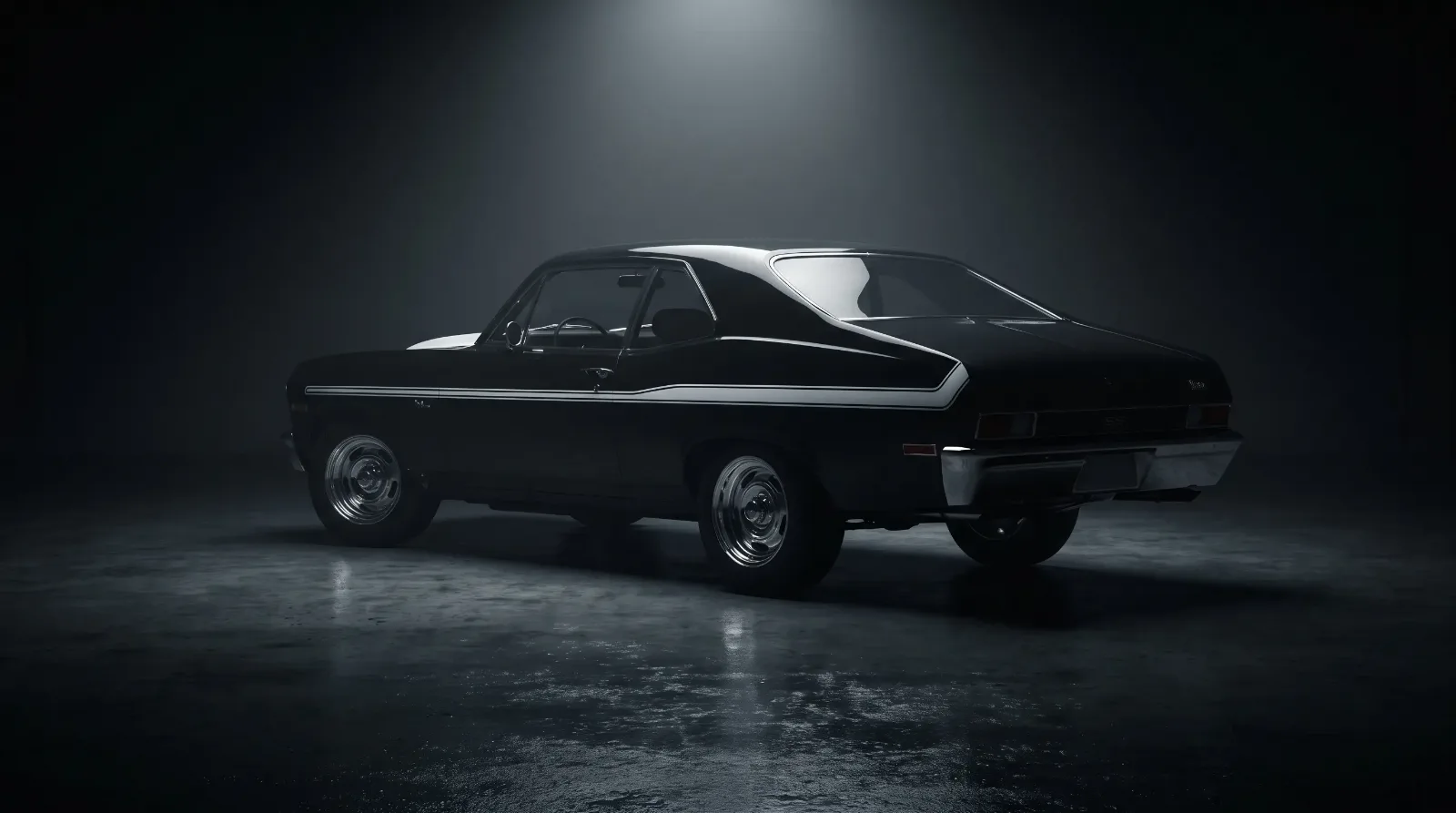
The rarity claim, and why it holds up
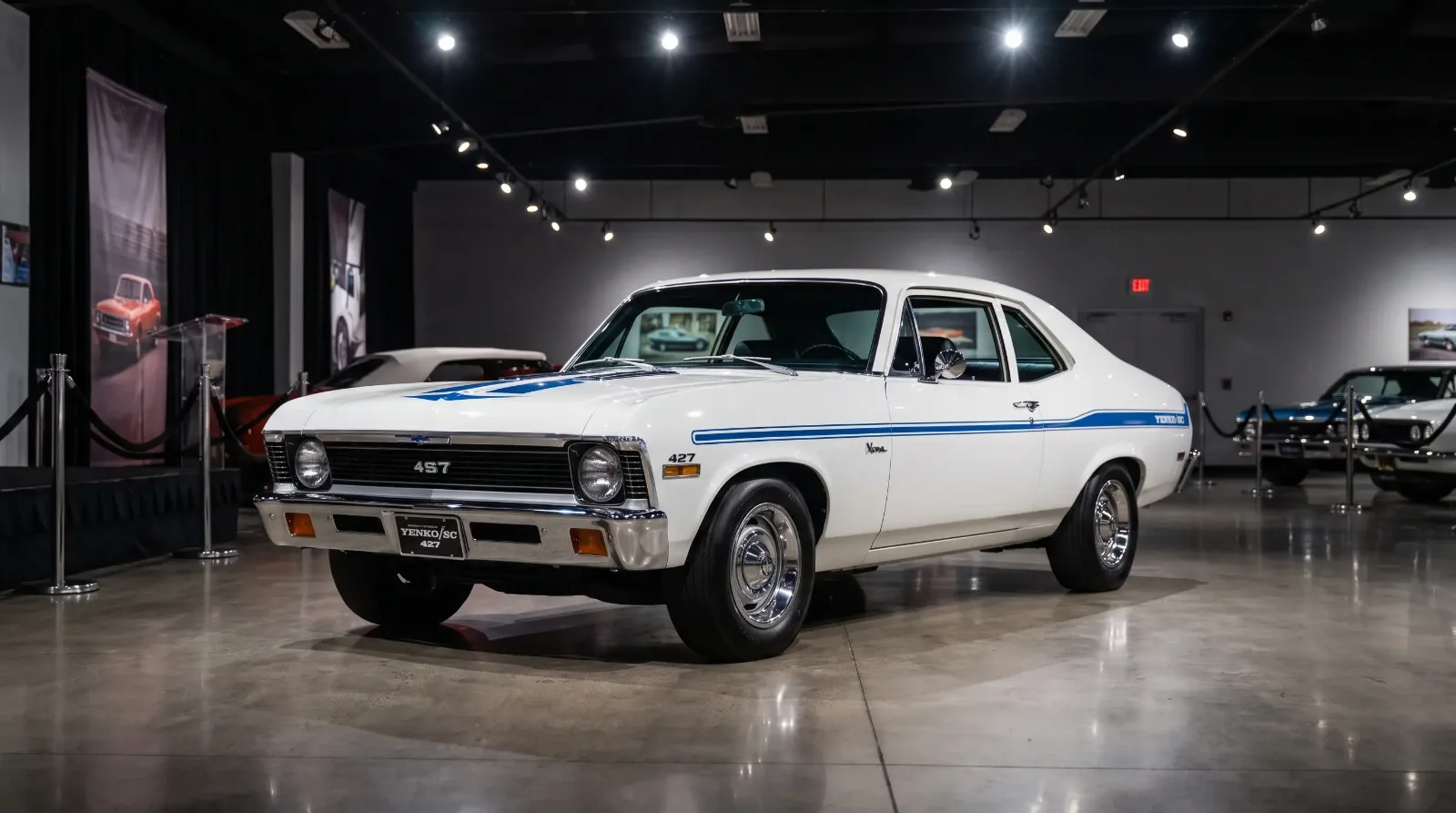
Production figures for the 1969 Yenko Nova 427 are disputed even among specialists, and honest appraisers say so instead of picking the number that sounds best. The Yenko Sportscar Club's own count of 37 cars, with some researchers arguing for 38, is the figure that keeps recurring, covering the L72 427/425hp combination Yenko installed in place of the factory 396. Whatever the precise figure, it is small enough that a genuine example is a five-figure-and-up rarity before you even discuss condition. The claim survives scrutiny. The number attached to it should always come with a citation, not a dealer's memory.
What inflates confusion is the aftermarket. Because the factory never built a 427 Nova at all, and because the swap into a Nova body is mechanically straightforward for anyone with the parts and the will, clones and unverified swaps outnumber genuine Yenko-documented cars by a wide margin. That is not a knock on clone builders, a well-executed tribute car is an honest product if sold as one. It is a warning about what "rare" is worth without proof behind it.
The dealer paperwork that makes or breaks value
A genuine Yenko Nova 427 started life as a factory-documented SS396 Nova, carrying a build sheet, a Protect-O-Plate, and a VIN sequence consistent with the standard 396 production run, and on top of that base documentation it needs Yenko's own dealer invoice or period paperwork proving the 427 swap actually happened at his shop. Missing any one of those is not automatically disqualifying, cars lose paperwork over five decades of ownership changes, but it shifts the burden of proof onto the seller. I have appraised cars where the owner produced a broadcast sheet found under carpet padding during a restoration, and that single scrap of paper added a meaningful percentage to the appraised value overnight. Paper is not decoration here. Paper is the asset.
What sets a genuine car apart from a clone
Beyond paperwork, examiners look at casting numbers on the block and heads, the date codes stamped into those castings, and whether they fall in a plausible window after the car's factory build date, since the 427 went into these cars at Yenko's shop sometime after assembly, not on the Chevrolet line. A block cast well before the car existed, or too long after Yenko's shop stopped doing these conversions, is a hard stop, no argument survives that. Body tag stampings, cowl VIN placement, and the presence or absence of factory-correct SS396 trim details alongside Yenko's own Stinger-package components round out the picture. None of these checks are exotic. They are the same due diligence any appraiser runs on a car claiming rare factory options, applied with extra rigor because the money at stake is higher.
| Verification point | What it tells you |
|---|---|
| Block and head casting dates | Whether the drivetrain predates or matches the claimed build |
| Broadcast sheet / build sheet | Original factory order details, options, and destination dealer |
| Protect-O-Plate | Cross-checks VIN, engine, and options against factory records |
| Body tag stamping | Confirms trim level and assembly plant consistency |
Auction results, and what didn't sell
Low production numbers alone do not make a car valuable, they only set an upper bound. What determines actual scarcity today is how many of those originally small production runs survived decades of ordinary use: engine swaps for warranty or reliability reasons, accident damage, rust, and simple neglect during the 1970s and early 1980s when muscle cars were unfashionable used cars rather than appreciating collectibles. A number of genuine Yenko Novas are known to have lost their original drivetrains long before anyone thought to protect them, either swapped out under warranty after a failure or replaced by an owner who wanted something more streetable.
That means the population of cars retaining both original documentation and original matching-numbers components is smaller still than the raw production figure suggests. Appraisers who quote a production number without addressing survivorship are giving you half the picture. Ask any specialist how many of the originally built cars are believed to remain in fully documented, matching-numbers condition, and expect a noticeably smaller answer than the production count itself.
The public record is instructive precisely because it includes failures. More than one Nova billed as a genuine Yenko car has gone through a major auction with a no-sale result, typically after pre-sale scrutiny raised questions the consignor could not answer about casting dates or missing paperwork. A no-sale is data. It tells you the market, when given time to look closely, will walk away from a story it cannot verify, even a compelling one. For readers following the super-car Novas as a group, this pattern holds across the whole family, not just this one variant.
Conversely, the documented sales that do clear the block establish real benchmarks, and those benchmarks sit well above anything achievable by a car missing its paper trail, regardless of how correctly it was built.
"Rare and valuable are not the same word. A car can be genuinely rare and still be a poor investment if nobody can prove it. Prove it first, then talk about rarity."
Marcus Feld
The appraiser's caveat
My job is to price risk, not romance. A documented Yenko Nova is a strong asset: liquid at the right auctions, defensible to insurers, and unlikely to lose ground even in a soft market for muscle cars generally. An undocumented car claiming the same pedigree is a different instrument entirely, one where the discount reflects genuine uncertainty rather than unfair skepticism. Buy the first kind if you can find and afford it. Treat the second kind as a driver-quality tribute car, price it accordingly, and enjoy it without pretending it is something a bill of sale cannot support. For the rest of the story on how this family of cars came to exist, keep reading the series.
One more caveat worth stating plainly: even a fully documented Yenko Nova is not immune to a soft collector market. Liquidity in this niche depends on a small pool of serious buyers who understand exactly what they are looking at, and that pool can thin out during broader economic downturns just like any other collectible asset class. Documentation protects the floor under a car's value. It does not guarantee the ceiling holds in every market cycle. Anyone buying at the top of this segment should understand they are buying a thin, specialist market, not a broad and liquid one, and should size their expectations and their exit timeline accordingly.
Sources and notes
Related Reading
Have a
Chevrolet Nova
for Sale?
Reach thousands of serious classic car collectors across the US.
Sell It Here →
Are You a Classic Car Dealer?
List your full inventory and connect with targeted classic car buyers.
Join as a Dealer →

About the author
Marcus Feld
Accredited collector-car appraiser who reads the market through hammer prices, condition tiers and risk.
Related Listings - Chevrolet Nova
Comments
Be the first to comment on this article.