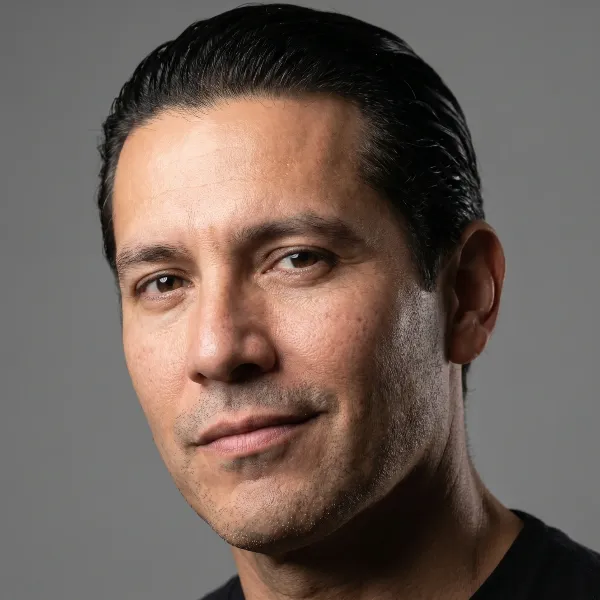
The Man Behind the Title
Some nicknames are bestowed overnight. Others are earned across decades of consistent, unglamorous excellence — through cold mornings on unfamiliar racetracks, through shop floors covered in Corvette parts, through conversations with engineers who quietly valued a racer's honest feedback. Dick Guldstrand's title, "Mr. Corvette," belonged to the second kind. It was not a marketing invention. It was a recognition, offered informally by the Corvette community itself, for a career that touched nearly every dimension of the car's racing and development history.
Guldstrand was not a factory driver in the traditional sense. He did not race under a Chevrolet contract during the sport's most glamorous eras. What he did was arguably more durable: he built a life around the Chevrolet Corvette — as a competitor, as a development resource, as a builder, and ultimately as a custodian of the car's racing heritage. That breadth is what distinguished him from contemporaries who may have achieved more in any single category.
Racing the Production Classes: SCCA and the Late 1950s–1960s
Guldstrand came of age as a racer during the period when the Sports Car Club of America's production classes were the primary arena for American sports car competition. The Corvette, introduced in 1953 and progressively developed through the mid-1950s, had by the late 1950s become a serious tool for SCCA production class racing — particularly after the arrival of the solid-axle models with genuine V8 power and improved handling.
Accounts suggest Guldstrand became one of the more prominent Corvette racers in SCCA competition during this era, particularly in the B-Production and A-Production classes where the Corvette competed against sophisticated European machinery. Period sources indicate he was a consistent, technically disciplined driver rather than a purely aggressive one — a distinction that mattered enormously in endurance-format events and in the development work that would follow.
By the mid-1960s, the landscape of American sports car racing was shifting rapidly. The full arc of Corvette racing history during this decade was shaped by competing forces: Chevrolet's official withdrawal from factory racing support following the 1957 AMA ban, the rise of privateer efforts, and the simultaneous development of increasingly sophisticated European competitors. Guldstrand navigated this environment as a privateer racer who nonetheless maintained informal relationships with Chevrolet's engineering community — relationships that would define the next phase of his career.
The Development Driver: Working with Chevrolet
The precise nature of Guldstrand's relationship with Chevrolet Engineering is not always fully documented in the public record, but the broad contours are consistent across multiple period accounts: he served, at various points, as an informal development driver and testing consultant for Corvette-related projects, particularly during the late 1960s and into the 1970s.
This kind of arrangement was not unusual for the era. Following the AMA racing ban of 1957, General Motors officially distanced itself from direct racing support, but Chevrolet engineers — particularly those associated with the Corvette — maintained unofficial channels to the racing community. Racers like Guldstrand, who had demonstrated both speed and the analytical ability to communicate what a car was doing, were quietly useful to development engineers who needed real-world feedback that factory test drivers sometimes could not provide.
Reportedly, Guldstrand's involvement included testing and evaluation work connected to several Corvette development programs during this period. The specific programs and his precise contributions are not always clearly established in the historical record, but his presence in the orbit of Corvette development during the late-C2 and early-C3 generations is consistent with what multiple sources have described. Those who worked around Chevrolet's Corvette programs during this era have generally credited him as someone whose input was taken seriously, even when his name did not appear in official documentation.
The C3 Corvette, introduced for 1968, represented a significant styling departure from the limited-production Grand Sport racers and the engineering experiments that had defined the mid-1960s. It was also the generation that Guldstrand's shop would become most closely associated with preparing for competition.
"He knew what the car was telling him, and he knew how to tell the engineers what the car was saying. That's a skill most racers don't have."
— Period account attributed to Corvette development associates, exact source varies
Guldstrand Motorsports: The Burbank Shop
At some point in the late 1960s or early 1970s — the precise founding date varies somewhat by source — Guldstrand established his own Corvette specialty operation in Burbank, California. The shop, operating under various names associated with his name over the years, became one of the most respected Corvette preparation facilities in the country.
The scope of the operation was broad. Guldstrand and his team prepared Corvettes for customers ranging from serious club racers to collectors seeking high-performance street builds. The shop developed expertise in suspension tuning, engine preparation, and the kinds of chassis work that separated a competitive Corvette from a merely fast one. In an era before widespread aftermarket support for Corvette performance — before the cottage industry of specialist suppliers that exists today — a shop with Guldstrand's combination of racing experience and engineering understanding was genuinely rare.
His customer base reportedly included both amateur racers and individuals who simply wanted their Corvettes prepared to the highest possible standard. The shop's reputation spread largely through word of mouth within the Corvette community — a community that, by the 1970s, had developed into a substantial subculture with its own events, publications, and networks.
The GS78: A Purpose-Built Racer
The most tangible evidence of Guldstrand's engineering ambitions was the GS78 — a purpose-built Corvette-based racing car developed by his shop in the late 1970s. The project represented an attempt to move beyond preparation of production Corvettes and create a purpose-engineered racing machine built around Corvette DNA.
Details about the GS78's exact specifications, production numbers, and racing record are not always consistently documented across available sources, and the project appears to have been limited in scope. What the effort demonstrated was Guldstrand's willingness to invest in original engineering rather than simply refining what Chevrolet had already produced. The car was reportedly shown at events and generated significant interest within the Corvette community, even if its impact on actual competition results was modest by the standards of fully-funded professional racing programs.
The GS78 project is perhaps best understood as a statement of intent: an expression of Guldstrand's belief that the Corvette platform had engineering potential beyond what the factory had fully exploited, and that a dedicated specialist operation could develop that potential independently. It placed him in a lineage of Corvette independents that included figures associated with the L88 racing engine era — men who pushed the car's limits outside official factory structures.
Community Presence and the "Mr. Corvette" Identity
Racing results and development work, however significant, do not fully explain a title like "Mr. Corvette." The nickname also reflected Guldstrand's sustained presence in the Corvette community over decades — at events, at concours, at conventions, and at the informal gatherings that define any enthusiast subculture.
By the 1980s and 1990s, Guldstrand was a recognizable figure at major Corvette events across the country. He participated in judging at concours events, appeared at Corvette conventions, and remained accessible to enthusiasts in a way that some racing figures of his generation did not. His combination of actual racing and development credentials with genuine enthusiasm for the car and its community made him an authoritative presence at such events.
There was also the pedagogical dimension: Guldstrand reportedly conducted driving schools and performance clinics over the years, passing on the kind of car-control knowledge that he had developed through decades of competition. This direct transmission of expertise — from experienced racer to aspiring enthusiast — is a significant part of what earned him the community's respect and, eventually, his informal title.
| Era | Primary Role | Significance |
|---|---|---|
| Late 1950s–1960s | SCCA production class racer | Established racing credentials; developed analytical feedback skills |
| Late 1960s–1970s | Development consultant, Chevrolet | Informal but reportedly significant input on Corvette development programs |
| Early 1970s onward | Shop owner, Burbank CA | Built one of the country's premier Corvette preparation facilities |
| Late 1970s | GS78 developer | Purpose-built Corvette racing car project |
| 1980s–2000s | Community figure, judge, instructor | Sustained presence at Corvette events; driving schools; concours judging |
Why "Mr. Corvette" Endures
Dick Guldstrand's legacy is somewhat unusual in the history of American motorsport because it resists reduction to a single defining achievement. He did not win Le Mans. He did not set a landmark land speed record. He did not drive the car that became a famous cultural symbol in the way that a few of his contemporaries did. What he did was sustain a career of consistent, multi-dimensional excellence around a single car over several decades — as a racer, as an engineer's collaborator, as a builder, and as a community figure.
That kind of sustained contribution is, in many ways, harder to achieve than a single dramatic result. It requires not just talent but commitment, not just speed but analytical depth, and not just personal ambition but genuine investment in a broader community. The SCCA and Trans-Am racing scenes produced many fast drivers; far fewer of them built careers as complete and as durable as Guldstrand's.
The informal title was an acknowledgment of all of this. "Mr. Corvette" was not awarded by any sanctioning body or corporate sponsor. It was conferred by the community of people who cared most about the car — the racers, the collectors, the engineers, and the enthusiasts who encountered Guldstrand over decades and recognized in him something rarer than outright speed: a man whose entire professional identity was organized around making Corvettes go faster, handle better, and compete more successfully, year after year, without a headline-generating shortcut in sight.
Sources and notes
These sources provide background on Corvette racing history, SCCA production class competition, and the broader context of Corvette development during the periods covered in this article. Specific details about Guldstrand's career have been hedged where primary documentation is limited.