Two Men, One Car, No Compromise
Great products rarely emerge from harmony. They come from argument — from two people who care deeply about something and disagree, productively and sometimes bitterly, about what it should be. The Corvette is perhaps the clearest example of this principle in automotive history. For roughly three decades, it was shaped by a sustained tension between two figures who both loved the car and could not fully agree on what it was for.
Zora Arkus-Duntov, the Belgian-born engineer who became the car's technical conscience, believed the Corvette had to work. It had to handle, stop, breathe through corners, and hold its own against whatever Europe was producing. Bill Mitchell, the flamboyant designer who succeeded Harley Earl as head of GM Styling in 1958, believed the Corvette had to look like nothing else on the road. He thought in shapes and silhouettes, in the visual shock of a car arriving at the edge of your peripheral vision and demanding your attention before you'd decided to give it.
Neither man was wrong. That, ultimately, is the point.
Authority Without Overlap — and the Friction That Followed
The organizational structure at General Motors in the 1960s and 1970s was not designed to resolve disagreements between Duntov and Mitchell. It was designed, more or less, to guarantee them. Duntov ran Corvette engineering. Mitchell ran GM Styling. Their domains were formally distinct, and neither could unilaterally override the other. In practice, this meant that every major Corvette decision involved a negotiation, and negotiations between two strong-willed men who held their positions on aesthetic and engineering grounds rarely ended cleanly.
What made the dynamic unusual — and generative — was that both men operated with a kind of institutional cunning. Mitchell, in particular, understood that fait accompli was a more effective tool than persuasion. His use of Corvette show cars through the early 1960s was not simply a design exercise. It was strategy. By debuting the Mako Shark and its successors publicly — generating press coverage, dealer enthusiasm, and executive attention — Mitchell was, in effect, committing GM to a visual direction before Duntov and the engineering team had been given a formal say. Read more about Mitchell's approach in the history of the Mako Shark show cars and how they drove the production design agenda.
Duntov, for his part, used technical data the way Mitchell used sketches. When he objected to a design decision, he came with numbers — weight distributions, drag coefficients, suspension geometry. His objections to the C3 Corvette's aerodynamics and mass were well documented internally, and period accounts suggest he made his displeasure known at length. But Mitchell's C3 — descended directly from the Mako Shark II show car — went forward largely as Mitchell intended, because the visual case had already been made in public.
The C3 Battle: Weight, Drag, and the Shape That Won
The third-generation Corvette, introduced for 1968, remains the clearest case study in what the Duntov-Mitchell rivalry actually produced. The C3's origins in the Mako Shark II show car were transparent — Mitchell had essentially shown the world what the next Corvette would look like before engineering had signed off. Duntov's objections were structural and aerodynamic. The body was heavier than he wanted. The fastback roofline, as dramatic as it was visually, reportedly created lift at speed rather than suppressing it. The cabin was cramped in ways that complicated packaging.
He lost most of those arguments. The C3 went into production looking, in all essential respects, the way Mitchell wanted it to look. And the market responded accordingly — the C3 was a commercial success throughout its unusually long production run, which stretched from 1968 to 1982.
But to conclude that Mitchell simply won is to misread what happened. Duntov's engineering team extracted genuine performance from that body. The small-block and big-block V8 options, the suspension refinements that accumulated across the C3's production life, and the tuning that gave certain variants real sporting credibility — these were Duntov's contribution to a car whose shape he hadn't chosen. The C3 worked, in ways that mattered, because someone with Duntov's priorities was watching the engineering even when the styling had already been decided.
"I did not make the Corvette. I only helped it become what it always wanted to be."
— Zora Arkus-Duntov, attributed in period interviews
The Mid-Engine Question: Duntov's Great Unfinished Project
No single issue captures the Duntov-Mitchell conflict more cleanly than the question of where to put the engine. Duntov had been arguing for a mid-engine Corvette since the late 1950s. His engineering logic was impeccable: moving the engine behind the driver and in front of the rear axle would transform the car's weight distribution, its handling balance, and its ability to translate power to the road. The best sports cars in the world were moving in that direction. Ferrari, Lamborghini, and Porsche were all exploring or implementing mid-engine layouts. If the Corvette was serious about competing at that level, it needed to follow.
Mitchell disagreed, and his objection was not purely aesthetic — though it was partly that. The Shark design language that defined the Corvette's visual identity through the late 1960s and 1970s depended, in Mitchell's view, on front-engine proportions: the long hood, the short rear deck, the visual weight planted over the front wheels. A mid-engine car would require a fundamentally different silhouette. Mitchell argued that changing the architecture would mean abandoning the identity he had spent years building.
The full story of Duntov's mid-engine campaign is one of persistent advocacy against institutional resistance. He produced running prototypes — most notably the CERV I and CERV II research vehicles — that demonstrated the concept's viability. GM's internal politics, cost concerns, and ultimately Mitchell's resistance combined to keep the mid-engine layout off the production Corvette until 2020, when the C8 finally delivered what Duntov had wanted four decades earlier. Duntov died in 1996. Mitchell in 1988. Neither saw the resolution.
What They Agreed On — and Why That Matters More
The risk in framing the Duntov-Mitchell relationship as a rivalry is that it obscures the deeper consensus underneath the conflict. Both men agreed on the things that actually mattered. The Corvette had to be special. It could not become ordinary. It had to be taken seriously as a performance car, not merely sold as one. Neither man would have accepted a Corvette that looked spectacular but couldn't hold a corner, or one that handled brilliantly but looked like an afterthought.
That shared premise is what kept their friction productive rather than destructive. Their arguments were always arguments about how to achieve something they both wanted — not arguments about whether to achieve it. And the institutional structure at GM, for all its inefficiency, prevented either man from having the final word. Duntov couldn't simply engineer away the styling. Mitchell couldn't simply draw his way past the physics.
The result, across the Duntov era and beyond, was a car with a coherence that most manufacturers cannot achieve on purpose. The Corvette of the 1960s and 1970s was genuinely beautiful — not just dramatic, but composed — and it was genuinely fast, in ways that came from engineering attention rather than displacement alone. It was, in the fullest sense, a product of productive tension.
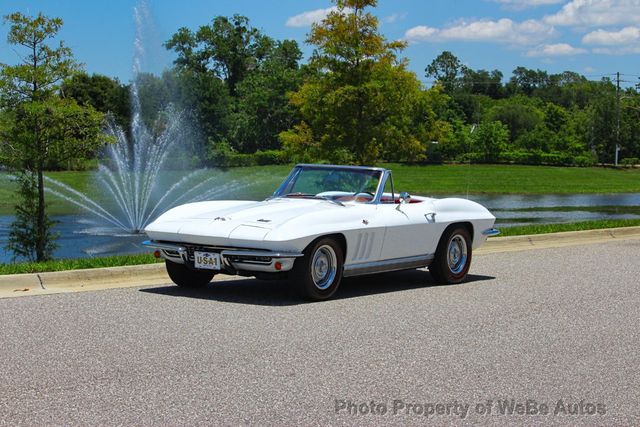
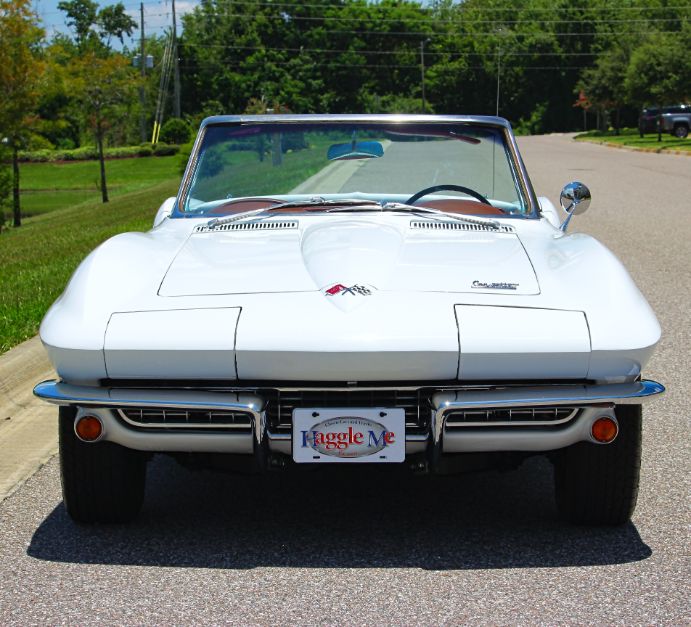
The C2 Sting Ray, which emerged from the early years of their collaboration, is probably the clearest expression of this dynamic working at its best. Mitchell's body was among the most visually arresting things GM ever produced. Duntov's chassis — independent rear suspension, four-wheel disc brake option, refined weight balance — was the first Corvette that could genuinely back up its appearance with behavior. They hadn't agreed. They had competed. And the car that came out of that competition has never needed an apology.
Sources and notes
- National Corvette Museum — History — institutional archive of Corvette development history, including engineering and design milestones
- Motor Trend — Zora Arkus-Duntov profile — comprehensive retrospective on Duntov's role in Corvette engineering and his internal campaigns
- Car and Driver — Bill Mitchell and GM Design — examination of Mitchell's design philosophy and his influence on postwar American automotive aesthetics
- Hemmings — The Mako Shark Story — detailed account of the show car lineage that Mitchell used to shape the C3's direction
- Road and Track — Corvette Mid-Engine History — traces Duntov's decades-long campaign for a mid-engine layout and its eventual realization in the C8