Two Shelbys, two very different missions
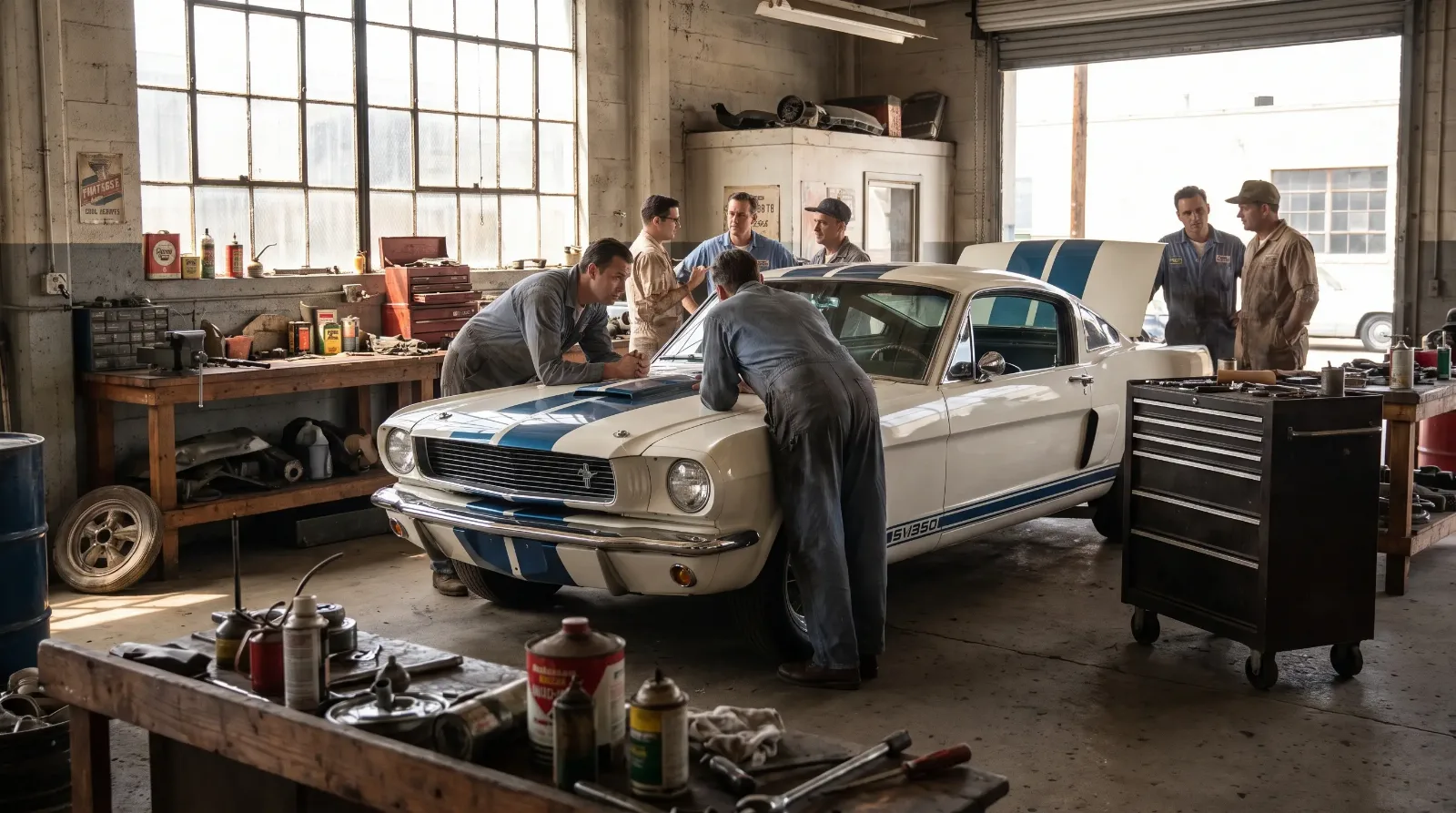
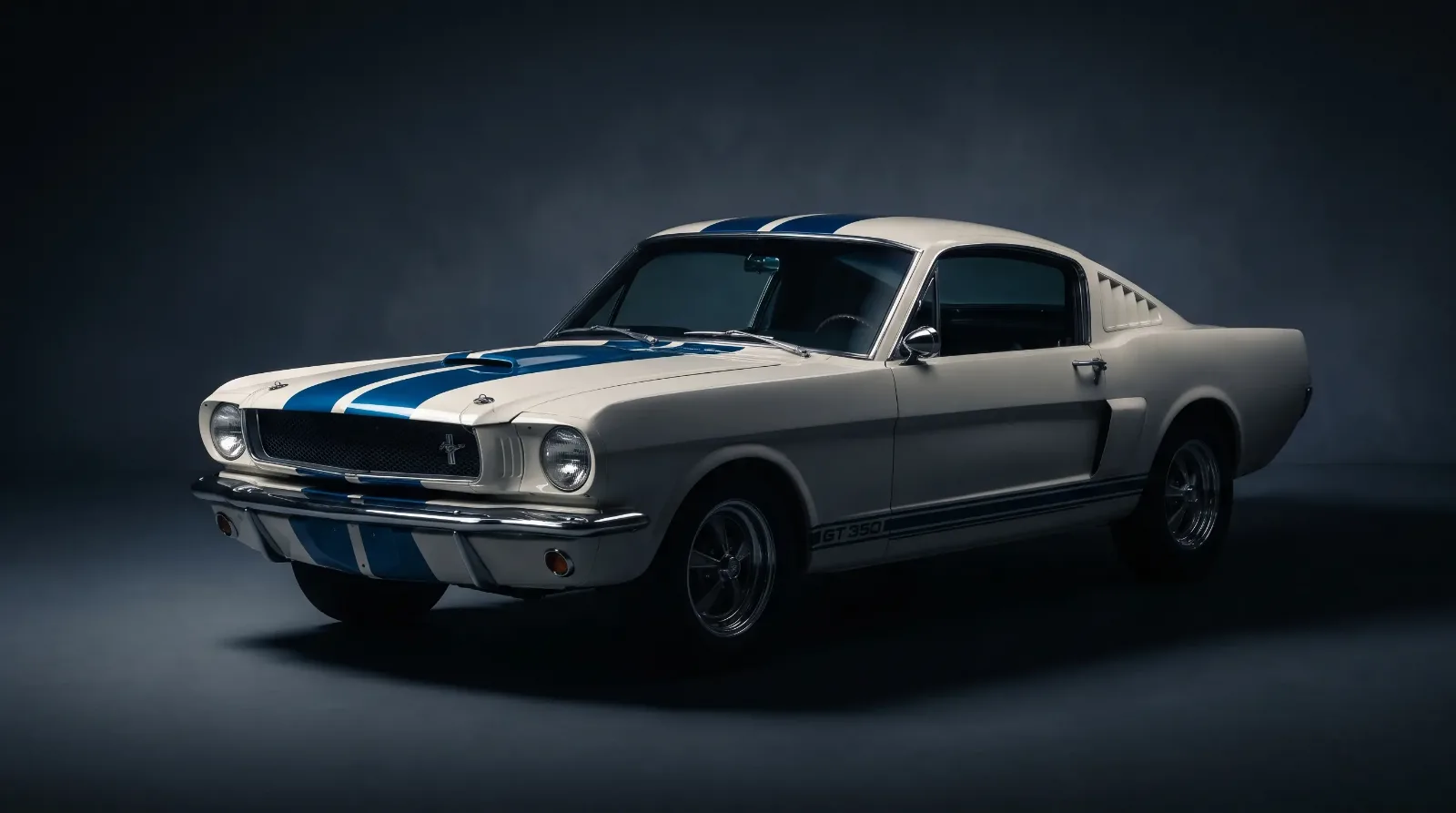
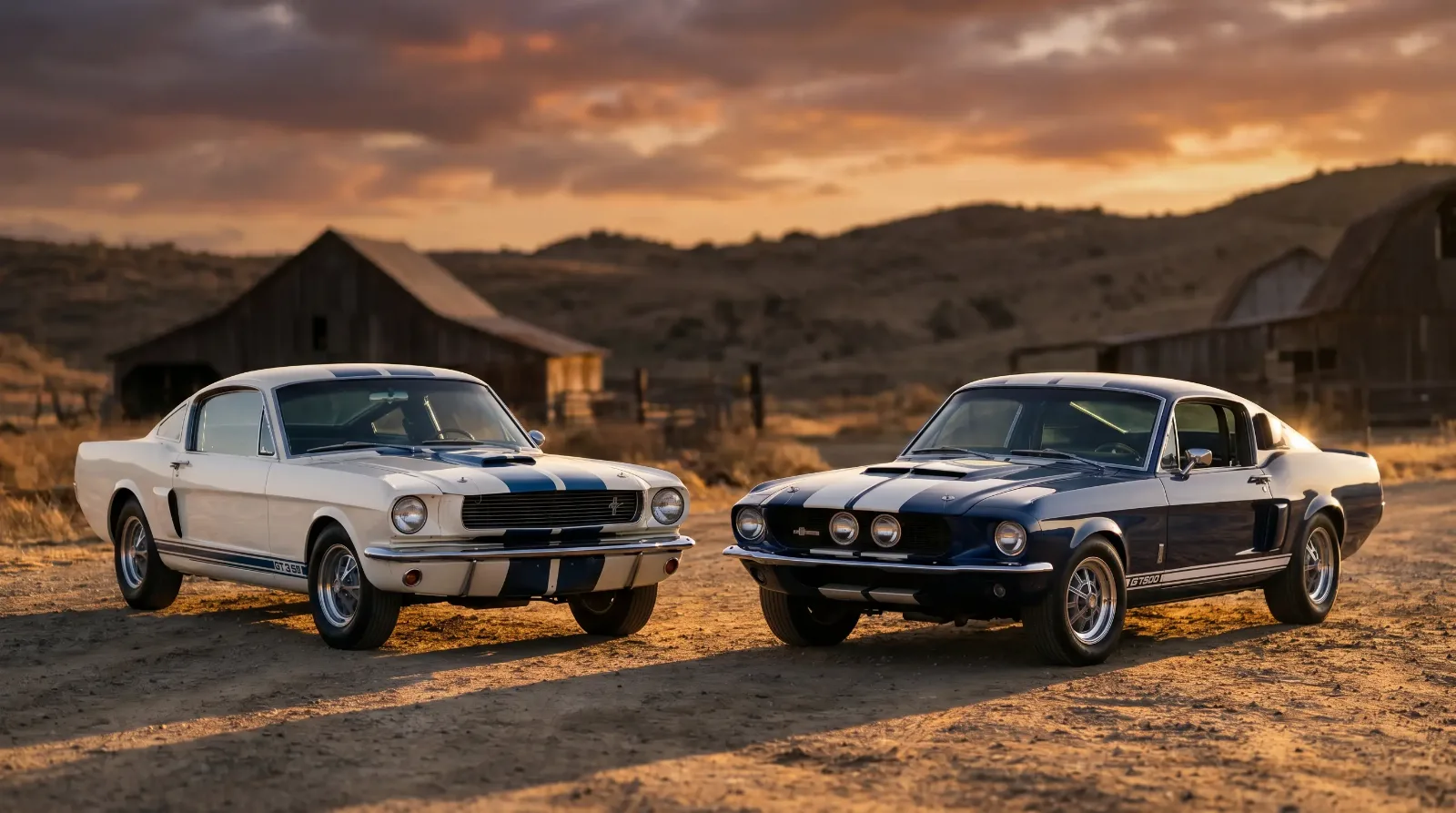
When Carroll Shelby sat down with Ford in late 1964, the deal was simple: take the Mustang, strip it of comfort, and turn it into a road-racing weapon capable of competing in SCCA B-Production. The car that emerged, the GT350, was not made for everyone. It was made for drivers who wanted to attack an apex, not cruise a boulevard. Then, three years later, Ford asked for something else entirely: a Mustang that could flatten the competition in a straight line, one that would outsell the competition on dealership floors. The GT500 answered that call, and in doing so, told a different story about what a Shelby Mustang could be.
These two cars share a name, a snake badge, and a place in automotive history. But their characters are as distinct as their engines. Understanding the difference between them is really understanding how an entire philosophy evolved, under pressure, across less than a decade of production. For anyone drawn to the story of the Shelby Mustangs, the GT350 and GT500 are the two poles around which everything else orbits.
The GT350: a road racer in a pony car body
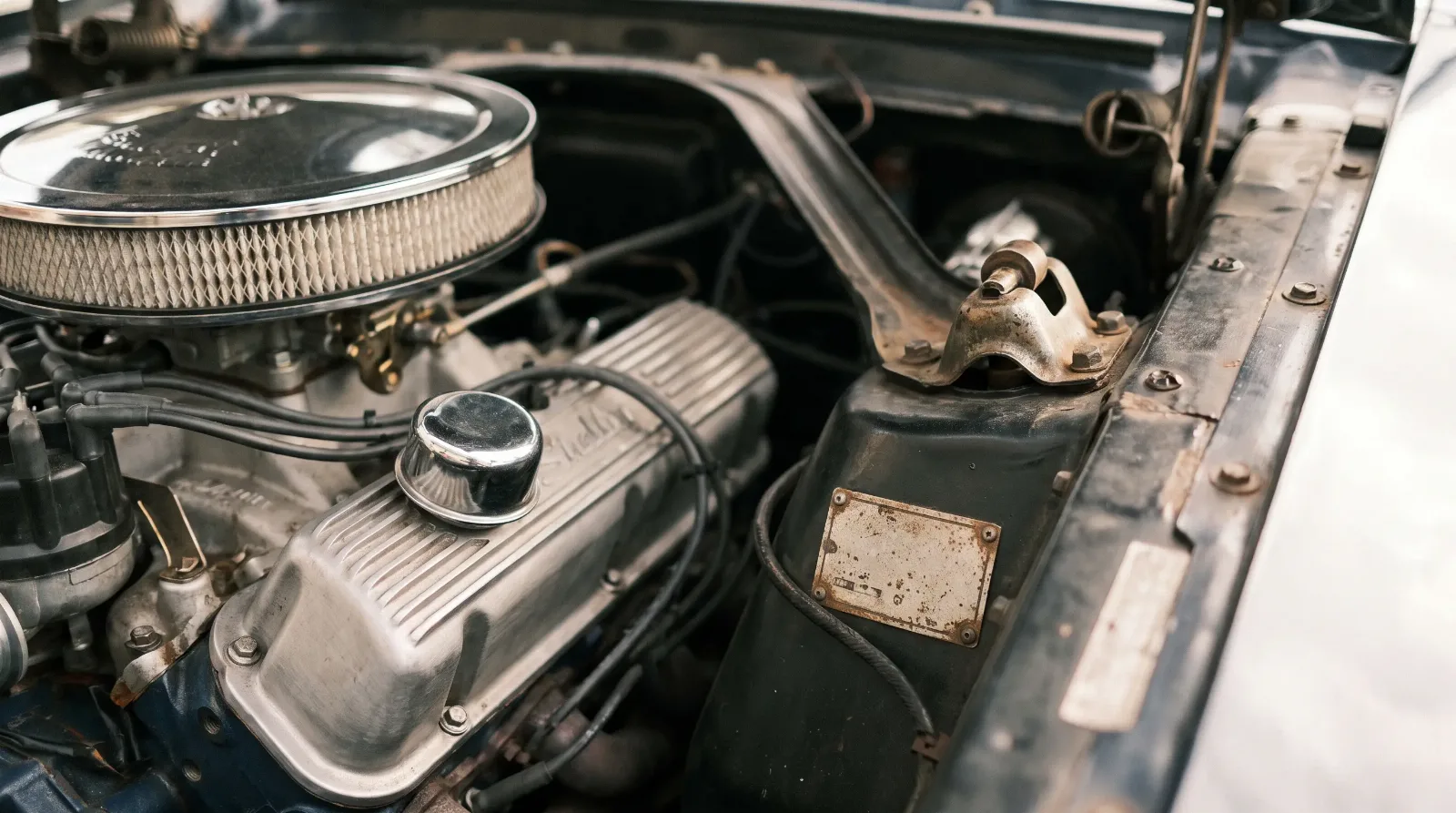
The original 1965 GT350 began with Ford's HiPo 289 cubic inch V8, rated at 271 horsepower in standard K-code form. Shelby pushed that figure to approximately 306 horsepower with revised carburetion, tubular headers, and a more aggressive cam. The suspension was lowered and stiffened with Koni shocks and relocated rear radius rods, eliminating the factory's tendency toward axle tramp under hard acceleration. The rear seat was deleted. So was most of the sound deadening. Every pound the car lost was a pound the driver gained in feedback and response.
The early cars also used a four-speed Borg-Warner T-10 transmission, and Ford Motor Company insisted the competition models carry a Detroit Locker differential, which made them genuinely difficult to drive slowly. This was not an oversight. The GT350 was not designed for slow driving.
For 1966, Shelby softened the car slightly to broaden its appeal. Hertz ordered a run of rental GT350s, which went out to customers who frequently returned them with evidence of track use. The Hertz cars are among the most studied production variants in the entire Shelby catalog. For 1967 the GT350 carried over the High Performance 289, still rated around 306 horsepower, and retained its reputation as a driver's machine, precise and demanding in a way that a standard Mustang never was. The switch to a 302 cubic inch small-block did not arrive until 1968.
The GT500 arrives with a big-block agenda
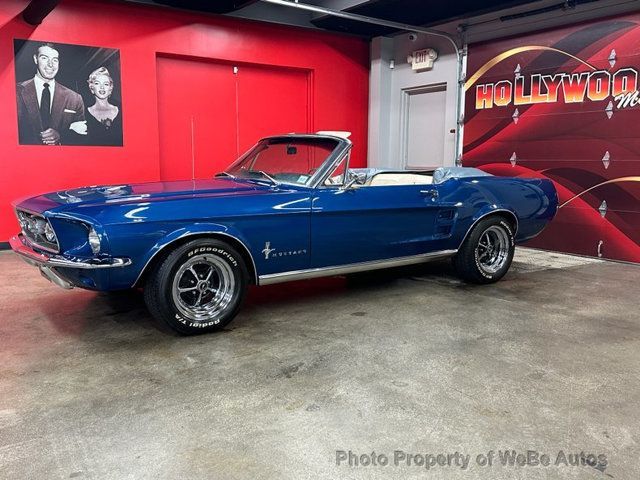
The 1967 model year brought the first GT500, and with it an entirely different approach. Ford had introduced a wider, heavier Mustang body that year, one capable of accepting the 428 cubic inch Police Interceptor V8. Officially rated at 355 horsepower, the 428 was a torque machine rather than a high-revving sports car engine. That factory figure is widely regarded as conservative; period observers and Shelby American itself suggested the engine made closer to 360 to 400 horsepower in practice, a common bit of 1960s underrating aimed at keeping insurers calm. It made its power low in the rev range, and it made a great deal of it.
The GT500 was also offered with an automatic transmission from the beginning, a detail that tells you everything about its intended audience. Where the GT350 demanded commitment from its driver, the GT500 was willing to negotiate. It was still a Shelby, still faster and better-sorted than a stock Mustang, but its appeal was rooted in effortless acceleration rather than corner-by-corner mastery.
A tiny handful of 1967 GT500s left Shelby American with the lightweight 427 cubic inch engine in place of the 428. Researchers who track these cars by serial number document only about three such examples, each created at Shelby's Los Angeles facility rather than ordered that way from Ford. These cars are among the rarest and most valuable Shelbys ever produced, and they occupy a particular place in the mythology of the line.
"The GT350 asks something of you the moment you sit down. The GT500 just invites you along for the ride. Both offers are genuine, but they are not the same offer."
— Patrick Walsh
| Model | Production years | Engine | Character |
|---|---|---|---|
| GT350 | 1965-1970 | 289 Hi-Po (1965-67), 302 (1968-70) | Road racer, driver-focused, nimble |
| GT500 | 1967-1970 | 428 Police Interceptor (1967-68), 428 Cobra Jet (1968-70) | Muscle cruiser, straight-line power, grand tourer |
| GT500KR | 1968 | 428 Cobra Jet | King of the Road, limited production, drag-strip focused |
When Ford took the wheel: 1968 and the shift in identity
The 1968 model year marked a turning point that collectors and historians still argue about. Ford assumed greater control over Shelby production, and the cars began to reflect corporate priorities more than Carroll Shelby's original philosophy. The interiors became more comfortable. Safety equipment mandated by new federal regulations added weight. The fiberglass nose became longer and more ornate.
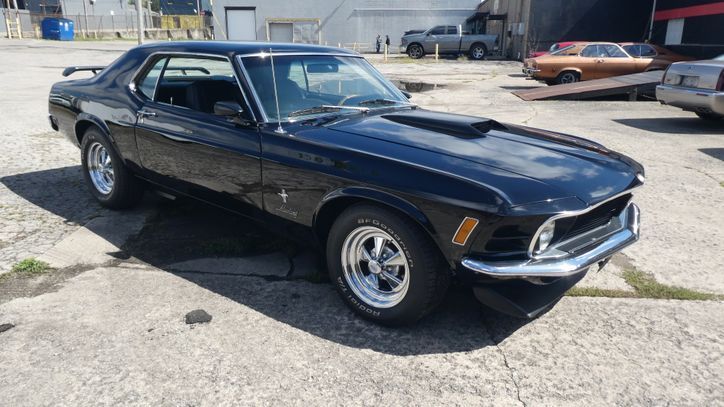
The GT350 received sequential turn signals and a new hood with functional NACA ducts, visual additions that were undeniably striking but pulled the car further from its spartan 1965 origins. The GT500 gained the 428 Cobra Jet engine for 1968, a genuinely strong powerplant that made the car faster in a straight line than it had ever been. That same year, the GT500KR, for King of the Road, appeared as a limited variant. But the essential character of the line had changed. These were now prestige Mustangs as much as performance machines.
By 1969 and 1970, the Shelby Mustangs looked spectacular but had moved decisively toward the grand-tourer end of the spectrum. Ford quietly ended production after 1970, and Carroll Shelby's direct involvement in the cars had already diminished well before that. The original mission, building a street-legal race car that could embarrass European sports cars at weekend club events, had given way to something more marketable and more comfortable, but less singular.
What each car actually felt like to drive
People who drove both cars in period are consistent on one point: the GT350 communicated. The suspension tuning, the close-ratio gearbox, the lack of insulation, all of it conspired to make the driver feel every piece of road surface. It was not a forgiving car. A sloppy corner entry would be punished. But when driven well, it responded with a precision that no stock Mustang of the era could approach.
The GT500 felt like a different category of vehicle. The 428's torque arrived early and stayed. At highway speeds, the car settled into a confident, unhurried pace that made long distances feel easy. You could build speed quickly without the urgency the GT350 demanded. For buyers who wanted the Shelby name but also wanted to take their car on a road trip without arriving exhausted, the GT500 made sense.
Both cars found their audiences. Today, both have found their place among the most desirable classic Shelby Mustangs for sale. The early GT350s, particularly the 1965 and 1966 cars, command attention from collectors who prize the purity of the original concept. The GT500, especially the 1967 first-year cars and the 1968 KR variants, draws buyers who want the visual drama of the big-block Shelby at its most confident.
Carroll Shelby built the GT350 to prove a point about what an American pony car could be on a road course. Ford built the GT500 to prove a different point, that the Shelby name could sell at scale without apology. Both arguments were correct. The two cars together trace the arc of an idea from its purest form to its most commercial, and that arc is still fascinating to follow more than half a century later.
Sources and notes
Horsepower figures from this era should be read as period factory ratings, which were frequently underrated for insurance reasons and varied with measurement standards. Production counts, especially for one-off and engine-swapped cars such as the 427 GT500s, are drawn from serial-number research and may be revised as documentation surfaces. The GT350 name-origin story is enthusiast folklore that Carroll Shelby recounted in several versions; it is presented here as anecdote rather than verified record. Always confirm specifications against documentation for a specific car before making a purchase decision.
- Shelby Mustang — Wikipedia (model history, production years, engine lineup)
- 1967 Shelby GT500 Factory 427 Cars — Shelby Research Group (the three documented 427 cars)
- Why the 1967 Shelby GT500 Is a Powerful Mustang — Revology (428 Police Interceptor rating and underrating)
- How the Shelby GT350, GT500 Model Names Came To Be — Ford Authority (name-origin anecdote)
- 1967 Shelby GT350 In-Depth Guide — Mustang Specs (289 engine carried over for 1967)
- 10 Things to Know About the 1967 Shelby GT500 — TopSpeed (1967 GT500 specifications and context)