How a Texan racer reshaped the Mustang
When Ford launched the Mustang in April 1964, it arrived as a stylish, affordable coupe built on humble Falcon underpinnings. It sold in staggering numbers, but it carried little performance credibility. Ford wanted that credibility, and to get it the company turned to Carroll Shelby, the Texan chicken farmer turned Le Mans winner who had already turned the Shelby Cobra into a giant-killer. The brief was simple in words and hard in practice: take the new pony car and make it a sports car the Sports Car Club of America would respect on a road course.
This is the hub for Carroll Shelby's Mustangs, the overview that ties the GT350 and GT500 lines together. It sits beneath the wider story of where the Mustang story begins, and it sets up the deeper model-by-model dives that live in their own articles. The headline facts are well established: Shelby American took the fastback Mustang, stripped weight, sharpened the suspension, freed up the engine, and built a car that won championships almost immediately. What follows is how that happened, and how the Shelby Mustang changed between 1965 and 1970.
Shelby American operated out of facilities in Southern California, first in Venice and later at larger premises near Los Angeles International Airport. By 1965 the shop was already deep in Ford's competition programs, building Cobras and supporting the GT40 effort that would eventually beat Ferrari at Le Mans. Lee Iacocca and Ford's product planners understood that a Shelby badge on a Mustang would do for the showroom what racing victories did for reputation.
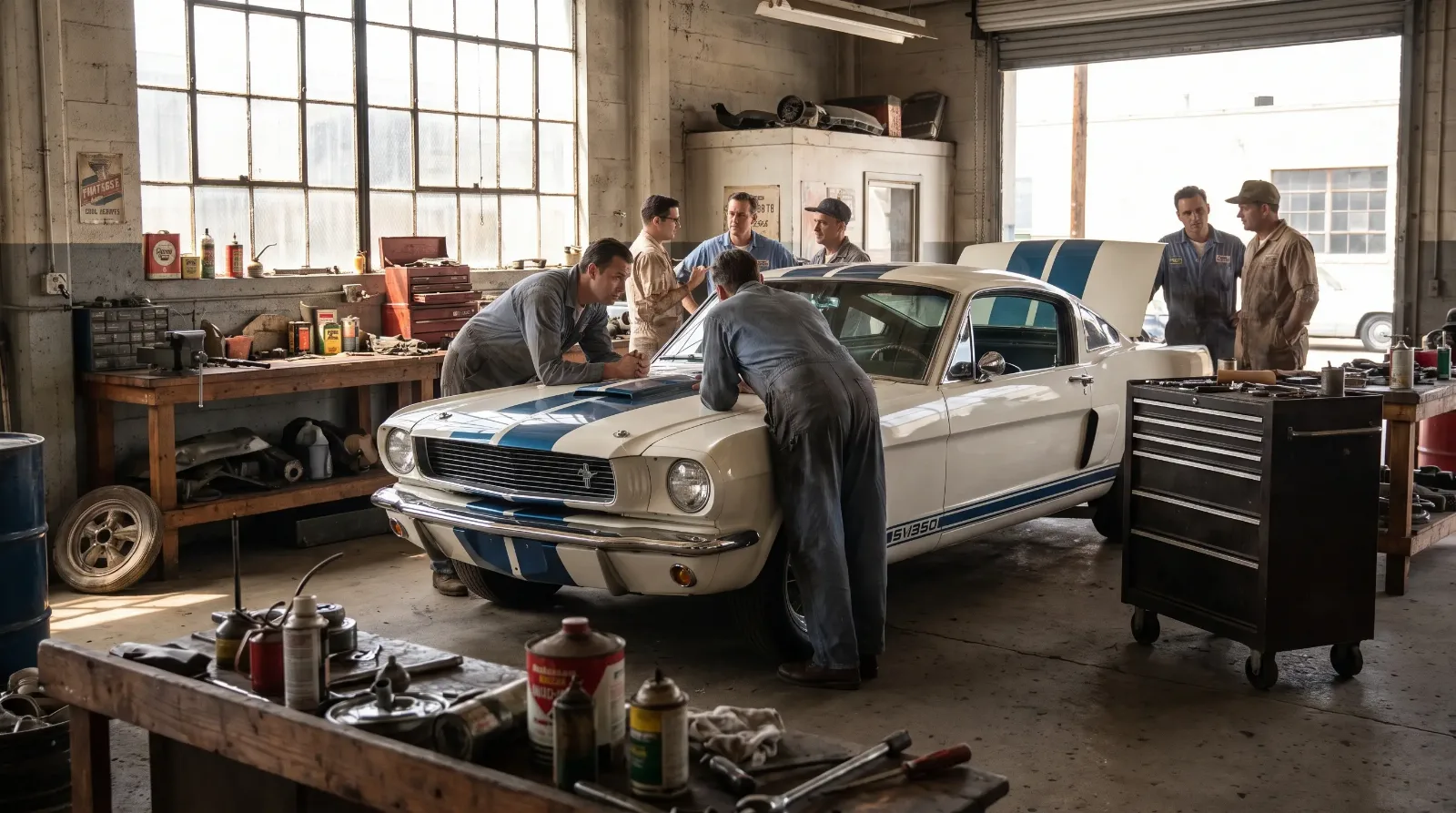
The arrangement was a genuine partnership rather than a simple badge exercise, at least in the early years. Ford shipped incomplete fastback Mustangs, San Jose-built cars with the high-performance 289 and a four-speed, to Shelby American, where they were converted into GT350s. The work was hands-on and the volumes were small, which is exactly why the earliest cars feel so different from a standard Mustang. As the program grew, the economics of low-volume California conversion came under pressure, and that tension eventually pushed Shelby Mustang assembly toward Ford itself.
The GT350: the 1965 original and its evolution
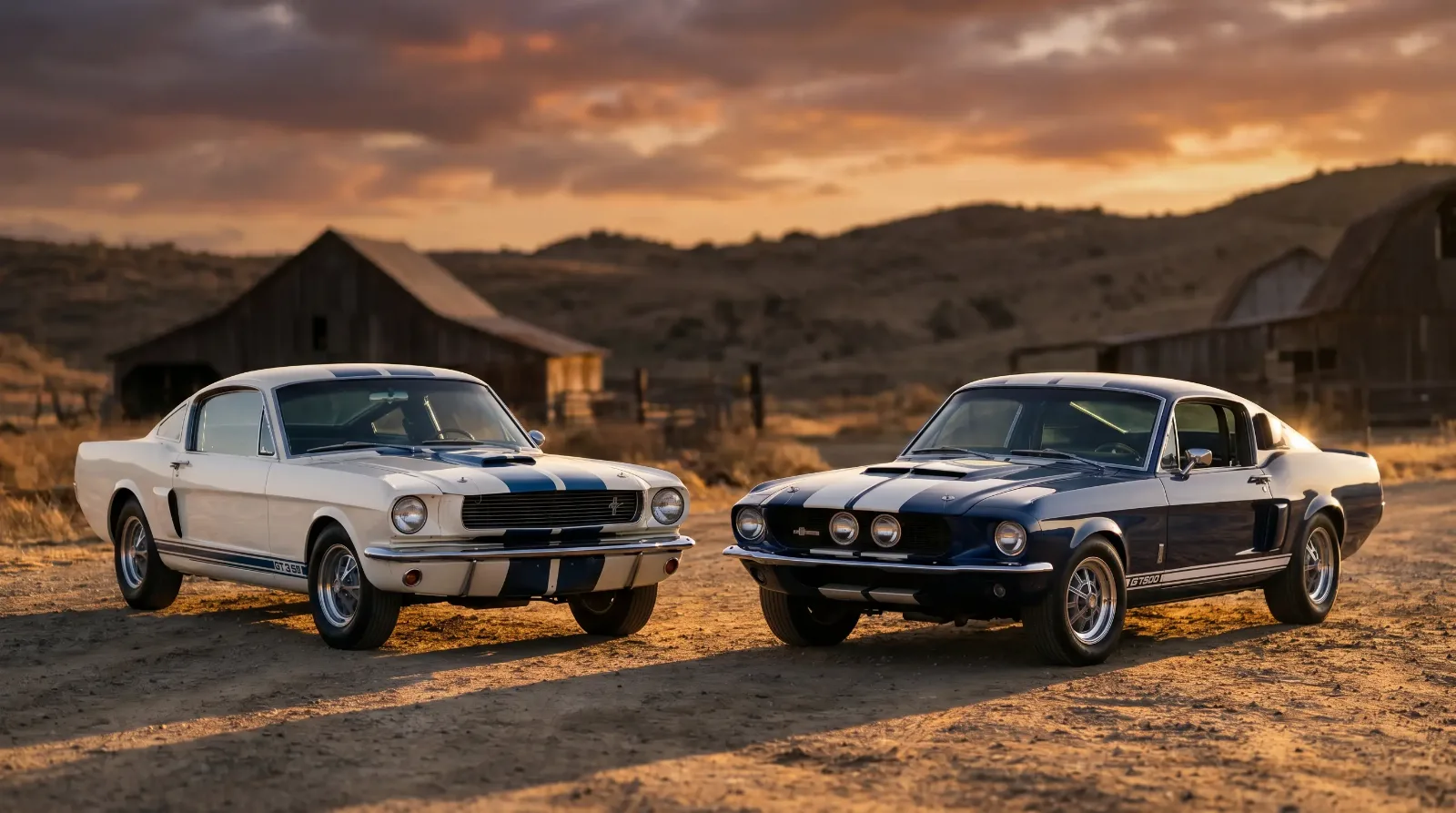
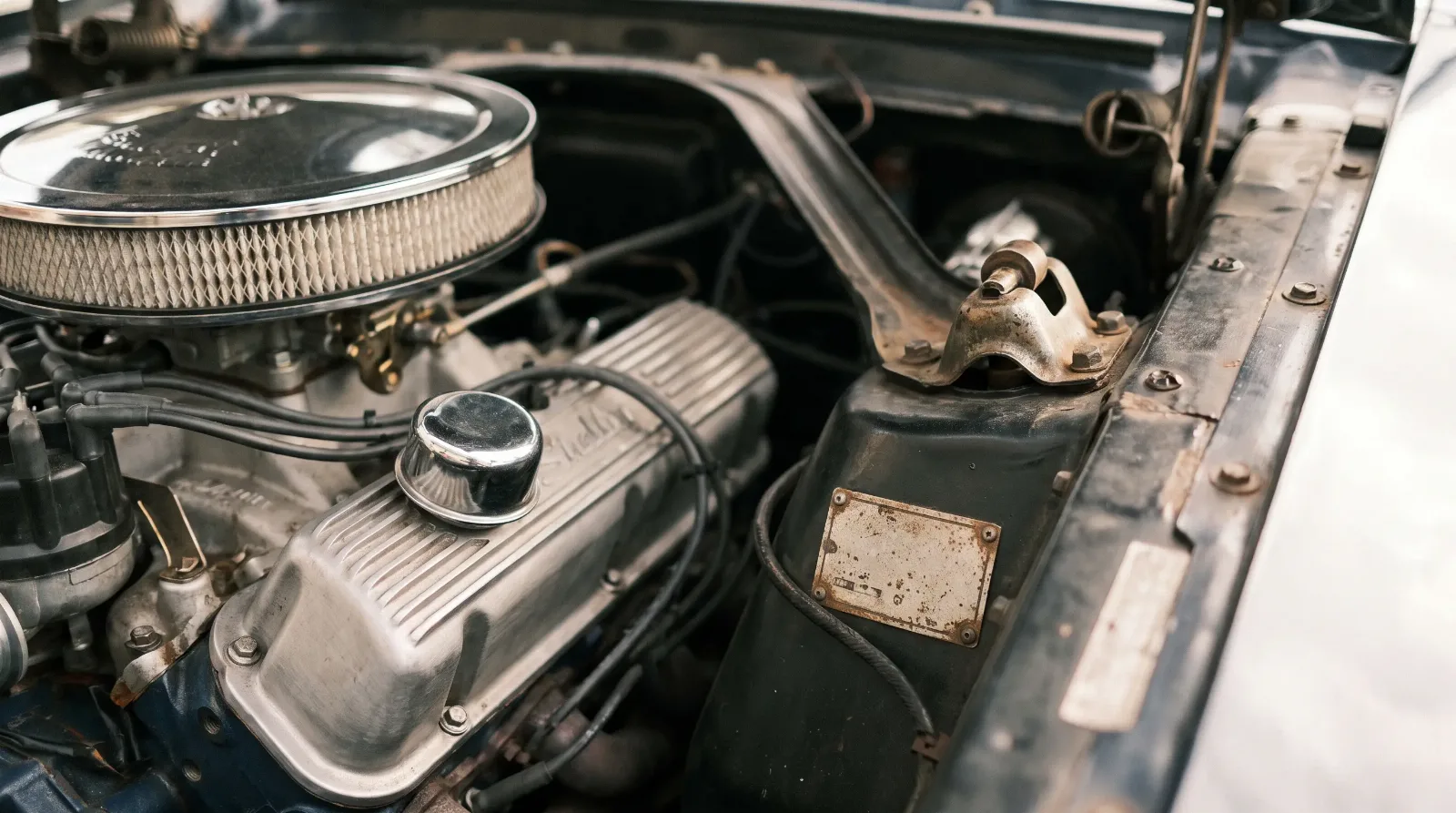
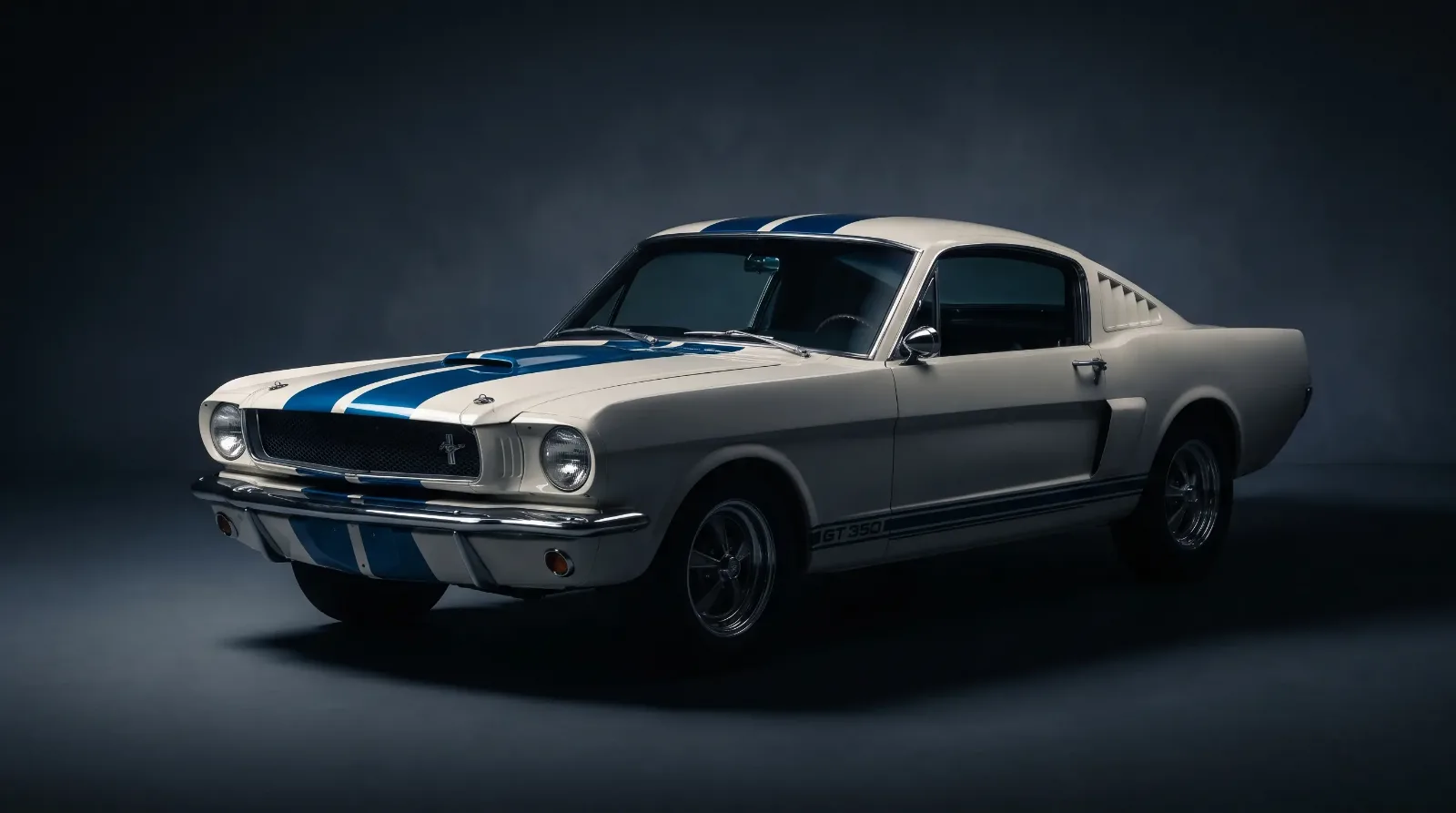
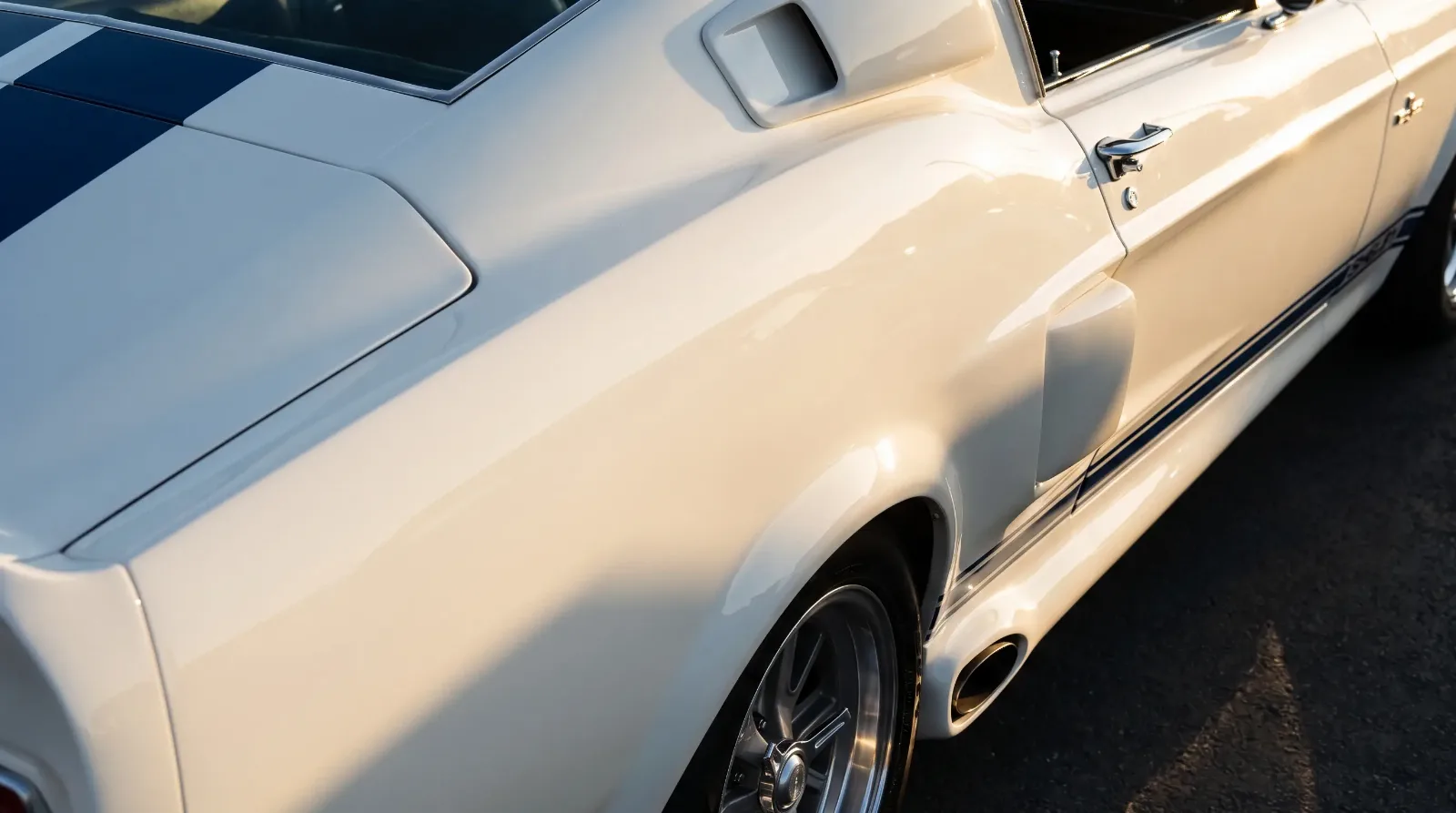
The 1965 GT350 is the purest expression of the idea. It was based on the white fastback Mustang with the 289 cubic inch V8, which Shelby American massaged with a high-rise intake, a larger carburetor, and freer-flowing exhaust to lift output to a quoted 306 horsepower. Just as important were the changes you could not see on the spec sheet at a glance: relocated suspension pickup points, stiffer springs, Koni shocks, a larger front anti-roll bar, and on many early cars a Detroit Locker differential. The result handled and stopped in a way no ordinary Mustang did.
Early 1965 cars were stripped for purpose. The rear seat was often deleted, the spare moved into the cabin, and the cars came almost exclusively in white with blue rocker stripes, with the now-iconic over-the-top racing stripes a popular addition. A competition variant, the GT350R, took the concept further for the track. Over the following years the GT350 softened and broadened: automatic transmissions, more colors, back seats, and creature comforts arrived as Shelby chased a wider audience. By 1967 the GT350 had grown more styling addenda and lost some of its raw edge, the price the program paid for moving from racer's special to volume product.
For 1968 the small-block car gained a 302 cubic inch engine in place of the 289, and the whole Shelby range adopted new front and rear styling. By 1969 and 1970 the GT350 used a 351 cubic inch Windsor V8, and the cars had become larger, heavier grand tourers that shared their basic shape with the restyled Mustang of that era. The 1970 cars were, in fact, leftover 1969 models re-VIN'd and lightly updated, marking the quiet end of the original Shelby Mustang line.
The GT500 and the big-block era from 1967
If the GT350 was about balance, the GT500 was about thrust. Introduced for 1967, the GT500 dropped a big-block V8 between the Mustang's front fenders and aimed squarely at buyers who wanted effortless straight-line speed alongside the Shelby image. The 1967 GT500 used a 428 cubic inch engine fed by a pair of four-barrel carburetors, with output quoted conservatively at 355 horsepower. In period the consensus was that the real figure was higher than Ford and Shelby admitted, a common habit in the insurance-conscious 1960s.
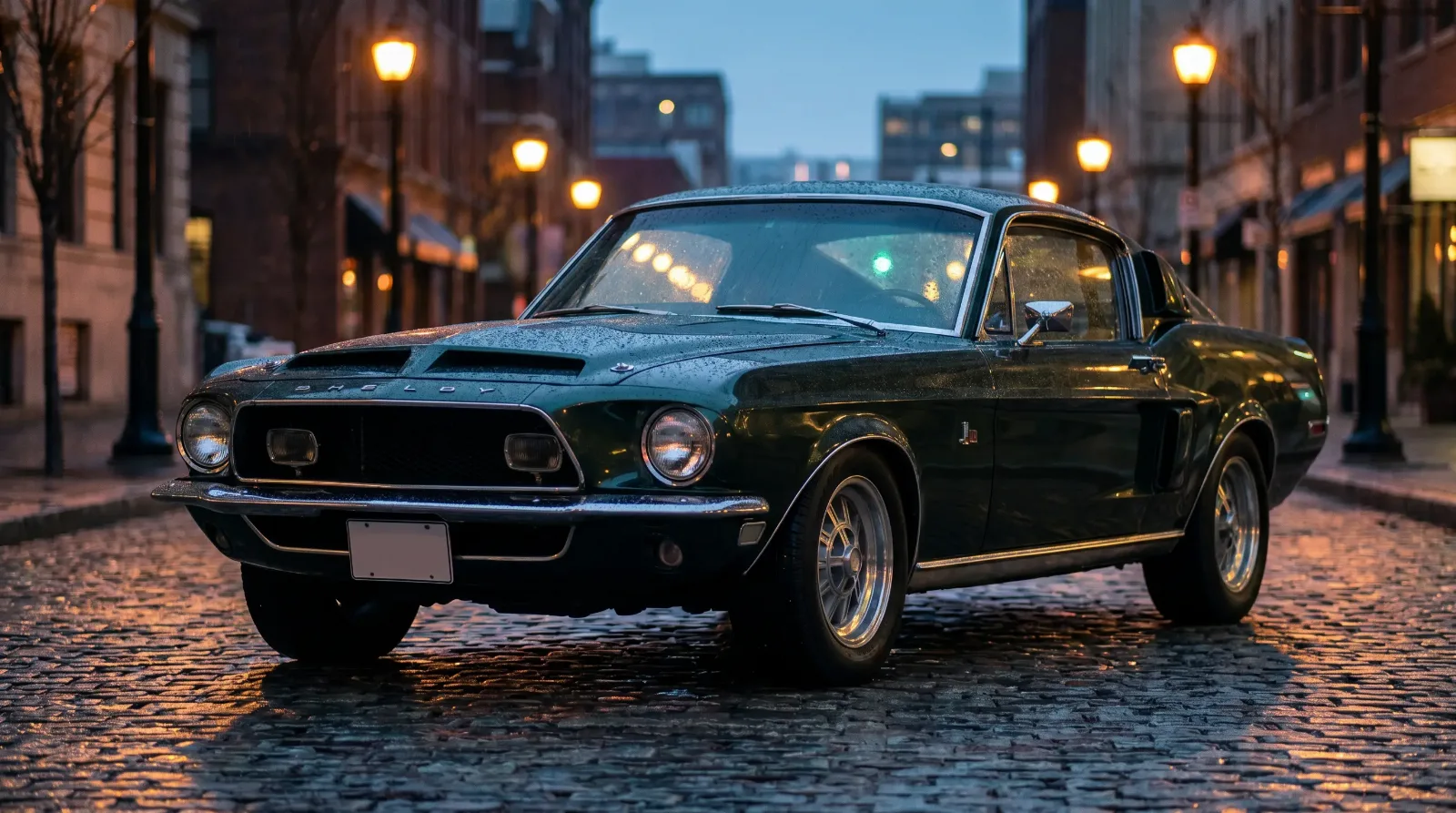
The big-block cars changed character again for 1968 with the arrival of the GT500KR, the "King of the Road." The KR used the 428 Cobra Jet engine, a tougher and more capable big-block that made the GT500 genuinely quick at the drag strip. By 1969 and 1970 the GT500 carried the 428 Cobra Jet in the longer, lower restyled body, complete with fiberglass front bodywork, hood scoops, and the dramatic styling that defines the late Shelby look. The GT500 always sat above the small-block car in price and image, the boulevard bruiser to the GT350's back-road scalpel.
Racing pedigree: why the Shelby name carried weight
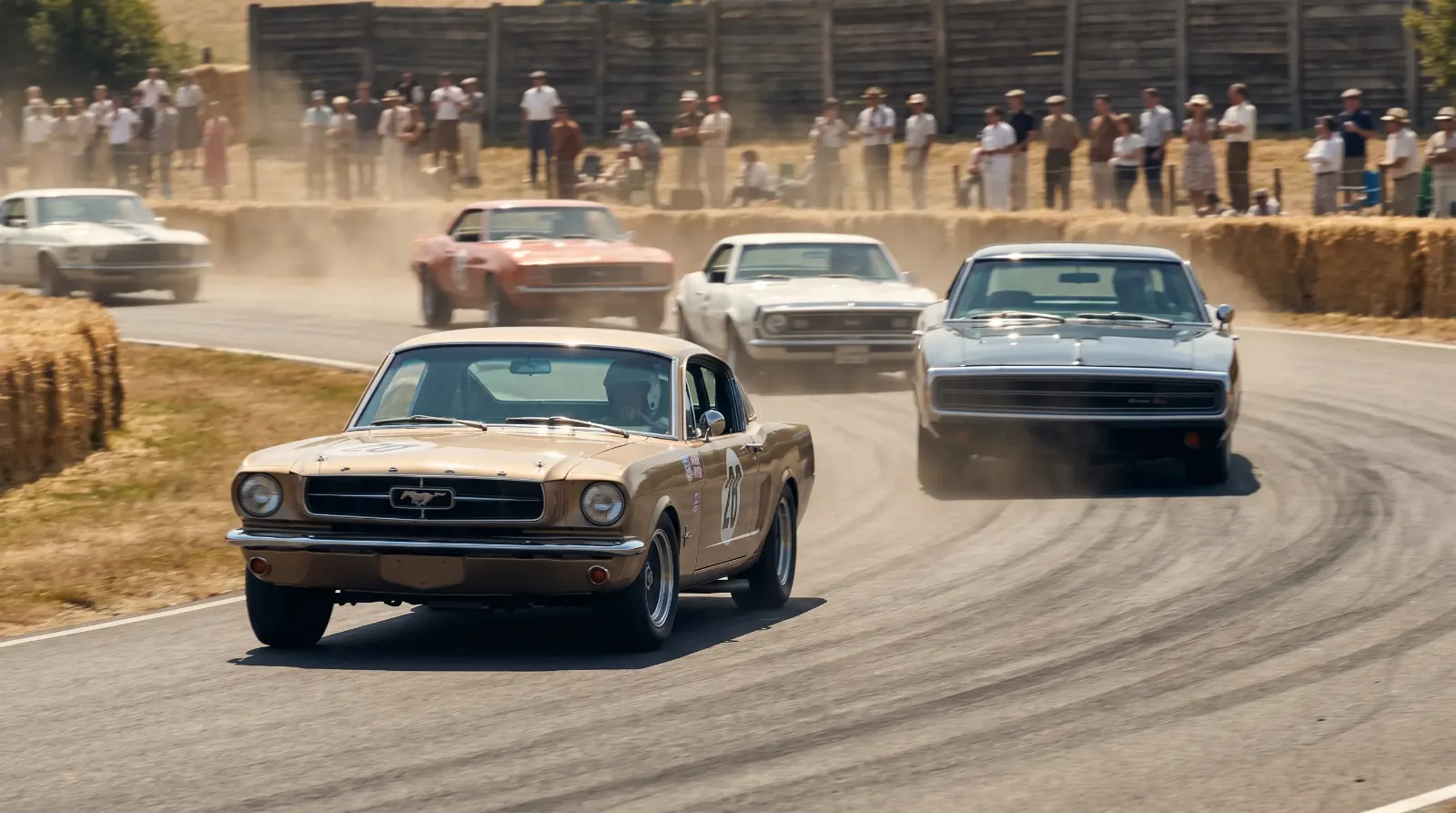
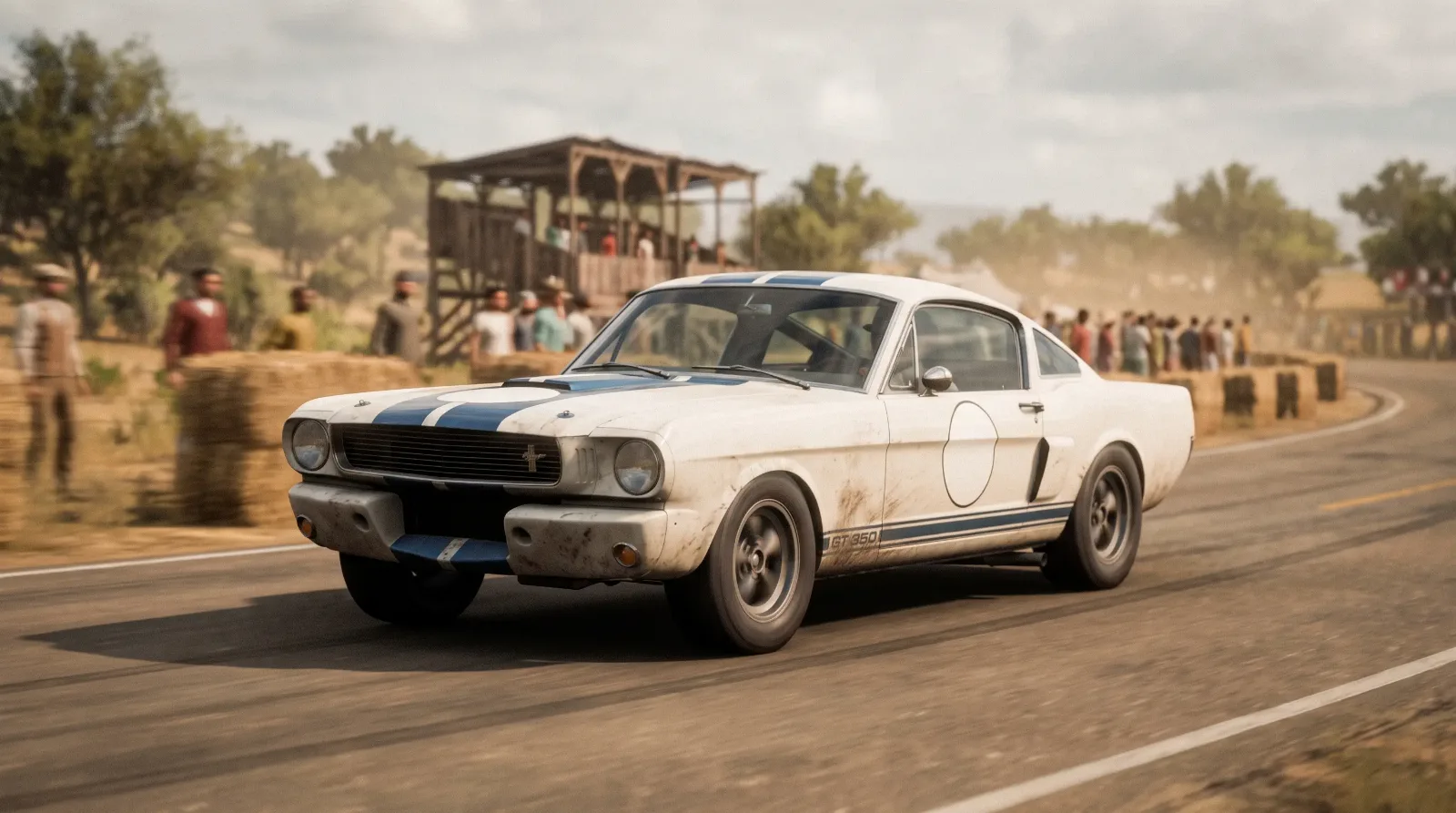
The Shelby Mustang's reputation was not marketing alone. It was earned on track. The GT350 was built specifically so it could be homologated for SCCA B-Production racing, and competition versions went on to dominate that class, winning the SCCA B-Production national championship in 1965 and repeating the feat in 1966 and 1967 for three straight titles. That run of success is the foundation of the entire Shelby Mustang legend, because it proved the cars were quick in the hands of independent racers, not just on a press release.
Shelby American's competition credibility extended well beyond the showroom Mustang. The same organization was central to Ford's wider motorsport assault of the mid-1960s, and the discipline of building cars to win races fed directly into how the road GT350 was engineered. The performance Mustang story did not stop with Shelby, of course. Ford's own engineering teams later produced the cars covered in the feature on the Boss and Mach 1 performance Mustangs, which carried the high-performance torch into the end of the decade.
The move to Ford production for 1968
The most significant structural change in the Shelby Mustang story came in 1968. Until then, Shelby American in California had been doing the conversions. For the 1968 model year, production shifted: the cars were assembled by the A.O. Smith company in Michigan under contract, much closer to Ford's orbit, rather than at the California shop.
The reasons were practical. Low-volume conversion in California was expensive and logistically awkward, and Ford wanted tighter control over a product wearing its dealer network's signage. The move brought more consistent build quality and more standardized cars, but it also marked the point where the Shelby Mustang became more a styling and trim exercise layered onto Ford's own engineering, and less a bespoke Shelby American creation. Enthusiasts still debate whether the 1965 to 1966 cars or the later production-line Shelbys represent the "true" Shelby Mustang, and that debate is part of the cars' enduring appeal.
"Ask any crowd at a show which Shelby is the real one and you will start an argument that outlasts the trophy presentation. That argument is the best thing about these cars."
— Patrick Walsh
Specifications by model and year
The table below summarizes the headline configurations of the Shelby Mustang line. Power figures are the quoted period ratings and should be read as gross figures from an era when numbers were often understated for insurance reasons.
| Model | Years | Engine | Quoted power |
|---|---|---|---|
| GT350 | 1965-1966 | 289 cu in V8 | ~306 hp |
| GT350 | 1967 | 289 cu in V8 | ~306 hp |
| GT350 | 1968 | 302 cu in V8 | ~250 hp |
| GT350 | 1969-1970 | 351 cu in Windsor V8 | ~290 hp |
| GT500 | 1967 | 428 cu in V8 | ~355 hp |
| GT500KR | 1968 | 428 Cobra Jet V8 | ~335 hp |
| GT500 | 1969-1970 | 428 Cobra Jet V8 | ~335 hp |
Legacy and values today
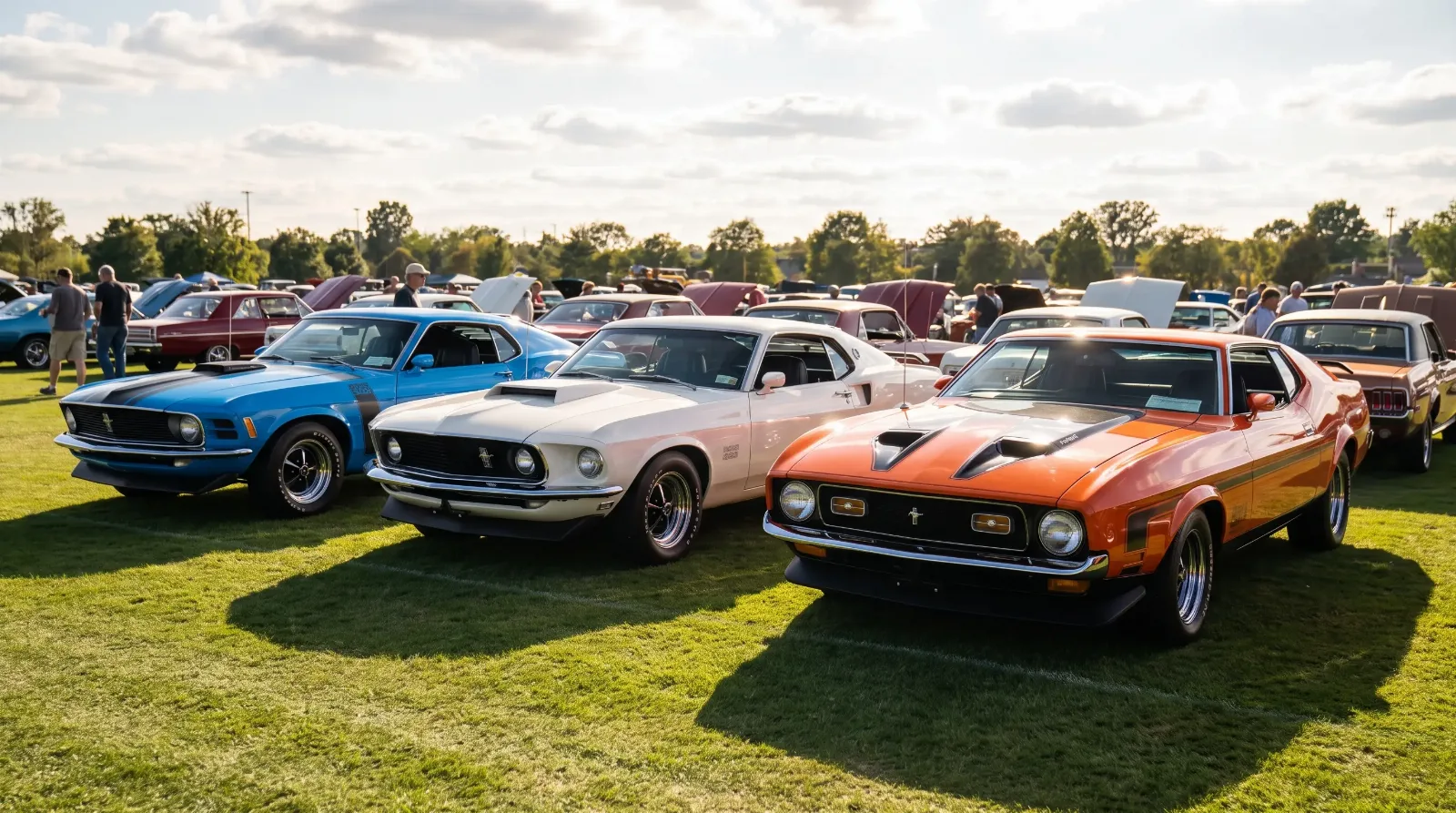
The Shelby Mustang occupies a special place in the collector world. Where a standard 1960s Mustang remains an attainable classic, genuine Shelby cars sit well above them in desirability and value, with the earliest GT350s and the most powerful GT500 variants the most sought after. Documentation matters enormously: the Shelby American Automobile Club registry, original invoices, and a clear history can be the difference between a strong sale and a wary one, because the cars have been valuable long enough to attract clones and tributes.
In broad terms, values have climbed steadily over the decades as the 1960s performance era has matured into blue-chip collecting, with the rarest combinations of year, model, and provenance commanding the strongest prices. For readers who want to see what genuine cars from this lineage look like in the current market, the listings of classic Shelby Mustangs for sale are the place to start. The deeper model-by-model histories of the individual GT350 and GT500 variants are covered in their own articles, but the through-line is constant: a Texan racer took an ordinary pony car and made it extraordinary, and the market has never forgotten it.
Sources and notes
Power figures quoted in this article are period gross ratings and, in the muscle-car tradition, were frequently understated for insurance reasons; real-world output on several models is widely believed to have been higher. The "350 feet" naming story is Carroll Shelby's own often-repeated anecdote, and the details vary between tellings, so it is offered as lore rather than verified fact. The figures and production details above were cross-checked against the following references, current as of publication.
- Shelby Mustang — Wikipedia
- 1965 Shelby GT350: Ultimate Guide — Mustang Specs
- 1967 Shelby GT500: A Profile of a Muscle Car — HowStuffWorks
- The 1968 Shelby Mustang and the A.O. Smith Corporation — MotorCities
- How the Shelby GT350 and GT500 Names Came To Be — Ford Authority
- 1968 Shelby GT500KR: Ultimate In-Depth Guide — Mustang Specs