The Engine That Duntov Built for Drivers
By 1970, the American muscle car era had settled into a familiar ritual: displace more, torque harder, run the quarter-mile faster. Chevrolet itself had fed this appetite with the big-block Corvette variants — the LS5 and, a year later, the fearsome LS6. Cubic inches were the currency of the street, and the C3 Corvette Mako Shark era had grown into a canvas large enough to accommodate every excess.
Zora Arkus-Duntov saw it differently. The Belgian-born engineer who had shaped the Corvette's identity since the mid-1950s was not indifferent to power — he craved it — but he understood that power without balance was theater. When Chevrolet introduced the LT-1 option for 1970, it was Duntov's clearest argument that a smaller, more precise engine could outperform a bigger one in the hands of a driver who knew how to use it.
What followed was a three-year production run of modest volume and enormous consequence. The LT-1 became the small-block Corvette that outran big-blocks, and sixty years later, it remains among the most coveted configurations the C3 generation ever produced.
Engineering the LT-1: What Made It Different
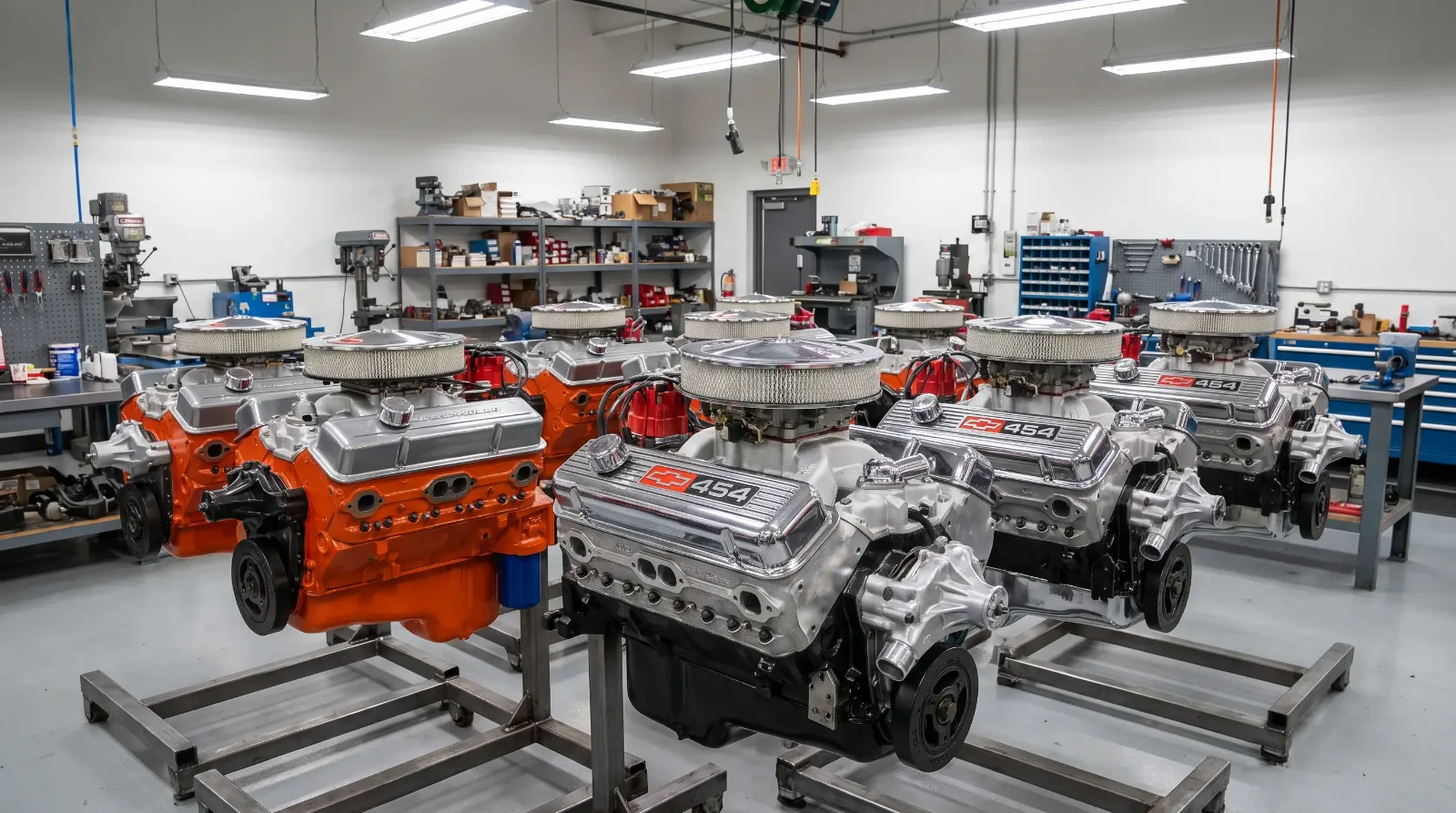
The LT-1 designation stood for a 350 cubic inch (5.7-liter) V8 developed specifically for performance driving rather than straight-line force. On paper, the displacement alone seemed almost apologetic compared to the 454-cubic-inch LS5 that sat in the same options column. In practice, the LT-1 was something else entirely.
The heart of the engine's character was its solid-lifter camshaft — a mechanical unit that required precise valve adjustment and rewarded high-rpm operation with a responsiveness that hydraulic lifters simply could not match. Where a hydraulic cam bleeds off energy through its compliance, the solid lifter transmits the cam profile directly, with authority. The LT-1 came alive above 4,000 rpm and kept pulling cleanly to 6,500 and beyond, a behavior that felt foreign to drivers accustomed to big-block torque arriving in a broad, low surge.
Chevrolet backed the camshaft with engineering decisions that reinforced its high-revving intent:
- An 11:1 compression ratio, demanding premium fuel and rewarding it with genuine thermodynamic efficiency
- Four-bolt main bearing caps, bracing the bottom end against the stresses of sustained high-rpm operation
- An aluminum intake manifold, reducing rotating mass and improving thermal management
- A 780 CFM Holley double-pumper carburetor on a single four-barrel setup, metering fuel with precision across the rev range
- Large-port cylinder heads shared with racing applications, enabling the airflow the camshaft demanded
The official gross horsepower rating was 370 at 6,000 rpm, with 380 lb-ft of torque at 4,000 rpm. These were Society of Automotive Engineers gross figures, measured without accessories, and the industry's rating conventions of the period tended toward generosity. Independent dynamometer testing suggested the actual net output was somewhat lower — but the character of the power delivery, not the peak number, was the LT-1's true selling point.
Duntov's Philosophy: Why the Small-Block Belonged in a Sports Car
Zora Arkus-Duntov had been arguing for the small-block Corvette since the big-blocks arrived. His position was not sentimental — it was mechanical. A 454-cubic-inch engine, with its iron block and the sheer mass of its rotating assembly, sat far forward in the Corvette's nose. This was not a problem in a straight line. In a corner, it was a liability.
The LT-1 350 was meaningfully lighter than either the LS5 or LS6. That weight difference, concentrated at the front of the car, shifted the Corvette's handling balance toward neutral. The suspension geometry that Duntov's team had developed for the C3 platform worked best when the front end was not overwhelmed by mass it was never designed to carry. A lighter engine also meant less polar moment of inertia — the car responded more quickly to steering inputs, changed direction more crisply, and punished driver errors less severely.
Duntov had seen what happened when European sports cars were asked to compete against American muscle on circuits rather than drag strips: the Europeans won. Not because their engines made more power, but because their power was accessible and their cars were balanced. The LT-1 was his attempt to build a Corvette that could embarrass European machinery on its own terms.
"The LT-1 was the engine Duntov had been waiting to put in the Corvette. Not because it made the most power — it didn't — but because it asked something of the driver. And when the driver answered correctly, the car rewarded them in ways no big-block could match."
— Jim Vasquez, motorsport historian
The rev ceiling reinforced this. Where the LS5 developed its best power below 4,500 rpm and became breathless above it, the LT-1 continued to pull with urgency well past 6,000. On a road course — or on a winding canyon road — this meant the driver could stay in a gear longer, extract more from each section of the track, and carry speed through corners rather than simply bludgeoning through the straights.
Production Years and the 1969 Prototype Connection
The LT-1 appeared in Corvette option sheets for the 1970, 1971, and 1972 model years. Production across those three seasons was relatively modest: approximately 1,287 units in 1970, 1,949 in 1971, and 1,741 in 1972 — figures that reflected both the option's premium price and the practical demands of its maintenance schedule.
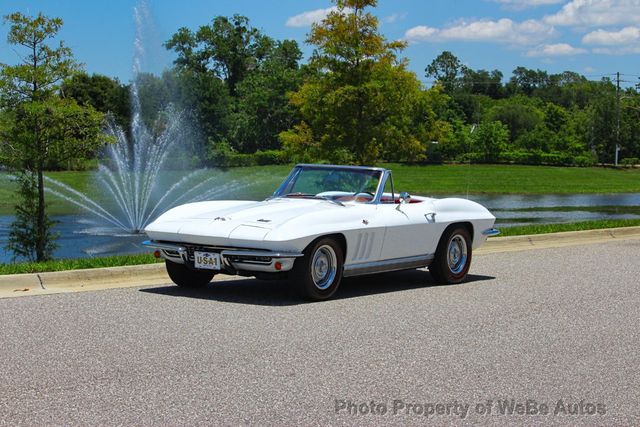
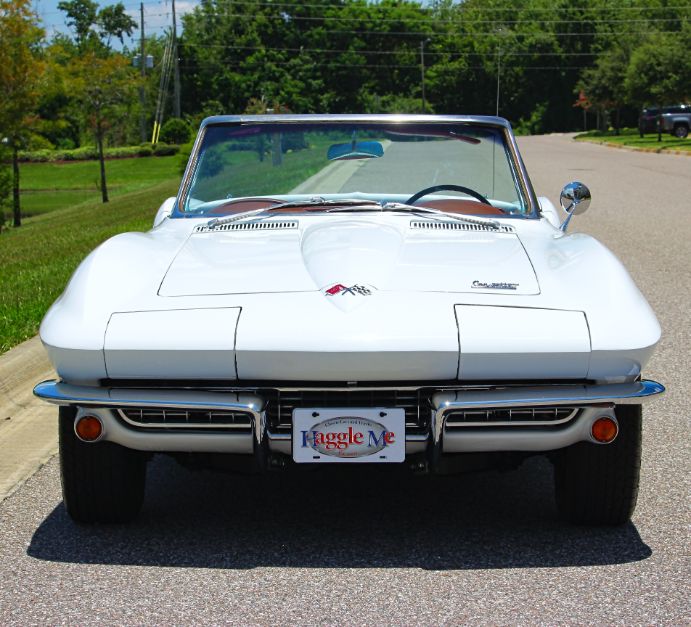
The 1969 Corvette carries its own historical weight in any discussion of the LT-1. The 1969 Corvette Stingray — the first year the model name returned as one word — was the year Duntov's team refined the chassis that would carry the LT-1 into production. Several prototype and pre-production LT-1 configurations existed during 1969, and some period accounts place LT-1 specification engines in low-volume, factory-built test vehicles. These machines were not catalogued options; they were engineering exercises that informed the final 1970 specification.
The 1970 model year was also notable for a calendar anomaly: General Motors' assembly plants produced 1970 Corvettes on a compressed schedule following a labor dispute, resulting in a total model-year production of just 17,316 units — the lowest count since 1962. This scarcity affects every 1970 Corvette configuration today, but the LT-1 examples are especially valued given their specific combination of limited numbers and mechanical significance.
By 1972, the compression ratio had dropped to 9:1 in response to the industry's transition toward lower-octane unleaded fuel, and the gross horsepower rating fell to 255 — a number that looks dramatic on a spec sheet but reflects the change in measurement convention as much as any genuine power reduction. Net horsepower figures told a less alarming story. Still, the writing was on the wall. After 1972, the LT-1 did not return for 1973, superseded by the emissions and fuel requirements that would define the decade ahead — a period covered in depth in the context of the C3 Corvette malaise era horsepower story.
LT-1 vs. the Big-Blocks: A Character Study
Period road tests from publications including Car and Driver, Road & Track, and Motor Trend produced acceleration figures that surprised observers expecting the big-block to dominate comprehensively. The LT-1 ran 0–60 mph times in the 5.7–6.0 second range; the LS5 with its 390 horsepower rating ran comparable times. The LS6 — available for 1971 at a factory-rated 425 horsepower and representing the peak of the big-block Corvette's development — was faster in outright acceleration, but by a margin that diminished quickly as conditions moved away from ideal.
On surfaces with imperfect traction, the LT-1's more manageable torque curve was an advantage. The big-block's broad, heavy surge overwhelmed rear tires that were already working hard; the LT-1's power arrived more progressively and could be metered more precisely through the throttle. Drivers who pushed both cars on roads with elevation changes and corners consistently reported that the LT-1 felt faster in use than its acceleration figures suggested.
| Engine | Displacement | Gross HP | Torque | Character |
|---|---|---|---|---|
| LT-1 | 350 cu in (5.7L) | 370 @ 6,000 rpm | 380 lb-ft @ 4,000 rpm | High-revving, balanced, driver-focused; solid lifters, 11:1 compression; available 1970–72 |
| LS5 | 454 cu in (7.4L) | 390 @ 4,800 rpm | 500 lb-ft @ 3,400 rpm | Broad torque curve, low-rpm dominance, heavy nose weight; available 1970–72 |
| LS6 | 454 cu in (7.4L) | 425 @ 5,600 rpm | 460 lb-ft @ 4,000 rpm | Peak big-block performance, more aggressive cam than LS5, higher compression; available 1971 only |
The distinction that mattered most was one that acceleration timers could not capture: which car felt better to drive quickly through a demanding sequence of corners? By the accounts of journalists and private owners who ran both, the LT-1 Corvette was the one that rewarded skill and invited repetition. It asked the driver to engage — to build revs deliberately, to place the car precisely, to work with the chassis rather than relying on torque to paper over errors.
Legacy: Why the LT-1 Endures
The LT-1 Corvette's reputation has grown in inverse proportion to the number of surviving examples. Production was never high, and attrition across five decades of use, modification, and neglect has thinned the population further. Numbers-matching LT-1 Corvettes — particularly 1970 examples with their compressed production run — represent a convergence of historical significance and mechanical purity that the collector market values highly.
What distinguishes the LT-1 in retrospect is not merely scarcity but argument. The engine represented a point of view: that a sports car should be balanced, that a driver should be rewarded for revving an engine fully, that handling matters as much as straight-line force. In the context of the early 1970s American market, this was a minority position. Buyers who chose the LT-1 over the LS5 were making a statement about what they wanted from a performance car, and the cars that survived reflect that original specificity of intent.
The LT-1 also occupies a precise historical moment. It arrived at the end of the period when Chevrolet could build an 11:1 compression engine for the street without apology, and it departed before the combination of emissions regulations, insurance surcharges, and fuel constraints had fundamentally reshaped what was possible. The 1970–72 window represents the apex of the C3's engineering ambition, and the LT-1 is the version of that ambition most aligned with Duntov's original vision for the car.
Collectors and historians who study the Corvette lineage consistently place the LT-1 at a singular intersection: the moment when Zora Arkus-Duntov's philosophy of the Corvette as a true sports car — not a muscle car wearing a fiberglass body — came closest to full expression in a factory-built, customer-deliverable automobile.
Sources and notes
- National Highway Traffic Safety Administration — vehicle production records and engine certification documentation
- National Corvette Museum — LT-1 production history, Duntov archive materials
- Car and Driver — period road test archives, 1970–1972 Corvette LT-1 and LS6 comparisons
- Road & Track — 1971 Corvette LS6 vs. LT-1 comparative test, original print archive
- SAE International — gross vs. net horsepower rating transition documentation, 1971–1972