
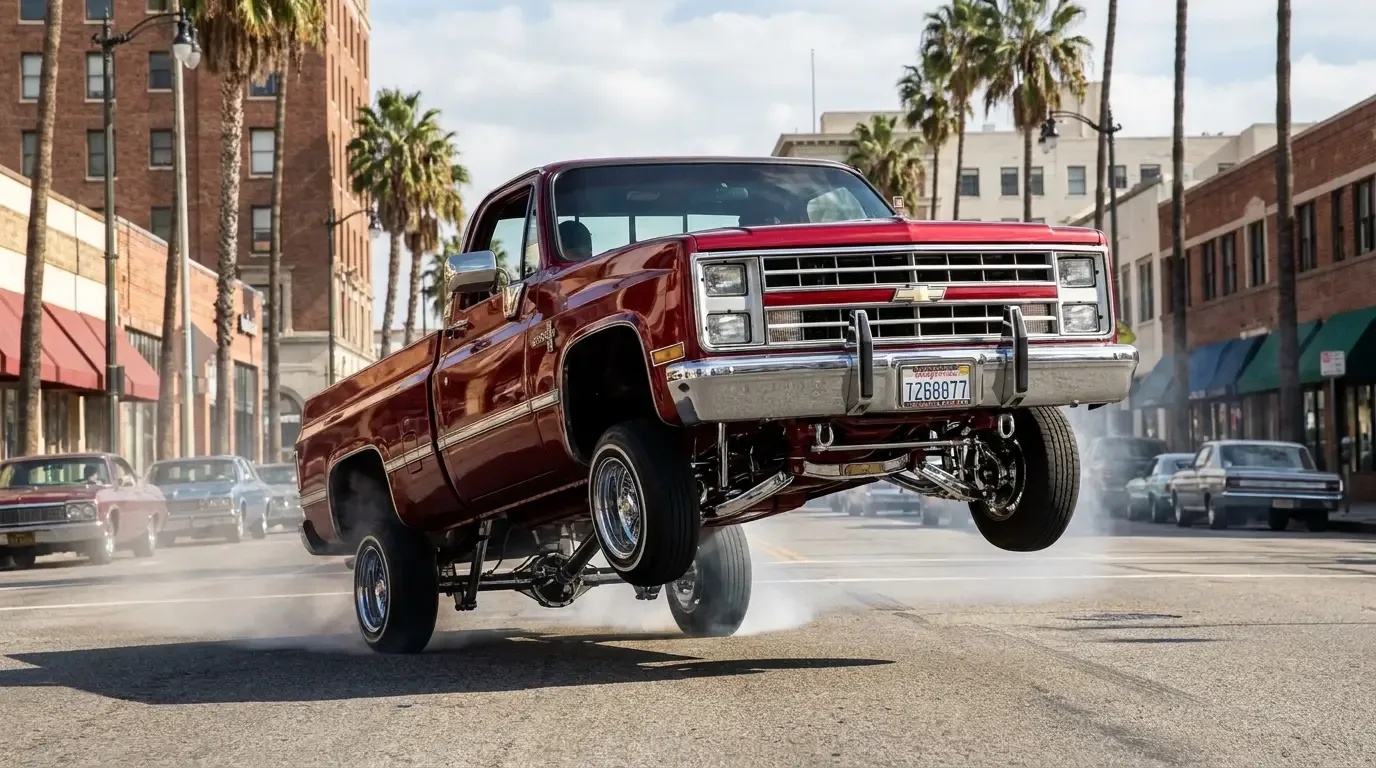
We grew up watching trucks lay frame on the boulevard the same way we grew up watching low low sedans do it, and for a lot of us the truck version hit different because it took a shape everybody's tio actually drove to work and turned it into something with pride painted into every panel. The C10 was never supposed to be a lowrider platform. It was a work truck, a fleet truck, a truck your neighbor used to haul drywall on the weekend. But the hydraulics do not care what a truck was built for. They care what a builder decides it is going to become, and enough of us decided the C10 belonged in this culture that it never really left again.
Ownership & Lifestyle
6 min read
C10s and the Lowrider Truck Tradition
Long before the restomod scene claimed the C10, lowrider builders had already turned this work truck into a canvas for hydraulics, candy paint, and club pride. Here is how that tradition took hold.
How a work truck ended up on the boulevard
The lowrider scene has always been about taking something ordinary and making it undeniable, and the C10 was ordinary in exactly the way that made the transformation hit hardest. These were cheap, plentiful trucks by the time builders in the late 1970s and through the 1980s started laying frame on them, easy to find in any yard or driveway, which meant a young builder without deep pockets could get into the culture on a truck instead of waiting to save up for a sedan. That accessibility is a big part of why the tradition took root the way it did. Nobody needed a rare car to participate. They needed a C10, a welder, and somebody in the neighborhood who already knew how to set up hydraulics.
What made it stick, though, was not just the price. It was that the truck's long, flat lines actually suited the aesthetic once it was down on the ground. A lowered C10 reads different from a lowered sedan, more purposeful somehow, like the truck was always supposed to sit that low and the factory just had not figured it out yet.
Hydraulics, setups, and the craft nobody outside the scene sees
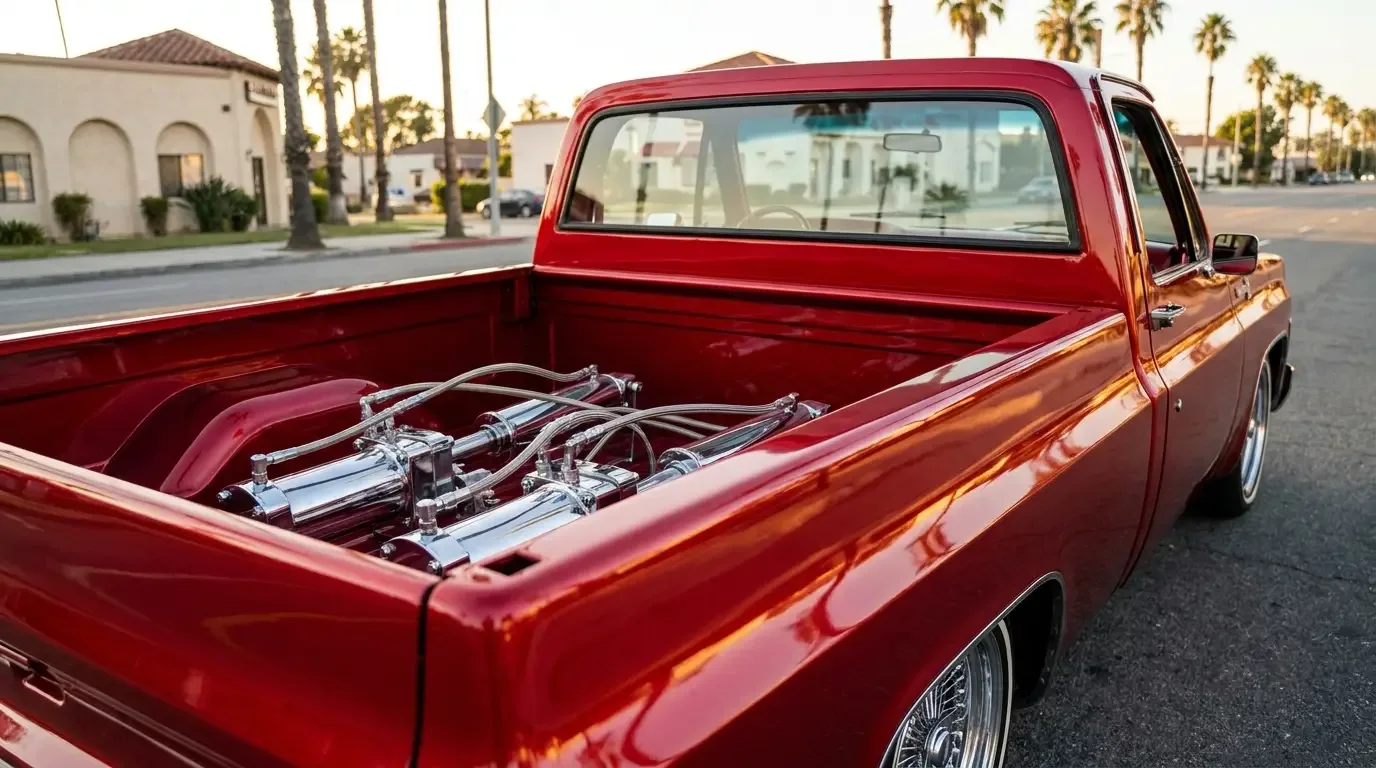
People who do not know the culture see the hop and the dance and think that is the whole story. The real work happens underneath, in the setup, in choosing the right pumps and cylinders and figuring out how to route the plumbing so a half-ton truck frame can take the stress of dumping and jumping without cracking somewhere it should not. A good setup on a C10 is not just parts bolted in. It is a builder who understands how the truck's own weight distribution changes everything about how the hydraulics behave compared to a sedan, and that knowledge mostly still gets passed down car to car, garage to garage, not out of a catalog.
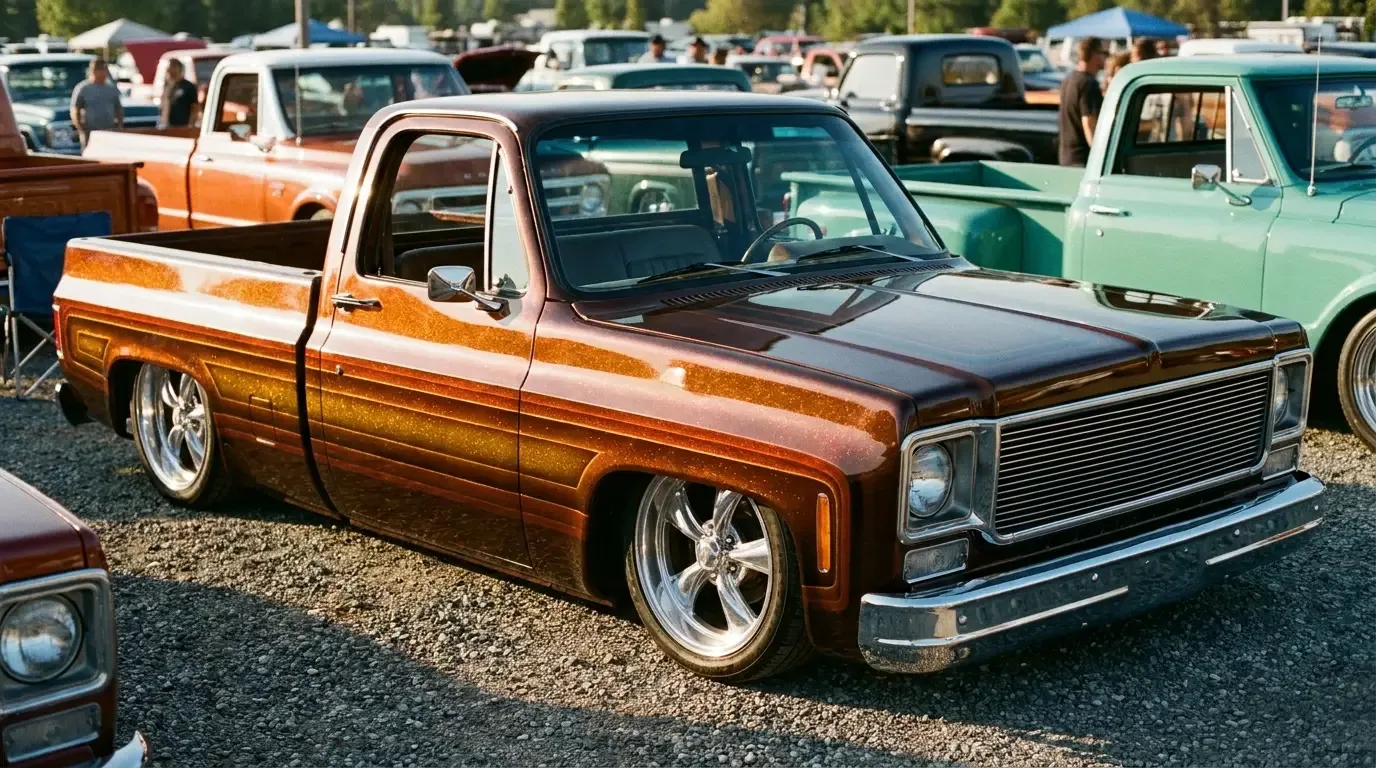
The paint carries its own craft that people outside the culture underestimate the same way. A candy paint job is not a color you pick off a chart. It is layers, base and candy and clear, each one changing how the light moves across the truck depending on the hour and the angle, and the guys who were laying that down on C10s decades ago were doing real art before anybody outside the community called it that. Patterns, murals, plaques on the tailgate naming the club, all of it says something specific about where the truck belongs and who built it, and none of that is decoration for its own sake.
Respect earned through the clubs, not around them
This tradition does not really exist outside the club structure, and that is something a lot of newcomers to the C10 scene do not understand until they have been around for a while. A club is not just a name on a plaque. It is the people who show up to help finish your truck before a show, who vouch for your build when somebody questions whether it is done right, who remember whose truck was whose even after it changes hands three times over twenty years. We give credit generously in this culture because the trucks were never really about one builder working alone. Somebody taught the guy who taught the next guy, all the way back, and forgetting that chain is its own kind of disrespect.
That structure is also why outsiders sometimes get the culture wrong when they write about it. They see the paint and the hop and miss that the whole thing is built on familia, on showing up for each other on the boulevard and in the garage both. Anyone actually trying to understand the wider lowrider truck tradition has to start with the clubs, not the chrome.
Why a younger generation is picking this back up
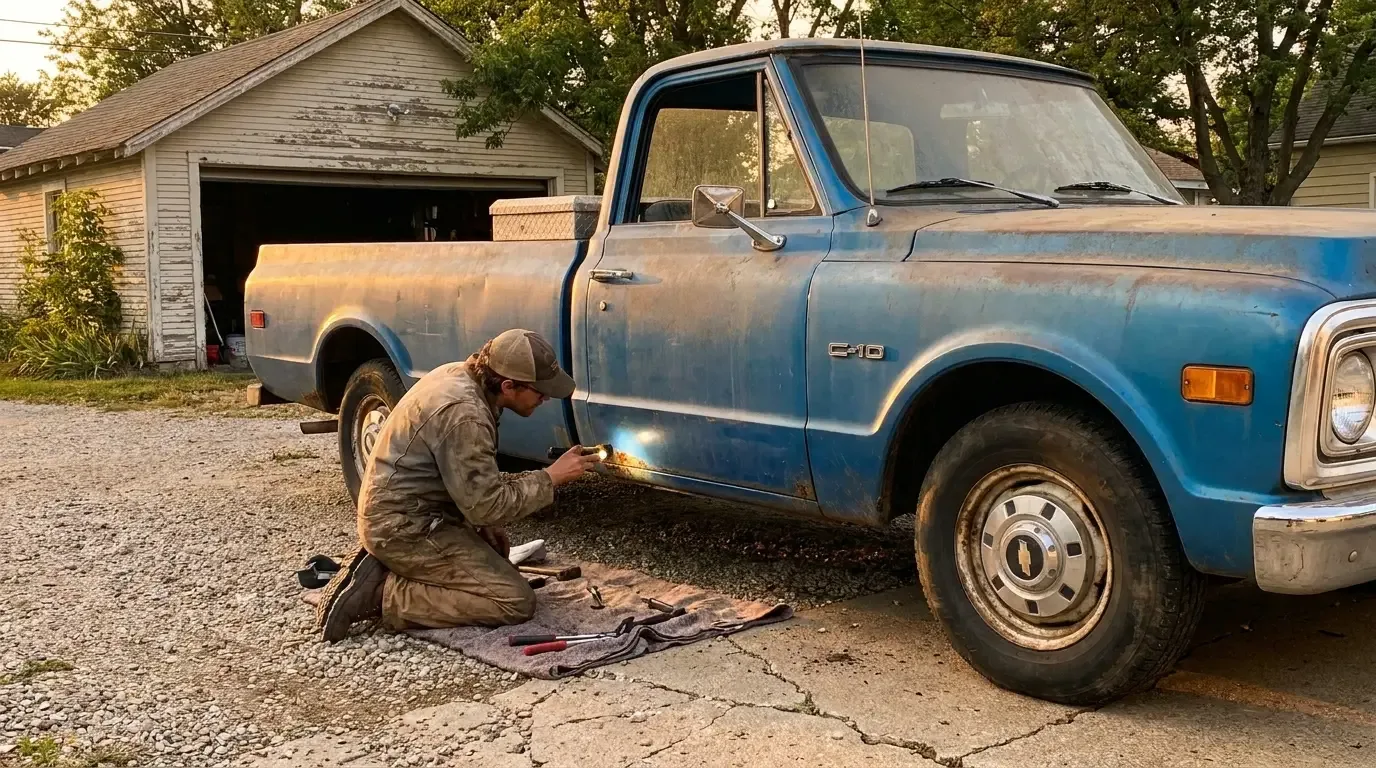
Something has been happening in the last several years that a lot of the older heads in this scene did not necessarily expect. A younger crowd, some of them grandkids of the original builders, has been coming back to the square body C10 specifically, drawn to a truck that their family already had a history with instead of starting from nothing. Part of that is the revival happening across why an even younger crowd is chasing these now, but part of it is just that the platform still does what it always did. It takes a modest truck and makes it into something that says who you are and where you come from, and that message has not gone out of style just because the truck it is riding on is fifty years old now.
"A candy paint job isn't a color, it's layers, and the guys who laid them down on the boulevard were artists before anybody called it art. The C10 just gave them a bigger canvas to prove it on."
Hector Morales
The truck culture and the lowrider culture were never really separate things for us. They grew up on the same streets, got built in the same garages, sometimes by the same hands on different weekends. Anyone who only knows the C10 as a restomod or a farm truck is missing a whole side of what this platform has meant to entire families and neighborhoods, and once you have seen C10 culture from inside the scene, it is hard to see the truck any other way again.
Sources and notes
Related Reading
Have a
Chevrolet C10
for Sale?
Reach thousands of serious classic car collectors across the US.
Sell It Here →
Are You a Classic Car Dealer?
List your full inventory and connect with targeted classic car buyers.
Join as a Dealer →

About the author
Hector Morales
East LA lowrider builder and lifelong member of the car-club scene, writing lowrider culture, hydraulics and custom paint from the inside.
Related Listings - Chevrolet C10
More in Ownership & Lifestyle
Comments
Be the first to comment on this article.