
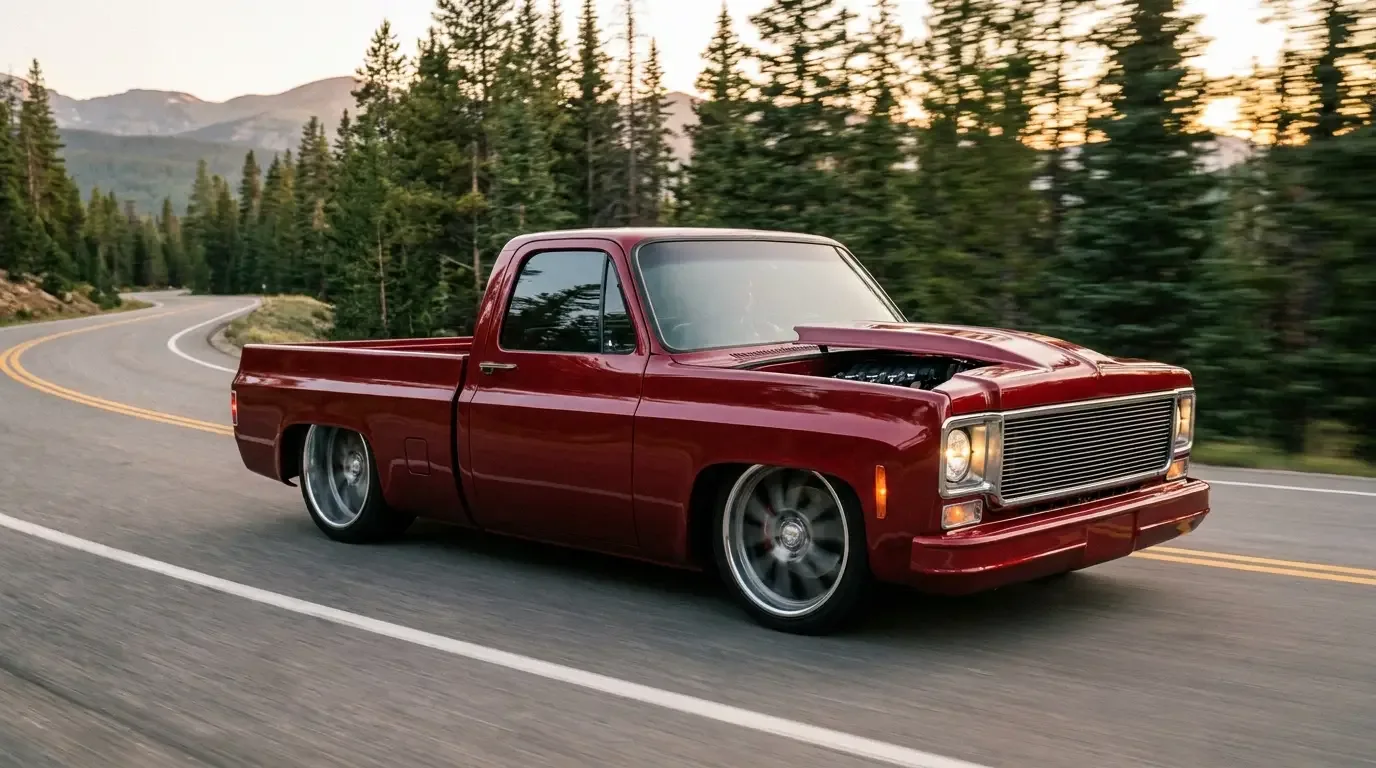
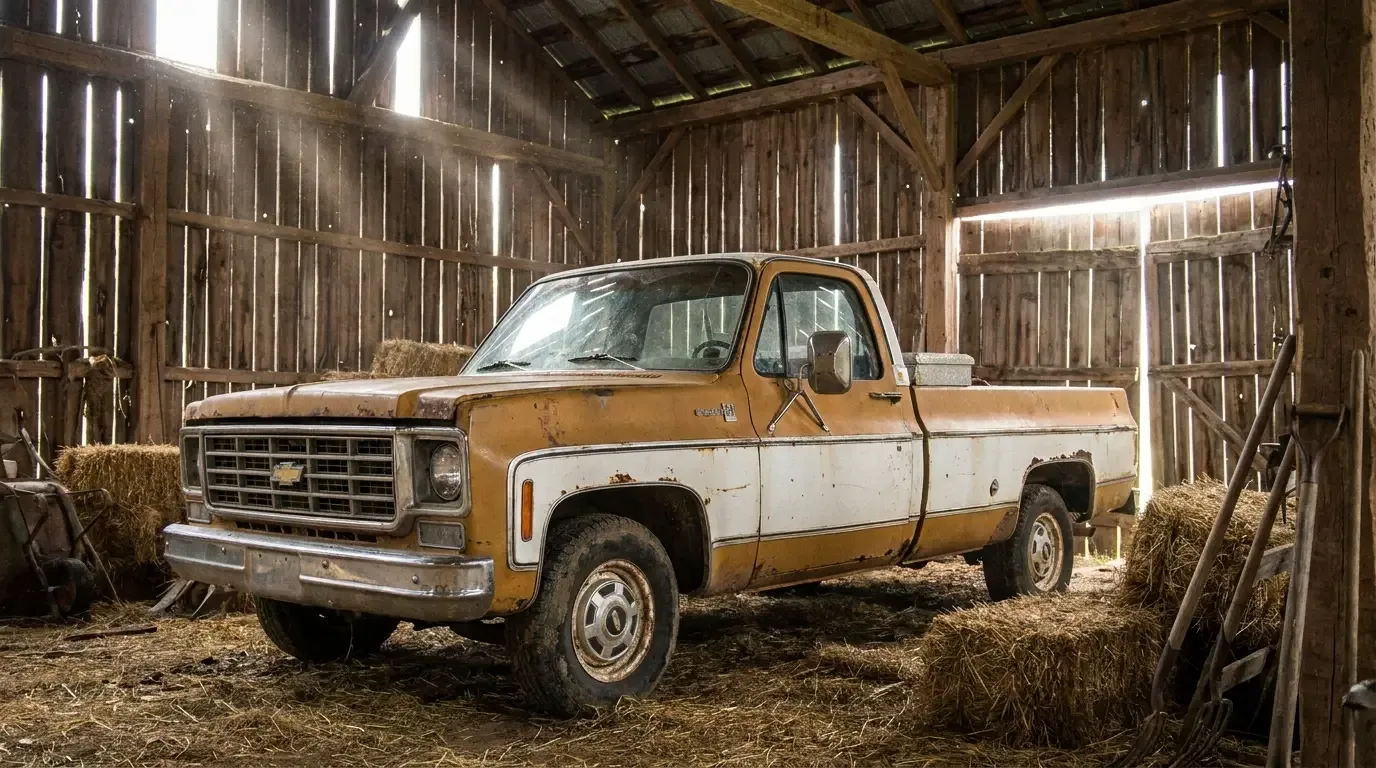
There's a truck show in a gravel lot somewhere every summer weekend in America where a C10 sits lowered to the ground on air bags, candy paint catching the afternoon sun, wheels tucked so tight into the fenders they look painted on. A teenager walks past it with his phone out, filming for fifteen seconds before moving to the next row. He has no idea the truck he just walked past once had a job. Hauled feed, or lumber, or somebody's father's tools to a job site five days a week, rain or shine, for decades before anyone thought to lower it, paint it, and put it on Instagram.
Ownership & Lifestyle
9 min read
C10 Culture: How a Work Truck Became a Custom Icon
How a humble Chevrolet work truck became the foundation for decades of regional custom-truck culture, told through the garages and communities that built it.
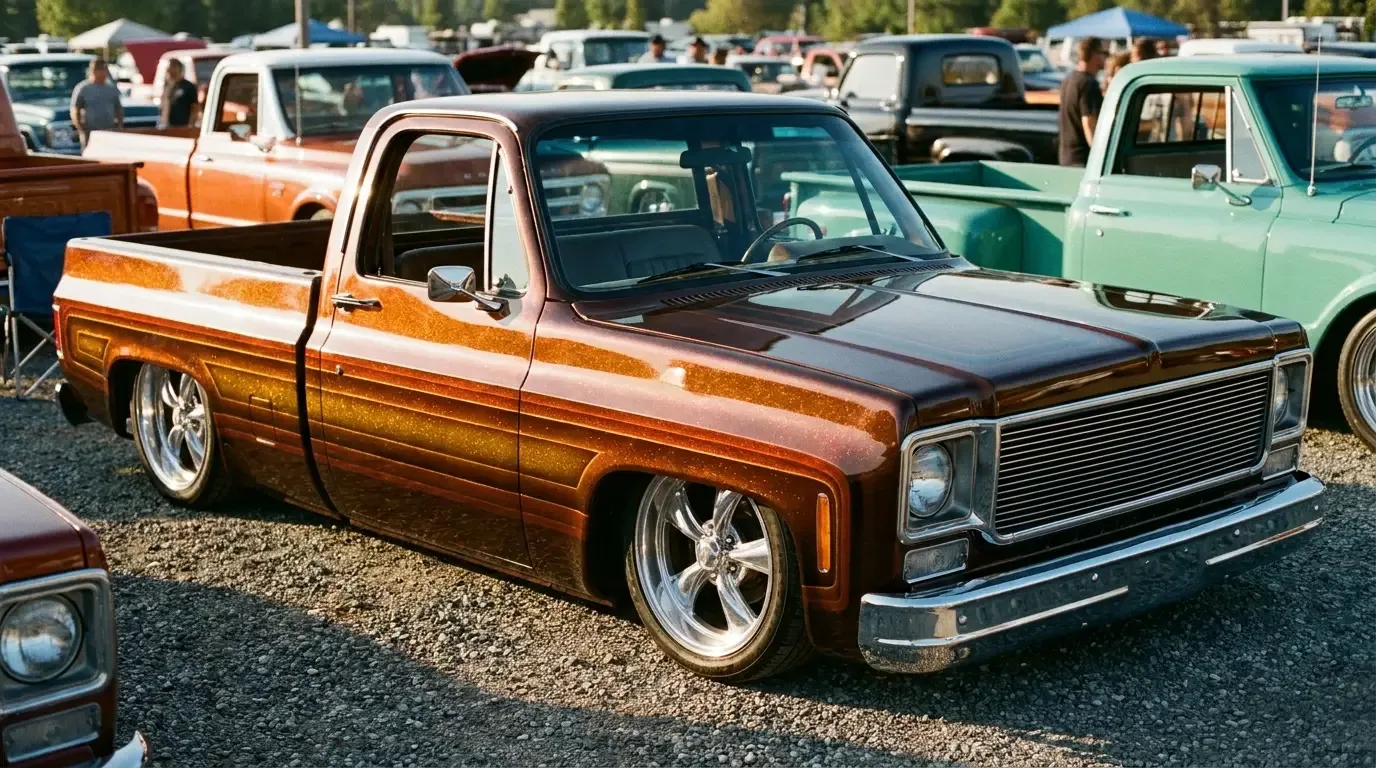
That gap, between what the truck was built to do and what it's become, is the whole story of C10 culture. Nobody designed these trucks to be beautiful. They became beautiful because enough people spent enough decades insisting they could be, one garage build at a time, until the rest of the world caught up and started calling it art.
A truck built to disappear into the background
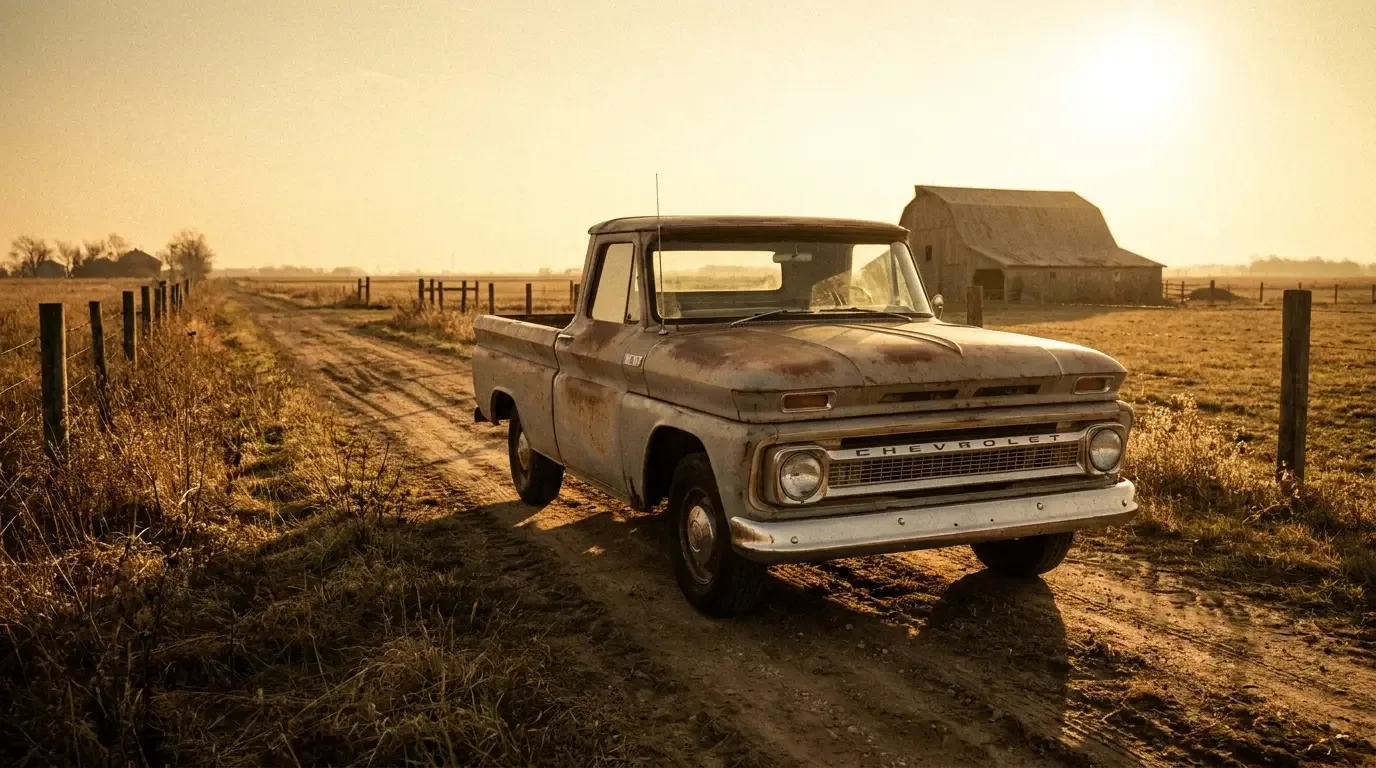
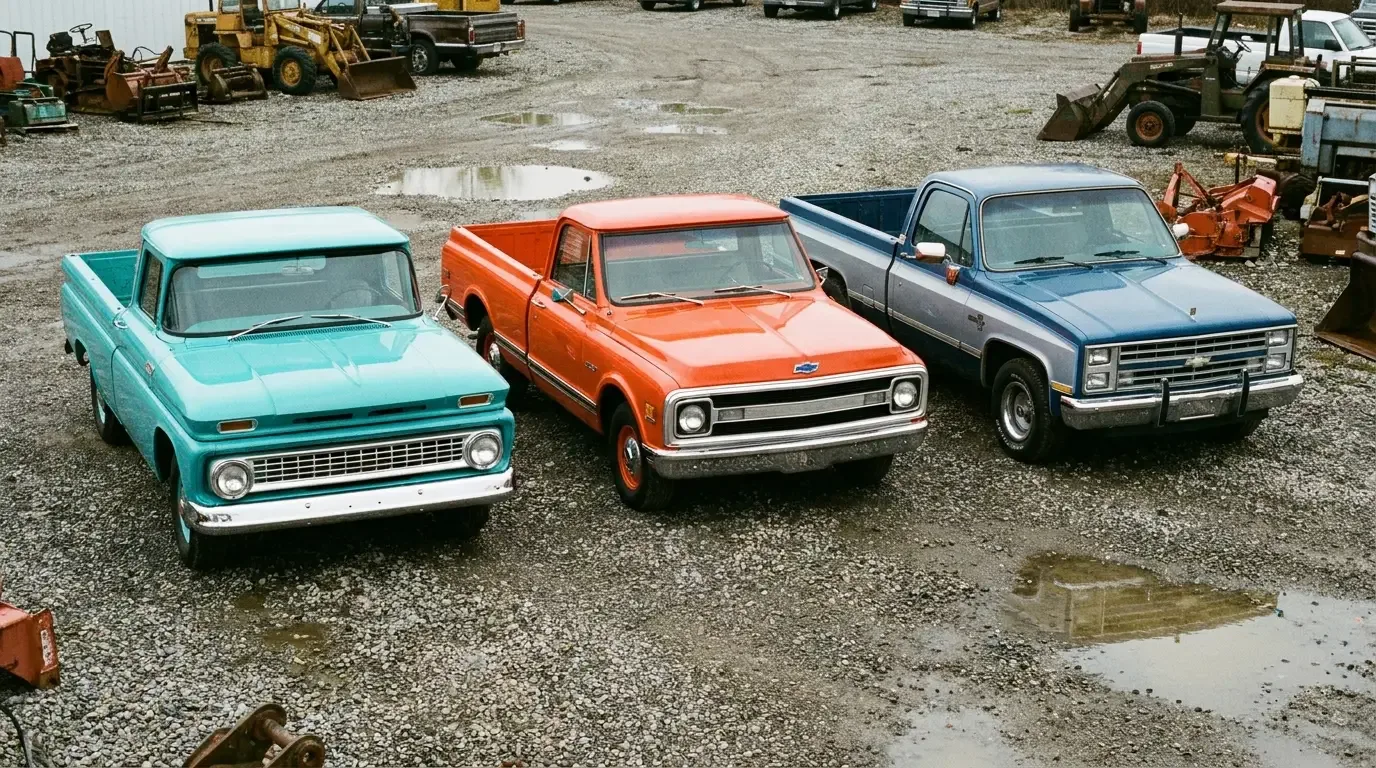
When Chevrolet rolled out this generation of C10, nobody at the design studio was thinking about show trophies. These were fleet trucks and farm trucks, priced to sell in volume, built to be replaced in a decade the way work trucks always were. The whole point was utility. A bench seat, a bed, an engine big enough to tow what a small business or a ranch needed towed. Beauty wasn't in the brief. Durability and cost were.
That's precisely why the platform ended up being such fertile ground for customizing decades later. A truck built simple, with clean lines and a big, flat-sided bed, gives a builder room to work that a busier, more heavily styled vehicle doesn't. Take away the chrome trim, drop the stance, tuck the bumpers, and the shape underneath does the rest of the talking. Builders figured that out early, and they never stopped figuring out new ways to say it.
The garages where it actually started
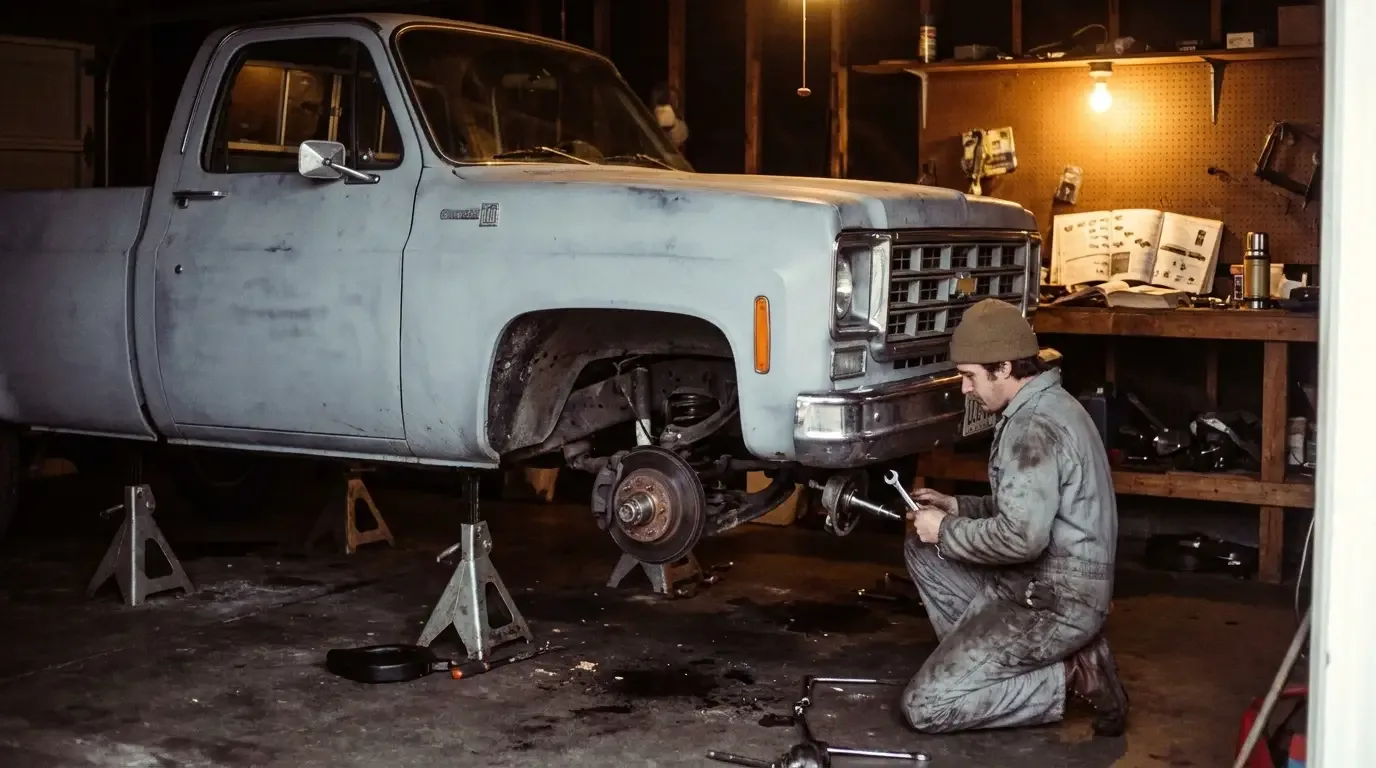
Long before any of this had a name, it had a location, usually somebody's driveway or a rented bay behind a body shop, with a truck up on jack stands and a stack of speed equipment catalogs on the workbench. The early custom-truck builders weren't chasing a trend. They were extending a habit that already existed in car culture, the same impulse that lowered a Merc or chopped a Ford coupe's roofline, applied to a truck because trucks were what a lot of these guys already owned and could afford to experiment on.
A lowered stance was often the first move, sometimes done with nothing more sophisticated than heated and re-arched leaf springs or a dropped spindle up front. Wheels came next, usually whatever the local speed shop had on the wall that made the truck look like it was leaning into a corner even parked in a driveway. Paint came later, once a builder had enough confidence, and enough spare cash, to trust the bodywork to hold a show-quality finish instead of a beater rattle-can job.
From work truck to show truck, one region at a time
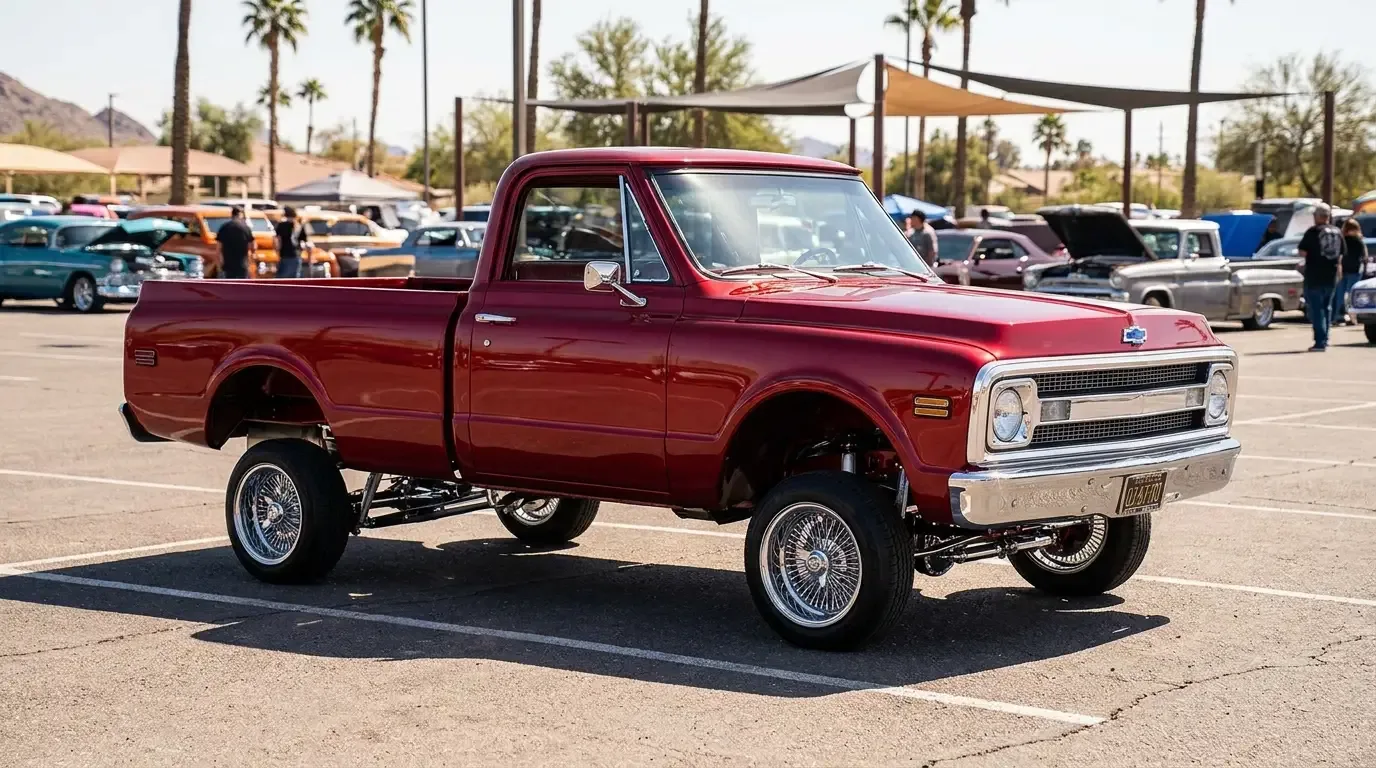
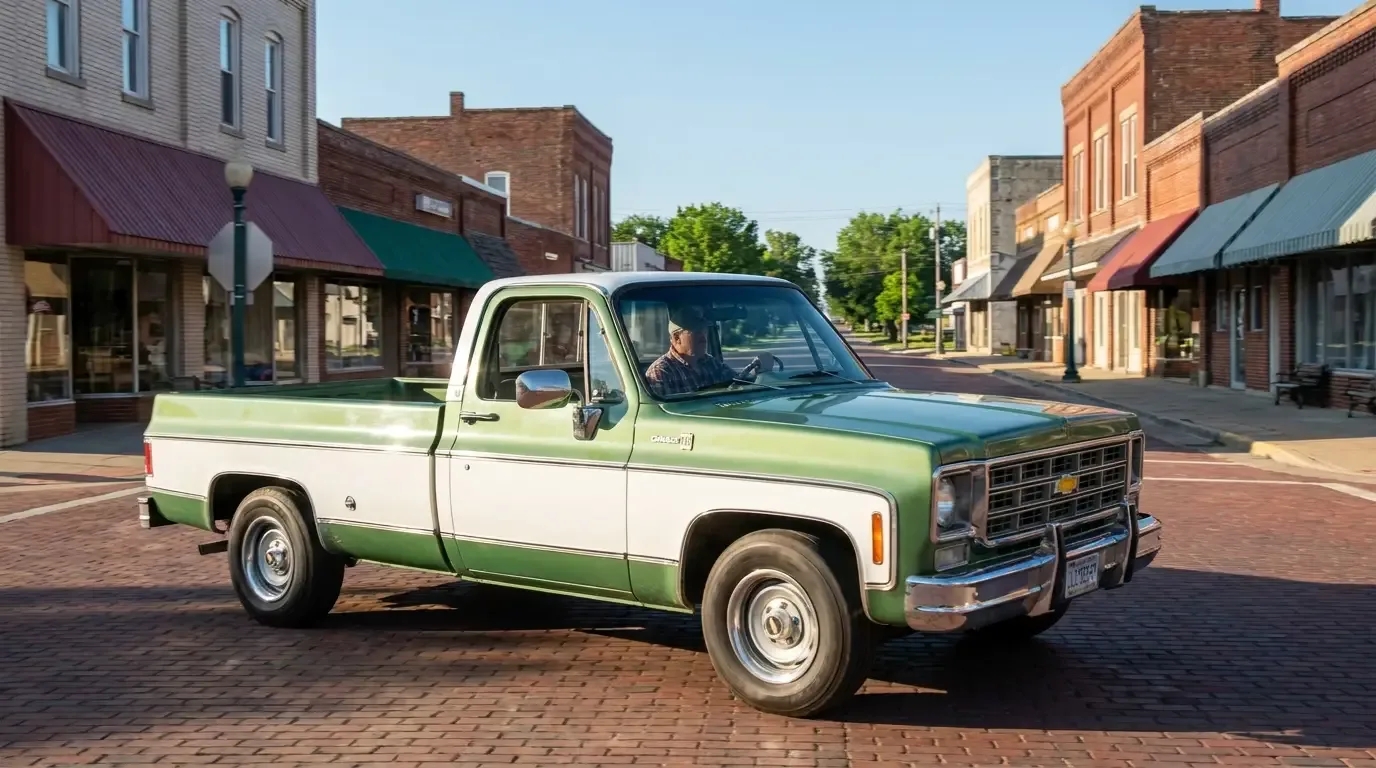
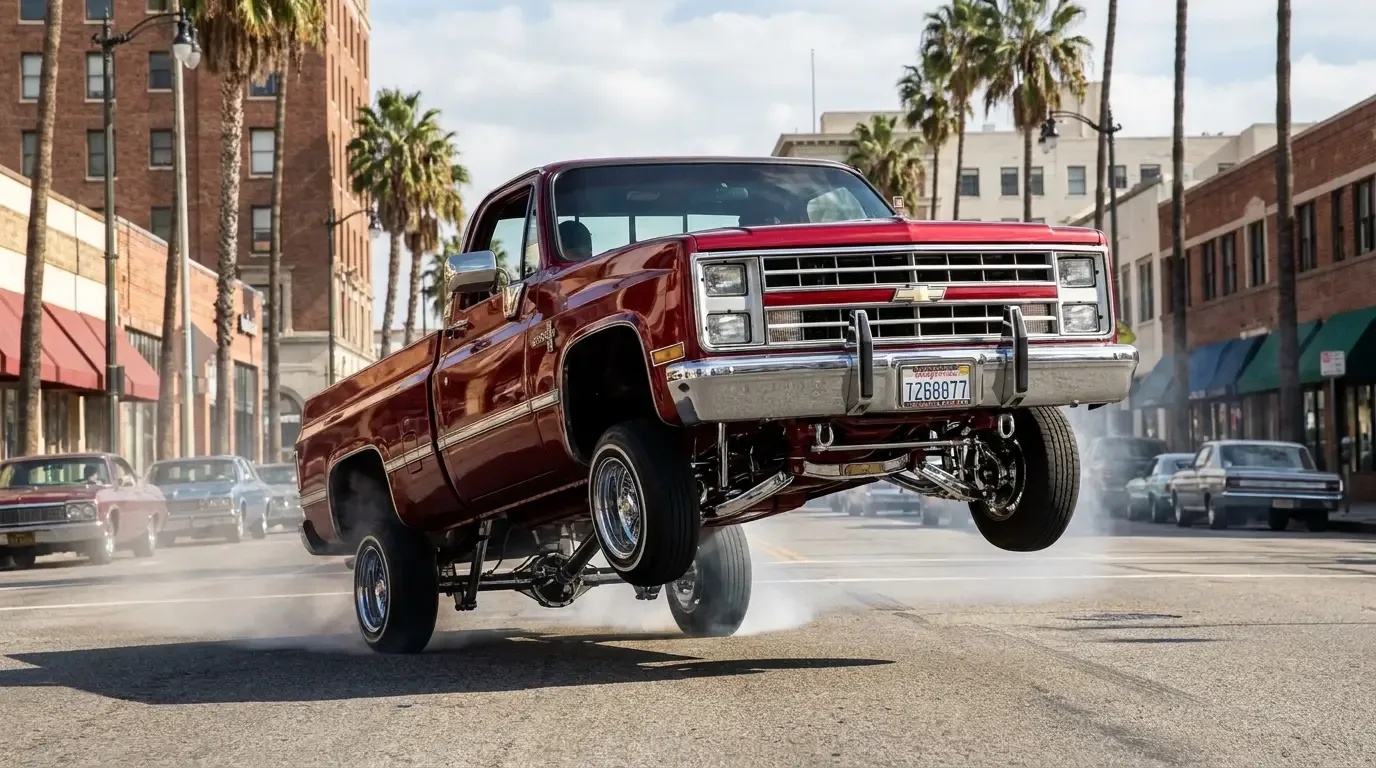
The culture didn't develop in one place. It grew up regionally, with its own flavor depending on where the truck sat. In the Southwest, builders leaned into lowrider traditions already thriving in the car scene, hydraulics, murals, patterns that told stories about family and neighborhood as much as they showed off paint skill. In the Midwest and South, the builds tended toward a cleaner, more restrained custom look, patina sometimes left intentional, a nod to the truck's working-class roots even as it got dressed up for a show. On the West Coast, builders pushed further into radical modification, tubbed beds, big engine swaps, air ride systems that could drop a truck's frame rails onto the pavement at the push of a button.
None of these regional styles were wrong. They were the same impulse, taking a humble work truck and making it say something personal, expressed through whatever local scene the builder came up in. That's part of why C10 culture never collapsed into one single look the way some other platforms did. There isn't a single correct C10 build. There's a whole map of them.
| Era | Dominant custom style | Typical modifications |
|---|---|---|
| 1970s-80s | Early lowrider and street truck | Dropped spindles, aftermarket wheels, murals |
| 1990s | Mini-truck and show truck movement | Hydraulics, air ride, deep tint, billet trim |
| 2000s-2010s | Resto-mod and pro-touring crossover | LS swaps, modern brakes, subtle bagged stance |
| 2020s | Mixed traditional and restomod revival | Patina preservation alongside full builds, social-media-era builds |
What actually makes a build good, according to the people who build them
Ask a builder who's been doing this since before it had an audience what separates a good custom C10 from a poser build, and the answer rarely starts with the paint. It starts with proportion. Stance is everything, the way the truck sits relative to its own wheel openings, the way the roofline relates to the bed rail, the small details that either look like they were considered or look like they were bolted on because a catalog had the part in stock. A build can have flawless paint and still look wrong if the stance is off by an inch in either direction.
The second thing that comes up, almost every time, is patience. The builds that get remembered, the ones that end up on magazine covers or win awards at the bigger shows, are almost never rushed. They're the trucks that sat half-finished in a garage for two or three years while the owner saved for the next stage, or waited for exactly the right wheel to come available, rather than settling for whatever was cheapest and available now. That kind of patience doesn't photograph well on social media, where finished builds get all the attention, but it's the actual engine driving the whole culture.
The community that keeps the culture alive
What holds all of this together isn't a single club or a single show. It's a network of regional truck clubs, online forums that have outlasted several generations of social media platforms, and swap meets where the same faces show up year after year, sometimes with the same truck, sometimes with a different one because the last build sold to fund the next. There's a generosity to it that outsiders don't always expect. Builders who spent years learning a technique the hard way, through mistakes on their own trucks, tend to hand that knowledge down freely to whoever's willing to listen at a show or in a garage on a Saturday.
That generosity is part of why the culture has survived long enough to pass from the people who built these trucks new, in some cases, to grandchildren who never knew them as anything but a project. The knowledge moves person to person more than it moves through any official channel, which means every regional scene has its own quiet historians, the guy at the local show who can tell you exactly which years used which spindle, which builder in town started the local style everybody else copied afterward.
"She kept his truck in the barn for eleven years before she could sell it. When the new owner started it, she cried in the driveway, because some engines still sound like a person."
Nora Beckett
Why the work-truck bones still matter
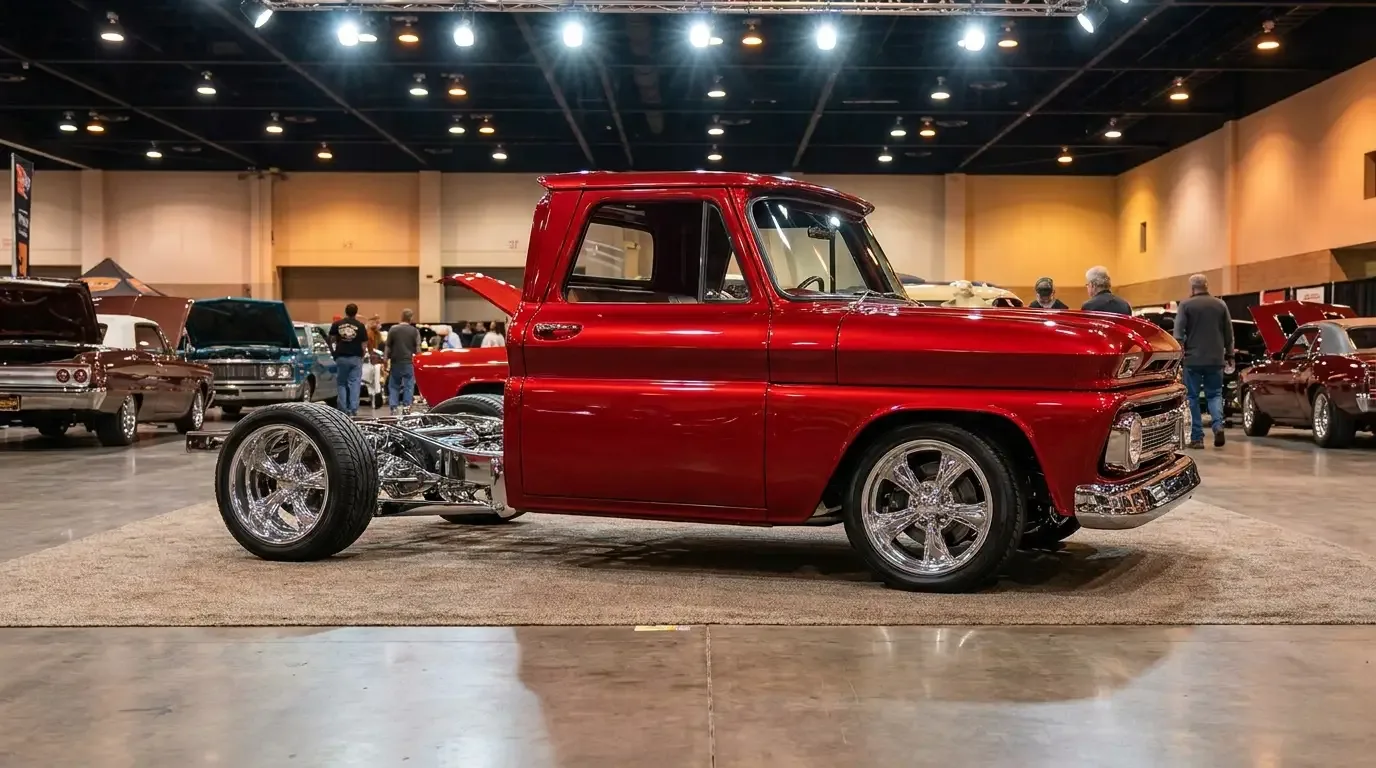
It would be easy to look at a fully bagged, candy-painted show truck and forget that underneath the custom bodywork is still a platform designed to carry a load of lumber to a job site. But that tension, between what the truck was built to do and what it's been turned into, is exactly what gives these builds their weight. A custom Corvette is beautiful because it was always meant to be. A custom C10 is beautiful because somebody looked at a truck that was never supposed to be anything more than useful, and decided useful wasn't the end of the story.
That's worth sitting with the next time you see one rolled up on a show field, wheels tucked, paint deep enough to see your reflection in. Somewhere underneath all of that is a frame that used to smell like diesel and hay, and somebody, somewhere, decided it deserved a second act.
Where to see it, and where it began
If you're new to this world and want the full arc, from utilitarian farm truck to garage-built icon, the C10 story is the place to start, and from there it's worth going back further to where that story actually started, the generational changes that gave builders the specific platform quirks, that flat-sided bed, that simple dash, that they've been leaning on for fifty years now. And if all of this has you wanting to see the culture up close rather than just read about it, there's no substitute for looking at actual custom-built C10s for sale, trucks built by people who learned every lesson in this piece the hard way, one Saturday at a time.
Sources and notes
Related Reading
Article
The Chevrolet C10 Story: America's Half-Ton Icon
Article
The Chevrolet C10 Through the Generations
Article
The Ultimate Maintenance and Daily-Driving Guide for a Classic C10
Article
Inside the Modern C10 Restomod Scene
Article
From SEMA to the Street: Famous Custom C10 Builds
Article
The Gateway Truck: Why First-Time Collectors Start With a C10
Article
C10s and the Lowrider Truck Tradition
Article
Why Millennials and Gen Z Are Chasing Square Body C10s Today
Article
C10s in Movies and TV
Article
Why the C10 Became America's Favorite Farm-to-Show Truck
Have a
Chevrolet C10
for Sale?
Reach thousands of serious classic car collectors across the US.
Sell It Here →
Are You a Classic Car Dealer?
List your full inventory and connect with targeted classic car buyers.
Join as a Dealer →

About the author
Nora Beckett
Automotive features writer and photographer who tells the human stories behind the cars, from show fields to cross-country road trips.
Related Listings - Chevrolet C10
More in Ownership & Lifestyle
Comments
Be the first to comment on this article.